eldiario.es
María González Veracruz: "El décimo escaño en la Región de Murcia está entre el Partido Socialista y Vox" La cabeza de lista del PSOE al Congreso por la Región de Murcia reta al PP a explicar por qué rechazó casi 1.200 millones al año y asegura que volvería a llamar "hermoso" a Pedro SánchezEl CIS murciano da la victoria al PP en las elecciones generales en la Región, mientras que Vox y PSOE se disputan el décimo escaño
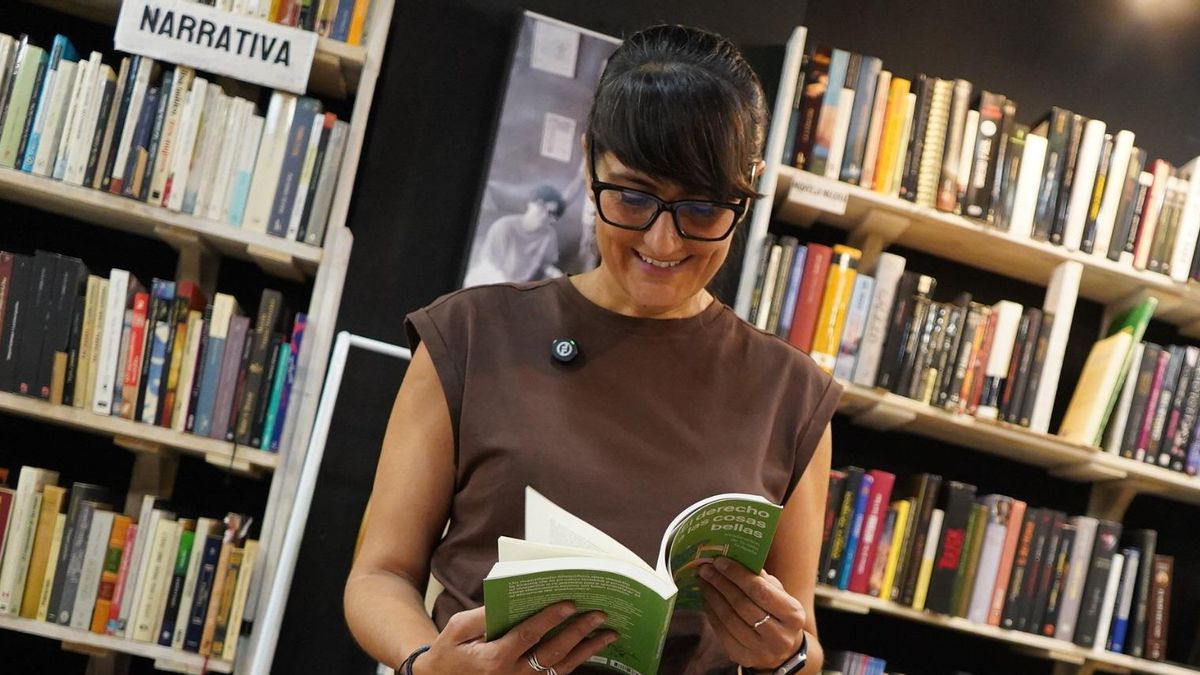
María González Veracruz (Murcia, 1979) atiende la llamada telefónica con la voz tomada. "Es mi punto débil", admite. Habla el martes por la mañana y, varias horas después, le espera el debate del Colegio de Periodistas de la Región, así que su plan para el resto del día es callar todo lo que pueda. No le preocupa demasiado. "Luego me pongo un micro y no sé de dónde saco el torrente de voz", asegura.
El domingo lo comprobó en el pabellón Príncipe de Asturias. Abrió el mitin de Pedro Sánchez en Murcia junto al secretario general del PSRM, Francisco Lucas, y la cabeza de lista al Senado, Irene Jódar, días después de que la Asamblea Regional declarara al presidente persona non grata.
Es licenciada en Bioquímica por la Universidad de Murcia e hija de Rafael González Tovar, que fue secretario general de los socialistas murcianos. Dirigió Juventudes Socialistas entre 2003 y 2009 y Zapatero contó con ella en la Ejecutiva Federal de 2008. Fue diputada regional de 2007 a 2011 y diputada del Congreso de 2011 a 2019.
En 2017 se quedó a 12 votos de Diego Conesa en la primera vuelta de las primarias del PSRM. Después llegó al Gobierno como secretaria de Estado de Telecomunicaciones y, desde septiembre de 2024, de Digitalización e Inteligencia Artificial. Ahora encabeza una lista que, según el último barómetro del CIS murciano, el CEMOP, se juega con Vox el décimo diputado de la Región.
La ley de inteligencia artificial (IA) que impulsó su Secretaría decae con la disolución de las Cortes. ¿La volvería a presentar?
Sí, claro. Hemos liderado en Europa, y también en Naciones Unidas, la necesidad de regular la IA, sobre todo para proteger a los menores y a las mujeres. Para nosotros es una prioridad máxima. Y no ha salido, por cierto, por el poco interés del PP y de Vox. Lo que pase con la protección de mujeres y niños frente a la desinformación también nos lo jugamos el 29 de noviembre.
¿Qué ha hecho el Gobierno central por el Mar Menor y qué ha fallado?
Hemos tenido como prioridad proteger el Mar Menor sin tener apenas competencias, y queremos seguir movilizando esos 700 millones de euros. Pero lo que más necesita el Mar Menor es parar al PP y a Vox. El PP se ha supeditado a un partido negacionista y ha llevado a la Asamblea Regional una rebaja de su protección. Y no hablo solo de sostenibilidad. Desproteger el Mar Menor también hace daño al empleo y a la economía de la región.
La agricultura tiene un peso enorme en la economía regional. ¿Cómo se equilibra?
Es absolutamente compatible. Se puede proteger el Mar Menor y seguir apoyando al sector agroalimentario, que ha recibido muchísima inversión en tecnología, en modernización de regadíos y en agua desalada.
¿Qué futuro defiende para el trasvase Tajo-Segura? Si se reduce, ¿qué alternativa propone, con qué plazos y quién la paga?
La política de agua que más beneficia a la Región de Murcia es la del Partido Socialista, y está contrastado. Solo hay que pasarle el algodón, que no engaña. Cuando gobernamos siempre se multiplican los recursos y nunca se ha tocado el trasvase. El PP de Castilla-La Mancha dice que este es el Gobierno más trasvasista de la historia, y en 2025 hubo un récord de 250 hectómetros.
Pero las últimas decisiones del Gobierno reducirán los hectómetros que llegan por el trasvase. ¿La alternativa es la desalación?
Nuestra aportación real de agua es la desalación. Son infraestructuras que empezó el anterior Gobierno socialista, que aquí se criticaron muchísimo y que hemos seguido multiplicando. Hoy garantizan 250 hectómetros a la región. Pero siempre con el trasvase al lado. El único momento en que ha habido trasvase cero fue con el PP, durante 11 meses con Mariano Rajoy.
María González Veracruz, en el mitin de Pedro Sánchez en Murcia
La Región de Murcia es la comunidad peor financiada por habitante ajustado La propuesta de Montero le daría unos 1.200 millones más, pero se pactó primero con ERC. ¿Por qué tendría que fiarse un murciano de un modelo que se negocia antes en Catalunya?
Porque necesitamos ese dinero. El PP pactó mal la financiación para la región y no lo arregló nunca, ni siquiera con mayoría absoluta. La mejor oferta que ha tenido el Gobierno regional ha venido del Gobierno de progreso, y el PP tiene que explicar por qué ha votado en contra de casi 1.200 millones al año. A mí me parece impresionante que te vayan a perdonar más de 3.000 millones de deuda y digas que no. Es un cheque directo para acabar con la asfixia de los niñas y las niñas en las aulas, con el amianto, con los barracones, porque aunque se sabe poco, hay barracones en colegios de la Región. Y para la dependencia y las listas de espera. Nosotros estamos en lo que afecta a las familias. Ellos, en hacer partidismo contra el Gobierno central.
El campo murciano depende de la mano de obra inmigrante. ¿Qué política migratoria y laboral defiende para el sector? ¿Cree que el PSOE no ha sabido conectar con los trabajadores del campo y con esta población?
Nos podemos remitir a lo que hemos hecho. Para nosotros, la política migratoria es de sentido común, de ley y orden, pero también de humanidad. Hemos hecho una regularización que, por cierto, empezó pidiendo Cáritas, y que ha dado derechos a gente que ya trabaja en nuestra tierra y que ahora, además, cotiza. Se sabe poco, pero un estudio de la Politécnica de Cartagena dice que la población extranjera de la región aporta casi dos euros por cada euro que consume en servicios públicos. Hacen falta menos bulos y más humanidad. Yo creo en una sociedad murciana acogedora y en el discurso de odio de Vox y PP hay más ruido que nueces.
En municipios como Torre Pacheco o Mazarrón, Vox ha sido una de las fuerzas más votada. Ahí sí parece haber rechazo.
Ahí hay un reto. En municipios con tanta inmigración la clave es cómo se organizan los servicios públicos y la integración real, y eso es responsabilidad directa de la comunidad y de los ayuntamientos. El otro día estuve en Ceutí, en un acto con población inmigrante, y están integrados con total normalidad. La culpa de nuestros problemas no la tiene la inmigración. Lo que hace falta es más Estado y menos precariedad, mejores escuelas, mejores hospitales, vivienda. Los ayuntamientos socialistas han cedido a la Comunidad más de 80.000 metros cuadrados de suelo para vivienda protegida, y el Gobierno regional ni ha contestado.
La Región podría tener que devolver el 96% de los fondos europeos para alquiler asequible y hay miles de solicitudes del Bono de Alquiler Joven sin atender. Si su partido gobierna, ¿hará que el dinero del Estado no dependa de que la comunidad lo ejecute?
O crees que la vivienda es un derecho o estás con el mercado y con los fondos buitre. No se trata de hacer un millón de viviendas que nadie pueda pagar, sino de tener vivienda protegida para siempre, no como la del PP en Andalucía, que caduca y pasa a ser libre. Para eso necesitamos una mayoría amplia en el Congreso. Y quiero ser muy clara. En la Región, el décimo diputado está entre el PSOE y Vox, y dividir el voto de izquierdas es el mejor regalo que se le puede hacer a Vox.
Para que el dinero se gaste, lo primero es cambiar el Gobierno regional en mayo. El PP tenía recursos para 566 viviendas asequibles y no ha construido ni una. Nosotros vamos a seguir con las ayudas directas, como el bono de alquiler, y premiando a quien aplica la Ley de Vivienda. Aquí no se ha aplicado. No hay ni una sola zona tensionada declarada.
En la Unidad de Medicina Materno-Fetal de la Arrixaca hay, presuntamente, una plantilla llena de objetores. ¿Qué puede hacer el Congreso para garantizar el aborto en la sanidad pública en Murcia?
Me parece intolerable que se mantenga al responsable de esa unidad. Tiene que dimitir, y el PP tiene que ser exigente porque los derechos de las mujeres en la Región no pueden depender del carácter retrógrado de un responsable médico. Hay que ser muy contundentes. El 29 de noviembre las mujeres nos jugamos consolidar nuestros derechos y ampliarlos. El derecho a decidir sobre nuestra maternidad, que para mí es intocable, pero también la conciliación, los permisos, la subida del salario mínimo o el complemento de igualdad en las pensiones.
María González Veracruz
Hoy es el 25N, Día Internacional para la Eliminación de la Violencia contra las mujeres. Feijóo dice que repartirá las competencias de Igualdad entre otros ministerios. ¿Qué se perdería de la lucha contra la violencia machista?
Nos queda muchísimo por avanzar porque el machismo está muy metido en la sociedad. Pero lo que no nos podemos permitir es un Gobierno con un vicepresidente como Abascal, que niega la violencia de género y dice que la igualdad es una ideología. Por favor, la igualdad es de justicia. Necesitamos hombres feministas que apoyen la lucha de las mujeres, no hombres que nos devuelvan 50 años atrás. Si alguien va a seguir peleando para que las mujeres tengamos vidas dignas, libres y, sobre todo, para que sigamos vivas, es el Partido Socialista.
En Castilla y León, PP y Vox han excluido de las ayudas al cine obras con "adoctrinamiento ideológico", y la oposición y parte del sector lo llaman censura. ¿Es un adelanto de lo que haría un Gobierno de PP y Vox en España?
Es la realidad. Ya hemos visto en ayuntamientos del PP quitar plazas dedicadas a Paco Rabal y Asunción Balaguer, como en Alpedrete, censurar festivales o cuestionar las ayudas al cine. Y Ayuso vino a decir que en este país solo puedes hacer cultura si eres de ultraizquierda. Está clarísimo lo que quieren, que es hacernos retroceder 50 años. El domingo se vota entre cultura, pensamiento crítico y libertad, la de verdad, no la de Ayuso, o censura.
Según el CEMOP, Vox, con un 29,4%, superaría al PSOE, con un 22,4%, en la Región. En 2023 el PSOE sacó tres diputados y Vox, dos. ¿Por qué cree que podría adelantarles?
El por qué lo analizaremos al día siguiente. La encuesta de verdad es la del 29 de noviembre, y hay muchas que lo buscan es condicionar. Lo que importa es que uno de los escaños está en el aire entre Vox y el PSOE. Por eso pido el voto a la gente de izquierdas, a la progresista y también a la de centro moderado. En la Región, quien de verdad puede parar a Vox es el Partido Socialista.
En el mitin del pasado domingo dijo "Pedro Sánchez, ¡qué hermoso eres!", una expresión que quizás fuera de Murcia no se entienda. Según el CEMOP, solo el 14,3% de los murcianos prefiere a Sánchez como presidente, por detrás de Feijóo y de Abascal. ¿Lo volvería a decir?
Sin duda. Lo que ha hecho la Asamblea Regional es usar mal las instituciones, la cara más desagradable de la política. Reivindicar a Pedro Sánchez en murciano es decirles a los que insultan y a los que utilizan las instituciones contra el presidente que aquí tiene cientos de miles de apoyos. Lo noto en cada mercado. Declararlo persona non grata ha sido un insulto para muchísima gente de esta tierra.
Si sale elegida, ¿qué cosa concreta podremos comprobar dentro de cuatro años que consiga para Murcia?
Por ejemplo, que el centro de microchips Quantix siga siendo una realidad. Son 20 millones de euros para cambiar la economía de la región con una empresa que nos pone en el centro de la economía global. Y no es poca cosa porque el PP ya dejó caer en una entrevista en ABC que no pondrá dinero público en este tipo de empresas. Y, luego, todo lo demás, las pensiones, la igualdad, el salario mínimo.
about 7 hours ago