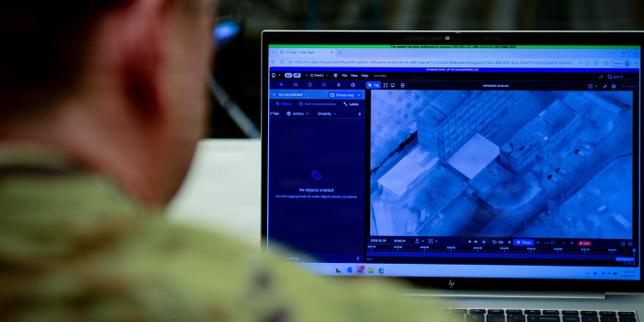

Poland signed a $300 million deal with US firm Palantir on Friday to adopt its Maven AI system for military battlefield analysis. [1]
The five-year contract, signed in Warsaw, will see the Polish armed forces use Palantir's Maven Smart System, known in Poland as Saturn. The software fuses data from drones, satellites and radar to support commanders in identifying targets and managing battlefield information. [1] [2]
Defence Minister Władysław Kosiniak-Kamysz said the system would help Poland "build a modern army, ready for the challenges of the future" and called it "one of the biggest steps in the transformation of our armed forces." He confirmed all servers and data will remain in the possession of the Polish armed forces. He said Poland would "hold all the tools and all the keys in our hands." [1] [3]
Maven, which grew out of Project Maven initiated by the US Department of Defence in 2017, uses machine learning to integrate various data sources for military operations. It is already used by the US military, NATO's Allied Command Operations and Ukraine. According to a 2025 analysis by the US Army War College, soldiers using such systems could process 80 targets in an hour, compared with 30 without the support. [1] [2]
Kosiniak-Kamysz said NATO has already integrated Maven into its military exercises, so the agreement would "bring us closer to NATO and improve our position in the alliance." He added that no European providers were able to offer the same capabilities. Chief of the General Staff General Wieslaw Kukula said the system would strengthen Poland's position in the alliance. [1] [3]
Palantir has faced criticism over its role in expanding governments' use of sensitive data and its work with US immigration authorities and the Israeli military. Experts in Poland called the deal a "short-sighted action." Palantir CEO Alex Karp, present at the signing, addressed potential opposition. "It is Poland's enemies who shout loudest against Palantir," he said. "They spend a lot on propaganda, persuading useful idiots that good solutions are unnecessary and that bad ones are good." [1] [4]
The Polish army is developing its own similar systems with the aim of replacing Palantir's in the future. Kosiniak-Kamysz compared the acquisition to Poland's purchase of F-35 jets and Apache helicopters in terms of its transformative impact on defensive capability. Palantir registered a Polish subsidiary a decade ago and has grown its Warsaw office. Last year the defence ministry signed a letter of intent with the firm on AI, cybersecurity and information technology. [3] [1]