Loading…
 Saturday, September 26Saturday, September 26
4 months · 14 summary articles
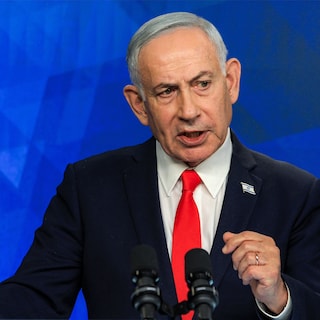
Israeli Prime Minister Benjamin Netanyahu declared on Monday that Israel will maintain its military presence in a southern Lebanon security zone indefinitely, defying a US-Iran framework agreement to end their conflict and insisting that Tehran had sought an Israeli withdrawal. Speaking after Hezbollah repelled an Israeli armored unit in the first announced military operation since Washington and Tehran reached their accord, Netanyahu framed the continued occupation as essential to protect northern Israeli communities from the Iran-allied militia. “Israel reserves the right to defend itself,” he stated, adding that the military would not withdraw from the buffer zone despite the diplomatic breakthrough between the United States and Iran .
The escalation underscores the fragility of the US-Iran deal, which European Union foreign policy chief Kaja Kallas welcomed but warned still faces its toughest phase. Kallas told ministers that Lebanon must be included in the ceasefire framework as Israel keeps troops deployed, and the EU approved a €100 million assistance package for the Lebanese Armed Forces to bolster stability . Analysts suggest the agreement’s weakest point may lie in Lebanon, where Netanyahu’s government appears determined to exploit the vacuum left by regional détente. “Israel will certainly try to undermine the deal,” said Professor Hannu Juusola, a Middle East studies scholar, noting that the shared US-Israel campaign against Iran’s nuclear programme had delayed the threat by years and saved lives .
Hezbollah’s Monday operation—repelling Israeli forces near a southern Lebanese town—marked the militia’s first publicly acknowledged military action since the US-Iran accord, signalling that the group remains a potent force despite the diplomatic shift. Netanyahu seized on the incident to claim credit for the joint campaign with Washington that, he asserted, had deferred Iran’s nuclear ambitions and spared millions of Israelis from existential danger .
The standoff risks derailing the US-Iran framework before its implementation, with Netanyahu’s insistence on military freedom of action in Lebanon directly contradicting the spirit of the agreement. Israel’s refusal to withdraw from the security zone—maintained to protect citizens in northern Israel—has drawn international concern, particularly from Brussels, which is now funding Lebanese security forces to mitigate spillover violence. As diplomats scramble to integrate Lebanon into the ceasefire talks, the region remains on edge, with Netanyahu vowing that Israel will act unilaterally to counter any threat from Hezbollah, regardless of broader diplomatic progress .
Follow us for live European news

Hezbollah repels Israeli force in first operation since Iran-US deal Hezbollah said on Monday its fighters repelled an Israeli armored unit advancing toward a southern Lebanese town, marking the groups first announced military operation since Washington and Tehran reached a framework agreement to end their conflict.
yenisafak · 3 months ago
Netanyahu vows Israel to stay in Lebanon buffer zone despite US-Iran deal Israeli Prime Minister Benjamin Netanyahu said on Monday that occupation forces will maintain their presence in a "security zone" across southern Lebanon indefinitely despite a memorandum of understanding reached between Washington and Tehran to end the conflict, insisting that Tehran had sought an Israeli withdrawal.
yenisafak · 3 months ago
EU: Lebanon must be covered by US-Iran ceasefire as Israel keeps troops deployed EU foreign policy chief Kaja Kallas stated that European foreign ministers stressed the need for Lebanon to be included in ongoing ceasefire efforts, as Israel continues its military deployment there. The EU approved a €100 million assistance package for the Lebanese Armed Forces. Kallas welcomed the US-Iran deal but warned that the toughest phase of the talks still lies ahead.
yenisafak · 3 months ago
Israel | Nöyryytetty Netanjahu voi löytää Iran-sovun heikon kohdan Israel pyrkii varmasti murentamaan sopimusta Yhdysvaltojen ja Iranin välillä, sanoo Lähi-idän tutkimuksen professori Hannu Juusola. Sovun heikko kohta voi löytyä Libanonista.
helsingin sanomat · 3 months ago
Netanyahu seeks Israeli freedom of action in Lebanon Israeli Prime Minister Benjamin Netanyahu stated that Israels military will not withdraw from its security zone in southern Lebanon, maintaining it to protect citizens in northern Israel. Israel also reserves the right to defend itself against the Iran-allied Hezbollah militia. Netanyahus remarks follow a US-Iran agreement to end their conflict, the contents of which he […]
cphpost · 3 months ago
Live - Netanyahu stelt zich opnieuw kandidaat als premier van Israël: Ik ben van plan te winnen
de morgen · 3 months ago
Israeli occupiers destroy Palestinian villages only water line in West Bank Israeli occupiers bulldozed the sole water pipeline serving Umm Safa village, northwest of Ramallah, cutting off running water to residents while paving a new settlement road. The village has seen escalating attacks from illegal settlements and outposts. Meanwhile, Israel plans to allocate $1.89 million to fund the extremist Hilltop Youth group.
yenisafak · 3 months ago
Netanjahu pripisuje zásluhy Izraelu a USA. Spoločná vojenská operácia podľa neho oddialila iránske jadrové zbrane o roky Netanjahu tvrdí že spoločná kampaň s USA odvrátila jadrovú hrozbu Iránu na roky dopredu a zachránila milióny Izraelčanov pred existenčným nebezpečenstvom.
aktuality.sk · 3 months ago
Iran: No sustainable US deal without guarantee of Lebanons security Irans Foreign Ministry spokesman stated that no agreement with the US will be sustainable without the comprehensive guarantee of Lebanons security and territorial independence, noting that Lebanon is mentioned three times in the recent memorandum. He also said the release of Irans frozen assets and compensation for war losses are key economic priorities.
yenisafak · 3 months ago