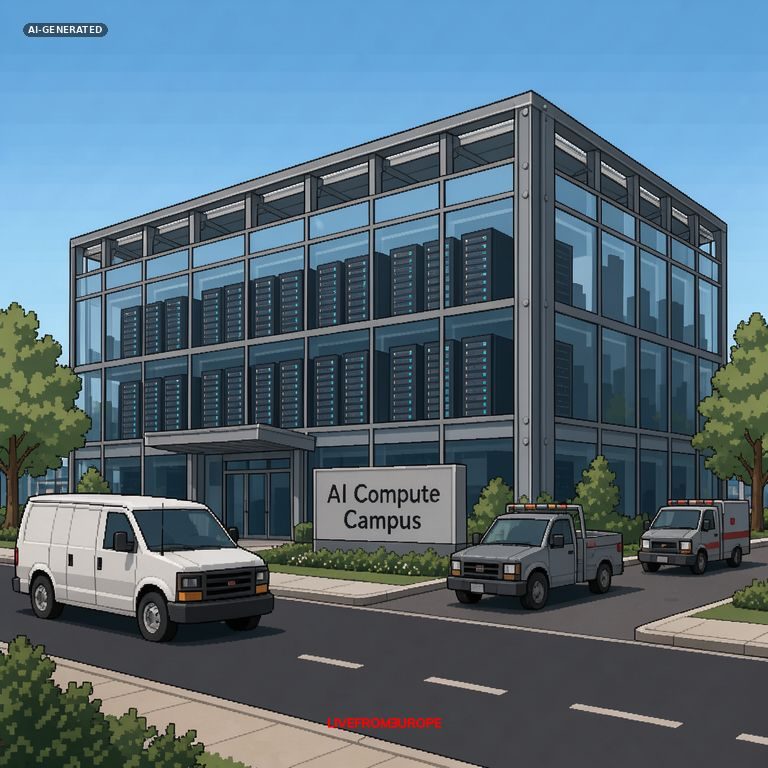
OpenAI is preparing a policy and public relations push to shape the AI debate in Washington after the midterm elections, with plans to rebrand data centers as “AI compute campuses” and advocate for “speed limits” on advanced AI systems.
Chris Lehane, OpenAI’s chief global affairs officer, told Axios the company will roll out proposals during the lame-duck session of Congress, starting November 9, to position AI as empowering rather than disruptive. The effort includes lobbying for U.S. leadership in global AI standards and promoting community benefits from data center projects, such as the company’s planned facility in Pike County, Ohio. Lehane called the midterms “a bit of a movie trailer for what you’re going to see in 2028,” when he expects AI to dominate the presidential election .
OpenAI’s push comes as it frames AI as a tool for uncovering existing vulnerabilities rather than creating new ones. CEO Sam Altman, speaking alongside Oracle’s Clay Magouyrk, argued that AI is accelerating the discovery of long-standing security flaws, with companies now patching thousands of issues at unprecedented rates. Altman suggested businesses may need to shift from fixing individual bugs to continuous monitoring, while OpenAI’s head of cyber, Johannes Landgraf, warned that attackers are exploiting vulnerabilities just as quickly as they are found .
The company’s strategy also includes expanding its influence in cybersecurity. OpenAI has partnered with Oracle to help businesses identify and prioritize threats using AI, with Altman noting that traditional patching may no longer suffice as AI systems grow more powerful .
Lehane emphasized that OpenAI’s proposals aim to keep humans in control of AI, stating that “people should always remain in control of this technology” and that the company will advocate for safeguards on the most advanced systems. The campaign will target 2028 presidential contenders, with Lehane arguing that candidates must address public anxiety over AI’s role in society .