
Israel strikes Gaza refugee camp as kidney failure deaths surge in healthcare collapse
Story Timeline
2 months · 3 summary articles
Israel strikes Gaza refugee camp as kidney failure deaths surge in healthcare collapse
Israeli airstrikes kill Palestinian, destroy Gaza mosque and tents as West Bank settler violence rises
Israeli airstrikes kill two in Gaza refugee camps as ceasefire falters
Continuation
Israeli military strikes have caused buildings to burn and displaced dozens of families in the Shati refugee camp within Gaza City, highlighting the ongoing conflict and humanitarian impact in the region. The strikes, which occurred on July 30, 2026, have left many families without homes and have drawn attention to the escalating violence in Gaza.
The healthcare system in Gaza is under severe strain due to the conflict. At al-Shifa Hospital in Gaza City, the dialysis department is struggling to keep up with the demand for treatment. According to the Palestinian [Ministry of Health](en.wikipedia.org](en.wikipedia.org))), 50 percent of dialysis machines in Gaza have stopped working completely due to an ongoing shortage of sodium bicarbonate, which is required to operate the machines. The number of hospitals equipped to handle kidney failure patients has been reduced to four from seven, with some, such as the Noura al-Kaabi Dialysis Centre, destroyed by Israeli forces during the war. As a result, kidney failure patients are dying at an alarming rate in Gaza. Ministry of Health statistics show that there were 1,200 kidney failure patients before the war. That number has now dropped to about 700 patients after the death of more than 470, due to missed dialysis sessions and a lack of essential medications, according to the Palestinian Centre for Human Rights.
The U.N. human rights office on Wednesday warned of worsening violence by Israeli settlers in the occupied West Bank, and urged international action against the killing of Palestinians as well as the creation of settlements, which it said had reached an all-time high. According to United Nations figures, 18 Palestinians have been killed in incidents linked to settler attacks so far this year, compared with 17 in the whole of 2025. The Palestinian Authority says at least 20 Palestinians have been killed by settlers since the start of the year. Last Friday, four Palestinians and two Israeli soldiers — one of whom acted as a security coordinator for a nearby Israeli settlement — were killed when a crowd of Israeli settlers, some armed, approached the Palestinian village of Tal, southwest of Nablus.
"Settlers and Israeli security forces, often acting together, have attacked local communities, assaulting families, destroying and confiscating property, and burning mosques," Ravina Shamdasani, the spokesperson for the Office of the High Commissioner for Human Rights, said in a statement. The Israeli government and military did not immediately respond to Reuters' requests for comment. The U.N. human rights office said settler violence and actions tantamount to ongoing annexation of Palestinian territory in the West Bank had worsened in the two years since a ruling at the International Court of Justice in July 2024 that Israel's occupation of Palestinian territory and settlements there were illegal and should be withdrawn. Israel at the time rejected the finding as "fundamentally wrong" and one-sided.
India continues to supply arms to Israel despite a “substantial risk” of them being used in the “ongoing genocide against Palestinians” in Gaza, according to a report by Amnesty International. In a report shared with Al Jazeera, the Britain-based rights group on Thursday documented how India has “forged a close and profitable partnership with the Israeli defence sector and has become a significant contributor to the supply chains that support Israel’s military operations”. According to the report, Indian companies have supplied at least 390,516 small arms parts for military-grade weapons, 564,970 parts of explosive ordnance – such as drone warheads and artillery shell casings – and 298 components of military vehicles to Israeli military suppliers.
Amnesty said it used shipment trade data to reveal how weapons, ammunition, parts and components were shipped to Israeli companies that supply them to the country’s army. The rights group said its researchers “systematically excluded” shipments that may have been destined for civilian use, adding that they identified India’s exports of weapons and ammunition, including parts and accessories, categorised under the internationally recognised Harmonised System codes (HS Code) 93+ and 8710+. Earlier this year, Al Jazeera also obtained 91 Indian customs export documents covering arms-related shipments to Israel in 2024 under the classification code 93069000, which refers to “bombs, grenades”, according to India’s Ministry of Commerce and Industry’s customs book. The documents showed Indian firms exporting weapons components to Israeli arms manufacturers, including Rafael Advanced Defense Systems, IMI Systems Limited and MCT Materials.
The Spanish government has taken steps to prohibit the advertising of tourist accommodations in Israeli settlements in the occupied Palestinian territories. The Ministry of Derechos Sociales, Consumo y Agenda 2030 has demanded that five multinational companies remove 141 advertisements for tourist apartments in these settlements. This action is based on Real Decreto-Ley 10-2025, which was approved in September of last year and includes various urgent measures against the genocide in Gaza and in support of the Palestinian population. The law states that advertising for the commercialization of goods originating from Israeli settlements in the occupied Palestinian territory and services provided in these settlements is considered illegal advertising.
Despite this law, the platforms have continued to publish advertisements for tourist apartments in Spain and other countries. The companies face possible sanctions if they do not comply with the requirements. The Ministry has not disclosed the names of the companies warned. In December of last year, seven companies were warned by the government, which managed to have 108 advertisements in occupied territories removed by February. Additionally, in February, a coalition of NGOs including SUDS, Novact, and the Comité de Solidaridad contra la Causa Árabe, with the support of SOMO and Al-Haq, filed a complaint against Edreams Odigeo for facilitating tourism in occupied territories after finding 43 advertisements in areas of the West Bank, East Jerusalem, and the Syrian Golan.
In addition to the advertising ban, the government has also prohibited the transit through Spanish ports of ships carrying fuel destined for the Israeli armed forces, the entry into Spanish airspace of state aircraft carrying defense material destined for Israel, and access to Spanish territory for individuals directly involved in the genocide. Economically, the law prohibits the importation of products from the settlements and limits consular services for Spaniards residing in illegal Israeli settlements.
Follow us for live European news
- 1
- 1
- 1
- 1
3 further sources not geolocated
Articles

Israeli strikes leave buildings burning in Gaza City Israeli strikes have displaced dozens of families in Gaza Citys Shati refugee camp.
aljazeera · 2 months ago

⚡ NEWSIsraeli strikes displace families in Gaza CityIsraeli military strikes have caused buildings to burn and displaced dozens of families in the Shati refugee camp within Gaza City, highlighting ongoing conflict and humanitarian impact in the region.📰 #Military #Geopolitics #GeoWire
mastodon bot · 2 months ago

⚡ NEWSAmnesty International accuses India of complicity in Gaza genocide via arms salesAmnesty International claims Indias continued arms sales to Israel constitute complicity in the Gaza genocide, citing daily broadcasts of atrocities. The rights group urges India to halt military support despite...📰 #Military #Diplomacy #Geopolitics #GeoWire
mastodon bot · 2 months ago

Consumo vuelve a exigir a cinco multinacionales retirar 141 anuncios de pisos turísticos en territorios palestinos ocupados por Israel Las empresas siguen publicando apartamentos en asentamientos pese a la ley que lo prohíbe y se enfrentan a sanciones si no los retiran Seis plataformas retiran un centenar de anuncios de alojamientos turísticos en los asentamientos israelíes en Palestina Las multinacionales de alojamientos turísticos siguen publicando anuncios de pisos en territorios palestinos ocupados por Israel pese a la ley que lo prohíbe y las amonestaciones ya emitidas por el Gobierno. Esta vez, el Ministerio de Derechos Sociales, Consumo y Agenda 2030 ha exigido a cinco multinacionales que retiren sus 141 anuncios. Ya en el mes de febrero, Consumo obligó a retirar más de un centenar de anuncios, pero las empresas han vuelto a permitir su divulgación. El ministerio que dirige Pablo Bustinduy ha recopilado decenas de anuncios de alojamientos vacacionales publicados en estas plataformas y ha enviado un requerimiento a las multinacionales. El Real Decreto-Ley 10-2025, aprobado en septiembre del año pasado, recogió diversas medidas urgentes contra el genocidio en Gaza y de apoyo a la población palestina. Y el artículo 4 establecía que la publicidad de la comercialización de bienes originarios de asentamientos israelíes en el Territorio Palestino Ocupado y de servicios prestados en dichos asentamientos tendrá la consideración de publicidad ilícita. Pese a esta ley, las plataformas han seguido publicando anuncios de pisos turísticos en España, como en otros países. Tras el requerimiento del Ministerio, las empresas se enfrentan a posibles sanciones si no cumplen con los requerimientos. El Ministerio no ha informado, como no hizo en las anteriores ocasiones, del nombre de las empresas advertidas. En diciembre del año pasado, fueron 7 las empresas amonestadas por el Gobierno, que consiguió que para febrero ya se hubieran retirado 108 anuncios en territorios ocupados. También en febrero, una coalición de ONGs integrada por SUDS, Novact y el Comité de Solidaridad contra la Causa Árabe, con el apoyo de SOMO y Al-Haq, presentaron una denuncia contra Edreams Odigeo por facilitar el turismo en territorios ocupados, después de encontrar 43 anuncios en zonas Cisjordania, Jerusalén Este y el Golán sirio. Además de la prohibición de esta publicidad, el Gobierno también prohibió el tránsito por puertos españoles de barcos que transporten combustibles destinados a las Fuerzas Armadas israelíes, la entrada al espacio aéreo español a todas aquellas aeronaves de Estado que transporten material de defensa destinado a Israel y el acceso a territorio español de personas que participen directamente en el genocidio. Desde el punto de vista económico, prohibía la importación de productos de los asentamientos y limitaba los servicios consulares a los españoles residentes en asentamientos ilegales israelíes.
eldiario.es · 2 months ago
Indias arms sale to Israel risks complicity in Gaza genocide, Amnesty says Rights group says India continues to support the Israeli military despite genocide broadcast worldwide on daily basis.
aljazeera · 2 months ago
Is Israel repeating the Crusaders fatal mistake? Deja Vu explores why the Crusader kingdom fell and asks: could Israel be next?
aljazeera · 2 months ago
Living with fear: Inside a southern Lebanon village divided by Israel Southern Lebanons Mansouri village is divided by Israels Yellow Line, a military boundary separating area it occupies.
aljazeera · 2 months ago
War and shortages push Gaza hospitals to breaking point Gazas collapsing health system leaves dialysis patients, amputees and trauma survivors without vital care.
aljazeera · 2 months ago

For Gazas beekeepers, the struggle to rebuild their livelihoods after more than two years of war is about much more than honey. It is also about preserving one of natures most important pollinators in a territory where farmland has been devastated reut.rs/4x5mbHV
bluesky_Reuters · 2 months ago
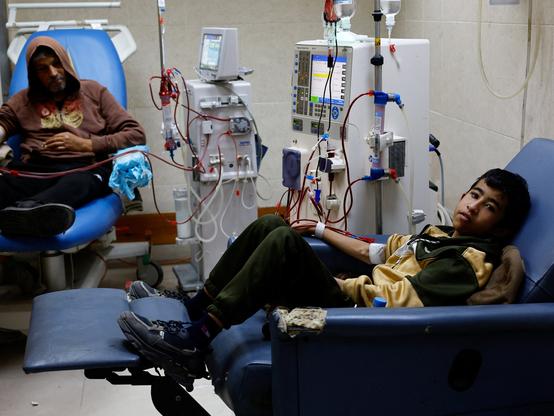
🟠 UPDATEIsraeli strikes displace families in Gaza CityGazas health system is collapsing, leaving dialysis patients, amputees, and trauma survivors without vital care due to war and shortages.📰 #Geopolitics #GeoWire
mastodon bot · 2 months ago
UN rights office warns of worsening settler violence in West Bank The U.N. human rights office on Wednesday warned of worsening violence by Israeli settlers in the occupied West Bank, and urged international action against the killing of Palestinians…
japantoday · 2 months ago
Senior Dutch politician says rightist Israelis exactly like Nazis
gdeltproject.org · 2 months ago
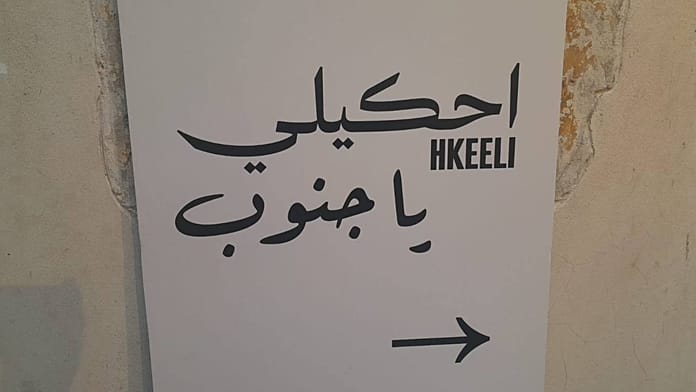
Tell me, South: Life in Lebanon explored through voices, photographs and memories While south Lebanon is still reeling from a war that has left deep scars on people and places, a new exhibition "Tell me, South" explores local emotions and feelings through peoples images, memories and letters.
euronews · 2 months ago