
Israel admits troops fired on Gaza car carrying 5-year-old girl, launches probe

Story Timeline
2 days · 3 summary articles
Israel admits troops fired on Gaza car carrying 5-year-old girl, launches probe
Israel opens criminal probes into Gaza childs killing and paramedics deaths
ContinuationIsrael strikes Syrian airbase in Idlib as US envoy condemns escalation
The Israeli military admitted on Wednesday that its troops fired on a car carrying 5-year-old Palestinian girl Hind Rajab in Gaza in January 2024, announcing a criminal investigation into the killing that sparked international outrage. The Israel Defense Forces said the probe was launched after a review found "apparent failures in the coordination of the movement of the Palestine Red Crescent ambulance" dispatched to rescue her .
Rajab, one of seven family members in the vehicle, survived the initial attack and pleaded for help over the phone for hours before an ambulance sent to rescue her also came under fire. Her body was found 12 days later in the bullet-riddled car. The IDF initially denied involvement, stating in 2024 that its forces were "not present near the vehicle or within firing range" .
The military also announced criminal investigations into four other high-profile incidents, including the 2025 killing of 15 Palestinian medics and humanitarian personnel. However, it said it would not probe three other attacks from early in the war that killed aid workers .
Palestinian Ambassador to the UN Riyad Mansour dismissed Israel’s past investigations as "not independent and not credible," telling CNN that he did not believe this probe would differ. The Hind Rajab Foundation stated that Israeli military investigations "overwhelmingly end without meaningful examination, prosecution, or punishment" .
Separately, Australia’s Foreign Minister Penny Wong condemned Israel’s decision not to pursue criminal proceedings against those involved in the April 2024 strike that killed Australian aid worker Zomi Frankcom and six other World Central Kitchen employees. Wong called the move "especially insulting" as it was announced on World Humanitarian Day, adding that it "falls far short of the accountability we expect." The IDF acknowledged "serious failures" in the strike but said commanders’ actions did not warrant criminal charges .
In a related development, Israeli opposition leader Yair Golan criticized Prime Minister Benjamin Netanyahu’s recent airstrike on Syria’s Abu al-Duhur airbase as "provocative and dangerous," warning it risks deepening a rift with Washington and drawing Israel into confrontation with Türkiye. Netanyahu framed the strike as a message to Türkiye, stating, "We will not tolerate a Turkish military entrenchment moving southward" .
Syrian Foreign Minister Asaad Al-Shaibani denied any Turkish military buildup at the base, calling the Israeli strike "unjustified" and stressing that the site was under Syrian sovereignty .
Follow us for live European news
- 2
- 1
- 1
- 1
- 1
- 1
- 1
- 1
- 1
9 further sources not geolocated
Articles

Australian anger as Israel drops World Central Kitchen deaths case Australia has summoned the Israeli ambassador in anger over the countrys decision not to pursue criminal proceedings.
aljazeera · about 2 hours ago

🔴 BREAKINGIsraeli Army Admits Killing 5-Year-Old Hind Rajab in GazaThe Israeli military admitted its troops fired on a car carrying five-year-old Hind Rajab in Gaza in 2024, launching a criminal investigation into the killing that sparked international outrage. The military also announced probes into four other high-profile incidents, including the...📰 #Military #Geopolitics #GeoWire
mastodon bot · about 2 hours ago

Israeli opposition slams Syria strike as provocative, warns of US rift Israeli opposition leader Yair Golan on Wednesday condemned the latest airstrike against Syria as a "provocative and dangerous" move that deepens the rift with Washington and risks drawing Israel into a confrontation with Türkiye, warning that Prime Minister Benjamin Netanyahu is using military force for political survival at the expense of national security.
yenisafak · about 2 hours ago
Israeli army admits firing on car in death of 5-year-old Hind Rajab The Israeli military on Wednesday admitted its troops fired on a car carrying five-year-old Hind Rajab in Gaza in 2024, saying it had ordered a criminal investigation into the killing which drew international outrage. The military also published reviews into four other high-profile incidents in Gaza, saying it was launching a criminal probe into the 2025 killing of 15 Palestinian medics and humanitarian personnel. FRANCE 24s Emerald Maxwell brings us more with this report.
france24 · about 2 hours ago
Hundreds of journalists have been killed in Gaza. Through the #GazaProject, investigative reporters from around the world came together to investigate the deaths of their colleagues. @frederikobermaier.com of @papertrailmedia.de was one of them. 🔗 Full episode: www.ftm.eu/articles/pod...
bluesky_Follow the Money · about 2 hours ago

Ex-Israeli PM slams Netanyahus Türkiye escalation as reckless Former Israeli Prime Minister Ehud Barak has condemned Benjamin Netanyahus deliberate escalation of tensions with Türkiye as "reckless and stupid." Barak accused Netanyahu of prioritizing political survival over national security, warning that the approach is alienating allies and could backfire catastrophically.
yenisafak · about 2 hours ago

Australia outraged as Israel clears soldiers over killing of aid worker in Gaza Australian foreign minister says Israels decision falls far short of the accountability we expect
independent · about 2 hours ago
Australia outraged after Israel closes investigation into killing of Amalthea aid workers Australian Foreign Minister Penny Wong on Thursday said her country is outraged after the Israeli authorities elected not to pursue criminal proceedings against those responsible for the killing of seven aid workers who were transporting humanitarian goods sent from Cyprus to Gaza in 2024. Three simultaneous airstrikes were carried out on a convoy carrying humanitarian […]
cyprus mail · about 2 hours ago

Australia says relations with Israel are "difficult" after Israel dropped a probe into the killing of aid worker Lalzawmi "Zomi" Frankcom in Gaza. The Australian was among seven World Central Kitchen staff killed in 2024 when their aid convoy was hit by an Israeli air strike u.afp.com/SHF4
bluesky_AFP English · about 3 hours ago

Qatari premier meets Hamas chief, urges end to Israeli Gaza aggression Qatari Prime Minister Sheikh Mohammed bin Abdulrahman bin Jassim Al Thani on Wednesday called for an immediate end to Israeli military escalations in Gaza during high-level talks with Hamas political chief Khalil al-Hayya in Doha, welcoming the groups acceptance of a roadmap to advance the second phase of the ceasefire agreement.
yenisafak · about 3 hours ago
🇮🇱❌🇱🇧 - The Israel Air Force alongside IDF artillery have been striking the Ali al-Taher axis, in southern Lebanon for nearly an hour.
telegram_GeoPWatch · about 3 hours ago
We do not trust Israeli judiciary says Hind Rajabs grandmother The grandmother of Hind Rajab, a five-year-old Palestinian girl killed in her familys car by Israeli forces in Gaza.
aljazeera · about 4 hours ago
Summer series | Investigating the killing of journalists in Gaza Hundreds of Palestinian journalists have been killed in Gaza – making it the deadliest conflict for reporters in decades. Were their deaths an inevitable consequence of Israels war, or has the media been deliberately targeted? As part of the Gaza Project, dozens of journalists from around the world joined forces to investigate the killings. Emma and Lise speak to Frederik Obermaier, co-founder of the Munich-based German investigative newsroom Paper Trail Media, who was involved in the reporting. He also led a follow-up investigation into allegations that an Israeli soldier of German origin shot unarmed civilians in Gaza. Obermaier discusses the resistance he faced reporting on these issues in Germany, where coverage of Israel and Palestine is particularly sensitive. The Holocaust puts a certain obligation on Germany and also on the German population. Whenever we see allegations of war crimes, I think its our duty as journalists to investigate.
follow the money · about 4 hours ago
Luftangriff in Syrien: USA warnen vor „direkter Konfrontation Israels mit der Türkei [premium] Der Machtkampf zwischen Israel und der Türkei spitzt sich zu. Israel bombardiert einen Flughafen in Syrien, um die Stationierung türkischer Soldaten zu verhindern. Dabei hatten beide Länder zunächst noch gemeinsame Interessen in Syrien.
die presse · about 4 hours ago

Israeli military admits for first time to firing on car carrying 5-year-old Hind Rajab as it opens criminal probe
news.yahoo.com · about 4 hours ago
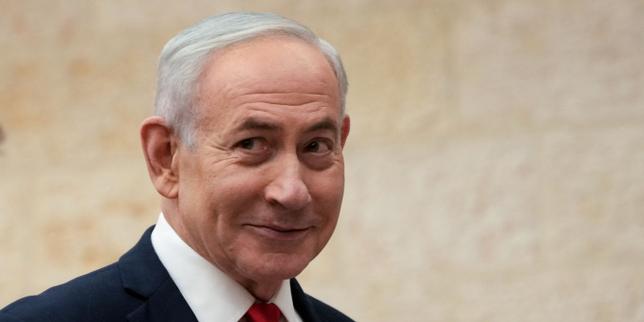
Benjamin Netanyahu says Israel sent a message to Turkey the day after Syrian airbase was bombed "We will not tolerate a Turkish military entrenchment moving southward, because it threatens us," the Israeli prime minister said. He stopped short of claiming Israeli responsibility for the strike.
le monde · about 4 hours ago
![Syrian foreign minister to Axios: Israeli bombing of airbase was unjustified Syrian Foreign Minister Asaad Al-Shaibani told Axios Wednesday that he made clear to Israel his government wasnt working with Turkey to amass a military presence at a Syrian airbase — but Israel went ahead and attacked the site anyway.Why it matters: The early Tuesday morning strike on the Abu al-Duhur airbase has heightened tensions among three close U.S. partners in the region, just as the Trump administration is trying to prevent further escalation.What theyre saying: "[T]here was no intention to establish a Turkish base there, nor to establish a permanent Turkish military presence or deploy Turkish forces at the site," Al-Shaibani said in one of eight written responses to questions from Axios.Meanwhile, President Trump told Axios in a phone call Wednesday that hed been briefed on the Israeli strike, but did not criticize it. "I cant talk about it," he said. He declined to say whether his briefing came before or after the strike. Driving the news: Israel dropped at least eight bombs on runways and hangars at the Abu al-Duhur airbase in northern Syria, about 45 miles from the Turkish border.The strike damaged the runways, which had recently been rebuilt. There were no casualties.Israel told the Trump administration the strike was aimed at preventing a Turkish military buildup at the airbase, U.S. and Israeli officials said.In a video posted on X Wednesday, Israeli Prime Minister Benjamin Netanyahu said Israel warned Syria ahead of the strike not to allow a Turkish presence at the base. "Our message was very clear: Dont. I guess they didnt quite understand the message," he said.Zoom in: But Al-Shaibani said Israel had no legitimate justification for the bombing.He said the work under way at the Abu al-Duhur airbase "was limited to rehabilitating the airfield and its facilities that were damaged during the war," for the use of the Syrian Air Force."There was no Turkish military build-up at the base in any sense that would justify such an interpretation," he wrote. "The base was, in fact, largely empty. It had not yet been fully rehabilitated or become fully operational, and the work there was still at the rehabilitation stage. "Therefore, linking the strike to a Turkish military presence at the base is not supported by the situation on the ground as it stood at the time," he added.Al-Shaibani acknowledged that Turkish military officers visited the base several days before the Israeli strike but stressed it was part of "ongoing military cooperation in the areas of training and the exchange of expertise.""Syria is currently working to rebuild its military and civilian institutions and develop their capabilities. It therefore benefits from cooperation and training programmes with a number of countries, not Turkey alone. Similar cooperation has taken place and continues with Saudi Arabia, Jordan, Qatar and Russia," he wrote."Syria is a sovereign state, and it has the right to establish relations of cooperation and alliance with any country, including Turkey", he added.Behind the scenes: Al-Shaibani said Syria and Israel were in touch in the days leading up to the Israeli strike. Syrian officials described the construction underway at the site and "made clear the base is Syrian and will remain under Syrian sovereignty and control," he said, adding that no permanent Turkish presence was planned."The nature of the activity at the base was known, and there was no basis for interpreting the rehabilitation work as the establishment of a Turkish military site on Syrian territory," he wrote.The Syrian foreign minister also said he was in contact with the Trump administration both before and after the strike. "The primary objective was to convey our position and concerns and to work to prevent escalation," he said. "We made clear to the U.S. that we do not trust Israels intentions towards Syria, and that we believe current Israeli policy, including its military escalation and actions on the ground, does not contribute to stability in Syria or the region," Al-Shaibani said. After the Israeli strike, he said, the Syrian government reached out to the Trump administration as well as to a number of other countries to protest. Syria also wanted to "contain the repercussions of the strike and prevent its recurrence.""We wanted to clarify the Syrian position, and emphasise the need to respect Syrias sovereignty and not turn its territory into an arena for settling scores or expanding the regional conflict. We want de-escalation, because continued military tension in the region serves no party and does not help build the stability that Syria and the wider region need," Al-Shaibani wrote.Whats next: Al-Shaibani said the Syrian government are still interested in reaching an agreement with Israel to de-escalate on the border between the countries. "But de-escalation cannot be the responsibility of one side alone. Israel must also reassess its policy towards Syria and recognise that continued military operations and attacks will not deliver long-term security, but will instead increase instability," he wrote."In principle, Syria does not close the door on negotiations. On the contrary, we believe that political and security solutions offer the most sustainable path towards stability."Al-Shaibani said that Syria tried to reach a security deal with Israel over the course of a full year of negotiations mediated by the Trump administration. "We made significant progress and reached a formula for the security agreement that had been agreed on paper. Israel subsequently backed away from its commitments, however, and the agreed formula was not implemented on the ground."A significant number of Israels security concerns were taken into consideration during those negotiations, he wrote. "But security cannot be one-sided. Just as we take Israeli security concerns into account, Israel must also take Syrian security concerns into account and seriously address our concerns regarding its expansionist policy and military operations inside Syrian territory."Al-Shaibani stressed that with "genuine political will" negotiations can resume and understandings can be reached "that ensure the security of both sides, respect Syrias sovereignty, and contribute to greater stability in the region rather than perpetuating the cycle of escalation."](https://images.axios.com/g2oWvAyxL6533qDhysKvAXdcJMw=/0x0:7008x3942/1366x768/2026/08/19/1787173720885.jpeg)
Syrian foreign minister to Axios: Israeli bombing of airbase was unjustified Syrian Foreign Minister Asaad Al-Shaibani told Axios Wednesday that he made clear to Israel his government wasnt working with Turkey to amass a military presence at a Syrian airbase — but Israel went ahead and attacked the site anyway.Why it matters: The early Tuesday morning strike on the Abu al-Duhur airbase has heightened tensions among three close U.S. partners in the region, just as the Trump administration is trying to prevent further escalation.What theyre saying: "[T]here was no intention to establish a Turkish base there, nor to establish a permanent Turkish military presence or deploy Turkish forces at the site," Al-Shaibani said in one of eight written responses to questions from Axios.Meanwhile, President Trump told Axios in a phone call Wednesday that hed been briefed on the Israeli strike, but did not criticize it. "I cant talk about it," he said. He declined to say whether his briefing came before or after the strike. Driving the news: Israel dropped at least eight bombs on runways and hangars at the Abu al-Duhur airbase in northern Syria, about 45 miles from the Turkish border.The strike damaged the runways, which had recently been rebuilt. There were no casualties.Israel told the Trump administration the strike was aimed at preventing a Turkish military buildup at the airbase, U.S. and Israeli officials said.In a video posted on X Wednesday, Israeli Prime Minister Benjamin Netanyahu said Israel warned Syria ahead of the strike not to allow a Turkish presence at the base. "Our message was very clear: Dont. I guess they didnt quite understand the message," he said.Zoom in: But Al-Shaibani said Israel had no legitimate justification for the bombing.He said the work under way at the Abu al-Duhur airbase "was limited to rehabilitating the airfield and its facilities that were damaged during the war," for the use of the Syrian Air Force."There was no Turkish military build-up at the base in any sense that would justify such an interpretation," he wrote. "The base was, in fact, largely empty. It had not yet been fully rehabilitated or become fully operational, and the work there was still at the rehabilitation stage. "Therefore, linking the strike to a Turkish military presence at the base is not supported by the situation on the ground as it stood at the time," he added.Al-Shaibani acknowledged that Turkish military officers visited the base several days before the Israeli strike but stressed it was part of "ongoing military cooperation in the areas of training and the exchange of expertise.""Syria is currently working to rebuild its military and civilian institutions and develop their capabilities. It therefore benefits from cooperation and training programmes with a number of countries, not Turkey alone. Similar cooperation has taken place and continues with Saudi Arabia, Jordan, Qatar and Russia," he wrote."Syria is a sovereign state, and it has the right to establish relations of cooperation and alliance with any country, including Turkey", he added.Behind the scenes: Al-Shaibani said Syria and Israel were in touch in the days leading up to the Israeli strike. Syrian officials described the construction underway at the site and "made clear the base is Syrian and will remain under Syrian sovereignty and control," he said, adding that no permanent Turkish presence was planned."The nature of the activity at the base was known, and there was no basis for interpreting the rehabilitation work as the establishment of a Turkish military site on Syrian territory," he wrote.The Syrian foreign minister also said he was in contact with the Trump administration both before and after the strike. "The primary objective was to convey our position and concerns and to work to prevent escalation," he said. "We made clear to the U.S. that we do not trust Israels intentions towards Syria, and that we believe current Israeli policy, including its military escalation and actions on the ground, does not contribute to stability in Syria or the region," Al-Shaibani said. After the Israeli strike, he said, the Syrian government reached out to the Trump administration as well as to a number of other countries to protest. Syria also wanted to "contain the repercussions of the strike and prevent its recurrence.""We wanted to clarify the Syrian position, and emphasise the need to respect Syrias sovereignty and not turn its territory into an arena for settling scores or expanding the regional conflict. We want de-escalation, because continued military tension in the region serves no party and does not help build the stability that Syria and the wider region need," Al-Shaibani wrote.Whats next: Al-Shaibani said the Syrian government are still interested in reaching an agreement with Israel to de-escalate on the border between the countries. "But de-escalation cannot be the responsibility of one side alone. Israel must also reassess its policy towards Syria and recognise that continued military operations and attacks will not deliver long-term security, but will instead increase instability," he wrote."In principle, Syria does not close the door on negotiations. On the contrary, we believe that political and security solutions offer the most sustainable path towards stability."Al-Shaibani said that Syria tried to reach a security deal with Israel over the course of a full year of negotiations mediated by the Trump administration. "We made significant progress and reached a formula for the security agreement that had been agreed on paper. Israel subsequently backed away from its commitments, however, and the agreed formula was not implemented on the ground."A significant number of Israels security concerns were taken into consideration during those negotiations, he wrote. "But security cannot be one-sided. Just as we take Israeli security concerns into account, Israel must also take Syrian security concerns into account and seriously address our concerns regarding its expansionist policy and military operations inside Syrian territory."Al-Shaibani stressed that with "genuine political will" negotiations can resume and understandings can be reached "that ensure the security of both sides, respect Syrias sovereignty, and contribute to greater stability in the region rather than perpetuating the cycle of escalation."
axios · about 5 hours ago
Guterres condemns Ben Gvirs remarks as inhumane UN Secretary General Antonio Guterres on Wednesday condemned remarks by far-right Israeli minister Itamar Ben Gvir calling for Israel to kill 30 or 40 people every night in Gaza as inhumane and dangerous. Guterres spokesman Stephane Dujarric said the UN chief condemned the comments in the strongest terms, describing them as abhorrent and scandalous. These […]
cyprus mail · about 5 hours ago
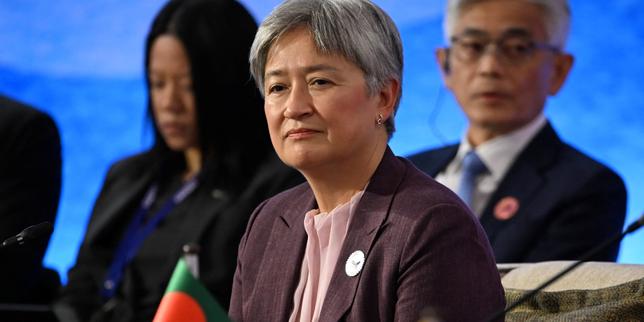
LAustralie « outrée » par la décision dIsraël de clore une enquête sur la mort de sept humanitaires à Gaza LAustralienne Zomi Frankcom figurait parmi les sept employés de lONG World Central Kitchen tués dans une frappe israélienne contre leur convoi à Gaza, en avril 2024.
le monde · about 6 hours ago

Türkiye vows continued humanitarian aid, especially for Gaza: President Erdogan President Recep Tayyip Erdoğan has reaffirmed Türkiyes commitment to providing humanitarian assistance worldwide, with a particular focus on Gaza. In a message marking World Humanitarian Day, he emphasized that Türkiye remains the leading aid provider relative to national income, rooted in its civilizational values.
yenisafak · about 6 hours ago

Hind Rajab Foundation rejects Israeli probe into girls killing The Hind Rajab Foundation said it has "no confidence" in the Israeli armys reported decision to launch a criminal investigation into the 2024 killing of five-year-old Hind Rajab and six relatives in Gaza, condemning the move as a masquerade to deflect accountability.
yenisafak · about 6 hours ago

Russian general warns Israel risks ceasing to exist as a state Lt. Gen. Apti Alaudinov told state media that Israel seeks to escalate the Middle East conflict and draw the US and NATO into the war, warning that Tel Aviv risks ceasing "to exist as a state" if it overestimates its military capabilities amid ongoing regional hostilities.
yenisafak · about 6 hours ago
Israel strikes military airbase in Syria while warning Turkey Israeli airstrikes on Syrias Abu al Duhur military airbase overnight between August 17 and 18 highlighted growing tensions between Israel and Turkey over Ankaras expanding role in Syria. Syria condemned the strikes, while the US continued efforts to de-escalate the situation. The post Israel strikes military airbase in Syria while warning Turkey appeared first on FDDs Long War Journal.
long war journal · about 6 hours ago
🇩🇪🇮🇱🇵🇸 Vice Chancellor of Germany, Lars Klingbeil, commented on the statements of Israels Minister of National Security, Itamar Ben-Gvir. "These are statements that we, the German government, cannot accept. We now need to seriously consider the possibility of imposing sanctions at the European level. Ben-Gvirs behaviour is inhumane. I support the State of Israel. But I do not support ministers like Ben-Gvir, who incite hatred, stir up violence and provoke unrest, and they have now crossed a line. The German government must clearly oppose this, and I am doing so here and now.
telegram_Intel Slava · about 7 hours ago
Israel bygger galge för hängning av palestinier Israel har börjat bygga en galge med åskådarplatser, avsedd för att hänga terrordömda palestinier. Vi skriver historia, säger den högerextrema säkerhetsministern Itamar Ben-Gvir.
svenska dagbladet · about 7 hours ago
Israel opens criminal probes over killing of 5-year-old girl sraels military will open internal investigations over its troops high-profile killings in Gaza of 5-year-old Palestinian girl Hind Rajab in January 2024 and 15 emergency and aid workers in March 2025, it said on Wednesday, although rights groups said such probes rarely lead to convictions. The military said the investigation decisions followed probes by its […]
cyprus mail · about 7 hours ago
JUST IN - Netanyahu says Israel sent message clearly to Turkey after Syria strike @insiderpaper
telegram_Insider Paper · about 7 hours ago
Israel orders inquiry into killing of 6-year-old Hind Rajab in Gaza The Israeli military announced criminal investigations into the killings of six-year-old Hind Rajab.
aljazeera · about 7 hours ago
Israeli strike on Gaza City police headquarters kills womens police chief An Israeli strike on Gaza Citys police headquarters has killed the womens police chief and several officers.
aljazeera · about 7 hours ago

Larmée israélienne reconnaît avoir tiré sur la voiture de Hind Rajab, tuée à 5 ans à Gaza Larmée israélienne a admis mercredi que ses troupes avaient ouvert le feu contre la voiture où se trouvait Hind Rajab, tuée à cinq ans en 2024 à Gaza, et annoncé louverture dune enquête criminelle, après des investigations préliminaires sur cette affaire. ...
la libre · about 7 hours ago