
U.S. military secures Strait of Hormuz oil corridor despite Iranian attacks: officials

Story Timeline
10 days · 7 summary articles
The U.S. military has established a clandestine shipping corridor through the Strait of Hormuz, enabling the daily transport of up to 10 million barrels of oil despite ongoing conflict with Iran, two U.S. officials told Axios .
The operation, coordinated by a task force based at Fort Bragg, North Carolina, allows 15 to 20 tankers to enter and exit the strait each night via a southern channel along Oman’s coast. U.S. forces organize the vessels into two daily convoys—one inbound and one outbound—with the U.S. Air Force providing protection against Iranian drones and cruise missiles. On some nights, exports have reached 15 to 20 million barrels, with one official noting that over 20 ships were scheduled to transit earlier this week, carrying approximately 15 million barrels .
A two-week U.S. Central Command campaign degraded Iran’s radar and maritime surveillance systems, leaving Tehran with only a few operational radars and spotters in fast boats, according to the officials. Iranian forces have launched drones and missiles toward suspected ship locations, but U.S. intercepts have limited damage. Earlier this week, U.S. forces shot down eight Iranian drones and two cruise missiles, one official said .
“We have been controlling the southern lane of the Strait of Hormuz for two months now. The Islamic Revolutionary Guard Corps can be a nuisance, but they don’t control the strait. We do,” a U.S. official with direct knowledge of the operation told Axios .
The operation also facilitates empty tankers entering the Gulf from the Arabian Sea to load oil from regional ports before exiting through the same route. Before the war, the strait handled 15 to 20 million barrels daily, but Iranian blockades had reduced traffic to a trickle. The current volume, while below pre-war levels, has stabilized global supply disruptions that had driven crude prices higher .
President Trump confirmed the operation’s scale in remarks to Axios on Wednesday, stating, “There is a tremendous amount of oil coming out of the Strait of Hormuz.” He added that the U.S. is not negotiating with Iran, calling such efforts “a waste of time” .
At least 15 ships have been hit by Iranian fire since the operation began, with 16 crew members injured and three killed, according to a New York Times report cited by Expressen. The U.S. has deployed around 20 warships in the Gulf of Oman, including the aircraft carriers Abraham Lincoln and George H.W. Bush .
Follow us for live European news
Articles

Cum traversează petrolierele Strâmtoarea Ormuz sub protecția SUA: „Noi controlăm zona Armata Statelor Unite a creat în secret un coridor maritim prin Strâmtoarea Ormuz, prin care sunt transportate zilnic milioane de barili de petrol, într-o operațiune menită să mențină exporturile de energie în ciuda conflictului cu Iranul.
adevarul · about 2 hours ago

Comment les Etats-Unis ont réussi à sortir du pétrole dOrmuz en secret : "Les Gardiens de la Révolution ne contrôlent pas le détroit" Larmée américaine a discrètement créé un corridor de navigation dans le détroit dOrmuz, aux mains de lIran, pour transporter des millions de barils de pétrole chaque jour, écrit le média états-unien Axios, qui cite deux responsables américains. ...
la libre · about 3 hours ago

US operates secret oil shipping route through Hormuz strait The US military has established a clandestine shipping corridor through the Strait of Hormuz, enabling millions of barrels of oil to reach global markets daily despite ongoing conflict with Iran. The operation, coordinated by a task force from Fort Bragg, allows 15-20 tankers to pass nightly using a southern channel along Omans coast.
yenisafak · about 3 hours ago
USA:s hemliga operation i Hormuzsundet USA har genom en hemlig oljeoperation lyckats öppna den södra delen Hormuzsundet.Flera miljoner fat fraktas längs den omanska kusten varje dag.Men insatsen kräver en hel del – och hotet från Iran finns kvar.
expressen · about 4 hours ago
U.S. Quietly Builds New Energy Foothold in Iraq With LNG Terminal – NaturalNews.com
gdeltproject.org · about 5 hours ago
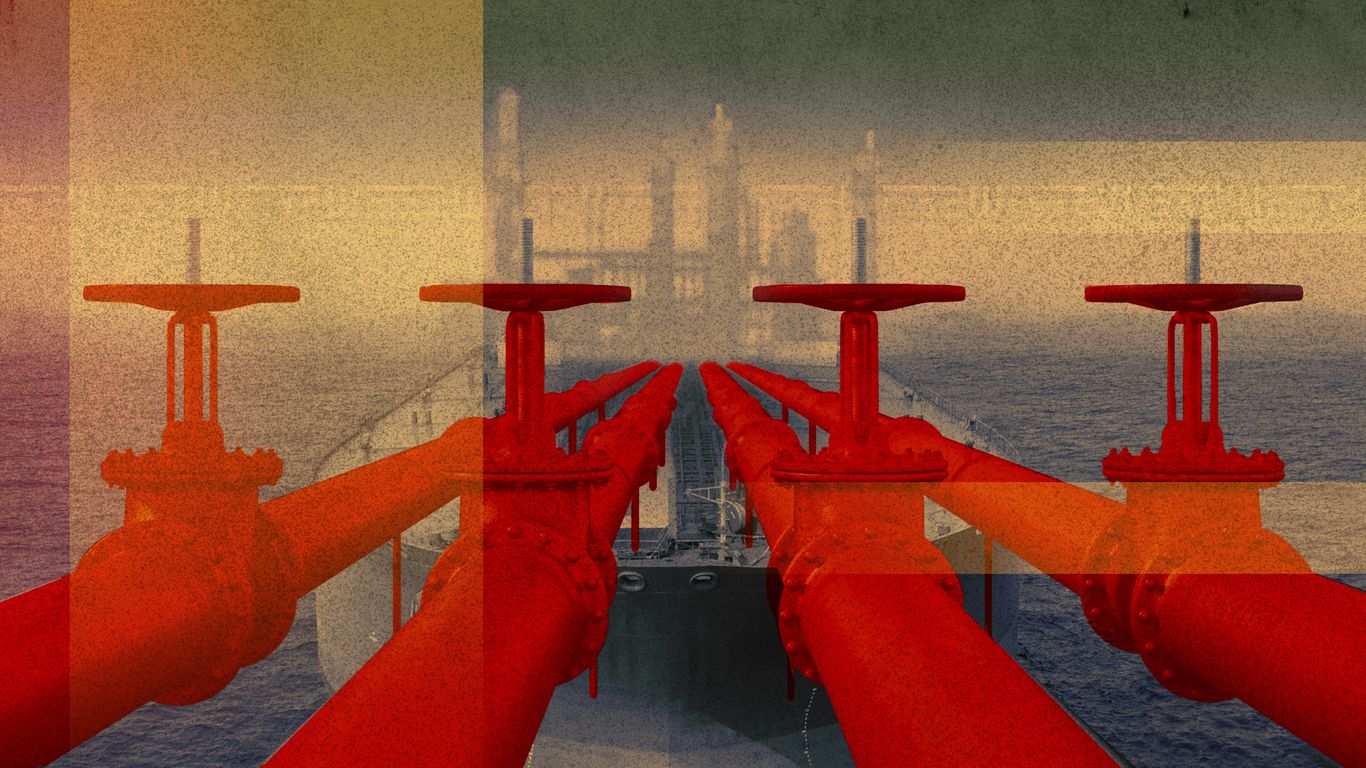
U.S. conducting stealth operation to transport oil through Hormuz The U.S. military has quietly established a shipping corridor in and out of the Strait of Hormuz to transport millions of barrels of oil each day — a notable success even as the broader war remains at a stalemate, two U.S. officials told Axios.Under the operation, which has been underway for the last several weeks, 15 to 20 tankers have entered and exited the strait each night through a southern channel along the coast of Oman. About 10 million barrels of oil a day — roughly half the pre-war volume — are being transported out of the strait and injected into the global energy market, the officials said.Why it matters: The U.S.-led operation is mitigating one of the most painful aspects of the war: the disruption to oil supplies that sent crude prices soaring. While the amount of oil coming out of the strait is still below pre-war levels, it is making a discernible difference in global supplies, officials say.How it works: The effort goes beyond escorting outbound tankers with oil on board. The U.S. military is helping empty tankers enter the Gulf from the Arabian Sea through the strait, pick up oil from countries in the region, and then exit.The full details of the operation have not been previously reported."We have been controlling the southern lane of the Strait of Hormuz for two months now. The Islamic Revolutionary Guard Corps can be a nuisance, but they dont control the strait. We do," one of the U.S. officials, who has direct knowledge of the matter, said.Behind the scenes: The task force overseeing the Hormuz effort is being run out of the Army headquarters in Fort Bragg, North Carolina. The task force is coordinating with regional Gulf partners. It creates a daily list of ships coming out of the Gulf through the Strait of Hormuz and into the Arabian Sea, as well as a list of rented empty tankers that travel from the Arabian Sea, through the strait and into the ports of Gulf countries to pick up more oil.Each night, the ships are scheduled to move in one big outbound line during a certain time slot and one big inbound line during a separate time slot. The ships then transit through the southern channel based on U.S. military guidance.The U.S. Air Force has fighter jets that protect against Iranian cruise missiles and drones. Zoom in: The operation was made possible by a recent two-week U.S. Central Command military campaign that degraded Irans radar and maritime surveillance systems, the officials said. Iran has diminished visibility of the traffic in the southern channel of the strait. Its monitoring is limited to a few radars it managed to reconstitute as well as "spotters" in small IRGC fast boats, U.S. officials say.Because the Iranians are mostly "blind," they are launching drones and cruise missiles in the general direction of where ships might be transiting.Some ships have been hit by the Iranian attacks, but many were stopped by the U.S. military. Earlier this week, for example, U.S. forces shot down eight Iranian drones and two cruise missiles, one of the U.S. officials said.State of play: U.S. officials say that over the past two weeks, 15 to 20 tankers transited in and out of the Strait of Hormuz each night through the southern channel, keeping the exports going. The average daily exports have been growing and are now close to 10 million barrels, U.S. officials say. On some nights over the last few weeks, they note, the amount of oil moving out of the Gulf was 15 to 20 million barrels. On one of the nights this week, more than 20 ships were slated to move in and out of the strait through the southern lane, with approximately 15 million barrels of oil potentially coming out, one of the officials said.What hes saying: "There is a tremendous amount of oil coming out of the Strait of Hormuz," President Trump told Axios on Wednesday.He said the U.S. is not negotiating with Iran at the moment. "They are wasting time. Its a waste of time to negotiate with them," he said. "The Iranians still have some fight left, but overall they are a shell of themselves," Trump said. Editors note: This story has been updated to clarify that 15 to 20 tankers have entered and exited the strait each night.
axios · about 7 hours ago
JUST IN - The U.S. military has quietly established a shipping corridor in and out of the Strait of Hormuz to transport millions of barrels of oil each day — a notable success even as the broader war remains at a stalemate — Axios @insiderpaper
telegram_Insider Paper · about 8 hours ago