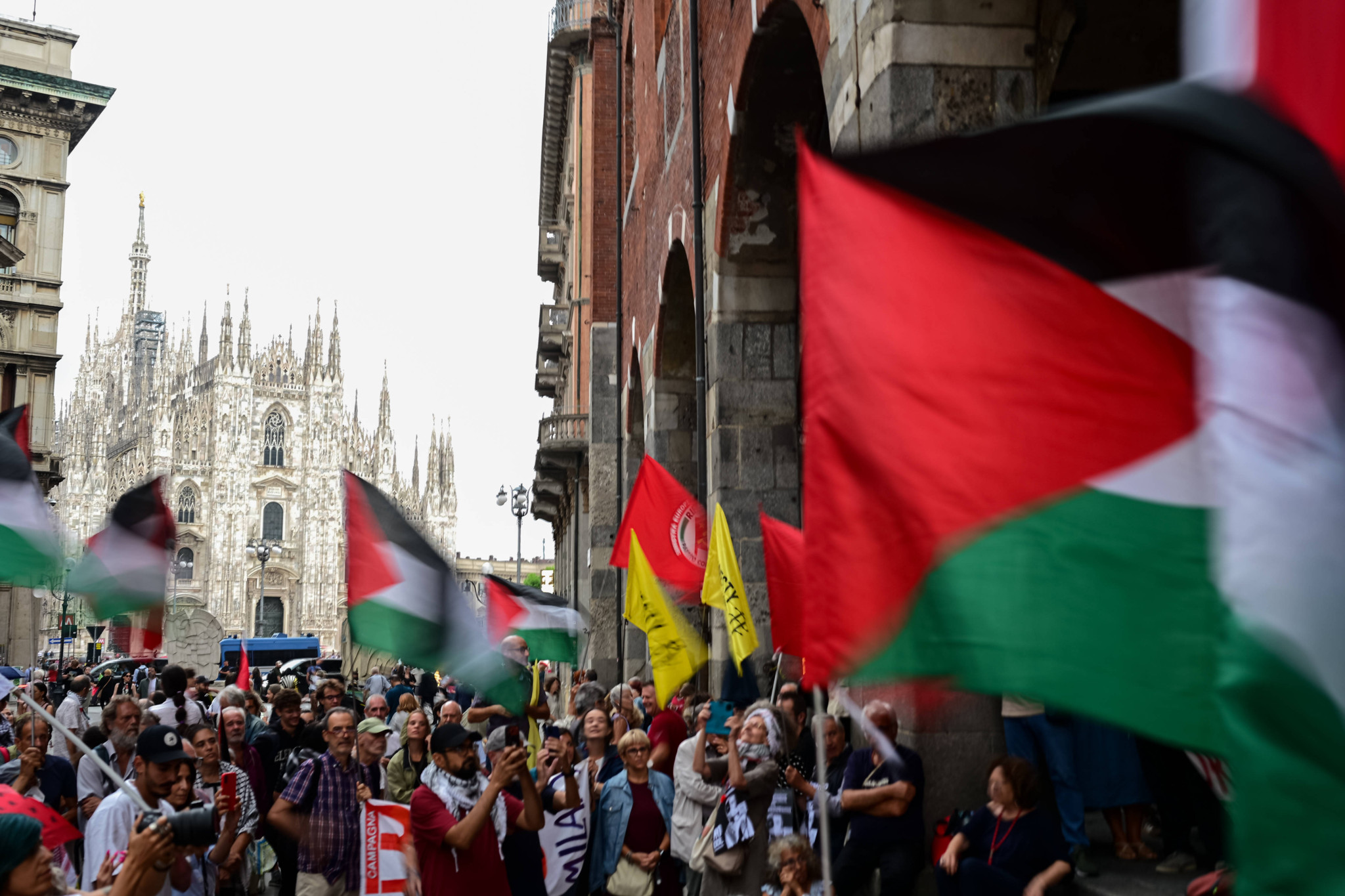
Italy's Lower House approved legislation on Tuesday strengthening the fight against antisemitism by a vote of 147-93, adopting a definition critics fear could curb criticism of Israel.
The bill, which the Senate passed in March, now becomes law. It does not create new crimes. Instead it establishes a national coordinator against antisemitism, a three-year strategy and a database to monitor incidents. The measure formally references the working definition adopted by the International Holocaust Remembrance Alliance, or IHRA.
The IHRA definition describes antisemitism as "a certain perception of Jews, which may be expressed as hatred toward Jews." Its examples include denying Jews the right to self-determination. They also include comparing Israeli policies to Nazi Germany.
Supporters say the bill responds to a sharp rise in antisemitic incidents. "Criticism of the government is absolutely accepted and encouraged," said Mario Venezia, president of Rome's Shoah Museum Foundation. "But questioning the existence of the State of Israel is another matter." Opponents argue the definition could restrict protected political speech. "The fact that this law anchors all the activities and measures it provides for to this definition constitutes the main problem for us," said Anneliese Baldaccini of Amnesty International Italy.
The CDEC Foundation's Antisemitism Observatory recorded 963 incidents in 2025. That is about 10 percent more than the previous year and more than double the 2023 level. Researchers say elevated levels continued into 2026, with 401 incidents in the first six months. The debate has intensified since Hamas's October 7, 2023, attack on Israel and the war in Gaza.
Opposition parties proposed replacing the IHRA definition with the 2021 Jerusalem Declaration on Antisemitism. That declaration draws a sharper distinction between antisemitism and criticism of Israel. The government rejected all amendments. Amnesty International's Erika Guevara Rosas called the vote "a bleak day for freedom of expression." The Union of Italian Jewish Communities welcomed the law. President Livia Ottolenghi said it strengthens "democratic defense forces in Italian civil society."
The center-right coalition and Italia Viva supported the bill. The Democratic Party and other opposition parties voted against it, though some PD reformists abstained. Democratic Party leader Elly Schlein had urged changes to the IHRA definition before the vote.