Chinese President Xi Jinping and Russian President Vladimir Putin began talks in Shenzhen on Wednesday, a day before a historic trilateral summit with US President Donald Trump in the southern Chinese city.
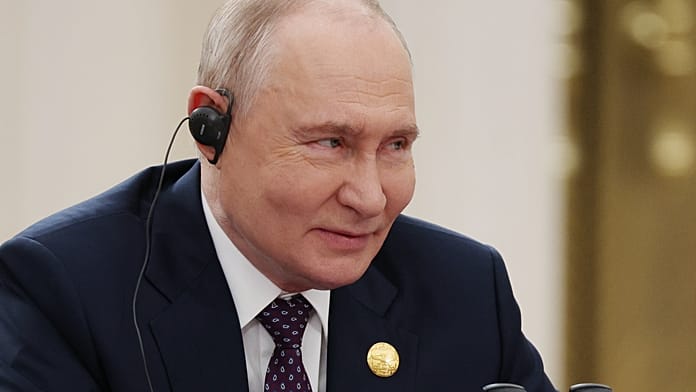
The two leaders met around midday for their fifth encounter this year, including once by video link, according to Chinese and Russian news agencies. Putin arrived in Shenzhen early Wednesday and was greeted with a red carpet, military march and dancers ahead of the Asia-Pacific Economic Cooperation (APEC) summit. Xi's chief of staff, the fifth most powerful official in China, waited on the red carpet with an honor guard.
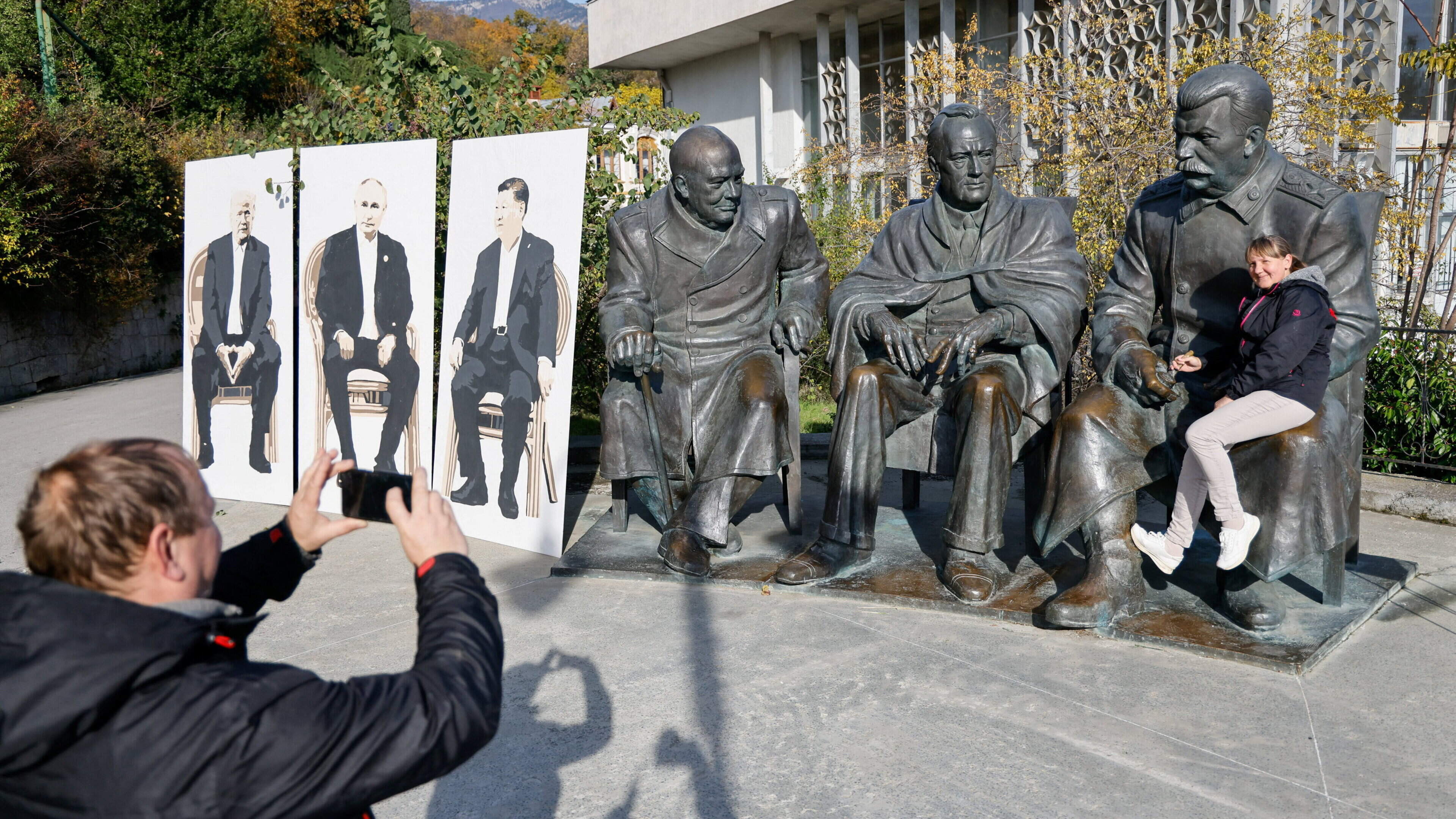
The trilateral meeting on Thursday marks the first time the three leaders have gathered, drawing comparisons to the 1945 Yalta Conference that formalized spheres of influence. The summit has triggered fears that the three men could decide the fate of Ukraine over the heads of Kyiv and Europe. Washington had signalled that Ukraine was not expected to be addressed, but Trump later said it would be. Xi regards the war as not China's concern.
China has said only that the leaders would hold "in-depth exchanges on safeguarding world peace and promoting strategic stability in major-power relations" on the sidelines of the APEC meeting. According to Washington, the Iran war and nuclear disarmament are also on the table after a US-Russia bilateral treaty on atomic weapons expired in February. Xi and Putin were expected to discuss energy and finance and then foreign policy including Ukraine and North Korea, Russian officials said.
Addressing the APEC gathering, Putin said he expected the trilateral summit to be "highly useful." "At a time when military-political risks are on the rise, what is desperately needed is unity rather than division... and dialogue rather than ultimatums," he said. He argued that Western sanctions imposed since Russia's 2022 invasion of Ukraine had failed, saying they were "not capable of fully stopping growth or destroying the economies of the competition."
Xi called for greater international cooperation on artificial intelligence and free trade as he opened the event. "Starting by lowering tariffs, expanding access and exploring regulations and management standards, China will conduct deep-seated reform," he said. He urged support for "free and open trade" and said China would lower tariffs and further open its markets while standing up against protectionism and unilateralism.
Trump was still in the Philippines on Wednesday, where a day earlier he met leaders of the Quad — Australia, Japan and India — for the first time in his second term. He said he was eyeing one-on-one talks with Putin and North Korean leader Kim Jong Un at his next stop in Shenzhen, saying Kim "would like" to meet in China. US Secretary of State Marco Rubio stopped short of confirming the meeting with Kim.
China has long maintained that the US and Russia should reduce their giant nuclear arsenals before it agrees to talks on its smaller stockpile. According to the Stockholm International Peace Research Institute, China has around 600 nuclear warheads, while the US and Russia each have more than 5,000. Kurt Tong, a former US diplomat in East Asia now with the Asia Group, said Putin was the clear beneficiary of the summit. It grants him the legitimacy of a head of state on par with China and the US.
Washington announced further restrictions on China's access to advanced AI chips from companies such as Nvidia, and China has pledged to retaliate. On Tuesday, Trump said the United States would catch China in rare-earths production "within 10 months." A trade truce reached between Trump and Xi at last year's APEC summit in South Korea expires in January.