Thousands of people protested across Poland on Thursday, demanding the liberalization of abortion laws under Prime Minister Donald Tusk’s government.
Demonstrations took place in at least 28 cities, including Warsaw, Krakow, Lodz, and Poznan, under the slogan “Red Card for Abortion.” Protesters marked the sixth anniversary of a 2020 Constitutional Tribunal ruling that banned abortions in cases of severe fetal abnormalities, leaving Poland with one of Europe’s strictest laws. Currently, abortion is legal only in cases of rape, incest, or when the pregnancy threatens the woman’s life or health.
The protests followed the lower house of parliament’s approval on Tuesday of two bills: one partially decriminalizing assistance with abortions and another allowing terminations for severe fetal abnormalities. However, activists dismissed these as insufficient, calling them “crumbs” compared to Tusk’s 2023 election promise of broader reform. “We are not satisfied with these changes,” Maja Pietruszewicz, an organizer, told *Gazeta Wyborcza*. “We are still in the same place as under the PiS government.”
President Karol Nawrocki, a conservative, is expected to veto the bills, despite his spokesperson suggesting he is open to dialogue. Protesters accused Tusk’s coalition of delaying action until a year before the next election. “The government’s promises act as disinformation,” said Zofia Marcinek of the Abortion Dream Team, adding that women often seek help too late after hearing officials claim access has improved.
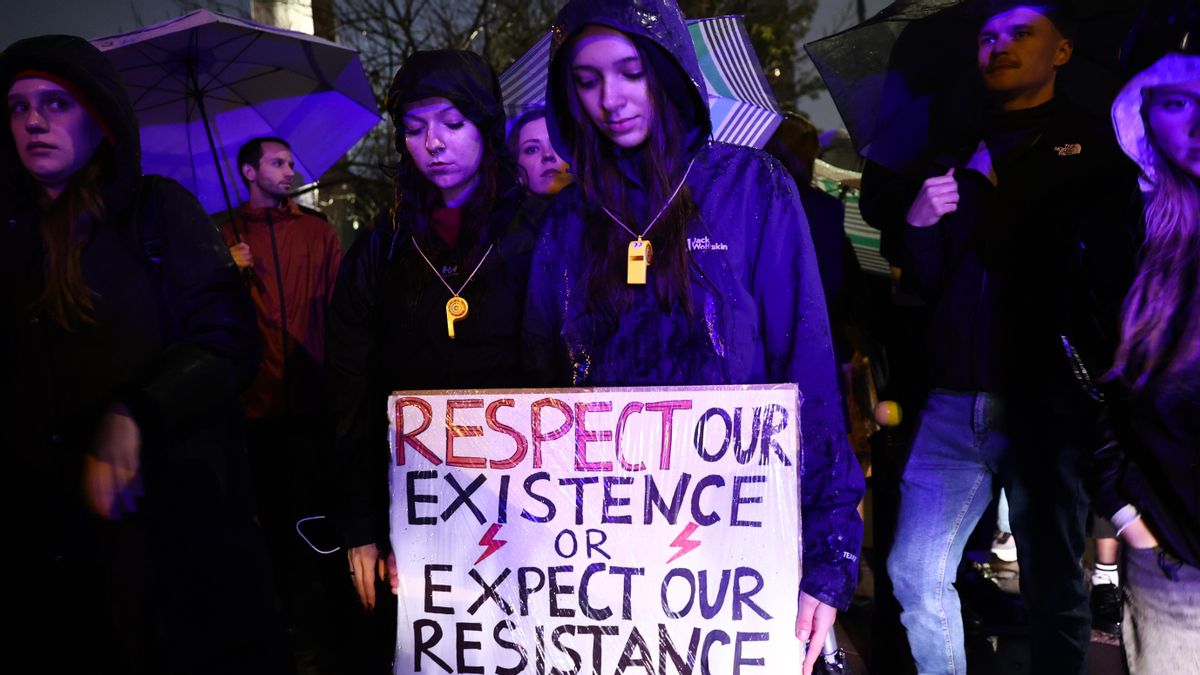
In Warsaw, about 1,000 demonstrators gathered in the rain, chanting slogans like “My body, my choice” and “Women’s hell continues.” Some carried signs reading “Not your body, not your choice” and “You won’t silence us with scraps.” Counter-protests by nationalist groups were reported in cities like Poznan and Wroclaw.
Polish hospitals recorded 573 abortions in the first half of 2026, up from 452 in all of 2022, according to the National Health Fund. Activists estimate tens of thousands of abortions occur annually outside hospitals, often using pills obtained abroad. Justyna Wydrzyńska, an activist, was convicted of community service for providing abortion pills to a domestic violence victim, while doctors face up to three years in prison for assisting in terminations under current law.