computer weekly
Digital sovereignty not smart, says The Hague CIO Policymakers calling for Europe to be as independent of US technology as possible are unrealistic, says the chief information officer of The Hague, the Netherlands' seat of government.
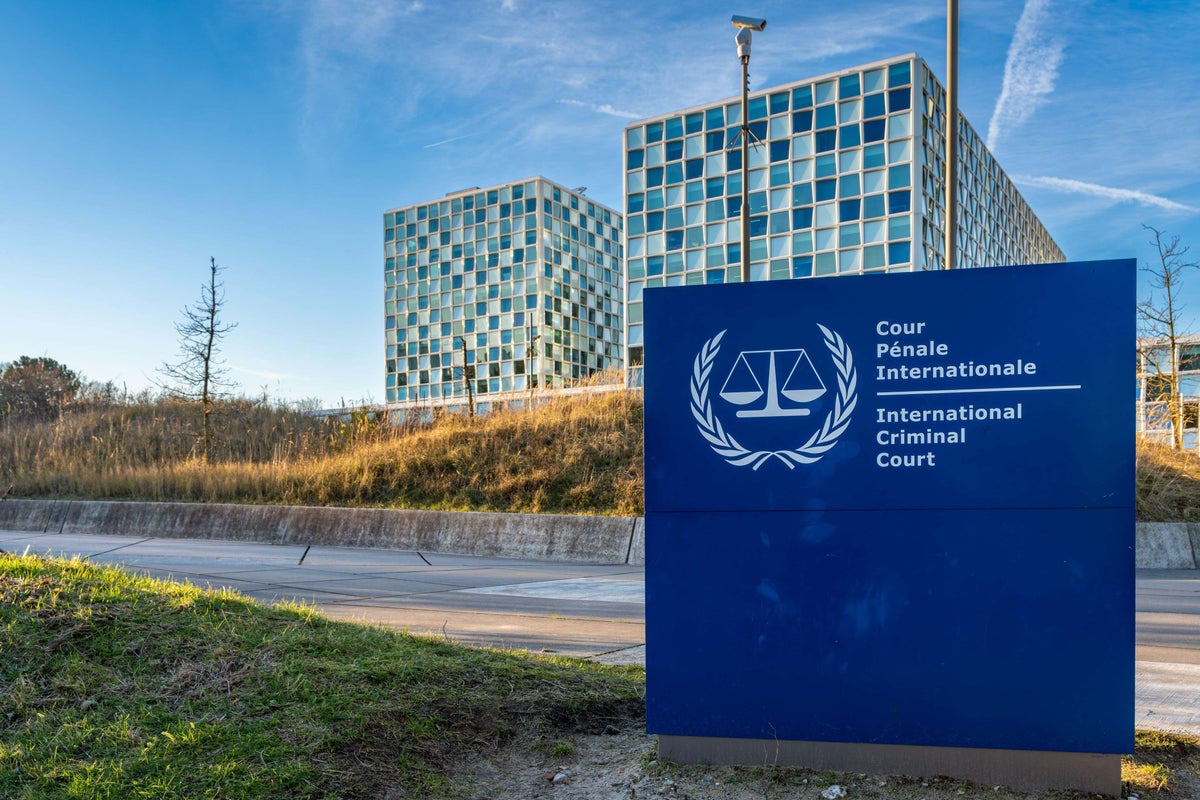
The Hague, host of the International Criminal Court (ICC), has become a flashpoint for European alarm about US domination of the software, cloud and AI services on which the continent depends.
Speaking in his municipal office four days before the US imposes sanctions on the ICC, Dennis Ravensbergen faces the practical consequences of that alarm. Earlier US sanctions on court officials and judges, in retaliation for investigations of alleged crimes in Afghanistan and Palestine, had already helped rally Europe to the cause of digital sovereignty. The court was forced to take emergency measures to keep operations running if sanctions obliged its predominantly American IT suppliers to pull the plug.
Trump effect
The Trump administration has stoked European indignation and fear with a succession of goading and threats in retaliation for European regulation and taxation of US technology firms.
That indignation and fear landed on Ravensbergen's desk in January when The Hague's councillors voted unanimously to make it a priority to establish digital independence "from countries that are partners but may become threats". A 10-year digital transformation strategy that Ravensbergen had helped architect and put before the council in 2025 gave it insufficient attention, councillors decreed.
They demanded a plan to get "the greatest possible degree of digital independence" from countries on which the city no longer wished to depend. That effectively means the US suppliers on whose systems the city runs.
Ravensbergen already had an extensive transformation programme under way. The i-Visie 2035 strategy that councillors voted on in January envisages digitising public services, re-engineering them around AI and replacing fragmented bespoke systems with standard cloud software. It promises to make The Hague a smart city: a nervous system of sensors on buildings, roads and utilities, with drones and robots doing maintenance and a central system to control it all.
Residents will contribute to urban works and spaces through an interactive digital twin. There will be wholesale process re-engineering and retraining for 13,000 staff. Cyber security found wanting by independent audits is to be repaired, data standardised and integrated, and systems joined with those of the other three largest Dutch cities, the G4. Microsoft is a supplier of choice.
The sovereignty mandate complicated that transformation. Requiring independence from foreign suppliers was like "changing the course of an oil tanker before the harbour is built", Ravensbergen and the municipal executive wrote in June. They argued that European alternatives were unavailable because the EU had been more concerned with regulating technology than building it. Change would take years and the alternatives would not be equivalent. Still, the executive agreed to pursue it.
"That's not really Smart, is it?" Ravensbergen says of the "as sovereign as possible" mandate. "That's not specific, measurable, acceptable, realistic, time-bound [Smart]. Because how sovereign is sovereign? When is it sovereign enough? Do you only want to have products from Europe? But we don't have all products from Europe yet."
Working it out
Policymakers and executives are still working those questions out, he says, even nationally. The G4 were doing studies ahead of another debate at the end of the year. Politicians, he says, are struggling with the question too.
Why, then, had sovereignty not been a priority when i-Visie appeared in September 2025, just four months before the January vote?
"Because the world has changed," says Ravensbergen. Two or three years ago, replacing on-premise systems with US cloud services had seemed logical. Now, concern about autonomy is growing exponentially.
Pressed on what has changed, he says it is not for the better. Pressed again, he adds that it was Donald Trump's return to the US presidency in January 2025, which caused pressure for digital sovereignty to grow.
"From that moment on, I was getting more questions about this. From my organisation, from people on the street, at birthday parties, from people [when] you go to a seminar or an event."
Where once much that came from the US was trusted, now people discuss it – the US had stoked concerns people had already about other countries. "Unfortunately, you cannot trust anybody in the world nowadays," says Ravensbergen.
He nevertheless agrees that digital independence is a distraction from the things he would rather be doing: delivering useful IT services to the citizens of the city, and especially those who really need municipal help.
Asked why the US cannot be trusted, Ravensbergen laughs. A long, searching pause follows. His PR assistant mumbles something. "It's, it's, it's, it's, it's, erm ..." says Ravensbergen.
He then states that the municipality has never had an issue with a US company "or whatever", but sovereignty is a public discussion and very much in the news. Then there is the ICC – a rare example, but something the municipality must consider. What other examples show that the US cannot be trusted? "I don't know them," Ravensbergen says as he laughs. "That's the most funny thing, isn't it?"
He adds that risk is an equation: probability times impact. The odds of US sanctions against The Hague are not very big, but the impact would be.
The Hague, a self-styled "international city of peace and justice", hosts numerous other courts and tribunals besides the ICC, as well as the Organisation for the Prohibition of Chemical Weapons, a clutch of NATO agencies, and Europol.
Just as Ravensbergen has been trying, "with great difficulty", he says, to keep Chinese hardware out of the component supply chains of the municipality's datacentres, councillors want the same for US systems. The US has meanwhile appeared to be trying to drive its suppliers out of the ICC's technology supply chain, using dependence on its technology as a geopolitical weapon.
The ICC consolidated its systems on US suppliers after a major cyber security breach in 2023. The US sanctions on its staff later showed how technological dependence made the court vulnerable to political interference. US cloud providers gave the court three days' notice that services would stop, Giler tells the conference, with Microsoft its primary supplier at the time.
It's not that we want to get rid of the American suppliers, but we want to think about what kind of products we want to use for what kind of data
Dennis Ravensbergen, The Hague
The ICC subsequently cut dependence on US and affiliated suppliers almost in half. A cessation of IT services would halt court proceedings, witness protection schemes and field operations investigating war crimes. Alternatives were limited because the sanctions had a "chilling effect" on other suppliers.
The Council of Europe reported that suppliers "over-complying" with sanctions and over-reliance on Microsoft were the ICC's problems. For Ravensbergen, the municipality's dependence on US suppliers remains an operational necessity. The Hague is "very much dependent" on them. It needs them to keep services running.
"It's part of the job of a CIO to find a balance. Those are my suppliers, and I have good relations with most of them. On average, they're delivering quite good products that we are very happy to use, that help us deliver good services to the citizens of the municipality of The Hague."
He has no plans to abandon Microsoft Azure or 365, although the G4 has agreed to test whether Amsterdam municipality's home-grown AI assistant can replace Copilot. His department mapped 29 major US suppliers and possible substitutes.
"Not that many things are being produced in and by European countries. So, there's no alternative, both in quantity and quality, to a lot of products that come from outside Europe. What you want is one thing, but what is available is another," says Ravensbergen.
For now, The Hague is classifying processes, data and systems to determine which are sensitive enough to require a more autonomous platform, using a methodology the G4 developed. It is looking for European alternatives that might become viable in years to come, if not now. Plans to migrate services to US clouds are meanwhile proceeding.
"The discussion we're having internally is about what kind of data do [we] want to keep in what place," Ravensbergen says. "Financial or medical data or more sensitive data, we want to have preferably on a European platform. It's not that we want to get rid of the American suppliers, but we want to think about what kind of products we want to use for what kind of data.
"And that's going to result in, hopefully, in the next couple of years, the development of a more European market where more IT products and services come available so that we can choose [and so] that we can switch," he says.
Dutch national policy and the European Commission's technology sovereignty package take a similar approach. The European Commission proposed building European alternatives, rather than purging foreign suppliers. Sovereignty means the option to choose – it starts with mapping dependencies and risks. Ravensbergen is particularly worried about technology from states running offensive cyber programmes.
EU tech sovereignty chief Henna Virkkunen insisted before the European Parliament that the sovereignty package was not protectionist, but Dutch technology companies have called for it to be so. The package itself offered patches for a failed single market that has left the European tech industry weak. Meanwhile, the European Commission's programme of single market repair is ongoing.
Read more about reducing US supplier dependence in the Netherlands
Dutch Surf tests practical route out of Big Tech dependency.
Netherlands designs sovereign cloud but concedes hardware dependency.
Dutch universities call for reduced dependence on Big Tech.
about 15 hours ago