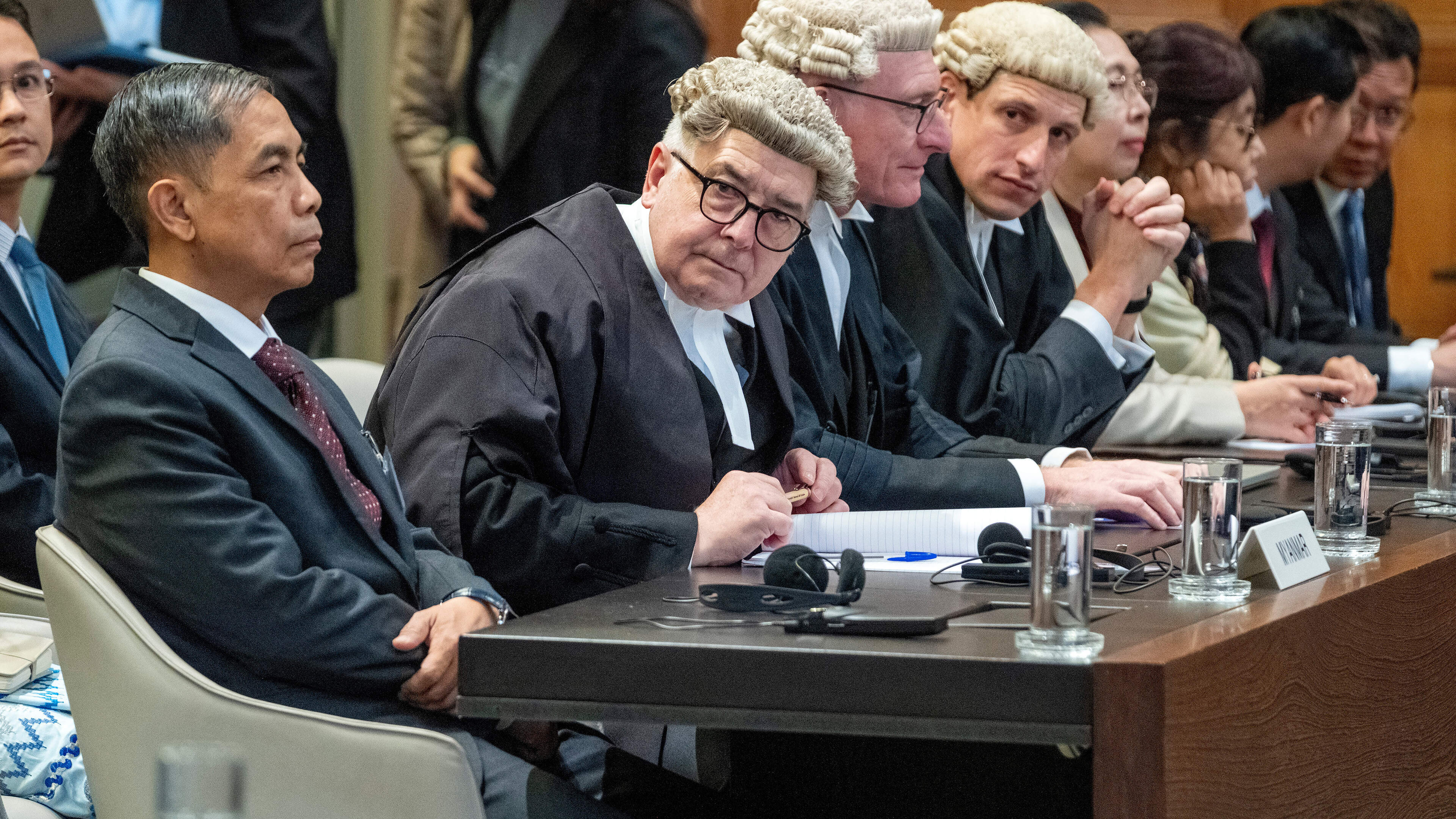
The International Court of Justice ruled on Thursday that Myanmar committed genocide against its Rohingya Muslim minority during a 2017 military crackdown. [1]
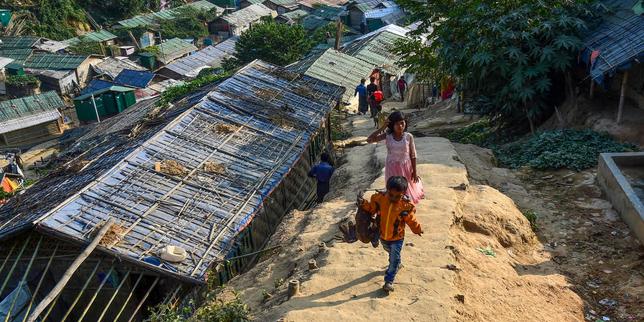
The Hague-based court voted nine to six to find the state directly responsible for the crime, the first time it has held a country liable for committing genocide rather than failing to prevent it. [2] The case was brought by The Gambia in 2019. [1] It focused on military operations in 2016 and 2017 when Aung San Suu Kyi's government was in power. [2] Judges found that "clearance operations" in Rakhine state killed about 10,000 Rohingya and displaced nearly one million to Bangladesh. [3]
The court determined that the campaign was aimed at destroying the Rohingya community in whole or in part. [4] It cited Facebook posts by Myanmar's military as evidence of hate speech against the Muslim minority. [5]
Myanmar's government dismissed the ruling as "unfair." Khine Khine Soe, spokesperson for President Min Aung Hlaing, noted that not all 15 judges agreed with the decision. [2] The Foreign Ministry said the evidence failed to meet the standard of proof for genocide and claimed the military conducted limited counter-terrorism actions against the Arakan Rohingya Salvation Army. [2]
Rohingya activists welcomed the verdict. Nay San Lwin of the Arakan Rohingya National Council called it the "first victory on our path to our final one: returning to our homeland and living there in peace and dignity." [2] Myanmar's shadow National Unity Government also welcomed the ruling. [2] Some Rohingya exiles expressed mixed feelings, fearing the verdict could stoke ultra-nationalistic sentiments and reprisals against Muslims in Myanmar. [6]
Legal experts said the ruling could strengthen South Africa's genocide case against Israel over the war in Gaza. [7] They said the judgment establishes a precedent that genocidal intent can coexist with a military objective. [7] Mark Klamberg, a professor of international law at Stockholm University, said the court clarified three criteria for determining intent. [8] They are the number of people affected, the area controlled by the accused party, and the importance of the targeted group to the whole. [8] The ruling may also affect a case brought by Nicaragua against Germany over arms supplies to Israel. [8]
The European Union praised the court's decisive role in upholding the rule of law at the international level. [8] The court ordered Myanmar to pay reparations and allow Rohingya refugees to return, but it has no police force to enforce its decisions. [8] About 1.2 million Rohingya refugees currently live in crowded camps in Bangladesh's Cox's Bazar district. [2]