
Netanyahu finalizes Lebanon withdrawal plans as US-mediated talks open

Story Timeline
3 months · 7 summary articles
Israeli Prime Minister Benjamin Netanyahu convened senior defense officials on Sunday to finalize plans for a phased withdrawal from two villages in southern Lebanon, as US-mediated talks between Israeli and Lebanese military officers opened in an effort to define a Hezbollah-free zone ahead of the redeployment. The consultations came as Netanyahu reaffirmed that Israeli troops would remain in southern Lebanon “for as long as necessary,” while insisting that Christian villages in the area had asked to be annexed by Israel for protection against Hezbollah—a claim immediately denied by local leaders.
Speaking to Fox News’s *The Sunday Briefing* on 5 July, Netanyahu stated that “some Christian villages in Lebanon, some of them have actually asked to be annexed to Israel, because we protect them against the Hezbollah, Hezbollah fanatics who want to kill them.” The prime minister added that Israel extends the same protection to Christians elsewhere. However, Hanna al-Amil, mayor of the Christian village of Rmeish, told Lebanon’s NNA broadcaster that the claim was “absolutely out of the question.” He noted that 15 Christian towns had issued a joint statement two days earlier rejecting the allegations and reaffirming their “loyalty to their national identity” and attachment to the Lebanese flag. Since the war began on 2 March—triggered by Hezbollah rocket fire in retaliation for the killing of Iran’s supreme leader in joint US-Israeli strikes—southern Lebanon has endured Israeli airstrikes, ground incursions, and evacuation orders. Despite the damage, most villages have remained inhabited, with residents refusing to leave their homes, churches, and farmland.
On 6 July, Israel’s public broadcaster KAN reported that Israeli and Lebanese officers had opened US-mediated negotiations to establish clear criteria for a Hezbollah-free zone before Israel begins a trial withdrawal from the two villages. The contacts aim to prevent misunderstandings that could hinder implementation, particularly after earlier disputes over defining such zones. An unnamed Israeli official told KAN that Israel has not yet started withdrawing and that the move is expected to begin “in the coming weeks” if arrangements are completed. Under a US-mediated framework agreement signed on 26 June, Israel agreed to a gradual withdrawal, with further redeployments contingent on the Lebanese army assuming full security responsibility and the disarmament of non-state armed groups, a reference to Hezbollah.
The planned withdrawal follows a week in which Netanyahu also dismissed reports that the US had restricted Israeli military operations in Lebanon, calling them “fake news.” He reiterated that there would be no reconstruction in Gaza until Hamas is fully disarmed, diverging from President Trump’s sequencing plan. Meanwhile, Israeli Chief of Staff Eyal Zamir, visiting the occupied Beaufort Castle in southern Lebanon, threatened a “swift offensive” in case of any ceasefire violation and urged the Lebanese army to disarm Hezbollah fighters.
The developments unfold against a backdrop of escalating regional tensions. On 6 July, Iranian President Masoud Pezeshkian criticized international institutions for failing to prevent Israeli aggression while providing political support to Tel Aviv, speaking at a Tehran conference commemorating former Supreme Leader Ali Khamenei, who was killed in the US-Israeli strikes earlier this year. In Europe, Irish Prime Minister Micheál Martin condemned what he described as “shocking atrocities,” particularly against children, women, and innocent civilians, and called for new EU sanctions against Israel ahead of next week’s foreign ministers’ meeting in Luxembourg. EU Commission President Ursula von der Leyen also signaled forthcoming proposals, citing Israel’s expanded settlements in the West Bank as “utterly unacceptable” and warning that they undermine the viability of a two-state solution.
In Israel, former General Gadi Eisenkot has emerged as Netanyahu’s chief rival ahead of upcoming elections, challenging the prime minister’s bid to survive as the country’s longest-serving leader. The political landscape is further complicated by Netanyahu’s government’s decision to defy a Supreme Court ruling on media regulation, raising fears of a constitutional crisis over judicial independence.
Follow us for live European news
- 1
- 1
- 1
- 1
- 1
1 further source not geolocated
Articles

Iran rejects UK-France Hormuz statement, warns against foreign forces Irans deputy foreign minister has rejected a joint UK-France statement on the Strait of Hormuz, warning against any foreign military presence in the waterway and insisting that security rests with the littoral states. He called the statement an adventurism that would bear consequences.
yenisafak · about 2 months ago
Israeli army chief threatens Lebanon with swift offensive from Beaufort Castle Israeli Chief of Staff Eyal Zamir has threatened Lebanon with a swift offensive in case of any ceasefire violation, during a visit to the occupied Beaufort Castle in southern Lebanon. He described the site as a strategic point and urged the Lebanese army to disarm Hezbollah fighters.
yenisafak · about 2 months ago
Netanyahu denies US restricted Israeli strikes in Lebanon Prime Minister Benjamin Netanyahu has dismissed reports that the US restricted Israeli military operations in Lebanon, calling them fake news. He also stated that there will be no reconstruction in Gaza before the enclave is disarmed, diverging from President Trumps sequencing plan.
yenisafak · about 2 months ago

Iran War Disinformation: How AI Deepfakes Fuel ChaosAI deepfakes are flooding X with Iran war disinformation, eroding trust in digital evidence. Learn how AI fuels wartime chaos. #WorldNews #ForeignPolicy
mastodon bot · about 2 months ago

Trumps War Comment Fuels Iran Tension DebateExplore Trumps cryptic war comment and its impact on rising Iran tensions. Is this fueling debate or just geopolitical noise? Find out more here. #WorldNews #ForeignPolicy
mastodon bot · about 2 months ago
A US congressional district in Israel! Even Americans are confused about whether US Ambassador to Israel Mike Huckabee represents the United States or Israel. Indeed, in an interview with Huckabee last February, Aidan McLaughlin of Vanity Fair asked: "Theres a perception among some on the right in the United States that you act more like Israels ambassador than Americas. Whats your response to that charge?" In the Vanity Fair interview, Huckabee attributed the shifting sentiments against Israel in American public opinion, especially
yenisafak · about 2 months ago
Irland trycker på för hårdare tag mot Israel EU:s ordförandeland Irland trycker på för hårdare tag kring Israels agerande på Västbanken, i Gaza och Libanon.EU-kommissionen lovar komma med alternativ.
svenska dagbladet · about 2 months ago
Netanyahu convenes security meeting to approve Lebanon withdrawal points Prime Minister Benjamin Netanyahu has convened a high-level security meeting to approve planned withdrawal positions for Israeli forces in southern Lebanon under a US-mediated framework. The talks focused on identifying areas for an initial withdrawal phase and Hezbollah-free zones, with Israel linking the move to Lebanese army deployment and international monitoring.
yenisafak · about 2 months ago

Irans Resilient Axis: A Strategic AssessmentExplore Irans strategic resilience and challenge narratives of US dominance. Assess Irans axis and its impact on geopolitical stability. #WorldNews #ForeignPolicy
mastodon bot · about 2 months ago

Israel-Iran Tensions: The Role of Evangelical OutreachExplore the role of evangelical outreach amidst Israel-Iran tensions. Discover faith, resilience, & community support during turbulent times. Learn more no #WorldNews #ForeignPolicy
mastodon bot · about 2 months ago
Israeli intelligence rejected backing Iran nuclear claim: Report Israeli intelligence agencies refused to endorse Prime Minister Benjamin Netanyahus assertion that Irans nuclear program had been completely destroyed, rejecting pressure from his office to validate assessments that officials deemed professionally unsustainable following the 12-day war in June.
yenisafak · about 2 months ago
Egyptian, Palestinian ministers discuss Gaza, authority support Egyptian Foreign Minister Badr Abdelatty and Palestinian Prime Minister Mohammad Mustafa discussed Gaza developments and Palestinian Authority support during a phone call, emphasizing the need for humanitarian access and international financial backing ahead of a July donor conference.
yenisafak · about 2 months ago
Israeli strike kills Palestinian in Gaza as army continues demolitions Gazas Health Ministry confirmed new fatalities on Saturday as Israeli forces pressed ahead with demolitions and artillery strikes across the enclave, while the Palestinian presidency warned that Tel Avivs daily killing policy risks sparking an uncontrollable explosion of tensions.
yenisafak · about 2 months ago
Turkish president warns war-addicted Israel must not plunge region into bloodshed President Recep Tayyip Erdogan said Israels "war-addicted" government must not be allowed to drown the region in bloodshed again, speaking alongside Pakistani Prime Minister Shehbaz Sharif after talks in Istanbul on Saturday where they addressed regional security and reaffirmed their $5 billion bilateral trade target.
yenisafak · about 2 months ago
Lebanon says 400,000 displaced returned south amid reconstruction push Lebanese Social Affairs Minister Haneen El Sayed said Saturday that approximately 400,000 displaced people have returned to southern Lebanon, though many remain unable to access their homes due to widespread destruction, while the government prepares a reconstruction plan and appeals for international funding.
yenisafak · about 2 months ago
Iranian president slams world silence on Israeli actions Masoud Pezeshkian says international institutions have failed to prevent Israeli aggression while providing political support to Tel Aviv, speaking at a Tehran conference commemorating former Supreme Leader Ali Khamenei who was killed in US-Israeli strikes earlier this year.
yenisafak · about 2 months ago
Ben-Gvir cancels UN police summit trip amid legal pressure Israeli National Security Minister Itamar Ben-Gvir has canceled his planned trip to a UN police chiefs conference in New York this week amid mounting legal pressure, as human rights groups filed complaints with US authorities alleging his involvement in war crimes and systematic abuse within Israels prison system.
yenisafak · about 2 months ago
Jailed Gaza hospital director faces life threat, rights group says Physicians for Human Rights Israel said Saturday that Hussam Abu Safiya, director of Kamal Adwan Hospital, is suffering from severe physical abuse and breathing difficulties that pose an immediate threat to his life, calling for his immediate release from Israeli detention.
yenisafak · about 2 months ago
Sverige bör inte godta diskrimineringen I praktiken riktas anti-Israel-bojkotter ofta mot allt med koppling till Israel. Det drabbar även judar som inte är israeler och människor utan koppling till Israels politik.
svenska dagbladet · about 2 months ago
Sisi rules out Israel normalization without Palestinian state Egyptian President Abdel Fattah el-Sisi told attendees at a military facility inauguration on Saturday that popular normalization with Israel remains impossible without a just peace ending the occupation and establishing an independent Palestinian state, warning that lasting stability requires restoring rights to their rightful owners.
yenisafak · about 2 months ago
Israeli cabinet defies High Court ruling on broadcast regulator The Israeli cabinet approved a declaration on Sunday rejecting the authority of the Council of the Second Authority despite a High Court ruling permitting the broadcasting regulator to continue operating, a move widely seen as risking a constitutional crisis.
yenisafak · about 2 months ago
Israel, Lebanon hold talks on trial withdrawal from border villages Israeli and Lebanese military officers have opened US-mediated talks to establish clear criteria for a Hezbollah-free zone ahead of a planned trial withdrawal from two villages in southern Lebanon, as Prime Minister Benjamin Netanyahu convened senior defense officials Sunday to discuss implementation timelines and security arrangements.
yenisafak · about 2 months ago
Israel to discharge 10,000 reservists by July amid budget crisis The Israeli military is preparing to discharge approximately 10,000 reservists by the end of July as mounting financial pressures and a severe budget shortfall force reductions in active duty personnel across regional defense units and military headquarters, local media reported on Sunday.
yenisafak · about 2 months ago

How Close Is Iran to a Nuclear Weapon? Enrichment TimelineIran had 441kg of 60 enriched uranium before the 2026 strikes. Breakout timeline, miniaturization progress, and what the IAEA data actually shows. #WorldNews #ForeignPolicy
mastodon bot · about 2 months ago
Israeli Supreme Court orders deadline for 14 detained Gaza doctors Physicians for Human Rights said Israels top court has given the government until Tuesday to respond to a petition seeking the release of 14 Palestinian doctors held without charge, including a hospital director who lawyers say faces critical health conditions after repeated beatings.
yenisafak · about 2 months ago
Krieg in Nahost: Außenminister Wadephul: Iran soll für Minenräumung zahlen Zwar werde Deutschland bei einer Räumung der Fahrrinne vorerst keine Gebühren verlangen. Im Grunde sei dies jedoch gerechtfertigt, erklärte der Minister.
sueddeutsche · about 2 months ago
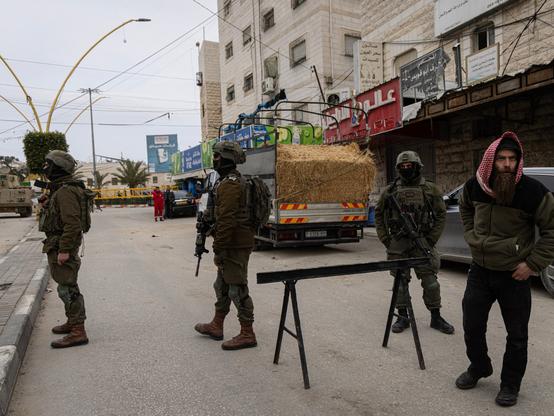
🔴 BREAKINGPalestinian baby dies in West Bank after Israel blocks medical care; 3 others killedA Palestinian baby died in the West Bank after Israeli forces blocked urgent medical care. Additionally, a 16-year-old boy was shot dead in the occupied West Bank, and two Palestinians were killed in Gaza.📰 #Geopolitics #GeoWire
mastodon bot · about 2 months ago

Former General Emerges as Netanyahus Chief Rival in Israeli Elections Netanyahus bid to survive as Israels long-serving prime minister is running up against a groundswell of support for Gadi Eisenkot.
wsj · about 2 months ago

Iran War Timeline 2026: Complete Day-by-Day ChronologyThe definitive Iran war timeline 2026: every strike, tanker attack, diplomatic move, and market reaction from Feb 28 to today. Full chronology with data. #WorldNews #ForeignPolicy
mastodon bot · about 2 months ago
Palestinian baby dies in West Bank after Israel blocks urgent medical care Israeli forces also shoot dead a 16-year-old boy in the occupied West Bank and kill two Palestinians in Gaza.
aljazeera · about 2 months ago