Loading…
 Saturday, August 29Saturday, August 29
3 months · 11 summary articles
The European Union’s Foreign Affairs Council convened in Luxembourg on Saturday, with Ukraine’s postwar recovery and defense cooperation dominating discussions as ministers assessed the bloc’s evolving role in the region’s security architecture. Estonian Foreign Minister Margus Tsahkna met with his EU counterparts to address Ukraine-related issues, while Kyiv secured fresh commitments totaling nearly €2 billion in energy agreements signed at the Ukraine Recovery Conference (URC 2026) in Gdańsk, Poland .
The URC 2026 concluded with Ukraine finalizing 28 international agreements, including €500 million in new financing from the European Bank for Reconstruction and Development (EBRD) and a €343 million dual-use technology program launched in partnership with the EU . These developments follow Kyiv’s announcement of the *Brave International* framework, a government-led initiative to streamline global defense innovation partnerships, signaling a strategic pivot toward long-term security resilience amid ongoing hostilities .
Energy security took center stage as Ukraine inked deals worth nearly €2 billion, with projects spanning infrastructure modernization and renewable energy integration. The agreements, finalized in Gdańsk, underscore the EU’s expanding financial and technical support for Ukraine’s critical sectors, even as the war grinds into its third year . Meanwhile, the EBRD’s commitments highlight growing institutional confidence in Ukraine’s post-conflict trajectory, despite persistent risks .
The EU’s strategic focus on defense innovation was further reinforced by Lithuania’s call at the Dubrovnik Forum for stronger deterrence measures and increased military investment across Europe. Foreign Minister Kęstutis Budrys emphasized the need for collective action to counter hybrid threats, framing defense spending as a cornerstone of European sovereignty .
Against this backdrop, Hungary’s Prime Minister Magyar reiterated Budapest’s ambition to adopt the euro by 2030, positioning the currency as a safeguard against economic mismanagement under the Orbán government. The pledge, made during talks with Eurogroup President Kyriakos Pierrakakis, reflects Hungary’s ongoing efforts to align with EU fiscal norms while navigating domestic political pressures .
As the EU grapples with internal divisions—from corruption challenges in Bosnia and Herzegovina to Serbia’s political polarization—the bloc’s unity on Ukraine and defense cooperation appears increasingly consolidated. Yet, external pressures, including potential U.S. trade measures under a new Trump administration, threaten to fracture transatlantic alignment, adding urgency to Europe’s push for strategic autonomy .
Follow us for live European news
9 further sources not geolocated

Ukrainian government launches Brave International framework for global defense innovation partnerships Ukraines Cabinet of Ministers has approved the launch of Brave International, introducing a unified framework and clear rules for cooperation with international partners in the development of defense innovations.
ukrinform · 2 months ago
OpenAI poaches Uber Indias chief to run its biggest market outside the United States OpenAI has appointed Prabhjeet Singh, the outgoing president of Uber India and South Asia, as its first managing director for India. Singh will join in September and report to Kiran Mani, the companys managing director for Asia Pacific, OpenAI told TechCrunch. He will oversee consumer growth, enterprise adoption, partnerships, regulatory engagement, and operations in what […] This story continues at The Next Web
the next web · 2 months ago
Vinmec Launches Vietnams First Integrated High-Tech Robotic Surgery Network, Establishing the Countrys First Multi-Connected Robotic Surgery Ecosystem HANOI, VIETNAM - Media OutReach Newswire - 27 June 2026 - Vinmec Healthcare System today officially launched its nationwide network of High-Tech Robotic Surgery Centers, marking a major milestone in the advancement of surgical innovation in Vietnam. Beyond investing in some of the worlds most ...
the slovenia times · 2 months ago
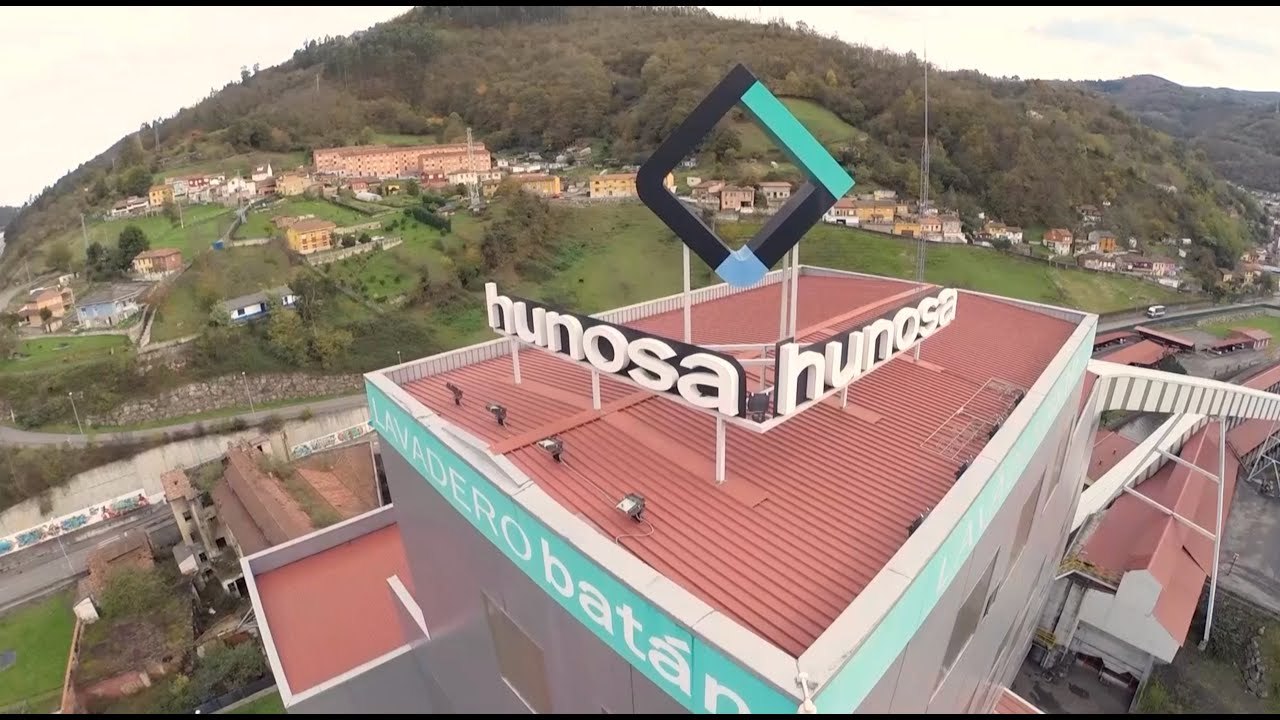
Hunosa pacta un plan de empresa con 160 incorporaciones y 130 millones de inversión Hunosa ha alcanzado un acuerdo sobre el Plan de Empresa 2025-2028 que contempla inversiones superiores a los 130 millones de euros, 160 incorporaciones entre la empresa matriz y su filial Sadim y fija la hoja de ruta de la compañía hasta 2050. Leer
expansion · 2 months ago
Ukraine signs energy agreements worth nearly €2bn Ukraine has signed 28 international agreements at the Ukraine Recovery Conference (URC 2026) in Gdańsk, covering the energy sector and securing financing for energy projects worth nearly €2 billion.
ukrpravda · 2 months ago
Bolivia Central Bank Faces New Economic Test After Dollar Peg Ends La Paz, Bolivia, June 27, 2026 – Brussels Morning Newspaper — Bolivia central bank has entered a new phase of monetary policy after the government ended the countrys 15-year dollar peg, a move aimed at restoring economic stability and improving access to foreign currency. The policy change follows months of pressure from declining foreign reserves, rising […]
brussels morning · 2 months ago
Transparency International: No Efficient Fight against Corruption without Protection of Whistleblowers In the 2022-2025 period, the competent institutions in Bosnia and Herzegovina received a total of 44 requests for the protection of whistleblowers. Also, during the same period, 133 whistleblowers addressed the civilian association Transparency International in Bosnia and Herzegovina (TI BiH). The data showed that citizens who reported corruption still have more trust in civil society […] The post Transparency International: No Efficient Fight against Corruption without Protection of Whistleblowers appeared first on Sarajevo Times.
sarajevo times · 2 months ago
Media Coverage Benefits Help Businesses Earn Customer Trust and Growth London, June 27, 2026 – Brussels Morning Newspaper — Media coverage benefits are playing a larger role in helping businesses earn customer trust as consumers increasingly rely on independent news and industry reporting before making purchasing decisions. Public relations professionals say companies featured in credible media outlets often gain stronger brand recognition, improved online visibility, and higher levels […]
brussels morning · 2 months ago
Tsahkna to Discuss Ukraine-Related Issues with EU Colleagues - The Baltic Times TALLINN – Foreign Minister Margus Tsahkna is set to participate in the European Unions Foreign Affairs Council meeting in Luxembourg ......
baltic times · 2 months ago
Ilie Bolojan anunță o scădere a deficitului cu peste 40. „Este calea spre însănătoșire Premierul interimar, Ilie Bolojan, a transmis că deficitul bugetar al României a scăzut cu peste 40 în primele 5 luni ale anului, potrivit execuției bugetare. Șeful Executivului susține că este un semn clar că statul începe să cheltuiască mai aproape de ceea ce îşi permite.
digi24 · 2 months ago
Council of Europe: Democracy Guides Europe in New Era
gdeltproject.org · 2 months ago
UK Company Administration: Annual Confirmation Statement Explained for Every Business London, June 27, 2026 – Brussels Morning Newspaper — UK company administration remains in focus as businesses across the country are reminded to submit their Annual Confirmation Statement to Companies House. The annual filing confirms that key company information remains accurate and up to date, supporting transparency across the UKs corporate register. Annual Confirmation Statement Continues to […]
brussels morning · 2 months ago
China and Europe are partners not rivals, Wang Yi says Chinese Foreign Minister Wang Yi said Thursday that China and Europe are partners rather than rivals, emphasizing that Beijings development presents opportunities for the continent rather than challenges as he hosted Austrian Foreign Minister Beate Meinl-Reisinger to mark 55 years of diplomatic ties.
yenisafak · 2 months ago
Ukraine recovery conference spotlights defense sector, postwar plans As the war continues, a conference in Gdańsk brought together defense firms, policymakers and investors to plan Ukraines postwar recovery and long-term security.
news.err · 2 months ago
Foreign Minister Tsahkna: the next Ukraine Recovery Conference will take place in Tallinn in 2027
gdeltproject.org · 2 months ago
Estonias foreign minister says Masha and the Bear is spreading Kremlin soft power Estonian Foreign Minister Margus Tsahkna responded to news that streaming giant Netflix has acquired the rights to two additional seasons of the Russian animated series "Masha and the Bear" and extended its license for earlier seasons and spin‑offs.
news.err · 2 months ago
Cyprus hotel bookings improve but season remains under pressure Hotel bookings in Cyprus are gradually improving after months of disruption linked to the crisis in the Middle East, but the sector is still facing an average loss of around 20 per cent for the rest of the season, the president of the hotel managers association has said. Christos Angelides said the wave of cancellations […]
cyprus mail · 2 months ago

En pleine vague de chaleur, le gouvernement a décidé de dissoudre une entité de recherche sur la transition écologique Daprès des informations obtenues par «Mediapart», lexécutif a décidé le mois dernier la dissolution du GIP Epau, le groupement dintérêt public Europe des projets architecturaux et urbains. Cet opérateur public menait des programmes de recherche avec les collectivités pour adapter les villes au changement climatique et atténuer ses effets.
mediapart · 2 months ago

This week at Follow the Money: 💬 EU Ombudswoman probes senior leaders secret chat after our report 🌍 Iran war may spike hunger far beyond UN estimates 🐟 El Niño & wild-caught feed threaten aquaculture 🎙️ New podcast on a massive VAT fraud scheme 🕵️ Partner scoop: Chrome extension spying risks
bluesky bot · 2 months ago

La UE empieza a cobrar 3 euros a paquetes pequeños ante el alud de envíos baratos chinos La Unión Europea (UE) comenzará el 1 de julio a cobrar una tasa de tres euros a los paquetes de hasta 150 euros comprados fuera del bloque, una medida que busca atajar la avalancha de importaciones baratas que entran al mercado europeo, sobre todo desde China, a través de plataformas en línea como Temu, Shein o AliExpress. Leer
expansion · 2 months ago
Dutch government pushes EU ban on plastic-based chewing gum amid litter crisis
gdeltproject.org · 2 months ago
Nigeria, EU Deepen Economic Partnership for Investment, Grow
gdeltproject.org · 2 months ago
Bank of China (Hong Kong) x Television Broadcasts Limited ("TVB") "Wealth Management Expo 2026" was Successfully Held Empowering Enterprises to Go Global, Pioneering the Blue Ocean of Silver Economy HONG KONG SAR - Media OutReach Newswire - 27 June 2026 - The "Wealth Management Expo 2026", powered by Bank of China (Hong Kong) ("BOCHK") and organised by TVB under the theme of "Empowering Enterprises to Go ...
the slovenia times · 2 months ago
Croatia approves new law to regulate short-term holiday rentals from 2027 ZAGREB, 27 June 2026 – The Croatian Government has approved a proposal for a new Hospitality Act aimed at creating... The post Croatia approves new law to regulate short-term holiday rentals from 2027 first appeared on Croatia Week.
croatia week · 2 months ago
Serbia, NSPM poll: Scenario: joint government vs. potential joint opposition lists Joint opposition list-G/EFA|S&D|RE: 56 (+2) SNS/SPS+-EPP: 44 (-2) +/- vs. December 2025 Fieldwork: 20-28 April 2026 Sample size: 1,000 ➤ europeelects.eu/serbia
telegram bot · 2 months ago
China, Bangladesh sign 13 agreements to boost trade, investments 🇨🇳🤝🇧🇩 Bangladesh and China on Thursday signed 13 memorandums of understanding (MoUs) covering various areas of cooperation, trade, and investment as the prime ministers of the two countries met in Beijing.The understandings were signed following a bilateral meeting held between Bangladeshi Prime Minister Tarique Rahman and his Chinese counterpart Li Qiang at the Great Hall in Beijing, according to a statement released on the Bangladeshi prime ministers official account on the US-based social media platform Facebook.The MoUs will take the strategic and economic cooperation of the two countries to a new height, it said, adding that the two leaders also discussed issues of Bangladesh-China bilateral relations, trade, investment, and mutual cooperation.China is Bangladeshs top trading partner, with bilateral trade volumes exceeding $24 billion, while Bangladesh exports roughly $1 billion to $1.16 billion annually.Earlier in the day, Bangladesh and China also agreed on technical cooperation for the transboundary Teesta River management project as the Bangladeshi leader sought Chinese support on this at a meeting with Chinese Minister of Water Resources Li Guoying at the State Guest House Diaoyutai in Beijing.The Teesta River is a 414-kilometer (257-mile) major river that flows through India and into Bangladesh via the northern Rangpur division. Bangladesh faces a major crisis during the summer and rainy seasons because India has dams upstream.To improve the situation, Bangladesh has taken up a mega project called the Teesta River Comprehensive Management and Restoration Project and has been searching for investment.The previous government of the ousted leader, Sheikh Hasina, wanted the project completed with Indian assistance. However, the focus shifted after the July 2024 uprising, which deposed Hasinas government.Separately, Rahman also held meetings with dozens of Chinese business giants and sought their support and investment on Thursday.He said Bangladeshs first "investment office" in China will soon be launched to facilitate services for Chinese investors.
yenisafak · 2 months ago
Slovenia, Türkiye vow to strengthen strategic partnership Slovenian Foreign Minister Tone Kajzer and Turkish Deputy Foreign Minister Mehmet Kemal Bozay expressed interest in drafting a new action plan to deepen the strategic partnership and enhance economic cooperation during talks on the sidelines of the Dubrovnik Forum in Croatia, the Slovenian Foreign Ministry said on Friday.
yenisafak · 2 months ago
Canceled Performance of Serbian Singer Jelena Karleusa in Sarajevo The performance of Serbian singer Jelena Karleuša at the Aqua club in Sarajevo was canceled after the Minister of Foreign Affairs of Bosnia and Herzegovina, Elmedin Konaković, submitted a request to the Ministry of Internal Affairs. It was originally announced that Karleuša would perform at the mentioned club on August 8. In the meantime, it […] The post Canceled Performance of Serbian Singer Jelena Karleusa in Sarajevo appeared first on Sarajevo Times.
sarajevo times · 2 months ago
Croatia, Ipsos poll: HDZ-EPP: 30 (-1) SDP-S&D: 22 (-1) Možemo!-G/EFA: 14 Most-ECR: 9 DP~ECR: 3 HSU-*: 3 Drito~ECR: 2 (-1) DOSIP-*: 2 IDS-RE: 2 DOMiNO-ECR: 2 PP-*: 1 HS-ECR: 1 (-1) Centar-RE: 1 HSS-*: 1 DZ NL-*: 1 (+1) Nezavisni-*: 1 NPS-*: 0 HNS-RE: 0 (-1) HSLS-RE: 0 SDSS~S&D: 0 +/- vs. 01-19 May 2026 Fieldwork: 01-19 June 2026 Sample size: 994 ➤ europeelects.eu/croatia
telegram bot · 2 months ago
Landfill tax bill under discussion as Cyprus risks losing €23m EU funding Proposed legislation introducing a landfill tax to address what officials describe as disorder in municipal waste management in Cyprus is currently under discussion in the House Environment Committee, with lawmakers facing a tight deadline before the summer recess. The measure forms part of the countrys green taxation reform and commitments under the National Recovery and […]
in-cyprus · 2 months ago