
EU leaders accelerate defence projects amid Ukraine accession talks and transatlantic tensions

Story Timeline
4 months · 27 summary articles
The European Union’s two-day summit in Brussels concluded on Friday with defence readiness and Ukraine’s future at the top of the agenda, as leaders sought to balance support for Kyiv with internal divisions over enlargement and military preparedness.
EU heads of state and government approved a package of measures to strengthen European defence, including accelerated implementation of projects along the bloc’s eastern flank, according to Latvian officials . The push comes amid warnings from Washington that the Pentagon is reviewing US force posture in Europe, underscoring transatlantic concerns over burden-sharing .
Ukrainian President Volodymyr Zelenskyy held urgent talks on the sidelines of the summit, pressing EU leaders to open the five remaining negotiating clusters for Kyiv’s accession and secure the first tranche of EU defence funding. He met European Council President António Costa and Commission President Ursula von der Leyen, who reiterated Brussels’ commitment to Ukraine’s EU path while acknowledging the political sensitivities among member states .
Hungarian Prime Minister Peter Magyar, attending his first EU summit since taking office, publicly broke ranks with his predecessor Viktor Orbán by opposing the rapid opening of Ukraine’s accession talks. Magyar claimed his stance was firmer than Orbán’s, signalling a shift in Budapest’s approach even as he secured a compromise to slow integration in exchange for supporting a joint EU declaration on continued support for Kyiv . Slovak Prime Minister Robert Fico, meanwhile, said he and Zelenskyy held “fundamentally opposing views” after their meeting, though both pledged to keep dialogue open .
Defence cooperation with non-EU partners also featured prominently. Turkish Defence Minister Yaşar Güler said the July 7–8 NATO summit in Ankara would mark a “turning point” for the alliance, as members prepare to adapt to new security threats . Japan’s Defence Minister Shinjirō Koizumi will attend the summit, underscoring Tokyo’s growing engagement with NATO despite not being a member .
Economic ties took centre stage in separate discussions. German and Turkish officials concluded high-level trade talks in Ankara, emphasising the strategic value of their $52 billion economic partnership for European supply chains . Meanwhile, EU leaders also addressed competitiveness, the 2028–2034 Multiannual Financial Framework, and illicit drug trafficking, as outlined in the summit’s final conclusions .
Follow us for live European news
- 1
- 1
- 1
- 1
- 1
- 1
- 1
- 1
- 1
4 further sources not geolocated
Articles

Slovak PM after meeting with Zelenskyy: we have fundamentally opposing views Slovak Prime Minister Robert Fico, following a meeting with Ukrainian President Volodymyr Zelenskyy on the sidelines of a EU leaders summit on 18 June, has concluded that they hold fundamentally opposing views, but expressed a willingness to continue dialogue.
ukrpravda · 3 months ago
Γεραπετρίτης: Σταθερή στήριξη της Ελλάδας στην ευρωπαϊκή πορεία του Μαυροβουνίου «H Ελλάδα θα συνεχίσει να παρέχει τεχνογνωσία και υποστήριξη σε ζητήματα μεταρρυθμίσεων και ενσωμάτωσης του ευρωπαϊκού κεκτημένου» είπε ο Έλληνας ΥΠΕΞ μετά τη συνάντησή του στην Ποντγκόριτσα με τον αντιπρόεδρο της κυβέρνησης του Μαυροβουνίου
protothema · 3 months ago
Summit v Bruselu Obrana a bezpečnost Evropské unie, mimo to i její konkurenceschopnost a ekonomika, to jsou hlavní témata současného zasedání Evropské rady. Podle slov premiéra Andreje Babiše (ANO) před jeho čtvrtečním odletem do Bruselu je v zájmu Česka kromě revize systému emisních povolenek i diskuse o rozpočtu Unie.
irozhlas.cz · 3 months ago
Na jednání unijních ministrů pojede místo Červeného opět Turek. Ten jel jako zmocněnec i v březnu Na jednání unijních ministrů životního prostředí pojede příští týden místo ministra opět vládní zmocněnec pro klimatickou politiku a Green Deal Filip Turek (za Motoristy). Turek to v pátek napsal agentuře ČTK. Ministra Igora Červeného (Motoristé) zastupoval už na jednání v březnu, což kritizovala opozice.
irozhlas.cz · 3 months ago
Putin holds talks with Thai, Singaporean leaders in Kazan Russian President Vladimir Putin held separate talks with Thai Prime Minister Anutin Charnvirakul and Singaporean Prime Minister Lawrence Wong during the ASEAN-Russia summit in Kazan, focusing on expanding trade and energy cooperation while addressing regional security concerns and tourism ties.
yenisafak · 3 months ago
Ankara NATO summit to mark turning point for alliance: Guler Turkish National Defense Minister Yasar Guler said the July 7-8 leaders meeting in Ankara will mark an important turning point for the alliance, demonstrating NATOs determination to adapt to evolving security threats while shaping its future strategic direction.
yenisafak · 3 months ago
Anche Balcani occidentali, allargamento e traffico di droghe nelle conclusioni del Consiglio europeo Il presidente di Cipro, che ricopre il semestre di presidenza del Consiglio UE, Christodoulides: "I negoziati di adesione con Ucraina, Moldavia, Albania e Montenegro hanno fatto progressi significativi in questi sei mesi"
eunews.it · 3 months ago
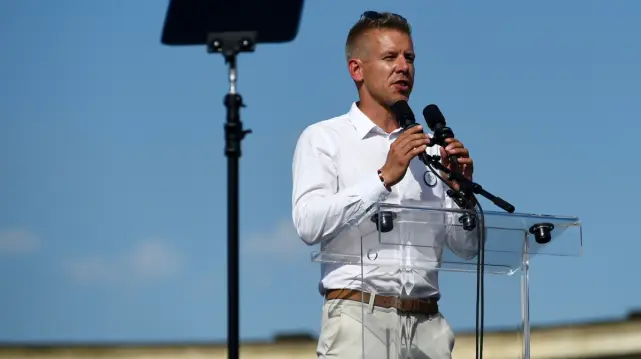
Hungarian PM says he worked against Ukraines EU accession progress and claims Orbán was once pro-UkraineHungarian Prime Minister Peter Magyar has said that he opposes the opening of all negotiating clusters in Ukraines EU accession talks and that his position on the issue is stronger than that of his predecessor, Viktor Orbán. #ukraine
mastodon bot · 3 months ago
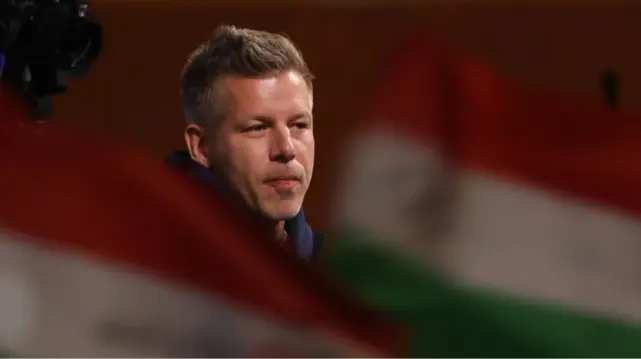
Hungarian PM reveals details of meeting with Zelenskyy, says they discussed potential meeting in BerehoveHungarian Prime Minister Peter Magyar has mentioned his meeting with Ukrainian President Volodymyr Zelenskyy during a press conference after an EU summit. #ukraine
mastodon bot · 3 months ago

Thats a wrap for #EUCO! EU leaders discussed: 📌 continued support for Ukraine 📌 competitiveness and global economic challenges 📌 #MFF 2028-2034 📌 situation in the Middle East 📌 European defence readiness 📌 illicit drugs Read the main results ➡️ link.europa.eu/RQdppw
bluesky bot · 3 months ago
Konakovic and Gerapetritis: No Open Issues, Strong Prospects for Enhanced Cooperation The Minister of Foreign Affairs of Bosnia and Herzegovina, Elmedin Konaković, spoke today in Sarajevo with the Minister of Foreign Affairs of the Republic of Greece, George Gerapetritis. They jointly assessed that the bilateral relations between the two countries are good and without unresolved issues, and confirmed their commitment to strengthening cooperation in various fields, […] The post Konakovic and Gerapetritis: No Open Issues, Strong Prospects for Enhanced Cooperation appeared first on Sarajevo Times.
sarajevo times · 3 months ago
Latvia will emphasize at European Council need to accelerate implementation of defense projects aimed at strengthening Eastern Flank - The Baltic Times RIGA - At the upcoming European Council meeting, Latvia will emphasize the need to accelerate the implementation of European Union (EU) defense ......
baltic times · 3 months ago
Tsahkna to Discuss Ukraine-Related Issues with EU Colleagues - The Baltic Times TALLINN – Foreign Minister Margus Tsahkna is set to participate in the European Unions Foreign Affairs Council meeting in Luxembourg ......
baltic times · 3 months ago
„Wir brauchen die Türkei: Reiche wirbt in Ankara um engere Beziehungen Katherina Reiche sieht die Türkei als zentralen Partner. Beide Seiten wollen die Wirtschaftsbeziehungen weiter vertiefen. Ein Schwerpunkt ist die Energieversorgung.
tagesspiegel · 3 months ago
Singapores PM Wong to visit Türkiye for working talks Prime Minister Lawrence Wong will pay a working visit to Türkiye on Friday, according to Communications Director Burhanettin Duran. The talks will focus on trade and investment, with discussions expected to cover regional and global developments.
yenisafak · 3 months ago
Turkish ambassador visits frigate TCG Oruçreis at Norfolk Ambassador Sedat Önal visited the Turkish frigate TCG Oruçreis during its port call at Norfolk Naval Station. The vessel is participating in FLEETEX‑250, a multinational exercise marking the 250th anniversary of the US Declaration of Independence, alongside 31 warships and multinational aircraft.
yenisafak · 3 months ago
Japanese defense minister to visit Türkiye for NATO summit talks Shinjiro Koizumi, Japans defense minister, is planning a visit to Türkiye in early July to attend events linked to the NATO summit and hold bilateral meetings. The trip underscores Tokyos growing security engagement with the transatlantic alliance, even as a non-member.
yenisafak · 3 months ago
Zelenskyy meets EU leaders at Brussels summit President Volodymyr Zelenskyy held talks with European Council President Antonio Costa and Commission President Ursula von der Leyen at the EU summit in Brussels. He urged the opening of five remaining negotiating clusters and requested the first tranche of EU financial support for defense.
yenisafak · 3 months ago
Türkiye, Germany seek deeper economic ties at JETCO talks Turkish Trade Minister Ömer Bolat said Ankara and Berlin discussed expanding cooperation on trade, energy transition and digital transformation during high-level JETCO talks in the capital, with both sides emphasizing the strategic importance of their $52 billion economic partnership for European supply chains.
yenisafak · 3 months ago
Japan extends Self-Defense Forces deployment in South Sudan Defense Minister Shinjiro Koizumi announced on Friday that Tokyo will extend its deployment of Self-Defense Forces personnel at the UN Mission in South Sudan headquarters for another year, stating that continued participation enables Japan to contribute to global stability while advancing its national security interests.
yenisafak · 3 months ago
Oana Țoiu la Conferința de Securitate de la Kiel: Marea Neagră, „poartă strategică pentru conectarea rutelor majore de transport Ministrul Afacerilor Externe, Oana Țoiu, a subliniat importanța strategică a Mării Negre în cadrul Conferinței de securitate de la Kiel, unde a deschis evenimentul împreună cu ministrul Federal de Externe al Germaniei, Johann Wadephul.
adevarul · 3 months ago

Pour ses débuts à Bruxelles, Peter Magyar impose sa ligne sur ladhésion de lUkraine à lUE Pour son premier Conseil européen depuis son élection, le Premier ministre hongrois est parvenu à obtenir le ralentissement du processus dintégration de Kiev, en échange de son appui à une déclaration commune sur le soutien de lUE à lUkraine. Un compromis qui rompt avec les blocages de lère Orban, relèvent les médias locaux.
courrier international · 3 months ago
Swiss government moots extending S status for Ukrainians As there is no prospect of an end to the war in Ukraine, the Swiss government intends, in principle, to extend protection status S for Ukrainians until 2027. For the time being, however, it is consulting the cantons and other partners on this matter. +Get the most important news from Switzerland in your inbox The government announced on Friday that, at a national asylum conference in November 2025, the State Secretariat for Migration (SEM), the cantons, cities and municipalities had been tasked with drawing up clear regulations for the future of S protection status. The results of this deliberation are now set out in a concept paper entitled "The Future of S Status". According to the government, it serves to prepare for three possible scenarios: the continuation of S status; its abolition in the event of a stable ceasefire; and a phasing out of S status in the event of a protracted conflict. The government took note of this concept at its meeting on Friday. It regards the concept ...
swissinfo · 3 months ago
Plenkovic: Work Continues on Final Text of Resolution on Croats in Bosnia and Herzegovina Croatian Prime Minister Andrej Plenković said in Brussels on Thursday that consultations are underway with coalition partner the Homeland Movement (DP) on the final form of a resolution on strengthening the position of Croats in Bosnia and Herzegovina, which the party is proposing. At the last coalition meeting, we agreed that, when our colleagues complete […] The post Plenkovic: Work Continues on Final Text of Resolution on Croats in Bosnia and Herzegovina appeared first on Sarajevo Times.
sarajevo times · 3 months ago