eldiario.es
Óscar Puente: "Tenemos una necesidad urgente de trenes de alta velocidad" El ministro de Transportes asegura que las pérdidas de Renfe, Ouigo e Iryo por la competencia en precios están siendo subvencionadas por los Estados de España, Italia y FranciaPuente entiende que los usuarios de Rodalies estén "desesperados" pero promete que el servicio mejorará
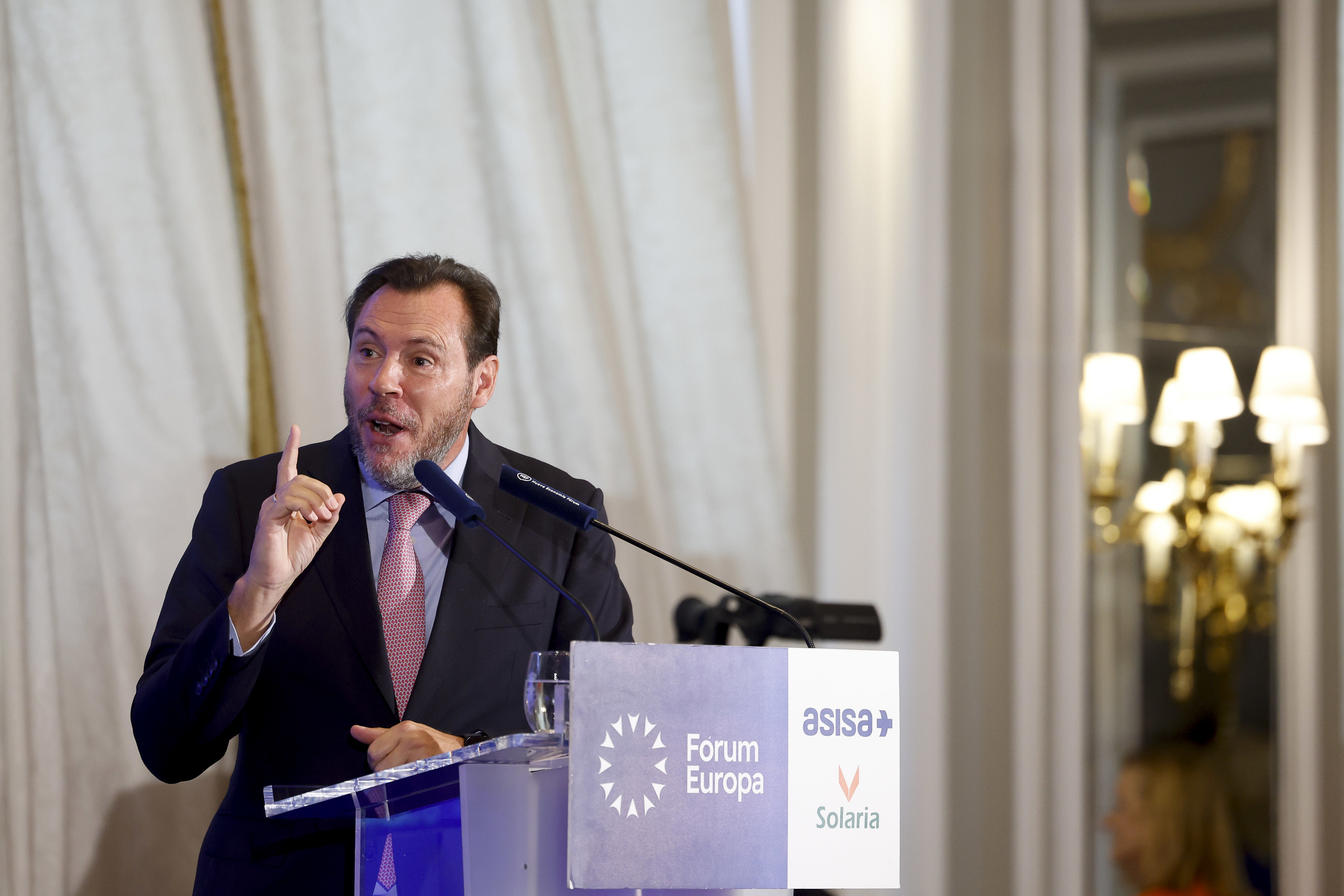
El ministro de Transportes y Movilidad Sostenible, Óscar Puente, ha reconocido este lunes que "tenemos una necesidad urgente de trenes de alta velocidad", en referencia al concurso de nuevo material ferroviario que tiene que decidir Renfe. Este martes, previsiblemente, el operador público ferroviario tiene que decidir a quién encarga los cerca de 40 trenes de un concurso valorado en más de 1.700 millones de euros.
Se trata de trenes por los que pujan la empresa italojaponesa Hitachi Rail y la alemana Siemens y que tienen que entregarse en un plazo de menos de 40 meses. En un desayuno informativo, Puente ha recalcado la necesidad de renovación del material, porque los últimos han llegado "con cuentagotas" y "algunos con demasiados problemas". "Necesitamos trenes cuanto antes", ha resumido.
En ese concurso no está Talgo, pero Puente ha defendido a la empresa y que el Estado impidiera su venta a una compañía húngara. "Es importante que seamos conscientes" de que "se cernía una OPA [una oferta de compra] de una empresa supuestamente húngara, que ha quebrado, tras la cual se escondía capital ruso, intenciones del Gobierno ruso, era parte de la seguridad nacional y por eso el Gobierno intervino", ha señalado.
"No era razonable que una empresa española acabara en manos indirectamente del Gobierno ruso". "Siempre he pensado que es una empresa que Talgo tiene un 'know how' muy interesante, tiene un material rodante muy diferente", ha explicado, por sus características técnicas. "Es una empresa que el Gobierno lleva en la mochila cuando se mueve por el mundo", ha añadido.
"Que haya concurrido o no a este concurso, no es relevante", porque se trata de un concurso de trenes de alta velocidad, a 350 km por hora, en un periodo muy corto". "Los trenes no están llegando y tenemos una necesidad urgente", ha repedito.
Las pérdidas de la alta velocidad, las pagan España, Italia y Francia
Óscar Puente también ha defendido la liberalización ferroviaria, pero ha dejado claro que supone pérdidas millonarias que están subvencionando los Estados dueños de Renfe, Ouigo e Iryo. Es decir, España, Francia e Italia.
"España no tiene una intensidad de circulaciones superior a la de nuestro entorno", ha explicado Puente. "Tiene una infraestructura preparada" y "decir que la liberalización sobrepasa las capacidades de la red es mentira, tiene capacidad para estos tráficos y más, han crecido las circulaciones, el número de pasajeros. Cada vez que hay una incidencia, la afectación es mayor", ha reconocido.
Ha argumentado que "la liberalización de trenes ha sido buena para bajar los precios de los trenes de la alta velocidad" pero ha remarcado que "es un engaño". "Hemos pasado de una [única] compañía que ganaba 150 millones de euros a tres que juntas pierden 230 millones de euros. ¿Quién lo paga? Los usuarios, no. Lo pagan tres Estados. ¿Quién está subvencionando la alta velocidad? El estado español, el francés y el italiano", ha resumido.
También, que la liberalización "ha sido mala para las incidencias, que se notan más y que henos sido el país más 'Quijote'. Puente, así, ha salido en defensa de Renfe, a la que Comisión Nacional de los Mercados y la Competencia (CNMC) exige que ceda sus talleres a Iryo y Ouigo. "Recibimos con brazos abiertos a dos empresas a las que tenemos que ceder los talleres, para el mantenimiento ligero y pesado, cuando en Francia nos tenemos que traer los trenes a España. La CNMC es más papista que el Papa, no podemos hacernos trampas a nosotros mismos", ha criticado.
about 6 hours ago