
SpaceX rocket stage crashes into moon, creating new crater near Einstein Crater
Story Timeline
1 day · 3 summary articles
SpaceX rocket stage crashes into moon, creating new crater near Einstein Crater
SpaceX rocket debris crashes into moon, creating plume detected by European telescope
ContinuationSpaceX rocket stage to crash into Moon on Wednesday, creating new lunar crater
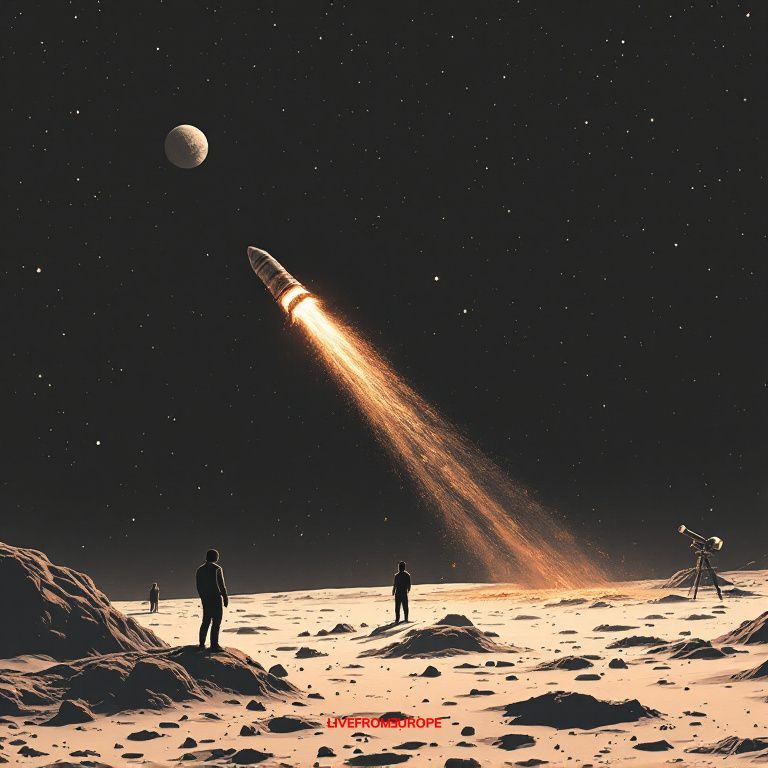
A discarded SpaceX Falcon 9 upper stage struck the moon on Tuesday, creating a new crater near Einstein Crater, according to multiple observatories and space agencies. The impact occurred around 2:35 p.m. EDT, with the roughly 9,000-pound rocket stage traveling at approximately 5,400 mph, scientists told The Associated Press .
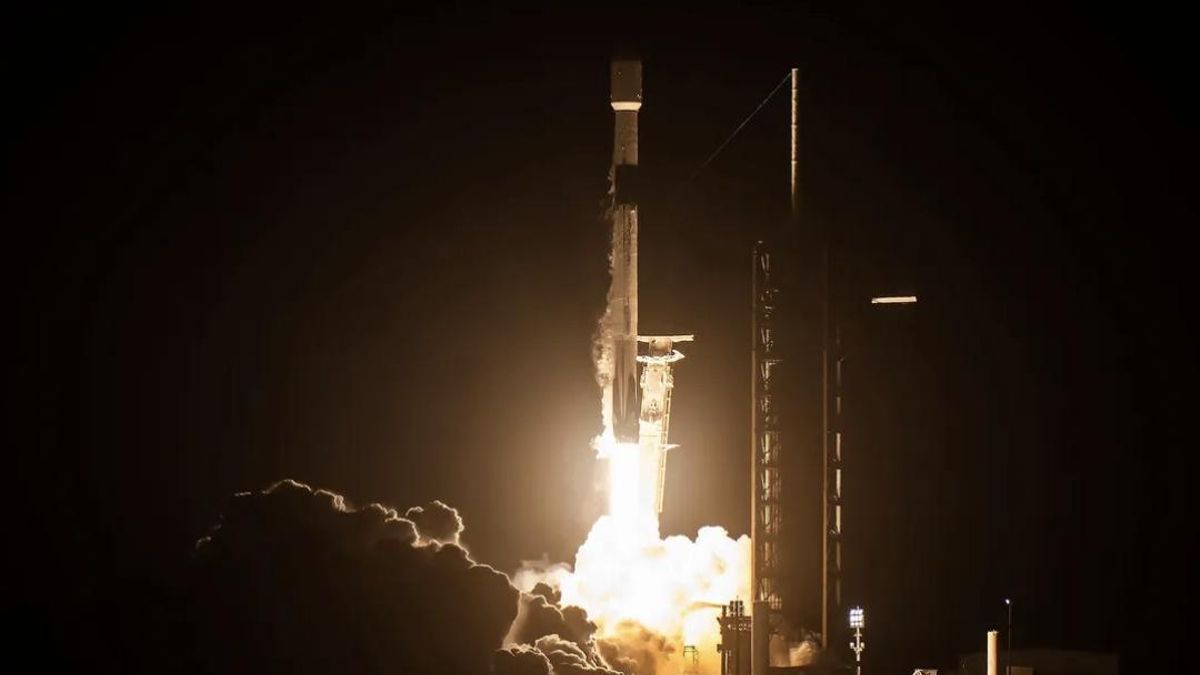
The rocket stage originated from a Jan. 15, 2025, launch from Florida, carrying Firefly Aerospace’s Blue Ghost and ispace’s Resilience modules under NASA’s Commercial Lunar Payload Services program. After deploying its payload, the stage remained in space, where solar activity and gravitational forces altered its trajectory, sending it toward the lunar surface .
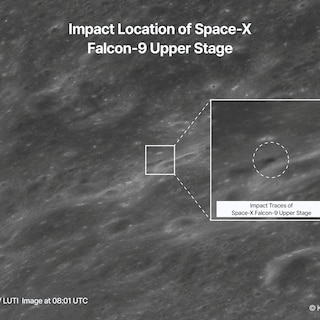
South Korea’s Korea Aerospace Research Institute (KASA) released before-and-after images captured by its Danuri lunar orbiter, showing a new shadowed area at the impact site. The agency confirmed the images were taken during eight observation sessions, with the first post-impact data collected on Aug. 5, 2026 .
Telescopes in Chile and Arizona detected a cloud of sodium and lithium rising from the impact site, according to astronomers. Carl Schmidt of Boston University told the AP his team was “100% certain” the observations captured evidence of the crash, while retired astrophysicist Jonathan McDowell said the rocket was reduced to “teeny, little pieces” . The European Southern Observatory’s Very Large Telescope also confirmed the presence of spectral lines for sodium and lithium in the debris plume .
NASA’s Lunar Reconnaissance Orbiter and South Korea’s Danuri are expected to conduct further observations of the impact site in the coming days. Scientists estimate the crater could measure between 60 and 90 feet wide, with debris potentially scattered up to 525 miles from the impact point .
SpaceX had attempted a maneuver to place the stage in a safe orbit after its mission, but Julianna Scheiman, NASA’s director of scientific programs for SpaceX Dragon capsules, said the combination of solar pressure and gravitational forces ultimately directed it toward the moon . NASA’s Center for Near-Earth Object Studies tracked the object’s trajectory and confirmed its lunar impact path .
Follow us for live European news
- 3
- 2
- 2
- 1
- 1
- 1
- 1
- 1
- 1
- 1
- 1
8 further sources not geolocated
Articles

Το «πριν και το μετά» της πρόσκρουσης του πυραύλου της SpaceX στη Σελήνη: Τι δείχνουν φωτογραφίες κορεατικής συσκευής Με τις NASA και SpaceX να μην έχουν τοποθετηθεί ακόμα επίσημα, το Ευρωπαϊκό Νότιο Αστεροσκοπείο και το Αεροδιαστημικό Ινστιτούτο της Νότιας Κορέας, επιβεβαιώνουν την πρόσκρουση του τμήματος πυραύλου -βάρους 4 τόνων - της SpaceX στη Σελήνη
protothema · about 2 hours ago
Nieuwe krater op de maan na crash van SpaceX-rakettrap: Koreaanse ruimtesonde brengt inslag in beeld
de morgen · about 2 hours ago
Eclipse total de sol del 12 de agosto: dónde y cómo verlo y qué evitar para tener una buena experiencia El eclipse total de sol del próximo miércoles 12 de agosto, un evento astronómico que ha creado una gran expectación y que forma parte de la triada de eclipses que se produce en España durante tres años, tiene dimensiones mucho más interesantes más allá que hacer fotos con el móvil o contemplarlo directamente, eso sí, siempre con gafas homologadas. Leer
expansion · about 2 hours ago

Aufnahmen von Sonnenwirbeln – Wie eine Ein-Euro-Münze aus 180 Kilometern Entfernung Erstmals zeigen detaillierte Aufnahmen des größten Sonnenteleskops auf Hawaii Sonnenwirbel mit bis zu 2000 Kilometern Durchmesser. Die Erkenntnisse könnten helfen, Sonneneruptionen besser zu verstehen.
welt.de · about 2 hours ago
10 Of The Worlds Biggest Telescopes & Where Theyre Located
gdeltproject.org · about 2 hours ago
Un cohete abandonado de SpaceX se estrella sin querer contra la Luna y deja un cráter que ahora investigan los científicos Residuos lunares - Los investigadores esperan analizar la excavación del terreno, la dispersión del polvo y las vibraciones para mejorar la protección de futuras infraestructurasLa mayor luna de Saturno gana fuerza como futura gasolinera espacial para explorar el espacio profundo El movimiento lento de una etapa abandonada durante 18 meses terminó convertido en una colisión lunar que varios observatorios intentan reconstruir ahora mediante imágenes tomadas desde América. La pieza, perteneciente a un Falcon 9 de SpaceX, habría golpeado el pasado miércoles 5 de agosto una zona cercana al cráter Einstein a unos 8.700 kilómetros por hora, después de que la actividad solar y las fuerzas gravitatorias alteraran su trayectoria. La trayectoria cambió hasta dirigirse al satélite El Mundo y CNN sitúan el origen del fragmento en el lanzamiento del 15 de enero de 2025, cuando el cohete transportó los módulos privados Blue Ghost, de Firefly Aerospace, y Resilience, de ispace, dentro del programa de Servicios Comerciales de Carga Lunar de la NASA. Blue Ghost logró alunizar en marzo de ese año, mientras Resilience se estrelló meses después al intentar descender. La segunda etapa era la parte superior y desechable del cohete, una pieza de unos 4.000 kilogramos que dio el último empuje a Blue Ghost y Resilience para sacarlas de la órbita terrestre y enviarlas hacia la Luna. Una vez terminada esa función, quedó abandonada en una órbita amplia. La maniobra diseñada para dejar el vehículo en una órbita segura no evitó que la gravedad y la radiación solar alteraran poco a poco su recorrido Julianna Scheiman, directora de programas científicos de la NASA y de las cápsulas Dragon en SpaceX, explicó que la empresa intentó dejarla en una trayectoria segura, aunque la maniobra no consiguió mantenerla bajo control. La presión de la luz solar y la atracción de la Tierra, la Luna y el Sol fueron modificando su recorrido hasta dirigirla hacia la superficie lunar. Los astrónomos independientes siguieron el objeto con datos públicos, y el Centro de Estudios de Objetos Cercanos a la Tierra de la NASA confirmó que avanzaba hacia la superficie lunar. La agencia descartó cualquier peligro para nuestro planeta y mantuvo el seguimiento con fines de entrenamiento, además de preparar la observación posterior del lugar donde habría caído. El cráter permitirá estudiar cómo responde el suelo lunar El choque estaba calculado para las 8:35 hora peninsular española, sobre un terreno iluminado por el Sol, una condición que reducía las posibilidades de distinguir el destello. Paul Wiegert, profesor de Astronomía y Física en la Western University de Ontario, situó el punto del golpe cerca de la posición de las diez en un reloj imaginario sobre la Luna. El brillo lunar podía atenuar la señal, aunque la luz solar ofrecía alguna posibilidad de detectar la columna de material expulsado. El plan observacional publicado en arXiv.org indicaba que el destello y la nube posterior podrían ser captados desde instalaciones terrestres o espaciales, aunque su magnitud visual no podía calcularse con precisión. Darryl Seligman, profesor asistente de Física y Astronomía en la Universidad Estatal de Michigan y coautor del estudio enviado a The Astrophysical Journal Letters, señaló que las predicciones se difundieron antes del impacto para que otros equipos preparasen sus instrumentos. Los científicos aprovechan el choque para obtener nuevos datos Según las estimaciones, el cráter resultante tendría entre 20 y 30 metros de diámetro y alrededor de cinco metros de profundidad, mientras parte del material rocoso podría desplazarse hasta 805 kilómetros antes de volver a caer. Los investigadores quieren comprobar cómo se excavan estas cavidades, cómo se dispersa el polvo y qué vibraciones se transmiten por el interior lunar, datos que ayudarán a valorar la protección necesaria para módulos, equipos y futuras bases. El orbitador surcoreano Danuri pasó cerca de la zona poco antes del choque y analizará sus registros antes de publicar cualquier resultado, mientras el Orbitador de Reconocimiento Lunar de la NASA comparará fotografías anteriores y posteriores. Los telescopios de América, incluidos varios situados en Chile, revisan una señal producida por un objeto de unos 14 metros observado desde aproximadamente 385.000 kilómetros. La acumulación de restos impulsa un nuevo control del tráfico lunar La Luna ha recibido al menos 800 impactos de objetos fabricados por seres humanos, desde etapas de los Saturno V hasta restos vinculados a misiones chinas, además de miles de meteoritos que abren cráteres cada año. Chris Hadfield, astronauta canadiense, recordó en X que el satélite carece de vida y ecosistemas, pero advirtió que el aumento de los alunizajes obliga a registrar mejor cada operación. The Lunar Ledger centraliza datos para reducir riesgos ante las más de cien misiones previstas hasta 2030, una presión que convertirá la gestión de residuos en una condición básica para la permanencia humana impulsada por Artemis y por los planes de China.
eldiario.es · about 2 hours ago
Chinese launch startup Orienspace targets IPO, secures funding for reusable Gravity-2 rocket HELSINKI — Commercial launch company Orienspace has kicked off preparations for an IPO coaching process while closing a funding round for accelerating its reusable Gravity-2 rocket. The Shandong-based company, formally […] The post Chinese launch startup Orienspace targets IPO, secures funding for reusable Gravity-2 rocket appeared first on SpaceNews.
spacenews · about 2 hours ago
Redwire to fly dedicated Starfall mission for microgravity research A Redwire subsidiary working on space biotech and pharmaceutical applications has signed an agreement to fly microgravity research payloads on SpaceXs Starfall reentry vehicle. The post Redwire to fly dedicated Starfall mission for microgravity research appeared first on SpaceNews.
spacenews · about 2 hours ago
Lessons for the future of NASA Mars exploration from a 1970s mission July 20 marked the 50th anniversary of one of the biggest robotic spaceflight achievements in NASAs history: the landing of the Viking 1 spacecraft on Mars. It was the first […] The post Lessons for the future of NASA Mars exploration from a 1970s mission appeared first on SpaceNews.
spacenews · about 2 hours ago
Vzorové priestory nového pavilónu už preverujú zdravotníci. Dolaďujú ich do posledného detailu V novom pavilóne spišskonovoveskej nemocnice vznikli prvé vzorové priestory. Zdravotníci v nich preverujú stavebnú pripravenosť a vybavenie vzorovej pôrodnej izby, inkubátorovej miestnosti na neonatológii a rovnako prislúchajúceho pracoviska sestier.
aktuality.sk · about 2 hours ago

La surface du Soleil comme vous ne lavez jamais vue Un observatoire américain et une équipe de chercheurs internationaux ont diffusé le 5 août des images inédites et fascinantes de la photosphère du Soleil.
courrier international · about 2 hours ago

Inside Americas laser revolution as the military nears big battlefield breakthrough
news.yahoo.com · about 2 hours ago

SpaceX rocket crashes into the moon after drifting off course
news.yahoo.com · about 2 hours ago
Partial solar eclipse to shade Finland next week The best views will be in the west and up north.
yle.fi · about 2 hours ago
ExoMars stretches out its legs Video: 00:00:06 The footage shows the simultaneous deployment of two landing legs from the ExoMars landing platform, in two sequential pairs. The legs travel stowed on the spacecraft through deep space, and are automatically deployed in pairs in less than a second using non-explosive actuators, just after the front shield is jettisoned. This is a crucial step in the landing modules preparation for touchdown. The tests used a full-scale model of the landing platform at the Thales Alenia facilities in Turin, Italy. The four legs replicate the structure and dimensions of those that will fly to Mars. The landing legs are crucial gear for the safe touchdown of ESAs ExoMars Rosalind Franklin rover mission in 2030, alongside parachutes and engines that will slow the spacecrafts descent onto Mars. While Thales Alenia Space is the industrial lead of the mission, Airbus provides the landing platform. Teams from the Sener company, based in Spain, designed and built the landing legs.
esa · about 2 hours ago
☀️ 🌓 🌑 Path of total solar eclipse on 12 August 2026 Day will briefly turn into night across a swathe of northern Spain on 12 August, when the Moon will completely cover the Sun during a rare total solar eclipse. Heres the path it will take:
bluesky_AFP English · about 2 hours ago

LIVE: NASA conducts U.S. Spacewalk 96 at ISS www.youtube.com/live/XvyyYEy...
bluesky_Reuters · about 2 hours ago
🇰🇵⚡️ — Today, August 6, at approximately 5:00 p.m. local time, North Korea launched at least one short-range ballistic missile from the Wonsan area toward the East Sea (Sea of Japan). The ministry confirmed that the missile posed no threat to Japan. This was North Koreas first ballistic missile launch in 42 days, with the previous launch having taken place on June 25. @IntelSlava
telegram_Intel Slava · about 2 hours ago
Croatian amateur astronomers discover possible new planetary nebula in the night sky ZAGREB, 6 August 2026 (Hina) – A group of Croatian amateur astronomers has discovered a previously unknown nebula in the... The post Croatian amateur astronomers discover possible new planetary nebula in the night sky first appeared on Croatia Week.
croatia week · about 2 hours ago

Coreia mostra imagem do impacto do foguetão da SpaceX na Lua A imagem de comparação captada pelo sul-coreano Danuri
observador · about 2 hours ago
Rocket Lab launches 8th iQPS satellite Rocket Lab launched a Japanese radar-imaging satellite Aug. 6, more than a month after the previous launch attempt was aborted. The post Rocket Lab launches 8th iQPS satellite appeared first on SpaceNews.
spacenews · about 2 hours ago
Three companies building the tech to grow crops on the moon Rockets, rovers and landers have dominated the attention of the commercial space industry as the United States focuses on sending humans back to the moon, but a handful of companies […] The post Three companies building the tech to grow crops on the moon appeared first on SpaceNews.
spacenews · about 2 hours ago
How should Europes militaries respond to space threats In this episode, SpaceNews Emma Gatti leads a panel of experts to discuss Europes defense posture and the reaction to space threats. This session was recorded in May at SpaceNews […] The post How should Europes militaries respond to space threats appeared first on SpaceNews.
spacenews · about 2 hours ago

Egy éve figyeli a Napot a NASA négy műholdja – amit elértek, az segíthet megvédeni az emberiséget A Punch néven futó küldetés során a tudósok folyamatosan figyelemmel tudják kísérni a Nap aktivitását, ennek köszönhetően pedig az eddiginél sokkal pontosabb előrejelzést tudnak adni a lehetséges napviharok alakulásáról.
hvg.hu · about 2 hours ago

Pourquoi tout le monde parle de léclipse du 12 août ? Voilà presque trente ans que le continent européen navait pas vu passer déclipse totale de Soleil. Mais quel est exactement ce phénomène ?
courrier international · about 2 hours ago
Diez claves para disfrutar del eclipse solar del 12 agosto: ¿Dónde lo veré mejor? ¿Cuándo me puedo quitar las gafas? En la cuenta atrás de este fenómeno histórico que podrá verse en una amplia franja del norte de España y Baleares, el director del Observatorio Astronómico Nacional ofrece una guía para vivirlo con intensidad y seguridad Leer
elmundo · about 2 hours ago

Kelvin-Helmholtz-Instabilitäten: Sonnenbilder zeigen bislang verborgene Plasmawirbel Astronomen haben die bislang detailliertesten Aufnahmen der Sonnenoberfläche veröffentlicht. Hochauflösende Bilder enthüllen erstmals winzige Wirbelstrukturen auf der Sonnenoberfläche.
faz · about 2 hours ago

From the Crucifixion to pop art: how humanity has painted solar eclipses From the Nebra Sky Disc to Roy Lichtensteins pop art, and from Rubens and Ribera to American Howard Russell Butler, the solar eclipse has been depicted in painting for millennia, mixing religious symbolism, scientific curiosity and aesthetic fascination.
euronews · about 2 hours ago
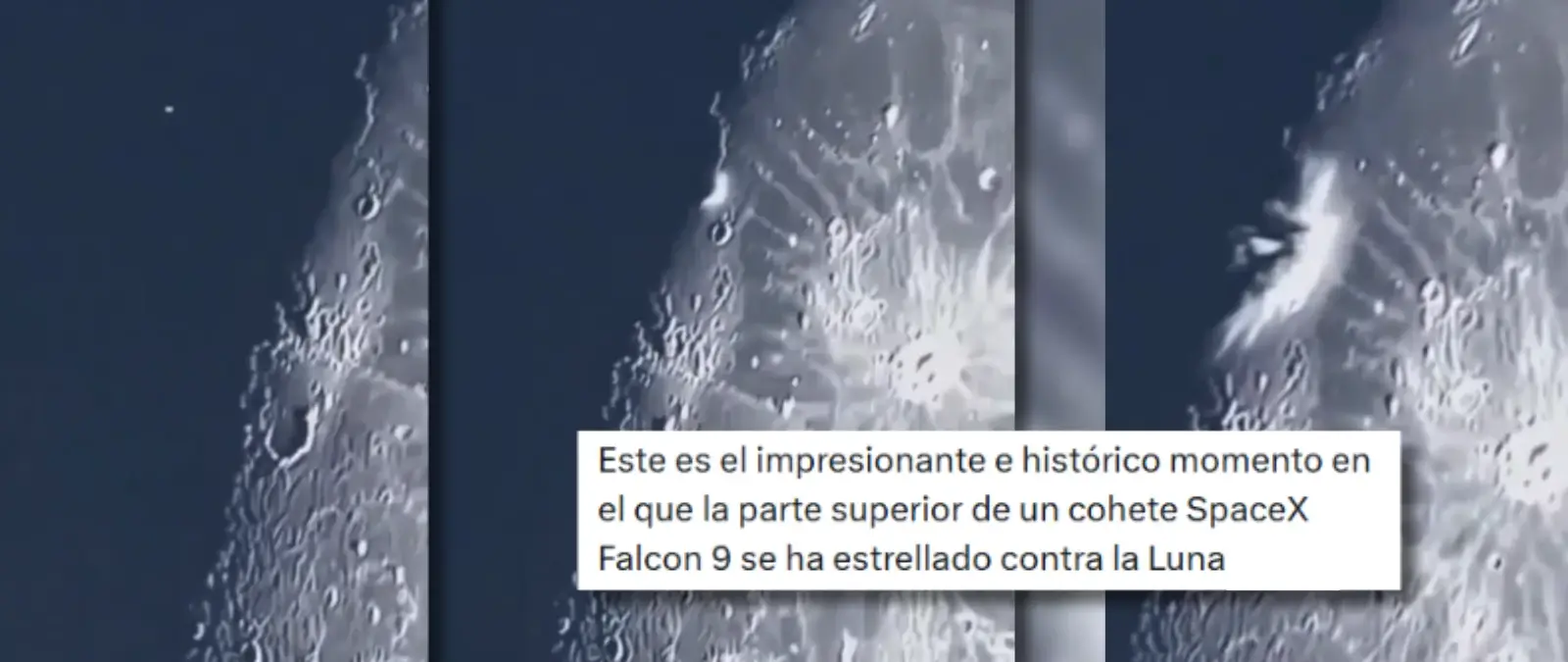
No, este vídeo no muestra el impacto de una pieza del Falcon 9 de SpaceX contra la Luna el 5 de agosto de 2026: circula desde al menos abril de 2026 Comparación entre los vídeos difundidos en abril y agosto de 2026.La NASA publicó el 4 de agosto de 2026 que intentaría observar el impacto lunar de una pieza del Falcon 9. Tras la hora prevista, la agencia confirmó en su perfil de Twitter que una parte del cohete había alcanzado la superficie lunar.
maldita · about 2 hours ago
Navy creates new robotic and autonomous systems DRPM Chris Miller will serve as acting DRPM RAS and PAE RAS the service announced.
breaking defense · about 2 hours ago