Loading…
 Saturday, September 26Saturday, September 26
4 months · 6 summary articles
The German government convened a high-stakes “four-against-four” summit at the Chancellery in Berlin on Wednesday, as Chancellor Friedrich Merz hosted coalition leaders alongside the heads of Germany’s main business federations and trade unions to negotiate over pensions, health care and tax reform. The closed-door talks at the Wannsee villa were overshadowed by public jousting between CSU leader Markus Söder and SPD chairman Lars Klingbeil over which party truly represents workers, while both sides sought to lower expectations of an immediate breakthrough .
Inside the Chancellery, Finance Minister Markus Marterbauer is scheduled to unveil a dual budget for 2027 and 2028 that aims to extricate Germany from the EU’s excessive-deficit procedure. The plan, agreed late on Tuesday with the ÖVP, SPÖ and NEOS, also includes a compromise on party and parliamentary-club funding that drew rare cross-party praise even as critics warned the broader budget still relies on optimistic growth assumptions .
Trade unions entered the room demanding higher public investment and wage guarantees, while employer representatives insisted on spending restraint and labour-market flexibility. “There are many red lines and even more complaints,” noted *Die Zeit*, “but can anything still move?” . SPD strategists hope the summit will yield at least symbolic concessions on health-care co-payments and pension indexation, while CDU/CSU negotiators stress that deficit reduction remains non-negotiable.
The political theatre outside the Chancellery underscored the pressure on Merz, who faces a caucus increasingly sceptical of his reform pace. Söder, whose Bavarian CSU has long positioned itself as the “true workers’ party,” mocked the SPD’s claim to represent labour interests, prompting Klingbeil to retort that only the SPD had delivered real wage increases in recent years .
Marterbauer’s budget speech to parliament on Thursday will test whether the government can square the circle: cutting spending without choking the fragile recovery. Analysts at *Der Standard* warn that the coalition’s growth forecasts—on which the deficit-exit hinges—are “highly uncertain,” leaving little margin for error .
With polls showing voter disillusionment over stalled reforms, the Chancellery summit may be remembered less for its immediate deliverables than for the signal it sends: that Germany’s fractious coalition is still capable of negotiation, even if compromise remains elusive.
Follow us for live European news

Treffen im Kanzleramt: Wir müssen reden An diesem Mittwoch trifft sich die schwarz-rote Regierung mit Gewerkschaften und Arbeitgebern. Die Union dämpft die Erwartungen. Die SPD hofft auf Erfolge. mehr...
taz.de · 4 months ago
Tamara van Ark en Wouter Koolmees worden verhoord De tweede week van de parlementaire enquête naar het coronabeleid is er een van politieke kopstukken.
nrc · 4 months ago
Vier gegen Vier im Kanzleramt Bei Friedrich Merz treffen heute die Koalitionsspitzen auf die Chefs der Wirtschaftsverbände und Gewerkschaften, um über die Reformbaustellen bei Rente, Gesundheit und Steuern zu verhandeln. Rasmus Buchsteiner liefert Eindrücke vom Wannsee vorab. Inklusive des Frotzelns zwischen Markus Söder und Lars Klingbeil um die Frage, wer die wahre Arbeiterpartei ist, und er dämpft zugleich die Erwartungen […]
politico.eu · 4 months ago
Finanzierung 13. AHV-Rente – Arbeiten für den «Ghüderchübu»? Die Einigungskonferenz als Rettung Einmal mehr muss die Einigungskonferenz her. Diese braucht es immer häufiger. Auch wegen der Polarisierung im Parlament.
srf.ch · 4 months ago
Kommentar: Gewerkschaften und Arbeitgeber sind keine Ersatzregierung Vor dem Koalitionsausschuss betreiben Kanzler Merz und Vizekanzler Klingbeil Erwartungsmanagement. Gleichzeitig übertragen sie den Sozialpartnern eine Rolle, die ihnen nicht zusteht.
handelsblatt · 4 months ago
Stromlücke: Energiebranche dringt auf „Flotte von Gaskraftwerken Am Mittwoch steht Wirtschaftsministerin Katherina Reiche der Branche Rede und Antwort. Die Unternehmen blicken positiv auf geplante Reformen. Trotzdem sehen sie Verbesserungsbedarf.
handelsblatt · 4 months ago

Drei Dinge, die man zur Budgetrede von Finanzminister Marterbauer wissen sollte Weniger Geld ausgeben, ohne den Aufschwung abzuwürgen: Vor dieser Herausforderung steht Marterbauer mit dem Doppelbudget 2027 und 2028. Die Koalition verspricht einen Exit aus dem EU-Defizitverfahren. Aber viele Annahmen sind unsicher
der standard · 4 months ago
Sozialpartnerdialog im Kanzleramt: Kann ein Kompromiss gelingen? Der Bundeskanzler lädt Arbeitgeber und Gewerkschaften ins Kanzleramt, um über Reformen zu sprechen. Es gibt viele Klagen und rote Linien, kann sich dennoch etwas bewegen?
die zeit · 4 months ago
Marterbauer präsentiert Doppelbudget Am Mittwoch präsentiert Finanzminister Markus Marterbauer (SPÖ) das Doppelbudget für 2027 und 2028. In den kommenden zwei Jahren soll damit ein Ausstieg aus dem EU-Defizitverfahren gelingen. Einen Tag vor der Budgetrede im Nationalrat erzielten ÖVP, SPÖ und NEOS noch eine Einigung in Sachen Parteien- und Klubförderung. Letzteres stieß auch bei der Opposition auf Zustimmung, die ansonsten an den Budgetplänen schon im Vorfeld scharfe Kritik formulierte.
orf.at · 4 months ago

Warum die Berliner Wahl für Kanzler Merz politisch zur entscheidenden Bewährungsprobe wird Die Berliner CDU nominiert den Regierenden Bürgermeister Kai Wegner als Spitzenkandidaten der Partei für die Wahl zum Abgeordnetenhaus im September. Wie sich Wegner bis dahin schlägt, wird auch für CDU-Chef und Bundeskanzler Friedrich Merz entscheidend sein.
welt.de · 4 months ago

F.A.Z. Frühdenker: Was halten die Sozialpartner vom Reformpaket der Koalition? Im Kanzleramt kommen die Koalitionsspitzen und die Sozialpartner zusammen, USA und Iran greifen sich gegenseitig an, der Papst hält eine Messe in der Sagrada Família, und der neue Steven Spielberg kommt in die Kinos. Der F.A.Z. Frühdenker.
faz · 4 months ago
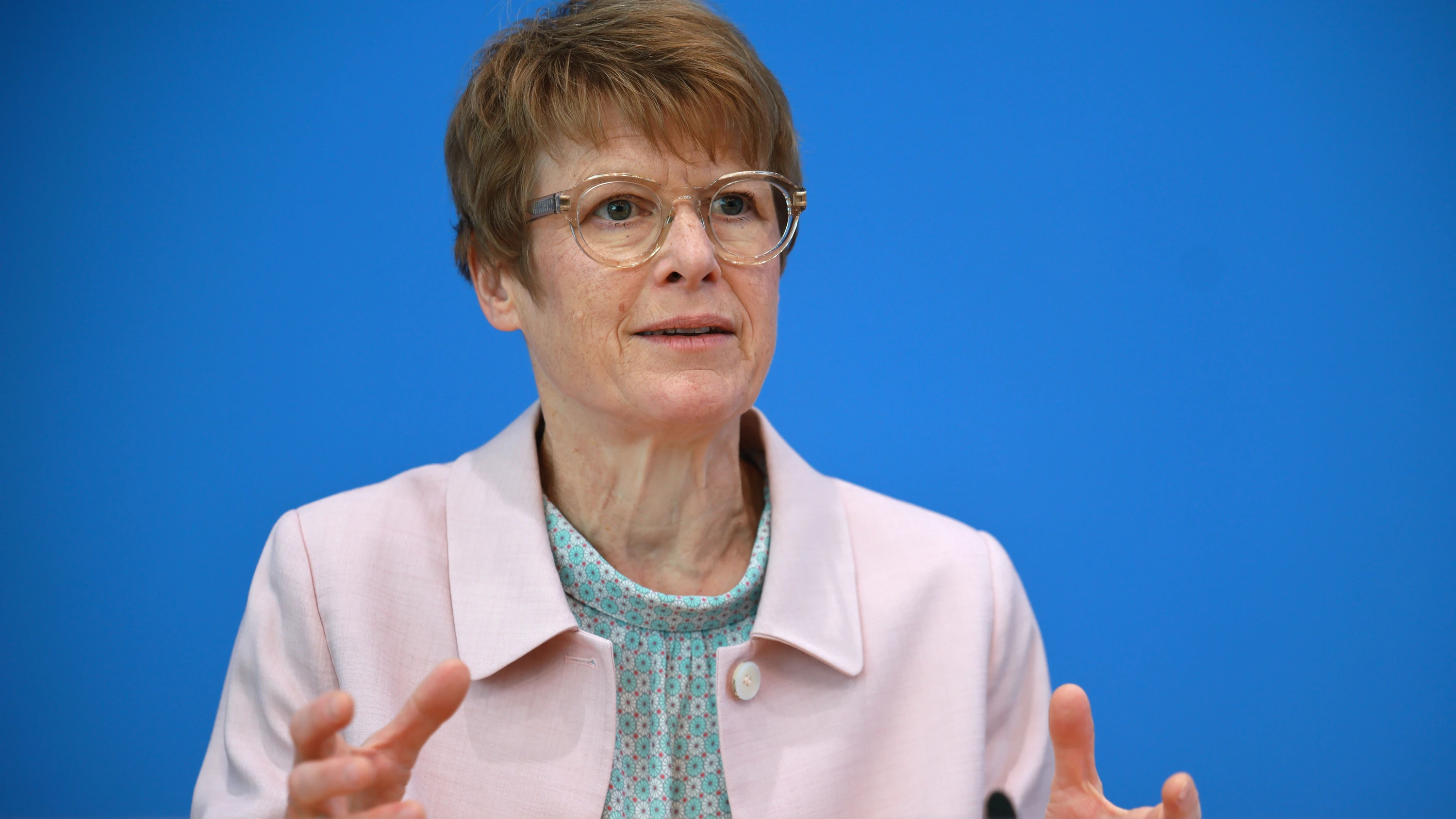
Deutschland-Liveblog: Veronika Grimm: Politik sollte sich auf „konsistentes Reformpaket konzentrieren „Wirtschaftsweise betont Notwendigkeit grundlegender Reformen +++ Gesetzentwurf zum Verzicht auf Diätenerhöhung noch in dieser Woche +++ Özdemir: Stuttgart 21 wird langsam „zur Lachplatte" +++ alle Entwicklungen im Liveblog
faz · 4 months ago