
EU leaders agree on single national plans to streamline 2 trillion budget

Story Timeline
4 months · 11 summary articles
EU leaders on Friday took a decisive step toward streamlining the bloc’s next seven-year budget, agreeing to replace a patchwork of sectoral programmes with a single national plan for each of the 27 member states. European Commission President Ursula von der Leyen called the decision “an important step forward,” saying the new structure will merge funding streams for cohesion, agriculture, fisheries, migration, security and the Social Climate Fund into one integrated instrument .
The breakthrough came during a European Council meeting in Brussels, where leaders also discussed a proposed budget of nearly €2 trillion over seven years. Yet deep divisions remain: net contributors such as Germany and the Netherlands are pushing for spending restraint, while countries including France advocate higher allocations to maintain farm subsidies, regional development and climate measures. Ireland, traditionally a net beneficiary, is closely monitoring the talks .
The Commission has gone further, urging member states to increase the EU’s own resources—new revenue streams that would reduce reliance on national contributions. “Federalization” of the budget is now openly debated, with some officials arguing that greater fiscal autonomy would stabilise long-term planning .
French President Emmanuel Macron and German Chancellor Olaf Scholz are at loggerheads over the scale of the Common Agricultural Policy, a perennial flashpoint. Paris wants to shield farm spending, while Berlin insists on capping overall commitments to keep the total below €2 trillion. Diplomats say a final accord is unlikely before December, but the single-plan framework agreed today sets the architecture for negotiations.
Von der Leyen hailed the structural reform as a way to cut red tape and improve accountability. “One plan, one dialogue, one responsibility per country,” she told reporters after the summit. Yet the political fault lines remain stark: eastern members fear cohesion funds could be diluted, while southern states worry climate and migration spending will be short-changed.
With the European Parliament set to weigh in later this year, the coming months will test whether the single-plan model can bridge the gap between frugal and ambitious capitals—or whether the budget battle will spill into 2027.
Follow us for live European news
Articles

Conseil européen: les Vingt-Sept toujours divisés sur le budget, un accord espéré dici la fin de lannée Les dirigeants des 27 États membres de lUnion européenne ont discuté, vendredi 19 juin, du futur budget pluriannuel de lorganisation, qui doit couvrir une période de sept ans. Un budget de près de 2 000 milliards deuros, au cœur de fortes tensions entre les pays qui souhaitent réduire les dépenses et ceux qui veulent les maintenir, et même les accroître.
rfi.fr · 3 months ago
EU leaders agree on the structure of the next budget, von der Leyen: An important step forward This involves the creation of a single plan for each Member State, which will replace the current separate sectoral programmes, bringing together funding for cohesion, agriculture, fisheries, migration, security and the Social Climate Fund into a single instrument
eunews.it · 3 months ago
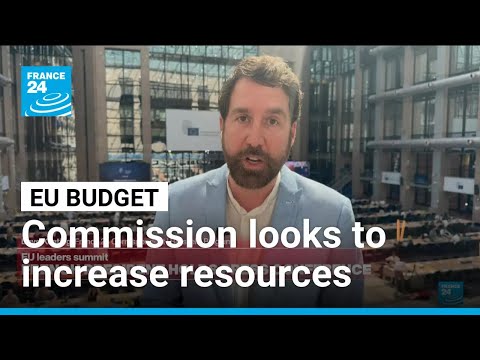
With EU budget battle underway, Commission proposes to increase own resources #EU Federalization :eu_round: #EUNews
mastodon bot · 3 months ago
Nicuşor Dan: Obiectivul României este ca viitorul buget multianual al UE să fie cât mai mare Obiectivul României este ca viitorul buget multianual al Uniunii Europene să fie cât mai mare, pentru că astfel şi contribuţia netă pentru ţara noastră va fi mai mare, a declarat vineri preşedintele Nicuşor Dan, la finalul Consiliului European de vară.
digi24 · 3 months ago

Megoldások nincsenek, problémák annál inkább – véget ért a brüsszeli EU-csúcs Megtörtént Magyar Péter bemutatkozása az uniós állam- és kormányfők körében, nagy lépést tette a vezetők a következő hétéves költségvetés előkészítése terén, de további sürgős lépéseket szorgalmaznak a versenyképesség javítása érdekében. Brüsszelben helyi viszonyok között mindenképpen kánikulának számító 34 fokos melegben ért véget az EU-csúcs
hvg.hu · 3 months ago

Germany and France are at odds over the EUs massive budget (and Ireland is in listening mode) Divisions have emerged amongst EU leaders on the extent of the spending encompassed within the EUs long-term budget.
thejournal · 3 months ago