Loading…
 Monday, August 24Monday, August 24
4 days · 3 summary articles
US unveils "toughest sanctions in history" against Iran as Tehran vows to block Gulf oil exports
US vows "toughest sanctions in history" on Iran, warns allies of economic consequences
Trump threatens "most crushing" economic measures against Iran as Middle East war enters sixth month
The Trump administration on Monday prepared to unveil what U.S. Treasury Secretary Scott Bessent called “the toughest sanctions in history” against Iran, framing the measures as the start of an “economic D-Day” and the “single greatest financial offensive ever marshalled against an adversary.” Bessent, writing in the Financial Times, said the goal was to “sever every economic lifeline” sustaining Iran until it stands alone .
Iran’s security chief, Mohsen Rezaei, warned that if the U.S. proceeds, Tehran would halt all oil exports from the Persian Gulf and the Strait of Hormuz, and treat any neighboring state joining the sanctions as “an act of war.” Rezaei said Iran would also target alternative oil export routes from the Gulf, declaring, “Not a drop of oil will leave the Persian Gulf” .
Iranian President Massud Peseschkian acknowledged “significant imbalances” in water, electricity, gas, and fuel supplies but insisted Iran would withstand the pressure, citing national resilience. Foreign Minister Abbas Araghchi dismissed the sanctions as “repetitive scenarios” and a sign of U.S. desperation, stating, “The fact that they have moved on from military operations to bring up the same old plans shows that they are desperate” .
The conflict has already disrupted global oil markets, with Iran effectively blocking shipping in the Strait of Hormuz, pushing prices higher. Since late February, U.S. and Israeli airstrikes have killed thousands in Iran and Lebanon, damaged infrastructure, and destroyed nearly 100% of Iran’s conventional military factories, according to Bessent. Iran retains missile and drone capabilities, continuing to threaten Gulf neighbors and tankers transiting the strait .
Bessent is scheduled to hold a press conference at 2 p.m. EDT to detail the sanctions, which will target countries and companies continuing trade with Iran. He warned that those fearing to oppose Tehran should “consider the consequences of maintaining” such ties .
Pakistan’s military chief, Asim Munir, arrived in Tehran on Monday as part of Islamabad’s efforts to de-escalate tensions and bring the U.S. and Iran back to negotiations, according to Iran’s state TV and regional officials .
Follow us for live European news
3 further sources not geolocated

Trump inszeniert Indycar-Rennen als patriotisches Riesen-Event Zum 250. Geburtstag der USA fand erstmals ein Indycar-Rennen in Washington statt. Donald Trump inszenierte das Spektakel als patriotisches Mega-Event. „Unser Land ist super und unser 250. Geburtstag ist etwas ganz Besonderes, so der US-Präsident.
welt.de · about 2 hours ago

Iran warnt USA vor Wirtschaftskrieg – und droht Golfstaaten Nachdem die militärischen Kampfhandlungen nachgelassen haben, wollen die USA den Iran nun wirtschaftlich unter Druck setzen
der standard · about 2 hours ago

250-Jahr-Feiern: Trump drehte Ehrenrunde bei Autorennen in Washington US-Präsident Donald Trump ließ sich auf seinem ins Leben gerufenen „Freedom 250 Grand Prix feiern. „Am Ende ist es größer geworden, als wir es je für möglich gehalten hätten, sagte der US-Präsident dem US-Sender Fox, der das Rennen übertrug.
die presse · about 2 hours ago
US-Sanktionen gegen Iran: Irans Präsident räumt wirtschaftliche Schwierigkeiten des Landes ein Massud Peseschkian spricht von »erheblichen Ungleichgewichten« im Iran. Parlamentspräsident Ghalibaf warnt die USA vor Konsequenzen ihres angekündigten Wirtschaftskriegs.
die zeit · about 2 hours ago
Die Lage im Überblick: USA: Endphase des Iran-Kriegs beginnt - Teheran droht Washington will Teheran mit den „härtesten Sanktionen der Geschichte wirtschaftlich in die Knie zwingen. Der Iran gibt sich selbstbewusst - und droht den USA und ihren Verbündeten mit Konsequenzen.
tagesspiegel · about 2 hours ago

USA kündigen „Endphase des Iran-Kriegs an – „Im Morgengrauen beginnt ein wirtschaftlicher D-Day Die USA wollen nach dem angekündigten Wirtschaftskrieg heute die Ausgestaltung der Sanktionen vorstellen. Während sich die meisten Akteure im Iran ziemlich gelassen zeigen, räumt Präsident Massud Peseschkian Probleme ein.
welt.de · about 3 hours ago

🟠 UPDATEUS-Iran Escalation: Sanctions and Hormuz Strait BlockadesIranian Foreign Minister Abbas Araghchi characterized new US sanctions as repetitive, stating they are like watching the same movie on repeat.📰 #USA #Sanctions #Geopolitics #GeoWire
mastodon bot · about 3 hours ago
Trump admin predicts U.S. trade war will be devastating for Canada The Trump administration on Sunday warned that Canada would be "foolish" to think it could win a trade war with the United States, predicting a "devastating" impact on…
japantoday · about 3 hours ago
Kanada zeigt Europa, wie man Trump die Stirn bietet [premium] Kanada hat keine Angst mehr vor US-Präsident Donald Trump und fährt im Zollstreit die Ellbogen aus. Ein Vorbild für Europa.
die presse · about 3 hours ago
Krieg in Nahost: Iran warnt USA vor Wirtschaftskrieg und droht Golfstaaten Washington will Teheran wirtschaftlich in die Knie zwingen. Iran gibt sich selbstbewusst und warnt seine Nachbarn davor, sich den USA anzuschließen.
sueddeutsche · about 3 hours ago
Iran-Krieg: Iran warnt USA vor Wirtschaftskrieg – und droht Golfstaaten Im Iran-Krieg wird aktuell nicht gekämpft. Washington will Teheran wirtschaftlich in die Knie zwingen. Der Iran gibt sich selbstbewusst – und droht den USA und ihren Verbündeten mit Konsequenzen.
handelsblatt · about 3 hours ago
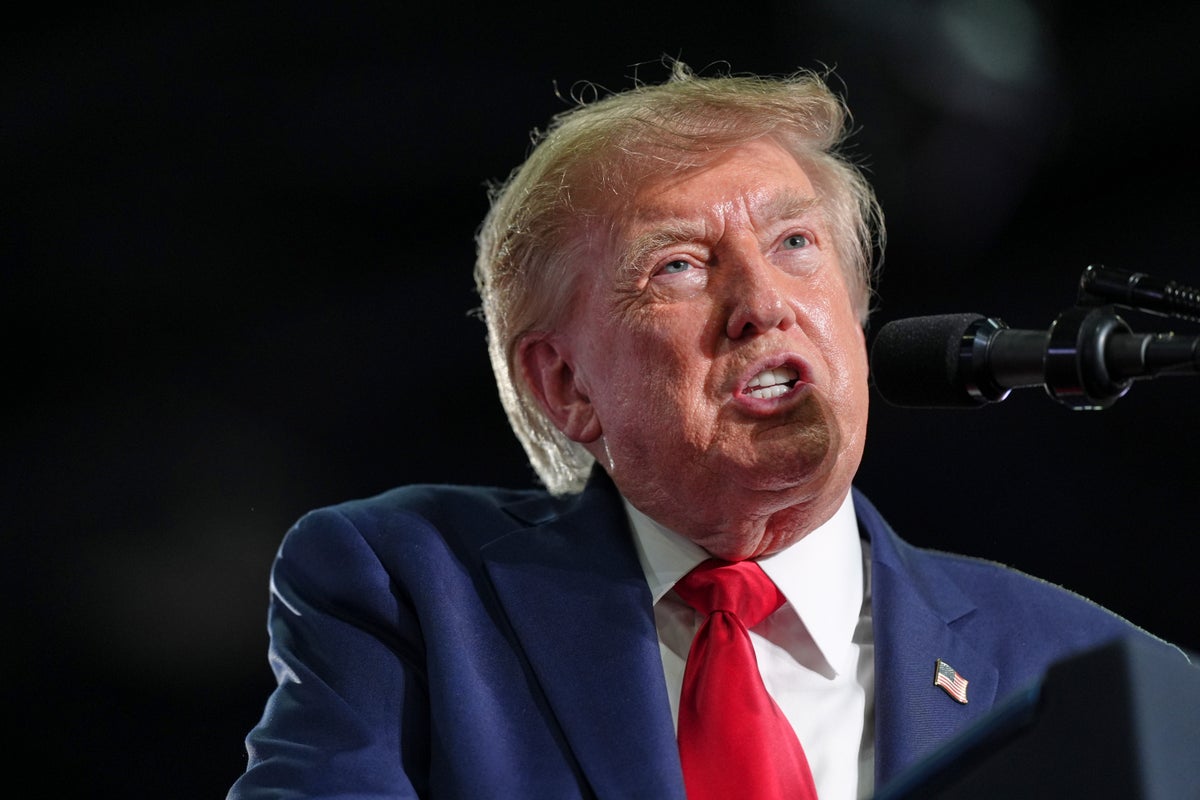
Iran-US war latest: Trumps economic D-Day arrives as Tehran threatens earthquake-like retaliation Irans new security chief warns Gulf neighbours they will be treated as enemies if they join Trumps economic war
independent · about 3 hours ago

Oil falls ahead of US announcement on new Iran sanctions reut.rs/46idK0B
bluesky_Reuters · about 4 hours ago
Die Lage im Überblick: Iran warnt USA vor Wirtschaftskrieg - und droht Golfstaaten Im Iran-Krieg wird aktuell nicht gekämpft. Washington will Teheran wirtschaftlich in die Knie zwingen. Der Iran gibt sich selbstbewusst - und droht den USA und ihren Verbündeten mit Konsequenzen.
tagesspiegel · about 4 hours ago
Iran war live: US vows economic D-Day; Tehran threatens Gulf oil exports US Treasury Secretary Scott Bessent says Washington aims to sever every economic lifeline that sustains Iran.
aljazeera · about 4 hours ago
Kanadas Carney zeigt Trump die Grenzen auf – schauen die Europäer weiter nur zu? Hat es zuletzt nach einer Einigung zwischen Kanada und den USA ausgesehen, ist der von Donald Trump angezettelte Zollstreit nun eskaliert. Vor den Zwischenwahlen ist Trump angreifbar
der standard · about 4 hours ago
Trump åkte ärevarv i The Beast i DC USA:s president Donald Trump åkte ett ärevarv i säkerhetsbilen The Beast inför söndagens Indycar-lopp på Washingtons gator.– Jag kommer göra en liten cirkel, sade Trump när han anlände.
svenska dagbladet · about 4 hours ago
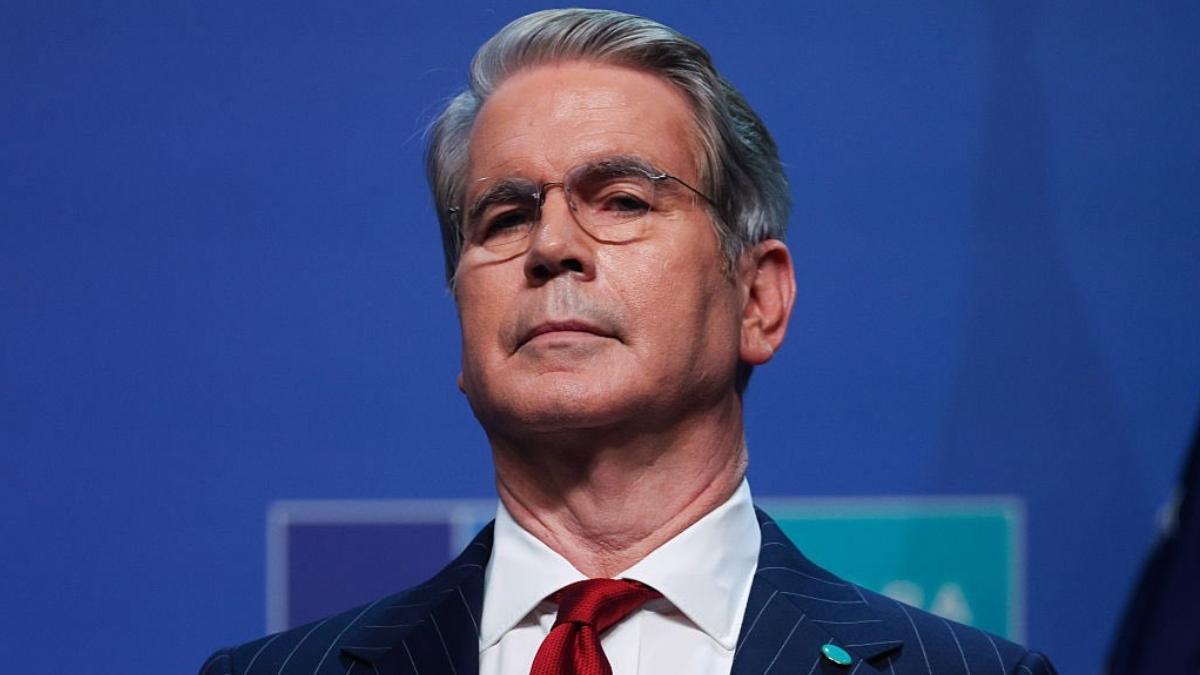
US launches an economic D-Day campaign against Iran as tensions escalate over oil and sanctions! #USIran #Geopolitics #OilMarkets
mastodon bot · about 6 hours ago
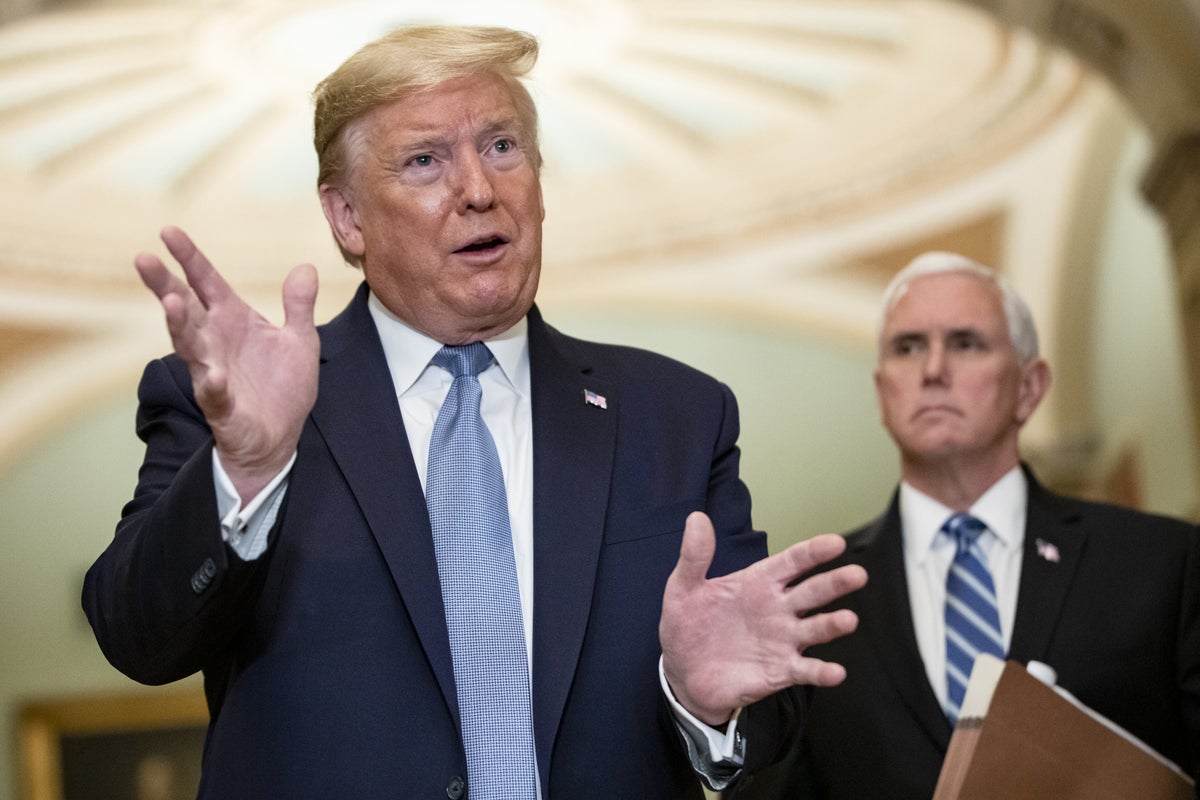
Mike Pence warns Trump hell have to go in and finish the job in Iran The former vice president, a stalwart Iran hawk, implies that further military action as war heads to six-month mark
independent · about 7 hours ago
+++ USA +++: Trump dreht Ehrenrunde bei Autorennen mitten in Washington US-Bundesrichterin kippt Trumps Visa-Stopp +++ US-Postdienstleister gibt neue Regeln für Wahlen vor +++ Trumps Initiative für günstiges Rinderhack erntet Kritik +++ Der Newsblog.
handelsblatt · about 7 hours ago
Trump caps summer of US 250th birthday with auto race through Washington President Donald Trump will cap celebrations of the U.S. 250th anniversary with a first-of-its-kind auto race through the streets of Washington, closing a summer of sports and spectacle as drivers speed past the capitals iconic landmarks. IndyCars Freedom 250 Grand Prix will zoom through the National Mall, past the U.S. Capitol, down historic Pennsylvania Avenue […]
cyprus mail · about 8 hours ago
Iran-Krieg: Iran warnt USA vor Bumerang-Effekt bei Wirtschaftskrieg Die militärischen Kampfhandlungen im Iran-Krieg haben nachgelassen. Die USA wollen Teheran nun wirtschaftlich in die Knie zwingen. Der Iran warnt vor möglichen Konsequenzen.
handelsblatt · about 8 hours ago
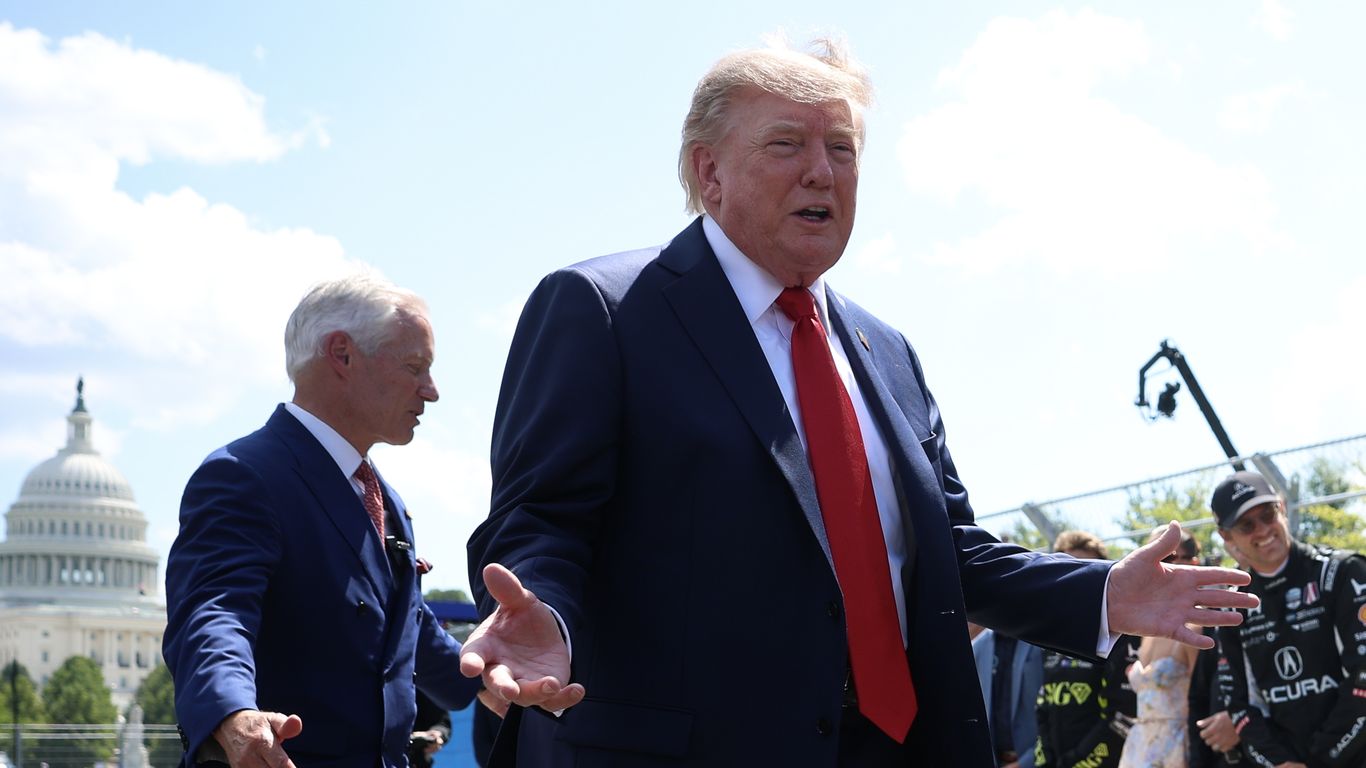
Trump says rejecting data centers is "a mistake" President Trump defended the expansion of data centers in an interview with his former fixer, Michael Cohen, that aired in full on Sunday.Why it matters: Trumps support comes as data centers face growing backlash in both red and blue states.What hes saying: Trump told Cohen during their interview that the U.S. was leading China in AI "by a lot" and that data centers were not taking power from the grid."Theyre making their own power plants. Theyre building the most beautiful, youve never seen power plants like this," Trump said during the interview that was recorded last week."Communities that dont take a data center, theyre making a mistake" because data centers create "tremendous amounts of jobs and money," Trump added.Reality check: Some data centers are developing behind-the-meter power plants that directly supply their facilities, but others will draw electricity from the grid.The big picture: Trumps comments come as Texas Gov. Greg Abbott said data center companies "dug their own grave" and deserve the backlash theyre facing after failing to win community support.Abbott has directed state regulators to make data centers pay the full cost of the electrical infrastructure they require, while Pennsylvania Gov. Josh Shapiro (D) imposed restrictions and New York Gov. Kathy Hochul (D) ordered a one-year moratorium on hyperscaler data centers.Context: The Trump administration has taken steps to ease some environmental requirements for data centers while pushing tech companies to cover more of the electricity costs associated with the AI buildout.Last month, the Environmental Protection Agency issued guidance saying power plants not connected to the public grid arent subject to the Clean Air Acts Acid Rain Program, a move the agency said would expand opportunities for dedicated data center power generation.Trump has also pushed data center operators to build, bring, or buy the power they need and cover the costs of related infrastructure through his Ratepayer Protection Pledge.
axios · about 8 hours ago
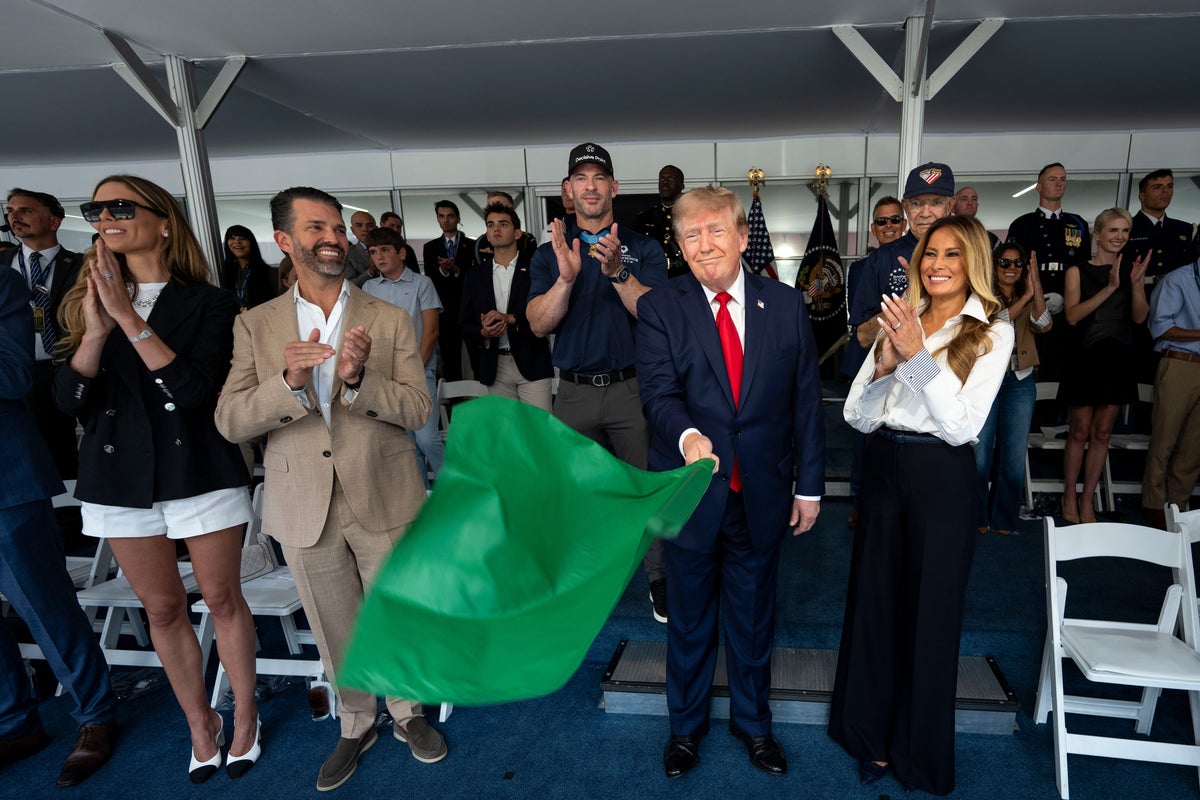
Trumps aide Natalie Harp, son Eric and MAGA inner circle join president and Melania for Freedom 250 Grand Prix Natalie Harp, Trumps executive assistant, was in the presidents spectator box along with first lady Melania Trump
independent · about 8 hours ago
![Trump and former fixer Michael Cohen make amends President Trump signaled that hes welcomed his former fixer, Michael Cohen, back into his good graces in a remarkably friendly interview that aired in full on Sunday.The big picture: The president and Cohen discussed a wide range of topics, including Trumps proposed ballroom, how the economy is doing during his second term and how so-called "weaponization" is destroying America. The interview is the first time Trump and Cohen have spoken publicly since the attorney was a key witness in the hush money trial that led to Trumps conviction on 34 felony counts of falsifying business records.Trump and Cohen have repeatedly traded barbs over each others alleged wrongdoing. Cohen had previously called Trump a "conman" and a "predator," while the president said Cohen was a "rat." What theyre saying: But on Sunday, the two participated in an amicable conversation where Cohen repeatedly referred to the president as "boss" and the pair openly mulled why so many people in America despise Trump.They also discussed Cohens role in the hush money trial, for which Trump blamed New York Attorney General Letitia James and Manhattan District Attorney Alvin Bragg, saying they forced Cohen to testify against him. "They threatened you with everything if you didnt go against Trump, and you took it back. I wouldnt even be talking to you right now if you didnt," Trump said.Zoom out: When asked by CNNs Jake Tapper last week if Cohen stood by his prior testimony that Trump directed him to commit crimes, he said "I will not discuss what I had said in the past, what I had stated under oath" and "[w]hat I said was said and thats where I stand with it."He also told CNN hed submitted a pardon application to Trumps White House after saying the Biden administration denied it.Cohen wrote on his Substack earlier this year that he felt "pressured and coerced" by prosecutors to testify against Trump.Catch up quick: Cohen went to prison during Trumps first term after paying Stormy Daniels $130,000 so she wouldnt discuss an alleged affair with Trump.He pleaded guilty in 2018 to eight counts related to tax fraud and campaign finance violations.Zoom out: Asked by Tapper last week whether he still thinks Trump is a "racist and a conman and a cheat," Cohen declined to answer and repeatedly said he was focused on the future rather than the past."How is it possible that the two of us can ever sit down again? … The answer is that we forgave," Cohen said, adding that he hasnt forgotten anything but is using "courage to stop allowing yesterday to dictate tomorrow."Go deeper: What to know about Michael Cohen, whos testifying at Trumps hush money trial](https://images.axios.com/jl5062Jy4wOiiSx3bvKqXpXLAks=/0x39:5000x2852/1366x768/2026/08/20/1787263693441.jpeg)
Trump and former fixer Michael Cohen make amends President Trump signaled that hes welcomed his former fixer, Michael Cohen, back into his good graces in a remarkably friendly interview that aired in full on Sunday.The big picture: The president and Cohen discussed a wide range of topics, including Trumps proposed ballroom, how the economy is doing during his second term and how so-called "weaponization" is destroying America. The interview is the first time Trump and Cohen have spoken publicly since the attorney was a key witness in the hush money trial that led to Trumps conviction on 34 felony counts of falsifying business records.Trump and Cohen have repeatedly traded barbs over each others alleged wrongdoing. Cohen had previously called Trump a "conman" and a "predator," while the president said Cohen was a "rat." What theyre saying: But on Sunday, the two participated in an amicable conversation where Cohen repeatedly referred to the president as "boss" and the pair openly mulled why so many people in America despise Trump.They also discussed Cohens role in the hush money trial, for which Trump blamed New York Attorney General Letitia James and Manhattan District Attorney Alvin Bragg, saying they forced Cohen to testify against him. "They threatened you with everything if you didnt go against Trump, and you took it back. I wouldnt even be talking to you right now if you didnt," Trump said.Zoom out: When asked by CNNs Jake Tapper last week if Cohen stood by his prior testimony that Trump directed him to commit crimes, he said "I will not discuss what I had said in the past, what I had stated under oath" and "[w]hat I said was said and thats where I stand with it."He also told CNN hed submitted a pardon application to Trumps White House after saying the Biden administration denied it.Cohen wrote on his Substack earlier this year that he felt "pressured and coerced" by prosecutors to testify against Trump.Catch up quick: Cohen went to prison during Trumps first term after paying Stormy Daniels $130,000 so she wouldnt discuss an alleged affair with Trump.He pleaded guilty in 2018 to eight counts related to tax fraud and campaign finance violations.Zoom out: Asked by Tapper last week whether he still thinks Trump is a "racist and a conman and a cheat," Cohen declined to answer and repeatedly said he was focused on the future rather than the past."How is it possible that the two of us can ever sit down again? … The answer is that we forgave," Cohen said, adding that he hasnt forgotten anything but is using "courage to stop allowing yesterday to dictate tomorrow."Go deeper: What to know about Michael Cohen, whos testifying at Trumps hush money trial
axios · about 9 hours ago

🟠 UPDATEMike Pence Warns Against US-Canada Trade WarCanadian Prime Minister Mark Carney declared the two sides are in an economic war after President Donald Trump targeted major Canadian industries and numerous highly specific items.📰 #Markets #Geopolitics #GeoWire
mastodon bot · about 9 hours ago

Mit einem Comic warnt der Iran die USA – Präsident räumt „erhebliche Ungleichgewichten ein Der Iran glaubt nach der Androhung eines Wirtschaftskriegs durch US-Präsident Trump an einen Bumerang-Effekt. Während sich die meisten Akteure ohnehin ziemlich gelassen zeigen, räumt Präsident Massud Peseschkian Probleme ein.
welt.de · about 9 hours ago
+++ Iran-Krieg +++: Irans Präsident räumt wirtschaftliche Schwierigkeiten ein Syrien und Israel sprechen offenbar unter US-Vermittlung über Deeskalation +++ Iran meldet Fund von großem Erdgasfeld im Süden des Landes +++ Iran warnt USA vor Bumerang-Effekt bei Wirtschaftskrieg +++ Der Newsblog.
handelsblatt · about 9 hours ago
Iran weist US-Drohung zurück: „Wird scheitern
orf.at · about 9 hours ago
Trump has run out of options in Iran war: Stephen Walt Political scientist Stephen Walt says Trump promised to make US stronger, but many of his policies are making it weaker.
aljazeera · about 9 hours ago