Loading…
 Saturday, September 26Saturday, September 26
4 months · 38 summary articles
The fragile US-Iran détente faced its first major test on Saturday as Washington and Tehran postponed planned technical talks in Switzerland, citing unresolved logistical issues and ongoing regional violence. US Vice President JD Vance will not travel to Bürgenstock, the Swiss resort hosting the negotiations, after the White House cited “unresolved logistical arrangements” that stalled preparations for implementing the Islamabad Memorandum signed electronically by Presidents Donald Trump and Ebrahim Pezeshkian . The Swiss Foreign Ministry confirmed the cancellation of Friday’s talks, which were intended to reopen the Strait of Hormuz and launch 60 days of negotiations on nuclear and sanctions issues .
US envoy Steve Witkoff is en route to Switzerland, where Jared Kushner has already arrived, while Iranian Foreign Minister Abbas Araghchi had been expected to join after initially signaling travel plans that were later thrown into doubt by renewed fighting in Lebanon . Pakistani sources reported that Tehran postponed the talks to protest continued Israeli ceasefire violations in Lebanon, with Araghchi withdrawing at the last minute following directives from Supreme Leader Ali Khamenei . Qatari Prime Minister Mohammed Bin Abdul Rahman al-Thani, a key mediator, arrived in Switzerland on Friday as the diplomatic process hung in the balance .
Despite the setback, Iran’s Supreme National Security Council announced that Hormuz traffic will be gradually increased under the US deal, with no fees charged for 60 days and mine-clearing measures to follow . The Islamabad Memorandum, signed on Thursday, extends the ceasefire and aims to stabilize the strategic waterway, but its implementation now hinges on de-escalation in Lebanon. Brent crude futures rose above $80 per barrel as investors reassessed geopolitical risks amid the uncertainty .
Analysts at the Long War Journal note that Khamenei is warily accepting the deal while hardliners in Tehran push to rebuild Hezbollah’s capabilities, viewing sanctions relief as an opportunity to restore proxy networks . Pakistan’s Prime Minister Shehbaz Sharif hailed Islamabad’s mediation as a “historic diplomatic achievement,” crediting the military for preventing the ceasefire from collapsing . With the talks delayed but not derailed, the coming days will determine whether the fragile opening can survive the pressures of a wider regional conflict.
Follow us for live European news
1 further source not geolocated

Iran says Hormuz traffic to be gradually increased under US deal Irans Supreme National Security Council announced that traffic through the Strait of Hormuz will be increased gradually under a memorandum of understanding with the US. No fees will be charged for 60 days, and mine‑clearing measures will follow. The deal, signed electronically by Presidents Trump and Pezeshkian, initiates 60 days of negotiations on nuclear and sanctions issues.
yenisafak · 3 months ago
US-Iran talks scheduled for Friday cancelled: Swiss ministry The Swiss Foreign Ministry announced that US‑Iran talks planned for Friday at Bürgenstock have been cancelled, citing unresolved logistical details. Vice President JD Vance will not depart for Switzerland as expected. The cancellation follows the electronic signing of the Islamabad Memorandum, which was supposed to reopen the Strait of Hormuz.
yenisafak · 3 months ago
Iran parliament speaker warns of crushing response to US deal breach Mohammad Bagher Ghalibaf has warned that Iran will deliver a crushing response if the US breaches the new agreement or makes excessive demands. He said the enemy was slapped once in the war; if they follow the same path, they will receive an even harsher slap.
yenisafak · 3 months ago
White House delays Vance Switzerland trip over Iran talks logistics The White House announced on Thursday that US Vice President JD Vance will not depart for Switzerland as scheduled, stating that unresolved logistical arrangements have stalled preparations for technical talks with Iran aimed at implementing the newly signed Islamabad ceasefire memorandum.
yenisafak · 3 months ago
Israeli minister says no one can tell us what to do amid US rift Israeli Defense Minister Israel Katz said late Thursday that Israel would respond immediately and with force if Iran attacks, insisting that "no one can tell us what to do" as a deepening rift emerges between Jerusalem and Washington over a recent US-Iran memorandum.
yenisafak · 3 months ago
Dollar index hits 13-month high on hawkish Fed, Middle East strain The dollar index climbed to a 13-month high on Friday, driven by hawkish signals from the US Federal Reserve and renewed uncertainty over Middle East peace efforts, as money markets priced in a likely rate hike and investors sought safety following reports that Israel targeted Lebanon and Iran withdrew from negotiations.
yenisafak · 3 months ago
Israeli opposition would secure Knesset majority, poll shows A new opinion poll published Friday shows that Israels opposition would secure a parliamentary majority if elections were held today, winning 61 seats in the 120-member Knesset while Prime Minister Benjamin Netanyahus ruling coalition would trail with 49 seats, according to the Lazar Research Institute survey.
yenisafak · 3 months ago
Saudi super-tankers reappear after two months of silence Three Saudi Very Large Crude Carriers (VLCCs), carrying approximately 6 million barrels of crude, have re-emerged on tracking systems after a two-month silence. The development signals a potential de-escalation in the Strait of Hormuz following a recent US-Iran understanding, with two vessels en route to Asian ports.
yenisafak · 3 months ago
Källor: USA skickar sändebud för Iransamtal USA:s vicepresident JD Vance ställde in sin resa till Schweiz på fredagen – och några förhandlingar med Iran blev inte av.Nu väljer USA att skicka sändebuden Steve Witkoff och Jared Kushner till alplandet. Samtidigt uppges Irans utrikesminister planera för en resa under det närmsta dygnet, rapporterar Axios med hänvisning till källor.
svenska dagbladet · 3 months ago
Japan-linked vessel clears Hormuz as three-month blockade eases Japanese Prime Minister Sanae Takaichi announced Friday that a Japan-linked vessel detained in the Persian Gulf has successfully transited the Strait of Hormuz and is sailing toward Japan, as Tokyo continues diplomatic efforts to secure passage for dozens of remaining ships.
yenisafak · 3 months ago
Sharif hails Pakistans mediation in US-Iran agreement Prime Minister Shehbaz Sharif praised Pakistans role in brokering the US-Iran agreement, calling the Islamabad Memorandum a historic diplomatic achievement. He credited military leadership for preventing the ceasefire from collapsing and announced that falling global oil prices would bring economic benefits to Pakistan.
yenisafak · 3 months ago
Hormuz traffic rebounds as 25 ships cross in a day after US-Iran deal Commercial traffic through the Strait of Hormuz surged to 25 ships in a single day — the highest since June — following the US-Iran Islamabad Memorandum. Four supertankers carried at least 8 million barrels of crude, mainly from Saudi Arabia and the UAE, bound for Japan, South Korea, Pakistan, Singapore, India, and China.
yenisafak · 3 months ago
Iran postponed US talks over Israeli ceasefire violations: Pakistani sources Iran postponed technical‑level talks with the US scheduled for Friday in Switzerland to protest continued Israeli ceasefire violations in Lebanon. Tehrans chief negotiator and foreign minister pulled out at the last minute following directives from top Iranian leadership.
yenisafak · 3 months ago
Trump: US secretly moved 87 oil tankers through Hormuz President Donald Trump revealed that the US quietly moved at least 87 oil tankers through the Strait of Hormuz under cover of darkness, with naval escorts, after degrading Irans radar systems. He warned that Iran has 60 days to finalise a deal or face consequences.
yenisafak · 3 months ago
Witkoff travels to Switzerland for talks with Iran U.S. Special Envoy Steve Witkoff traveled to Switzerland to resume technical talks with Iran.
ukrinform · 3 months ago
Brent crude tops $80 as US-Iran talks canceled, Israel hits Lebanon Brent crude futures climbed above $80 per barrel on Friday as investors weighed renewed geopolitical risks following the cancellation of planned US-Iran talks in Switzerland and Israeli military strikes in southern Lebanon that killed at least two dozen people, even as shipping conditions showed signs of improvement in the strategic Strait of Hormuz.
yenisafak · 3 months ago
Macron urges Netanyahu to show responsibility and rationality French President Emmanuel Macron on Thursday urged Israeli Prime Minister Benjamin Netanyahu to demonstrate "responsibility and rationality," criticizing Israeli policies in Gaza and the West Bank while rejecting claims that a recent US-Iran agreement represented a capitulation by Tehran.
yenisafak · 3 months ago
Israels Lapid warns foreign relations crumbling amid tensions with allies Israeli opposition leader Yair Lapid warned on Friday that Prime Minister Benjamin Netanyahus government is systematically dismantling the countrys foreign relations, citing mounting diplomatic disputes with Washington, a rupture with European Union leadership, and direct criticism from former ally Donald Trump.
yenisafak · 3 months ago
Hormuz shipping normalcy elusive until mines cleared: Report Maritime traffic through the Strait of Hormuz will remain severely restricted until approximately 80 naval mines are cleared from the main shipping channel, industry experts warned Friday, even as vessels begin transiting the strategic waterway following a US-Iran agreement to end hostilities and reopen commercial lanes.
yenisafak · 3 months ago

The U.S. and Iran extended their ceasefire, signed an MoU to reopen the Strait of Hormuz and launched a 60‑day push toward a broader agreement.Read the GPS daily brief for analysis. #Iran #StraitOfHormuz #diplomacy
mastodon bot · 3 months ago
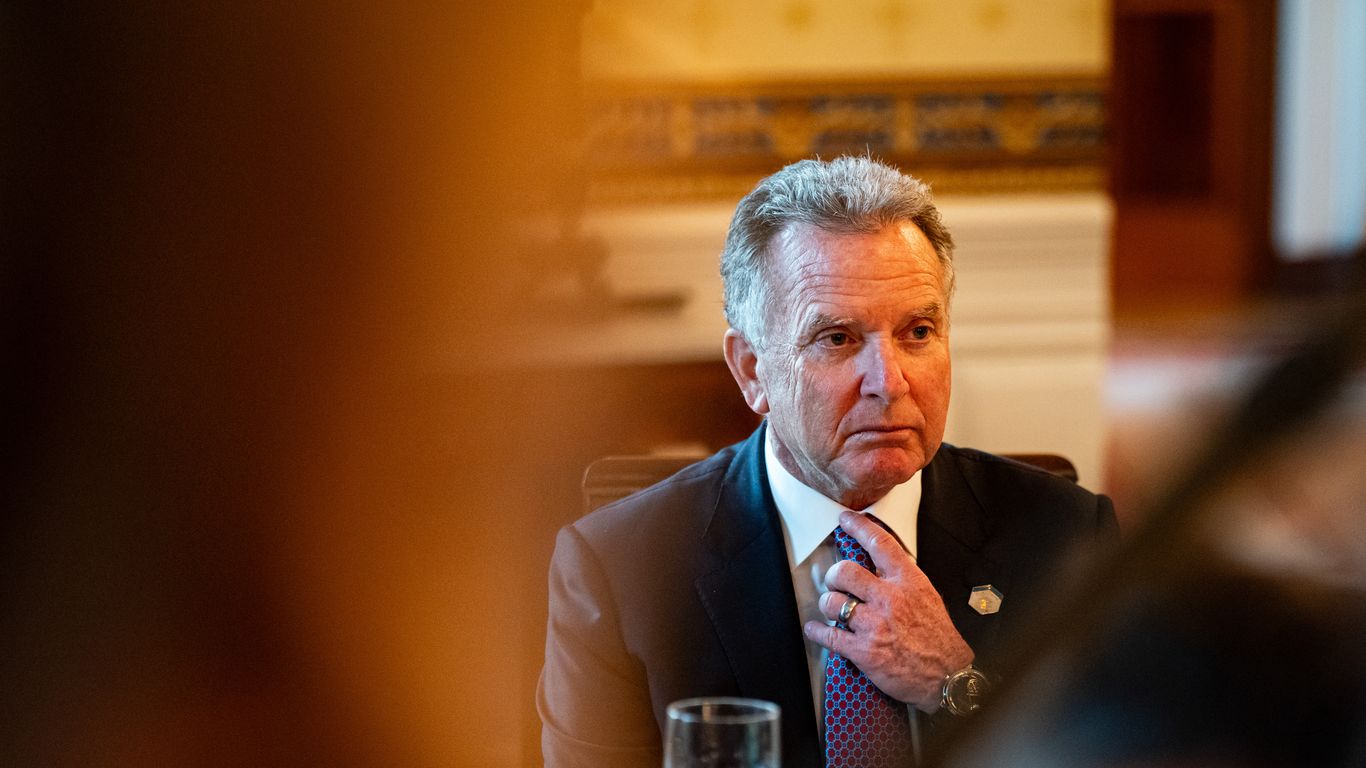
Trump envoys head to Switzerland for potential Iran talks White House envoy Steve Witkoff is on his way to Switzerland, where the first round of talks with Iran on a potential nuclear deal is expected to take place, a U.S. official told Axios.The U.S. official said Trumps envoy Jared Kushner is already in Switzerland. Why it matters: The talks were supposed to start on Friday but were postponed because of the fighting between Israel and Hezbollah in Lebanon. Its not yet clear if a new time has been set for the talks.The other side: According to a source from one of the mediating countries, Iranian Foreign Minister Abbas Araghchi told several of his counterparts on Friday that the ceasefire in Lebanon is a critical issue for Iran and "make or break" for the U.S.-Iran negotiations.A second source from one of the mediating countries said the Iranians stressed they want to see a ceasefire take hold before traveling to Switzerland. The source said for that reason the talks could not start until Monday, though the timeline could change. Behind the scenes: Qatari Prime Minister Mohammed Bin Abdul Rahman al-Thani, who is one of the key mediators between the U.S. and Iran, arrived in Switzerland earlier on Friday.What to watch: Vice President Vance was expected to lead the U.S. delegation, but postponed his trip last minute on Thursday night. Its unclear if he will make the trip this weekend.
axios · 3 months ago
⚡#UPDATE White House envoy Steve Witkoff is on his way to Switzerland, where the first round of talks with Iran on a potential nuclear deal is expected to take place, a U.S. official said. Jared Kushner is already in Switzerland. 💧 Rainbet.com the #1 Non-KYC Crypto Casino & Sportsbook @rainbetcom +18
telegram bot · 3 months ago
Trump envoys head to Switzerland for potential Iran talks White House envoy Steve Witkoff is on his way to Switzerland, where the first round of talks with Iran on a potential nuclear deal is expected to take place, a U.S. official told Axios.The U.S. official said Trumps envoy Jared Kushner is already in Switzerland. Why it matters: The talks were supposed to start on Friday but were postponed because of the fighting between Israel and Hezbollah in Lebanon. Its not yet clear if a new time has been set for the talks.Behind the scenes: Qatari Prime Minister Mohammed Bin Abdul Rahman al-Thani, who is one of the key mediators between the U.S. and Iran, arrived in Switzerland earlier on Friday.What to watch: Vice President Vance was expected to lead the U.S. delegation, but postponed his trip last minute on Thursday night. Its unclear if he will make the trip this weekend.
axios · 3 months ago