
Oil prices jump as US and Iran exchange airstrikes, close Strait of Hormuz
Story Timeline
3 months · 8 summary articles
Oil prices surged on Monday as renewed hostilities between the United States and Iran sent shockwaves through global markets. The price of Brent crude, the international benchmark, climbed by approximately 3.2% to $78.44 per barrel, while West Texas Intermediate (WTI) rose by 3.28% to $73.75 per barrel. The escalation in tensions has once again put the spotlight on the critical Strait of Hormuz, through which 20% of the world's oil trade passed before the conflict.
The latest round of airstrikes between the two nations has been described as the most significant since a ceasefire was declared on April 8. Over the weekend, the US military conducted bombings in Iran, prompting a response from Tehran on Monday. Iran has also announced the closure of the Strait of Hormuz "until further notice," a move that has further exacerbated market concerns.
The closure of the Strait of Hormuz, a vital chokepoint for global oil shipping, has sent ripples through the energy markets. "These tensions are causing a new rise in oil prices, which in turn is fueling expectations of inflation and a rise in interest rates," explained Ipek Ozkardeskaya, an analyst at Swissquote Bank.
The impact of the conflict is not limited to oil prices. Global stock markets have also felt the effects, with major indices in the US, Europe, and Asia all showing declines. The Dow Jones Industrial Average fell by 0.04%, the Nasdaq Composite dropped by 0.74%, and the S&P 500 declined by 0.32% in early trading on Monday. In Europe, the Ibex 35 in Spain was down by 0.39%, while Asian markets saw even steeper declines, with the Nikkei in Japan falling by 1.7% and the Kospi in South Korea dropping by nearly 9%.
The tech sector has been particularly hard hit, with investors expressing growing concerns about the profitability of massive investments in artificial intelligence and the high valuations of semiconductor companies. "The adoption of artificial intelligence and the return on investment seem, according to some, slower than the stock prices suggested," noted Neil Wilson, a strategist at Saxo Markets.
Despite the market turmoil, there are ongoing diplomatic efforts to prevent further escalation. Iran has indicated that it is engaged in talks with Qatar, Pakistan, and Oman to "prevent an escalade." However, the immediate impact of the conflict on oil prices and global markets is undeniable.
As the situation continues to develop, market participants are closely watching for any signs of de-escalation or further conflict. The focus will also be on key economic data and corporate results due later in the week, which could provide further insights into the broader economic impact of the rising oil prices and geopolitical tensions.
In the meantime, consumers are already feeling the pinch at the pump, with gasoline prices in Germany rising above two euros per liter. The broader economic implications of the conflict, including potential inflationary pressures and higher interest rates, are likely to be key topics of discussion in the coming days and weeks.
The renewed conflict between the US and Iran has once again highlighted the fragility of global energy markets and the interconnectedness of geopolitical events and economic outcomes. As the world watches and waits for the next developments, the impact of the conflict on oil prices and global markets is likely to remain a dominant theme.
Follow us for live European news
- 3
- 2
- 1
- 1
- 1
- 1
- 1
- 1
2 further sources not geolocated
Articles

The U.S. Is Both The Worlds Top Oil Producer And Top Consumer
gdeltproject.org · about 2 months ago
Surging Crude Oil Prices May Weigh On Wall Street
gdeltproject.org · about 2 months ago
Wall Street tech stocks fall after Asian chipmakers hammered Oil jumps as US-Iran hostilities escalate and investors go into risk-off mode
financial times · about 2 months ago

Les mauvaises nouvelles arrivent toutes en même temps à Wall Street La flambée du pétrole, les tensions au Moyen-Orient et les doutes sur lIA plombent louverture des marchés américains. ...
la libre · about 2 months ago
El Ibex amortigua el revés del petróleo La escalada en el conflicto entre Irán y EEUU vuelve a elevar el precio del petróleo. Con el Brent al filo de nuevo de los 80 dólares, los inversores dan un paso atrás en Bolsa. El Ibex no es una excepción, y repite las caídas predominantes la semana pasada. Leer
expansion · about 2 months ago

„Wir erleben, dass Börsen mit diesen Krisen relativ gut umgehen Die erneute Eskalation zwischen den USA und dem Iran treibt den Ölpreis nach oben. Folker Hellmeyer, Chefvolkswirt von Netfonds, spricht mit Dietmar Deffner über die Unsicherheit an den Märkten und erklärt, worauf Anleger achten sollten.
welt.de · about 2 months ago
Iran-Konflikt: Steigender Ölpreis belastet Wirtschaft und Sommerurlauber Wegen der erneuten Eskalation zwischen Iran und den USA wird das Rohöl wieder teurer. Das spürt man an der Tankstelle und den Börsen.
sueddeutsche · about 2 months ago
How heatwaves are changing Frances real-estate market Crude oil prices surge as renewed US-Iran strikes fuel market fears. In France, real-estate agents say property buyers are changing priorities as heatwaves become more frequent. And Cuba suffers another nationwide blackout amid the impact of US sanctions.
france24 · about 2 months ago
Dax aktuell: Dax notiert nahezu unverändert – Ringen mit 25.000 Punkten geht weiter Die neue Eskalation zwischen den USA und dem Iran belastet die Stimmung an den Börsen. Der Dax bewegt sich zu Wochenbeginn seitwärts, während die Ölpreise deutlich anziehen.
handelsblatt · about 2 months ago
Bloomberg: Τα Εμιράτα αύξησαν την παραγωγή πετρελαίου κατά 80 μετά την έξοδο από τον ΟΠΕΚ Η εξέλιξη αυτή οφείλεται στην απόφαση του Αμπού Ντάμπι να αποχωρήσει από τον ΟΠΕΚ στις αρχές Μαΐου, αλλά και στην επιτυχία του να βρει εναλλακτικές διόδους για τα φορτία του έξω από τα Στενά του Ορμούζ
protothema · about 2 months ago

Deux peurs gagnent les marchés Les marchés européens avancent avec prudence, pris en étau entre une nouvelle flambée du pétrole et le retour des doutes sur la rentabilité de lIA. ...
la libre · about 2 months ago
Kommentar: Die USA stoßen die Welt an den Rand des wirtschaftlichen Abgrunds Ist die Straße von Hormus offen oder blockiert? Nicht einmal darüber herrscht Klarheit. Mit ihrem planlosen Vorgehen riskieren die USA, dass die Ölpreise erneut explodieren.
handelsblatt · about 2 months ago
Most nem változik az üzemanyagok ára, de hamarosan újabb drágulás jöhet A Hormuzi-szoros forgalma többhetes mélypontra esett vissza a kiújuló amerikai–iráni konfliktus miatt.
hvg.hu · about 2 months ago
Opolnoči višje cene bencina, dizla in kurilnega olja Cene pogonskih goriv se bodo opolnoči podražile. Liter bencina bo dražji za 2,7 centa in bo znašal 1,588 evra, liter dizelskega goriva bo z 1,723 evra dražji za 8,3 centa, kurilno olje pa z 1,324 evra za 9,1 centa.
rtv slovenia · about 2 months ago

Bolsas europeias mistas e Ormuz praticamente sem tráfego Nova escalada de tensão no Médio Oriente levou o preço do petróleo Brent a subir quase 4
observador · about 2 months ago
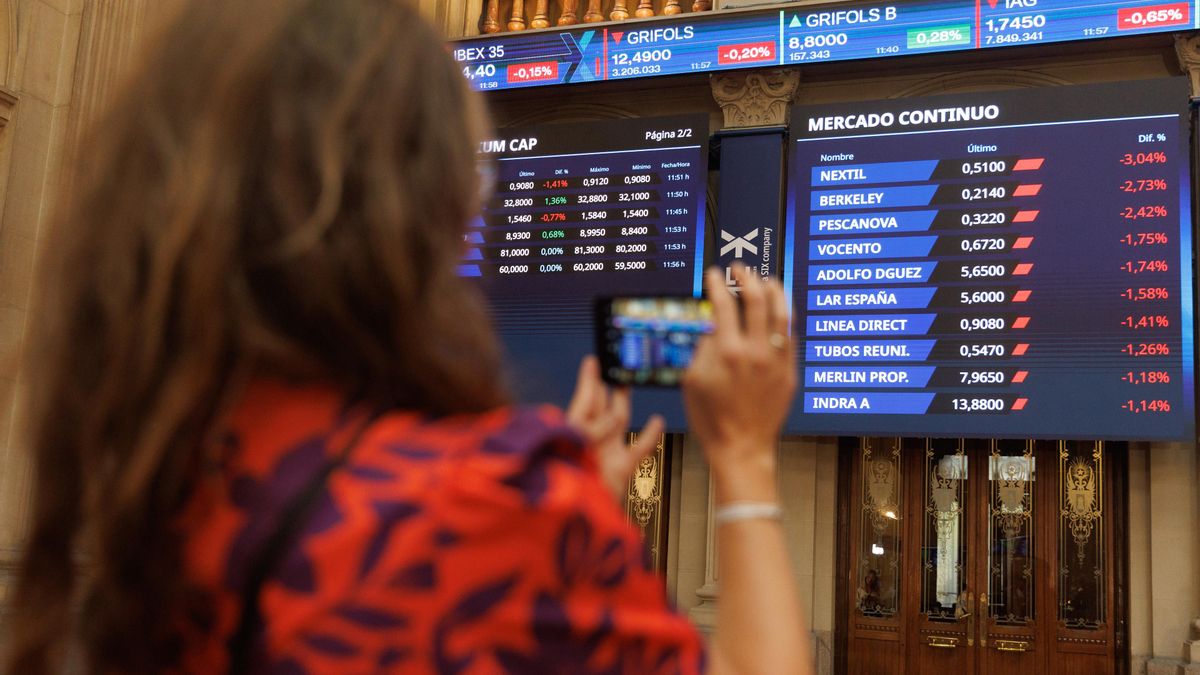
El petróleo se dispara un 4 y el Ibex abre con nuevas caídas tras la renovada tensión entre EEUU e Irán Las bolsas asiáticas han amanecido con descensos aun más fuertes tras los nuevos ataques de Trump en Oriente MedioEEUU e Irán escalan en sus ataques cruzados tras el cierre de Ormuz decretado por Teherán El Ibex-35 amanece este lunes con nuevas caídas del 0,39 que recogen una tendencia mundial de las bolsas a la baja, con fuertes caídas entre las asiáticas, tras la renovada tensión entre Estados Unidos e Irán y sus respectivos aliados. El petróleo de nuevo se ha disparado, más de un 4 hasta los 79 dólares el barril de brent, referencia en Europa. Después de unas semanas de alto al fuego y de aproximaciones para un acuerdo de paz, Estados Unidos e Irán han vuelto a intercambiar ataques en los últimos días. Este domingo por la tarde, las fuerzas estadounidenses lanzaron una ofensiva contra Irán para seguir mermando su capacidad para atacar a buques comerciales que transitan por el estrecho de Ormuz, informa EFE citando al Comando Oficial del Ejército de Estados Unidos. Las bolsas asiáticas han sido las primeras en reflejar la tensión en sus caídas. Así, la Bolsa e Shanghái ha cedido un 2,06, la de Shenxhen un 3,48, el Nikkei e Tokio se ha dejado un 1,92 y el Kospi surcoreano ha sido el más afectado tras caer un 5,74. Los selectivos europeos no han amanecido con tanta afectación e incluso la bolsa de Fráncfort y la de Londres han conseguido abrir en positivo con aumentos del 0,28 y del 0,24 respectivamente. Milán, con una baja del 0,13, y París, con el 0,11, sí que han recogido la tensión en sus aperturas, mientras que el Eurostoxx con los principales valores europeos se deja un 0,27, a la espera de que avance una jornada en la que difícilmente se recuperarán. El bombardeo iraní a un buque con la bandera de Chipre que transitaba por el estrecho de Ormuz fue el desencadenante de esta nueva respuesta estadounidense, que pretende asegurar el tránsito comercial en uno de los pasos marítimos más importantes del mundo. Anoche los bombardeamos a más no poder. Son gente muy, muy malvada y enferma, declaró Trump, que no quiso dar detalles sobre las conversaciones para alcanzar un acuerdo y un nuevo cese al fuego. Antes de la ronda de ataques del fin de semana, Irán anunció el cierre del estrecho hasta nuevo aviso, y aseguró que cualquier interferencia extranjera para abrir una ruta ilegal en la región recibirá una respuesta contundente.
eldiario.es · about 2 months ago
Kommentar: Die USA führen einen Krieg, mit dem sie die Welt an den Rand des wirtschaftlichen Abgrunds stoßen Ist die Straße von Hormus offen oder blockiert? Nicht einmal darüber herrscht Klarheit. Mit ihrem planlosen Vorgehen riskieren die USA, dass die Ölpreise erneut explodieren.
handelsblatt · about 2 months ago