Loading…
 Saturday, September 26Saturday, September 26
4 months · 11 summary articles
Iran’s Revolutionary Guard fired warning shots at two U.S. destroyers in the Sea of Oman on Friday, forcing the vessels to withdraw toward the Indian Ocean as Tehran accused Washington of “maritime harassment” and demanded an end to what it called illegal seizures of Iranian commercial tankers. The Islamic Republic’s Navy said it used Qader anti-ship cruise missiles and kamikaze drones to target the USS Truxtun (DDG-103) and USS Mason (DDG-87), while also claiming the amphibious assault ship USS Tripoli (LHA-7) and other elements of the George W. Bush carrier strike group were compelled to leave the Gulf of Oman .
The confrontation came as U.S. Central Command disclosed that its naval blockade—now in its eighth week—has redirected 129 commercial vessels and disabled six since April 13, part of Washington’s effort to enforce sanctions on Tehran’s oil trade . On Thursday, American forces seized another sanctioned supertanker in a high-seas operation, the latest in a string of interdictions targeting Iranian maritime commerce .
Meanwhile, the fragile ceasefire talks between Israel and Lebanon, mediated by Washington, faced immediate setbacks. Lebanon’s Parliament Speaker Nabih Berri called for an unconditional truce and simultaneous withdrawals, urging Hezbollah to retreat north of the Litani River while Israel pulls back from occupied Lebanese territory . Yet Israeli forces continued strikes in southern Lebanon on Friday, killing at least 12 people, according to local reports .
The humanitarian toll in Lebanon is mounting. The United Nations has doubled its aid appeal to nearly $640 million for the next six months as the Israeli offensive drives a surge in displacement and destruction . In Gaza, where the war entered its 30th month, the World Food Programme warned that millions are being pushed to the brink of famine .
Diplomatic fallout spread beyond the region. Ireland imposed travel bans on Israeli ministers Itamar Ben-Gvir and Bezalel Smotrich, citing their roles in the Gaza conflict, a move that underscores growing European discontent with Israel’s conduct . Iran also seized on Germany’s failed bid for a non-permanent UN Security Council seat, accusing Berlin of complicity in Israel’s military actions and U.S. aggression against Tehran .
Against this backdrop, Israel and the U.S. launched talks on a new security framework to replace the expiring 2028 military aid memorandum, signaling a shift toward bilateral trade and long-term defense cooperation . Yet with Iran vowing further action if U.S. vessels remain in the Gulf of Oman, the risk of escalation remains acute.
Follow us for live European news
1 further source not geolocated

🇺🇸🌏❌🇮🇷- According to TankerTrackers, the interdicted vessel, also known as LENORE (IMO: 9259367), formerly named DAVINA, is laden with approximately 1.9 million barrels of Iranian crude oil. ➡️ The vessel departed Iran on March 23rd, 2026, going offline from AIS tracking at that point, and spent the past six weeks hiding off Galle, Sri Lanka, having loaded its cargo at Kharg Island on March 20th. LENOREs AIS transponder came back online as a result of todays interdiction. ➡️ The vessel has transported roughly 20 million barrels of Iranian oil since 2024 and was placed under US OFAC sanctions on October 11th, 2024. @GeoPWatch
telegram bot · 4 months ago
Um Mission im Iran zu verhindern: Israel verdächtigt offenbar JD Vance, Kurden-Pläne an Türkei geleakt zu haben Kurdische Kämpfer sollten demnach ursprünglich einen Bodeneinsatz gegen das iranische Regime durchführen. US-Präsident Trump legte sein Veto ein – möglicherweise auf Druck des türkischen Präsidenten Erdogan.
tagesspiegel · 4 months ago
Israel to expand Gaza yellow line, squeezing Palestinian space Israeli Prime Minister Benjamin Netanyahu disclosed plans last week to expand military control over the Gaza Strip from 60 to 70, warning that the so-called "yellow line" will soon confine hundreds of thousands of Palestinians to increasingly overcrowded areas with collapsing infrastructure.
yenisafak · 4 months ago
Pakistani, Iranian interior ministers meet in Bishkek amid war mediation Pakistani Interior Minister Mohsin Naqvi held talks with his Iranian counterpart Eskandar Momeni in Bishkek on Friday as Islamabad intensifies diplomatic efforts to mediate a permanent end to the war between Washington and Tehran, which began on February 28 and has threatened regional stability.
yenisafak · 4 months ago
Gaza water crisis deepens as sewage floods streets, disease risks rise A view of a wastewater puddle is seen in Gaza City as the water crisis deepens due to severe infrastructure damage caused by ongoing Israeli attacks despite a ceasefire. The absence of a sewage system in western Gaza City is leading to foul odors, rodent proliferation, and environmental pollution.
yenisafak · 4 months ago
Palestinian boy finds solace in music after losing his leg in Israeli attacks Twelve-year-old Abdulrahman Nazer al-Nashash, who lost his father and his right leg in an Israeli attack, is trying to rebuild his life through music in Bureij, Gaza, Palestine on June 4, 2026. After receiving medical treatment in Jordan and returning to Gaza, the Palestinian boy plays the oud amid the rubble of his destroyed home in Bureij Refugee Camp, seeking comfort and resilience through his music.
yenisafak · 4 months ago
Palestinian girl loses leg, sister in Israeli attack on Eid al-Adha in Gaza Palestinian Sham Iyad Teysir Azzam, who lost her right leg after Israeli forces violated a ceasefire and targeted a park in Gaza City on the first day of Eid al-Adha, lies on a stretcher at Al-Shifa Hospital. She also lost her 12-year-old sister Sidra in the same attack.
yenisafak · 4 months ago
Iran says Germanys UN defeat reflects global anger over Gaza Foreign Ministry spokesman Esmaeil Baghaei said Germanys unsuccessful bid for a non-permanent seat marks a stark diplomatic rebuke from the international community, accusing Berlin of weapons supplies to Israel and complicity in Gaza alongside support for US-Israeli military aggression against Tehran.
yenisafak · 4 months ago
59 years after 1967 war, Israel continues campaigns in Gaza, West Bank, Lebanon Palestinians marked the 59th anniversary of the 1967 Arab-Israeli war amid ongoing Israeli offensives in Gaza, the West Bank, and Lebanon. Since October 2023, tens of thousands have been killed in Gaza, over 1,100 in the West Bank, and more than 3,500 in Lebanon. A PLO official said Israeli policies have focused on settlements and land confiscation.
yenisafak · 4 months ago
Israel, US launch talks on new security cooperation framework Israel and the United States have opened negotiations to replace the decade-long military aid memorandum set to expire in 2028 with a new security framework that would emphasize bilateral trade over traditional assistance packages, officials in Washington and Jerusalem confirmed on Friday.
yenisafak · 4 months ago
Iran says navy fired warning shots at US destroyers in Sea of Oman The Iranian Army said its naval forces fired warning shots using missiles and drones at two US destroyers operating in the Sea of Oman on Friday, forcing the vessels to withdraw toward the Indian Ocean while accusing Washington of ongoing harassment and theft of Iranian commercial tankers.
yenisafak · 4 months ago
Lebanons Berri calls for unconditional ceasefire, parallel withdrawals Parliament Speaker Nabih Berri called for a comprehensive and unconditional ceasefire on land, sea, and air, without destruction of infrastructure. He said Hezbollahs withdrawal from south of the Litani River should be implemented simultaneously with Israeli withdrawal from occupied Lebanese territory. The statement came amid US-mediated talks to extend a fragile ceasefire.
yenisafak · 4 months ago
Libanons president till Iran: Håll er borta Libanons president Joseph Aoun anklagar Iran för att utnyttja läget i Libanon som en förhandlingsbricka i samtal med USA.– Det här är inte ert land, säger Aoun i en intervju med amerikanska CNN.
svenska dagbladet · 4 months ago
EN DIRECT - Guerre au Moyen-Orient : les Etats-Unis démentent les tirs iraniens contre deux de leurs navires Le chef du Hezbollah, Naïm Qassem, a rejeté jeudi laccord de cessez-le-feu au Liban annoncé la veille. En parallèle, les combats se poursuivent dans le sud du pays.
liberation · 4 months ago
Predicted global hunger crisis becoming a reality as Mideast war drags on, UN warns Predictions that the Middle East war could drive tens of millions more people into acute hunger are proving to be accurate, the United Nations said Friday, warning that higher fuel and food costs linked to the conflict are deepening food insecurity far beyond the region.
france24 · 4 months ago
Irans Khamenei warns against divisions after enemys defeat on battlefield Irans Supreme Leader Mojtaba Khamenei said in a message on Thursday that Irans enemies, having been defeated on the battlefield, were now seeking to undermine public resilience and sow internal divisions. Khamenei called for national unity in the face of those threats and said any action that created pessimism or frustration among the public amounted to helping the enemy.
france24 · 4 months ago

Iran-US war latest: Tehran says it has fired warning shots at US destroyers after Trump claimed US doesnt need a deal Trump suggested if a deal was made he would meet with Irans supreme leader
independent · 4 months ago
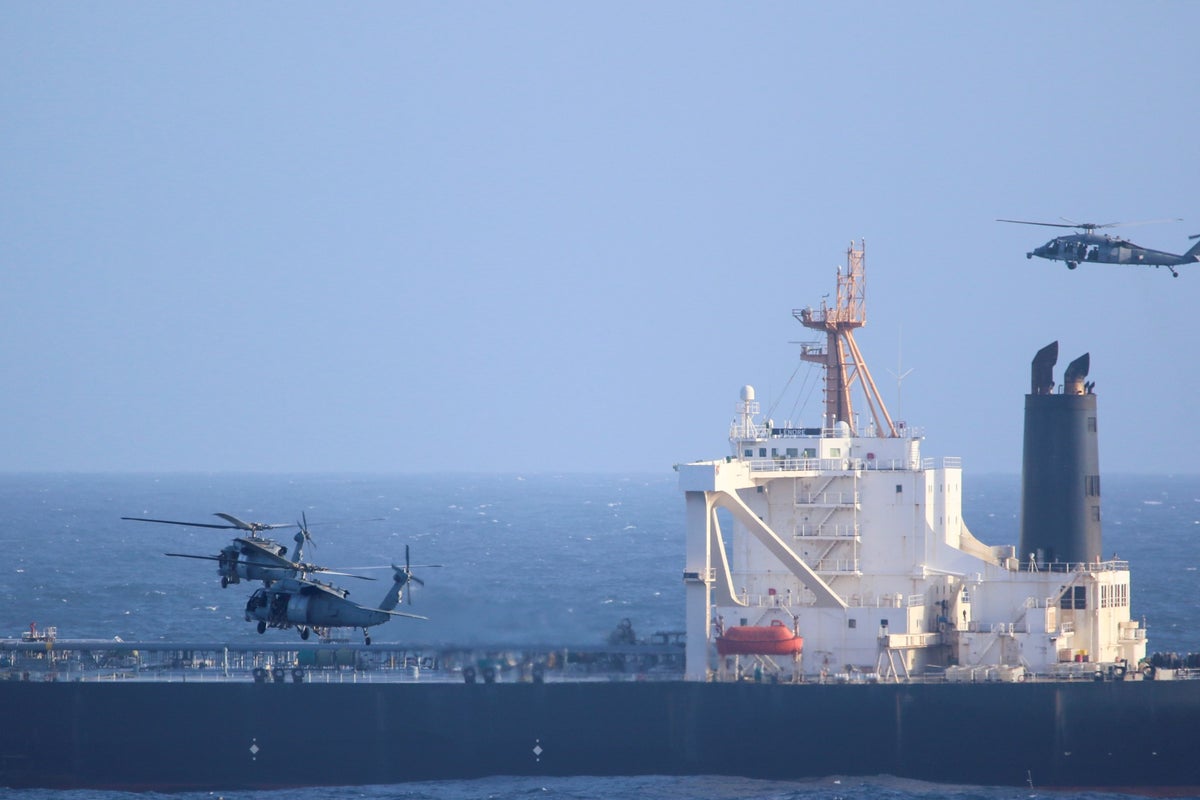
U.S. forces seize sanctioned supertanker in high-seas operation This action aligns with Washingtons blockade on Irans sea trade, after Tehran fired on ships in the Strait of Hormuz, and follows multiple U.S. interdictions of commercial and oil tankers in the region recently
independent · 4 months ago
UN boosts Lebanon aid appeal as Israeli war drives humanitarian crisis The UN says it needs nearly $640m to help Lebanon over the next six months.
aljazeera · 4 months ago
How the US naval blockade has bled Iran of nearly $6bn in oil revenues Iran is exporting less than one-sixth of the oil it was shipping before the war began.
aljazeera · 4 months ago
Israel maintains attacks despite US-brokered deal with Lebanon The Israeli army also issues new forced displacement orders for several towns and villages in southern Lebanon.
aljazeera · 4 months ago
UK Defence Spending Faces Critical Delays As Military Chiefs Issue Urgent Warning In 2026 LONDON, June 5 – Brussels Morning Newspaper — UK Defence Spending is under the spotlight as the governments long-delayed Defence Investment Plan continues to face roadblocks, prompting urgent warnings from top military officials. Chief of the Defence Staff Sir Richard Knighton cautioned on Friday that the nation is running out of time to modernize its armed forces, citing […]
brussels morning · 4 months ago

🔴 BREAKINGIreland issues travel bans for two Israeli ministersIrish Prime Minister Micheál Martin confirmed travel bans for Israeli ministers Itamar Ben-Gvir and Bezalel Smotrich, citing their roles in the ongoing conflict in Gaza. This marks a significant escalation of Irelands diplomatic stance against specific Israeli leadership figures.📰 #EU #Diplomacy #Geopolitics #GeoWire
mastodon bot · 4 months ago
#BREAKING 🇮🇷⚓️️️️️️️️️️🇮🇷❌🇺🇸- The IRGC has announced that, following warning shots using Qader anti-ship cruise missiles and kamikaze drones, US destroyers USS Truxtun (DDG-103) and USS Mason (DDG-87) withdrew from the Gulf of Oman toward the Indian Ocean. ➡️ The IRGC also stated that the amphibious assault ship USS Tripoli (LHA-7) has been forced to leave the Gulf of Oman, alongside other vessels from the George W. Bush carrier strike group. ➡️ The IRGC Navy Command warned that if enemy vessels remain within range, longer-range missiles will be used if necessary, calling on US forces to cease what it described as maritime harassment and disruption of commercial shipping in the region. @GeoPWatch
telegram bot · 4 months ago

Ebola : lOMS et lAgence de santé africaine annoncent un plan de 518 millions de dollars LOrganisation mondiale de la santé (OMS) et les Centres africains de contrôle et de prévention des maladies (CDC) ont annoncé vendredi lancer un plan conjoint de 518 millions de dollars (446 M deuros), de juin à novembre, pour lutter contre lépidémie dEbola en République démocratique du Congo (RDC) et dans des pays limitrophes. ...
la libre · 4 months ago