Loading…
 Saturday, September 26Saturday, September 26
5 months · 12 summary articles
The European Parliament on Wednesday approved a sweeping overhaul of EU rules on returning irregular migrants, including the creation of deportation centres outside the bloc’s borders, in a move that clears the way for member states to open return hubs in third countries. The vote in Strasbourg was 418 in favour to 218 against, with 30 abstentions, according to multiple reports published today [2026-06-17].
The new framework allows countries such as Denmark, Austria, Greece, Germany and the Netherlands—all of which have already explored the idea—to establish “return hubs” in non-EU states where migrants with rejected asylum claims can be held while awaiting deportation. The legislation also extends maximum detention periods to 24 months and introduces new investigative measures to track down people who have overstayed or whose asylum applications have been rejected [2026-06-17] .
Critics immediately condemned the reform as a dangerous erosion of fundamental rights. Green MEPs described the vote as an “anti-immigration U-turn” that risks creating an “EU version of ICE,” while human-rights groups warned that offshoring detention could lead to systematic abuses and deny migrants access to legal recourse [2026-06-17] . Supporters, including the centre-right European People’s Party, argued the changes are necessary to raise the bloc’s dismally low return rate—currently just 28 per cent of failed asylum seekers—by making removals faster and more enforceable [2026-06-17] .
The legal basis is now in place for bilateral negotiations between EU capitals and potential host countries in Africa, the Middle East or the Balkans. Denmark’s government, which first proposed the idea, said it would move quickly to identify partners willing to host such facilities [2026-06-17] .
The reform also tightens rules on cooperation from those facing return orders and mandates strict adherence to international law, though rights organisations question whether offshoring detention can ever meet those standards. The European Commission insists the measures include robust human-rights safeguards and will be monitored closely [2026-06-17] .
With the vote concluded, attention now turns to which countries will sign agreements with third states and where the first hubs will be located. The outcome is expected to reshape Europe’s approach to migration enforcement and test the bloc’s commitment to balancing border control with legal protections.
Follow us for live European news
2 further sources not geolocated

The European Parliament approved changes to EU policy on the return of third-country nationals staying illegally in the EU. Learn more: link.europa.eu/6c3YM9
bluesky bot · 3 months ago

UE. Aprovadas novas regras de expulsão de migrantes ilegais O Parlamento Europeu aprovou novas regras que facilitam a expulsão de pessoas de países terceiros em situação irregular
observador · 3 months ago
Οι θάνατοι μεταναστών σε κέντρα κράτησης της ICE υπερδιπλασιάστηκαν κατά τη διάρκεια της προεδρίας του Τραμπ Από το 2009 ως το 2024 στις εγκαταστάσεις κράτησης μεταναστών των ΗΠΑ καταγραφόταν ετησίως ένας θάνατος ανά 3.848 κρατούμενους - Το ποσοστό υπερδιπλασιάστηκε αφότου ο Τραμπ επέστρεψε στην προεδρία σε έναν θάνατο ανά 1.630 ανθρώπους
protothema · 3 months ago
Europoslanci schválili regule, které umožňují snazší vracení migrantů mimo Unii Poslanci Evropského parlamentu dnes schválili nové unijní předpisy, které mají zjednodušit navracení občanů třetích zemí pobývajících v EU nelegálně. Návrh, na němž se začátkem tohoto měsíce předběžně...
respekt · 3 months ago
Strukturelle Mängel – Bundesgericht rügt Bundesverwaltungsgericht wegen Asylverfahren Das Bundesgericht rügt das Bundesverwaltungsgericht wegen zu vieler Altfälle im Asylbereich.
srf.ch · 3 months ago

La Suède durcit encore un peu plus ses politiques migratoires Le Parlement de Stockholm a adopté des textes permettant de supprimer le statut de résident permanent aux bénéficiaires dune protection internationale, ou de retirer aux étrangers le droit au séjour en cas de «mauvais comportement». La Suède est «méconnaissable», alerte une militante.
mediapart · 3 months ago

Le Parlement européen adopte le règlement sur les «hubs de retour» Une majorité de parlementaires a approuvé mercredi à Strasbourg le règlement sur les retours de migrants déboutés du droit dasile, qui permet notamment aux États membres de conclure des accords pour installer des centres de rétention hors des frontières de lUnion européenne.
mediapart · 3 months ago
Asylpolitik: EU-Parlament stimmt Abschiebezentren in Drittstaaten zu Mehr Abschiebungen, mehr Härte: Neue Regeln für abgelehnte Asylbewerber sollen den EU-Staaten mehr Handhabe in der Migrationspolitik geben. Auch Rückkehrzentren in Drittstaaten rücken näher.
handelsblatt · 3 months ago
European Parliament backs overhaul of EU rules on migrant returns The European Parliament approved reforms to EU rules on returning irregular migrants, including return hubs in third countries, detention of up to 24 months, and investigative measures. The vote was 418-218. The framework requires cooperation from those subject to return decisions and compliance with fundamental rights and international law.
yenisafak · 3 months ago

Az Európai Parlament jóváhagyta az új uniós visszaküldési szabályokat, a zöldek szerint „idegengyűlölő fordulat történt Az Európai Parlament szerdán elfogadta az illegálisan az Európai Unió területén tartózkodó harmadik országbeli állampolgárok visszaküldésére vonatkozó szabályok átfogó reformját. A képviselők 418 igen, 218 nem szavazattal és 30 tartózkodás mellett hagyták jóvá a tagállamokkal június elején kialkudott kompromisszumot.
hvg.hu · 3 months ago
Immigration : lhistorien Patrick Weil veut en finir avec les politiques «passives agressives» Dans «De limmigration en France», un livre concis et pédagogique, le chercheur au CNRS déconstruit les fantasmes sur ce sujet «incandescent» et suggère des pistes de réflexion pour bâtir une politique à la fois réaliste et humaniste, à un an de la présidentielle.
liberation · 3 months ago

Erlaubnis des Ministers: Kurstadt auch laut Ortsschild 16 hessische Städte und Gemeinden dürfen sich jetzt offiziell Kurstadt, Kurort oder Heilbad nennen. Darunter sind auch zwei im Hochtaunuskreis. Das soll den Tourismus stärken und die Einwohner stolz machen.
faz · 3 months ago
Russian MFA Issued Over 1K Traditional Values Visas in 2025 The humanitarian support initiative allows citizens of the U.S., the EU and several other countries to apply for special visas if they oppose what Moscow characterizes as the destructive neoliberal ideological agenda in their home nations.
themoscowtimes · 3 months ago
Swiss parliament backs criminal record checks for foreign permits The Swiss Senate joined the House on Wednesday in adopting a motion that would forbid foreign nationals from obtaining a residence permit in Switzerland if they have previously been convicted of a crime. + Get the most important news from Switzerland in your inbox The motion was passed by 26 votes to 11. For more than 10 years, the southern canton of Ticino has systematically required a criminal record check for all foreign nationals applying for a residence permit, including EU/EFTA citizens. Recently, a mafia member who had been refused a permit by his own canton but had obtained one in the canton of Graubünden was arrested. Parliamentarian Marco Chiesa from Ticino believes that this tried-and-tested practice should be extended to the whole country. Justice Minister Beat Jans pointed out that known criminal records are taken into account when assessing an application for a residence permit, even if the offences were committed abroad. Such a systematic approach would not be in ...
swissinfo · 3 months ago
English at the front door, Danish everywhere else: the hidden language barrier in Denmarks public services, where only a fraction is available in English With around 700,000 internationals living in the country, it is crucial that they have access to public services in English to ensure that they pay their taxes and fulfil their obligations correctly. Yet only a small number of public services are available in English beyond the homepage.
cphpost · 3 months ago
EU Parliament votes yes on asylum centres outside of the EU On Wednesday, a majority in the EU Parliament voted for the return regulation, which opens the door for asylum centres outside the EU, giving Denmarks proposal the green light. With the formal legal basis now in place, Denmark and other EU countries can contact nations outside the EU to house these centres. Minister for Immigration […]
cphpost · 3 months ago
Swiss Senate seeks to allow deportations outside Europe
gdeltproject.org · 3 months ago
Inside Canadas troubling shift on migrant, refugee rights Experts say Canada closing the doors as socioeconomic issues upend decades-long consensus on immigration.
aljazeera · 3 months ago

EU Parliament Approves Stricter Rules for Failed Asylum Seekers The legislation, which includes the setting up of deportation centres located outside the EU, is designed to increase the low removal number of failed asylum seekers from the current 28 per cent.
balkaninsight · 3 months ago
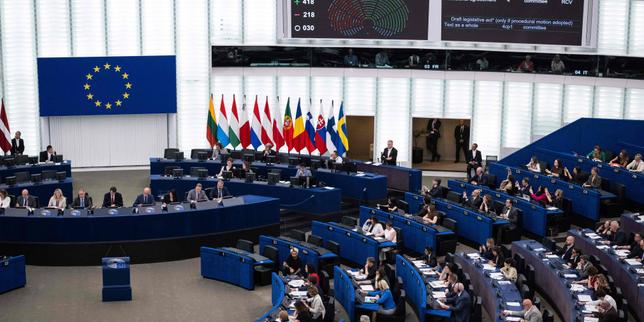
EU lawmakers approve migration reform allowing for creation of return hubs The text notably enables nations to open deportation centers outside the EUs borders, where migrants with no right to stay could be sent. Denmark, Austria, Greece, Germany, the Netherlands and others have already been exploring options to set hubs up.
le monde · 3 months ago
If the UK wants to rejoin the European Union, it first needs to understand it A full return will require a marathon of democratic persuasion, on the continent as much as in Britain. For one side holds most of the cards
european council · 3 months ago

Les étudiants étrangers pénalisés ne pourront pas manifester. Alors pourquoi se soucier de ces étudiants invisibles ? Laisser les politiques appliquer des mesures restrictives pour pénaliser les étudiants hors Union Européenne revient à laisser sinfiltrer certaines valeurs quil faut questionner. ...
la libre · 3 months ago
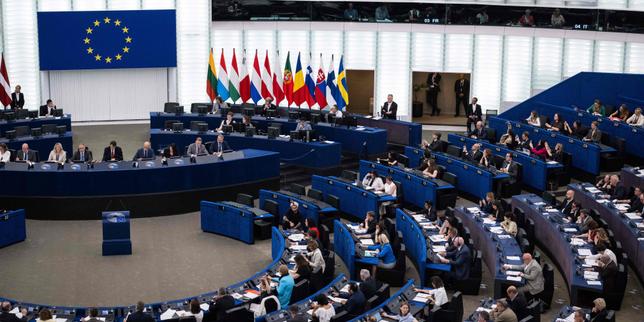
Immigration : le Parlement européen adopte une réforme qui ouvre la voie à la création de centres de rétention hors de lUE Le texte prévoit une série de mesures pour accélérer les expulsions et permet aux Etats qui le souhaitent dinstaller des « hubs de retour », pour y renvoyer des personnes déboutées du droit dasile.
le monde · 3 months ago

Migration: EU-Parlament gibt grünes Licht für umstrittene Return-Hubs Das EU-Parlament hat das umstrittene "EU-Abschiebegesetz" mit einer klaren Mehrheit verabschiedet. Es soll effizientere Rückführungen von Personen aus Drittstaaten ermöglichen
der standard · 3 months ago