
EU engages Taliban in Brussels talks to accelerate deportations of Afghan asylum seekers

Story Timeline
5 months · 8 summary articles
A Taliban delegation met with European Commission officials in Brussels on Tuesday for the first time, in closed-door talks arranged at the request of 20 EU member states to discuss the repatriation of rejected Afghan asylum seekers deemed security threats. The meeting, held on 23 June 2026, focused exclusively on accelerating deportations of Afghan nationals who have committed serious crimes or are considered risks to public safety, according to multiple reports .
European Commission spokesman Johannes Bahrke described the discussions as strictly technical, conducted at the level of officials rather than political leaders, and limited to operational and logistical questions surrounding repatriation . The talks were requested by 20 EU countries, including Germany and Belgium, which have long sought ways to remove Afghan nationals without legal status or who pose security concerns. Poland’s deputy interior minister, Maciej Duszczyk, confirmed Warsaw’s participation, stating that Poland remains at the forefront of European migration policy changes and is regularly invited to such consultations .
The European Union has repeatedly condemned Taliban abuses in Afghanistan, including restrictions on women’s rights and extrajudicial killings, yet the bloc now finds itself negotiating directly with the regime to resolve a shared problem: the presence of thousands of Afghan migrants whose asylum claims have been rejected but who cannot be deported due to the Taliban’s control of Kabul and the lack of diplomatic relations . Austrian EU Affairs Commissioner Karoline Edtstadler, quoted in *Der Standard*, defended the engagement as pragmatic, noting that without Taliban cooperation, Europe cannot resolve the impasse over deportations .
Analysts and commentators have framed the meeting as a reluctant necessity. In an editorial for *Die Presse*, the author argued that Europe’s inability to deport large numbers of Afghan nationals without Taliban consent makes dialogue unavoidable, despite the moral discomfort it entails . The Taliban delegation, led by officials from Kabul, attended the talks aimed at establishing frameworks for the safe and orderly return of deportees, according to Afghanistan’s state-run news agency Khaama Press .
While the European Commission insists the discussions remain technical and non-political, the decision to engage with the Taliban has sparked controversy across the bloc. Critics argue that any cooperation legitimizes a regime accused of human rights violations, while supporters counter that pragmatic engagement is the only viable path to resolving a humanitarian and security dilemma that has stymied EU member states for years.
Follow us for live European news
- 3
- 1
- 1
- 1
- 1
1 further source not geolocated
Articles
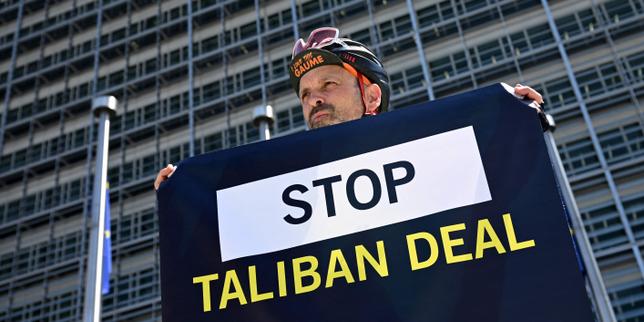
Immigration : la Commission reçoit en catimini une délégation de talibans à Bruxelles Alors que lUnion européenne condamne les exactions du régime taliban en Afghanistan, elle a accueilli, mardi 23 juin, une délégation de Kaboul afin de mener des discussions pour permettre aux Etats-membres de reprendre les expulsions vers le pays.
le monde · 3 months ago

Taliban in Brussels to discuss asylum seekers with EU On Tuesday, a delegation from the Taliban government in Afghanistan met with European Commission representatives in Brussels for the first time. Arranged at the request of 20 EU countries, the meeting focused on the repatriation of rejected Afghan asylum seekers, specifically targeting those who have committed serious crimes or pose a security risk. Led by […]
cphpost · 3 months ago
Nobel Laureate Malala Yousafzai Criticizes EU for Hosting Taliban Delegation in Brussels
gdeltproject.org · 3 months ago
Kabul Delegation Attends Brussels Migration Talks: Balki
gdeltproject.org · 3 months ago

Treffen mit Taliban: EU-Kommissar Brunner verteidigt Gespräche Es handelte sich laut Brunner um "technische Gespräche auf Beamtenebene". 20 EU-Staaten hätten die EU-Kommission darum gebeten. Politische Vertreter sollen nicht anwesend gewesen sein
der standard · 3 months ago

Polska uczestniczyła w spotkaniu z talibami w Brukseli. Wiceszef MSWiA: Zachowujemy ostrożność - Polska należy do państw, które są w awangardzie zmian europejskiej polityki migracyjnej. Dlatego jesteśmy zapraszani do udziału w tego typu rozmowach i konsultacjach na szczeblu unijnym - tłumaczył w RMF FM Maciej Duszczyk, wiceszef MSWiA.
gazeta.pl · 3 months ago
Abschiebungen: Brunner verteidigt Gespräche mit Taliban
orf.at · 3 months ago
Mit den Taliban reden [premium] Auch wenn es unschön ist: Europas kollektives Problem großer Zahlen derzeit nicht abschiebbarer Afghanen ohne Bleiberecht ist ohne Zutun des radikalislamischen Regimes in Kabul nicht lösbar.
die presse · 3 months ago
Bad company Brutal regimes rarely want for trading partners. The Taliban are only the latest to find that strategy and commerce outlast moral objection. Gul Hassan, the Talibans ambassador in Moscow, spent the first days of June 2026 working the sidelines of the St Petersburg International Economic Forum. Almost a year earlier, on July 3, 2025, he […] Bad company was originally published on Emerging Europe.
emerging europe · 3 months ago