
Hungary caps student loan interest at 0 and boosts childbirth grants
Story Timeline
4 months · 7 summary articles
The Hungarian government on Wednesday approved sweeping new measures to support families and ease financial burdens, including a freeze on student loan interest rates and expanded childbirth subsidies. Prime Minister Péter Magyar announced the decisions following a cabinet meeting, framing them as part of a broader effort to stimulate demographic growth and reduce economic strain on young families.
Under the new policy, student loan interest rates will be capped at 0% for the next two years, a move expected to save borrowers an estimated 12 billion forints (€30 million) annually. The government also increased childbirth support payments by 25%, raising the one-time grant for first-time parents to 1.5 million forints (€3,750) and extending eligibility to families with two or more children. “These measures are not just financial—they are a statement that Hungary values its future,” Magyar told reporters in Budapest.
In a separate economic decision, the Finance Ministry confirmed it would not impose an additional industrial tax surcharge on Budapest or county-level cities, despite earlier proposals to expand the levy. The ministry expects to collect 5.8 billion forints (€14.5 million) from the existing tax base, a figure that falls short of the 8 billion forints originally projected. The decision follows lobbying from municipal leaders who warned of further strain on local budgets.
The government also moved to dismantle a controversial national creed displayed in public institutions, replacing it with a new framework for a proposed wealth tax. Finance Minister Magyar pledged to decriminalize cryptocurrency transactions, signaling a shift in digital asset regulation. “We are modernizing our legal framework to align with technological progress,” he said, though details of the reform remain pending.
Meanwhile, in the Czech Republic, the mayor of Špindlerův Mlýn, Martin Jandura, resolved a long-standing debt dispute with the Penta Group after a billionaire investor intervened. Jandura relinquished ownership of a building that had become a financial liability, with the property now set to transfer to a prominent media entrepreneur. The resolution ends a years-long legal battle that had threatened the town’s tourism-driven economy.
In Sweden, the country’s largest bank was named the most expensive provider of variable-rate mortgages, with rates exceeding 5.2%, the highest in the Nordic region. Critics condemned the bank’s refusal to pass on recent central bank rate cuts, leaving borrowers facing unsustainable costs.
Across Europe, governments are grappling with competing priorities—from demographic decline to financial sector regulation—as they navigate post-pandemic economic challenges. Hungary’s latest measures reflect a broader trend of state intervention in family and financial policy, though their long-term impact remains uncertain.
Follow us for live European news
Articles

Leszedeti a Tisza-kormány a közintézmények faláról a Nemzeti Hitvallást, tárgyalták a vagyonadó bevezetését Magyar Péter azt ígéri, hogy megszüntetik „a kriptovaluták kriminalizását is.
444.hu · 4 months ago
Nagyobb részesedést alkudtak ki maguknak a szerbek a MOL-tól a NIS-ről szóló tárgyalásokon Így nagyobb befolyása lesz a szerb államnak a stratégiai jelentőségű döntéseknél.
444.hu · 4 months ago
Schweizer Energieversorgung – Im Boden oder an Masten: Die Diskussion um die Stromleitungen Der Ständerat hat beschlossen, dass nicht bei jeder Leitung geprüft werden muss, ob sie in die Erde verlegt werden kann.
srf.ch · 4 months ago

Huit millions deuros saisis et six personnes interpellées dans une affaire de blanchiment La police judiciaire fédérale a mené samedi dernier des perquisitions dans 17 lieux dans le cadre dun vaste dossier de blanchiment dargent entre la France et la Belgique, a indiqué mercredi le parquet de Bruxelles. Huit millions deuros ont notamment été saisis, alors que six personnes ont été interpellées. ...
la libre · 4 months ago
Pengarullning till stiftelse – koppling till M:s välgörare Med gåvor på nästan 600 000 kronor på tre år är riskkapitalisten Kristoffer Melinder en av Moderaternas tyngsta privata donatorer.Samtidigt är hans bolag partner med stiftelsen Teach for Sweden – som fått sitt anslag mer än dubblerat under regeringen Kristersson.Statsministern har naturligtvis ingen kännedom om stiftelsens styrelses interna arbete, skriver Ulf Kristerssons pressekreterare.
expressen · 4 months ago
„Gewinnmargen ähnlich wie beim Drogenhandel: Berlin lässt 400.000 Jung-Aale zu Wasser – was das mit der Aal-Mafia zu tun hat Hunderttausende Aale wurden am Mittwoch in die Havel gesetzt. Die Tiere haben eine weite Reise hinter sich. Gründe dafür sind Klimawandel, Industrie – und internationaler Schmuggel.
tagesspiegel · 4 months ago
Frauen holen stark auf: Deutsche Rentner sammeln offenbar deutlich mehr Versicherungsjahre als früher 2005 kamen Neu-Rentner im Schnitt auf 32,3 Versicherungsjahre, heute sind es einem „Spiegel-Bericht zufolge fast 40. Was hinter diesem Anstieg steckt.
tagesspiegel · 4 months ago
Pachtvertrag gekündigt, Abriss droht: Älteste Kleingartenanlage in Berlin-Pankow kämpft ums Überleben Nach fast 120 Jahren steht eine Laubenkolonie vor dem Aus. Die Eigentümer planen offenbar eine Wohnbebauung. Nun läuft der Rettungsplan an. Kann die Verdrängung noch verhindert werden?
tagesspiegel · 4 months ago
House appropriators back $55.5 billion Space Force budget, omit reconciliation funds Draft defense bill funds Pentagon at requested discretionary levels but excludes $350 billion in proposed reconciliation spending, casting doubt on Golden Dome and other space programs The post House appropriators back $55.5 billion Space Force budget, omit reconciliation funds appeared first on SpaceNews.
spacenews · 4 months ago
Starosta Špindlerova Mlýna se zbavil dluhu vůči Pentě. Pomohl mu miliardář Starosta krkonošského střediska Martin Jandura se vzdává budovy, kvůli níž se stal nedobrovolným dlužníkem skupiny Penta. Podle zjištění Deníku N nemovitost získá jeden z předních mediálních podnikatelů.
denik n · 4 months ago
Stansvik | Aalto-yliopiston professori tyrmää Matias Pajulan Stansvik-väitteet Laajasalon kotien määrän lasku 2 000:lla ei vaikuta Kruunuvuorensillan kannattavuuteen, sanoo professori Panu Savolainen.
helsingin sanomat · 4 months ago
Enda storbanken som inte har sänkt räntan De är dyrast och vägrar samtidigt att sänka räntan. Den nordiska bankjätten intar just nu den föga smickrande förstaplatsen när det gäller högst ränta på rörligt bolån.
svenska dagbladet · 4 months ago
Zonder de juiste chips komt Musk niet ver: om ASML kan hij niet heen. (En dat geldt andersom ook) Elon Musk wil een grote chipfabriek bouwen, de Terafab, om rekenkracht te verzamelen voor SpaceX. Zijn bedrijven moeten in de regel zelf in cruciale onderdelen voorzien, maar ASML blijft onmisbaar.
nrc · 4 months ago
Horoscop joi, 11 iunie. O zodie ia o decizie financiară importantă, iar alta scapă de o problemă apăsătoare Horoscopul pentru joi, 11 iunie 2026, aduce vești mari pentru cele 12 zodii. Fecioarele iau o decizie financiară importantă, iar Peștii scapă de o problemă gravă.
adevarul · 4 months ago

Dublin woman caught with more than €220k worth of drugs hidden in her car avoids jail The drugs were discovered after gardaí stopped and searched Sarah Calas car, where the drugs were hidden by a false wall.
thejournal · 4 months ago
Gwyneth Paltrows Israeli real estate ad goes viral Gwyneth Paltrow sparked widespread outrage by becoming the face of an Israeli real estate project.
aljazeera · 4 months ago
VIIE MILJONI UURING ⟩ Fosforiidi tulevik selgub pärast jaanipäeva Kolm aastat kestnud fosforiidiuuringud on jõudnud lõpusirgele ja pärast jaanipäeva selgub, kas nendega on otstarbekas jätkata. «Uuringutega tekib faktipõhine info, mille põhjal saab ühiskonnas laiemalt arutada ja siis otsustada, kas ja kuidas fosforiidi ning kaasnevate ressursside kasutuselevõtuga edasi liikuda,» ütles Eesti Geoloogiateenistuse nõunik Erki Peegel.
postimees · 4 months ago
FOSFORIIDIUURING ⟩ Geoloogiateenistus leidis, et Virumaa fosforiidikarjäär on tehtav Rakvere ja Kunda vahele jääva fosforiidimaardla uuring lõppes positiivse tulemusega – kaevandada on võimalik.
postimees · 4 months ago
Po schodišti u kostela v České Lípě se možná letos znovu projdou lidé. Čeká ho potřebná rekonstrukce Po schodišti propojujícím park u kostela Narození Panny Marie a Mariánskou ulici v České Lípě se možná ještě letos bude znovu chodit. Před několika lety město cestu uzavřelo kvůli špatnému technickému stavu.
irozhlas.cz · 4 months ago
Plzeň rozšířila svůj bytový fond o dalších 8 bytů. Jsou v ulici Na Jíkalce poblíž autobusového nádraží Omšelý, s opadanou fasádou a částečně bez oken – tak vypadal bytový dům s číslem popisným 2 v ulici Na Jíkalce v Plzni. Budova z 19. století poblíž autobusového nádraží postupně chátrala. To už ale neplatí. Město Plzeň nechalo třípatrový dům opravit a teď má výraznou žlutou fasádu. Uvnitř vzniklo 8 různě velkých nájemních bytů. Kompletní rekonstrukce vyšla na zhruba 30 milionů korun.
irozhlas.cz · 4 months ago

Pantouflage, recrutements familiaux et argent public à foison: les liens explosifs entre Bpifrance et un fonds franco-chinois Cathay Capital est le fonds privé qui a le plus bénéficié des soutiens publics de Bpifrance en 2025. Heureux hasard, il avait auparavant embauché le fils du directeur général de Bpifrance, Nicolas Dufourcq, après avoir recruté lun de ses meilleurs amis, lancien directeur du Trésor, Bruno Bézard.
mediapart · 4 months ago
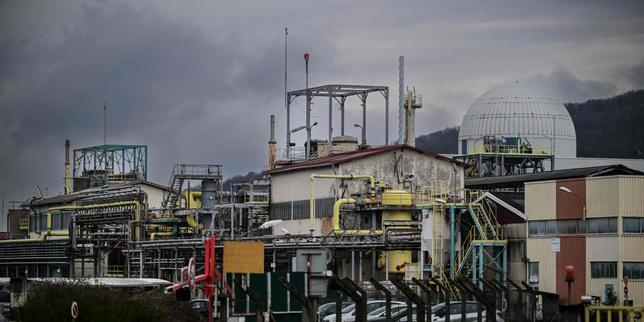
Vencorex : léchec du projet de reprise de la plateforme chimique, malgré un soutien quasi unanime, relance le débat sur le fonctionnement des tribunaux de commerce Les porteurs du projet de relance du site de Pont-de-Claix (Isère) ont jeté léponge. Le juge nest pas revenu sur sa décision de lattribuer à un ferrailleur qui va vendre les installations à la découpe.
le monde · 4 months ago
Für 750 Millionen Euro: Hier soll der Neubau für Potsdams Bergmann-Klinikum errichtet werden Geplant ist ein bis zu neun Etagen hohes Gebäude. Innerhalb der nächsten zehn Jahre ist das Großprojekt geplant, die Finanzierung muss geklärt werden. Der genaue Standort in der Innenstadt steht jetzt fest.
tagesspiegel · 4 months ago
Andrei Caramitru e sceptic că românii își vor recupera banii după sancționarea băncilor de către CC. „Garantat, doi ani de recesiune Economistul Andrei Caramitru a explicat la Digi24 cum vor reacționa băncile după ce vor primi amenzile și cum acest lucru va duce la o recesiune garantată în următorii doi ani. El este sceptic și nu crede că românii și-ar putea lua banii înapoi, deși Nicu Ștefănuță, a cerut Comisiei Europene să stabilească mecanisme clare pentru despăgubirea românilor care au plătit credite cu ROBOR umflat.
digi24 · 4 months ago
Informații exclusive din mega-procesul cu Pfizer. Alexandru Nazare: E cea mai mare daună la bugetul de stat. Ce variante are România Ministrul de Finanțe Alexandru Nazare a declarat, într-un interviu exclusiv pentru Digi24, că cele 680 de milioane de euro pe care România trebuie să le plătească companiei Pfizer reprezintă cea mai mare daună la bugetul de stat. Discuțiile cu Pfizer au continuat în toată această perioadă. Compania a desemnat un reprezentant pentru negocieri, doar că ministrul Nazare a precizat că încă nu a venit de la instanța din Belgia motivarea pentru plata banilor. Din momentul în care vine, suma trebuie achitată în două luni, iar obiectivul este ca în cazul în care trebuie plătiți acești bani, Pfizer să accepte o eșalonare.
digi24 · 4 months ago