
US to negotiate Lebanon-Israel border talks separately from Iran framework

Story Timeline
3 months · 16 summary articles
US Secretary of State Marco Rubio declared on Thursday that Washington will negotiate directly with Lebanon’s sovereign government on Lebanon-Israel border issues, explicitly separating those talks from the parallel US-Iran framework. Speaking to reporters in Abu Dhabi after meetings with Gulf allies, Rubio reaffirmed that Iran has no legal right to levy tolls in the Strait of Hormuz and warned that any future investment in Iran would hinge on measurable progress on regional security.
The announcement came as the US and Iran moved closer to a structured de-escalation. Pakistan’s Foreign Ministry confirmed that Tehran and Washington have agreed to open a direct communication channel and establish a de-confliction cell, with mediators from Islamabad and Doha laying out a 60-day roadmap toward a final peace accord. Technical talks are scheduled to resume next week.
Lebanese President Joseph Aoun separately told international mediators in Washington that Beirut’s negotiations with Israel remain on a distinct track from the US-Iran process. Aoun outlined a phased plan that begins with consolidating the current ceasefire, followed by Israeli withdrawal, Lebanese army deployment, reconstruction of border areas, and the release of prisoners, while discussions on pilot zones continue.
The Strait of Hormuz dispute intensified hours after Rubio’s remarks, when Iran and Oman announced a joint permit system asserting control over parts of the waterway. Hours later, former US President Donald Trump stated that Tehran had pledged not to impose tolls, threatening to walk away from any deal if charges were introduced. Analysts warn that Iranian control over Hormuz would constitute a major strategic shift in the Gulf.
In parallel, the US Senate voted 50-48 to adopt a nonbinding War Powers Resolution demanding that President Trump end military hostilities against Iran unless Congress explicitly authorizes further action. Four Republican senators joined Democrats in support, though the measure carries no legal force since Washington and Tehran have already agreed to a 60-day ceasefire under the Pakistan-Qatar framework.
Turkish Deputy Speaker Numan Kurtulmus, addressing the Parliamentary Union of the OIC in Baku, urged the Islamic world to undertake sweeping reforms while welcoming “positive developments” in the Switzerland-based US-Iran negotiations. He also called for an immediate halt to Israeli attacks in Lebanon and an end to what he termed the “war imposed on Tehran.”
Iran’s parliamentary speaker, Mohammad Bagher Qalibaf, told the same Baku summit that ending the Lebanon conflict is as vital to regional stability as achieving a ceasefire inside Iran itself, as the two tracks of diplomacy converge under the US-Iran memorandum.
Follow us for live European news
- 1
- 1
- 1
- 1
Articles

Syrias principled Lebanon stance... The first warning signal came last week from Hezbollah Secretary-General Naïm Qassem: he stated that the US is pressuring Syria to carry out a military intervention in Lebanon alongside Israel, but that the new Syrian administration has resisted this. Subsequently, some reports in the American press confirmed that President Trump had expectations from Syria in this direction. Finally, Syrian President Ahmad al-Sharaa officially announced in a detailed interview with Mashhad TV that they have no
yenisafak · 2 months ago
Rubio: US to deal directly with Lebanon, separate from Iran deal US Secretary of State Marco Rubio stated that Washington will negotiate directly with Lebanons sovereign government on Lebanon-Israel issues, separate from the US-Iran framework. He reaffirmed that Iran cannot charge tolls in the Strait of Hormuz under international law, and said any investment in Iran would depend on progress on security issues.
yenisafak · 2 months ago
Qatari PM visits Oman after Iran-Hormuz talks as mediation continues Qatari Prime Minister Sheikh Mohammed bin Abdulrahman Al Thani arrived in Muscat for talks following a new agreement between Oman and Iran on navigation in the Strait of Hormuz. The visit comes as Qatar continues its mediating role between Tehran and Washington toward a lasting peace agreement.
yenisafak · 2 months ago
Qatari PM says $300B Iran reconstruction fund aspirational Qatari Prime Minister Sheikh Mohammed bin Abdulrahman Al Thani said a proposed $300 billion investment fund for Iran represents an "aspirational number," noting that Gulf states could participate only if Tehran reaches a definitive settlement with the United States.
yenisafak · 2 months ago
US-Iran technical talks to resume next week: Pakistan Pakistans Foreign Ministry says technical-level negotiations between Washington and Tehran will restart early next week following a temporary break, as mediators work to implement the Islamabad Memorandum of Understanding aimed at securing a final peace deal within 60 days.
yenisafak · 2 months ago
Iran speaker: Ending Lebanon war as vital as ending conflict at home Mohammad Bagher Qalibaf said Wednesday that a ceasefire in Lebanon carries equal weight with ending hostilities in Iran, speaking at an Islamic parliamentary summit in Azerbaijan as regional peace talks continue under a recent US-Iran memorandum.
yenisafak · 2 months ago
IAEA says Iran nuclear inspections to proceed despite objections International Atomic Energy Agency Director General Rafael Mariano Grossi said on Wednesday that nuclear inspections in Iran will proceed under the recently signed US-Iran accord, rejecting Tehrans denials that it agreed to such measures during a news conference in Japan.
yenisafak · 2 months ago
China hails US-Iran Islamabad pact as positive signal Foreign Ministry spokesperson Guo Jiakun told reporters in Beijing that the US-Iran Islamabad Understanding sends a "positive signal" and should be jointly safeguarded, stressing that China advocates dialogue to resolve regional disputes and opposes any threat or use of force.
yenisafak · 2 months ago
Aoun: Lebanon-Israel talks separate from US-Iran negotiations President Joseph Aoun has stated that negotiations with Israel in Washington are on a separate track from the US-Iran talks in Switzerland. He said work is underway to consolidate the ceasefire, followed by Israeli withdrawal, army deployment, reconstruction, and prisoner releases, while pilot zones remain under discussion.
yenisafak · 2 months ago
US and Iran agree on communication line to avoid incidents Pakistans Foreign Ministry announced that the US and Iran have agreed to establish a direct communication line and a de‑confliction cell. A joint statement from mediators Pakistan and Qatar outlines a roadmap toward a final peace deal within 60 days, with technical talks set to resume next week.
yenisafak · 2 months ago
Oman opens temporary maritime corridor in Strait of Hormuz Oman has announced the opening of a temporary maritime corridor for vessels transiting the Strait of Hormuz, coordinated with the International Maritime Organization. The measure aims to ensure freedom of navigation without imposing tolls, following recent US-Iran diplomatic efforts. Ships must coordinate with the IMO to use the route.
yenisafak · 2 months ago
Rubio meets UAE president, reaffirms US security commitment after Iran war US Secretary of State Marco Rubio met with UAE President Sheikh Mohamed bin Zayed to reaffirm US security commitments following the Iran war. They discussed safe transit through the Strait of Hormuz, and Rubio praised the UAEs resilience against Iranian attacks.
yenisafak · 2 months ago
New book claims Trump told Netanyahu all the Jews are sick of you A new book by journalists Maggie Haberman and Jonathan Swan alleges that President Donald Trump told Israeli Prime Minister Benjamin Netanyahu during a September 2025 phone call that all the Jews are sick of you. The reported exchange occurred amid tense negotiations for a Gaza ceasefire and hostage release deal.
yenisafak · 2 months ago
Trump warns Iran talks would end if Hormuz tolls imposed US President Donald Trump said Wednesday that diplomatic negotiations with Iran would terminate immediately if Tehran attempts to collect fees from vessels transiting the Strait of Hormuz, warning that such tolls would derail ongoing efforts to address regional tensions.
yenisafak · 2 months ago
Hormuz confusion deepens as Iran and US clash over who controls it Trump said Tehran had promised no tolls or charges in the strait, hours after Iran and Oman announced a joint permit system asserting their authority over the waterway. Rubio flew to Abu Dhabi to reassure Gulf allies, as analysts warned control over Hormuz would be a major strategic victory for Iran
euronews · 2 months ago
Lebanese president, US discuss trilateral cell with Iran to cement ceasefire Lebanese President Joseph Aoun discussed with US Vice President JD Vance and Secretary of State Marco Rubio the formation of a trilateral mechanism with Iran to consolidate the fragile ceasefire, with arrangements for the cell currently under study, according to a statement from Beirut.
yenisafak · 2 months ago
Trump says Iran wrong to deny agreeing to inspections US President Donald Trump on Tuesday insisted that Tehran will allow nuclear inspectors into the country despite its denials, saying the inspectors will arrive "at an appropriate time" while dismissing Iranian claims that contradict Vice President JD Vances announcement of a breakthrough agreement.
yenisafak · 2 months ago
Irans president hails Pakistan ties, rules out missile talks Masoud Pezeshkian said on Tuesday that recent developments have demonstrated the durability of Tehrans relationship with Islamabad, as he ruled out any negotiations over Irans ballistic missile program during his first overseas trip since the war began.
yenisafak · 2 months ago
Fifth round of Lebanon-Israel talks opens in Washington US Counselor Dan Holler and Assistant Defense Secretary Daniel Zimmerman opened the fifth round of Lebanon-Israel negotiations at the State Department on Tuesday, aiming to secure a comprehensive peace agreement to end the cycle of violence as Israeli attacks on Lebanon have killed more than 4,100 people since early March.
yenisafak · 2 months ago
Sharif vows continued mediation as Irans president visits Pakistan Prime Minister Shehbaz Sharif pledged Pakistan will continue mediating until everlasting peace is achieved, following talks with Iranian President Pezeshkian in Islamabad. He clarified the Islamabad MoU did not include ballistic missiles, rejecting double standards. Sharif thanked Türkiye, Qatar, Saudi Arabia, and Egypt for backing Islamabads mediation efforts.
yenisafak · 2 months ago
US Senate passes War Powers Resolution to end Iran hostilities The Senate voted 50-48 to adopt a nonbinding resolution directing President Trump to end military action against Iran unless Congress authorizes further hostilities. Four Republicans joined Democrats in support. The measure is largely symbolic as the US and Iran have already reached an interim peace agreement mediated by Pakistan and are engaged in technical talks under a 60-day ceasefire.
yenisafak · 2 months ago
Ben-Gvir: US very naive on Iran, Israel may act alone against Tehran Israeli National Security Minister Itamar Ben-Gvir called the US very naive for believing Iran will abandon its nuclear program, hinting Israel may act alone against Tehran. He said no circumstances could force Israel to follow a friends dictates. His remarks come amid US-Israel tensions over Lebanon and the ongoing US-Iran peace negotiations.
yenisafak · 2 months ago
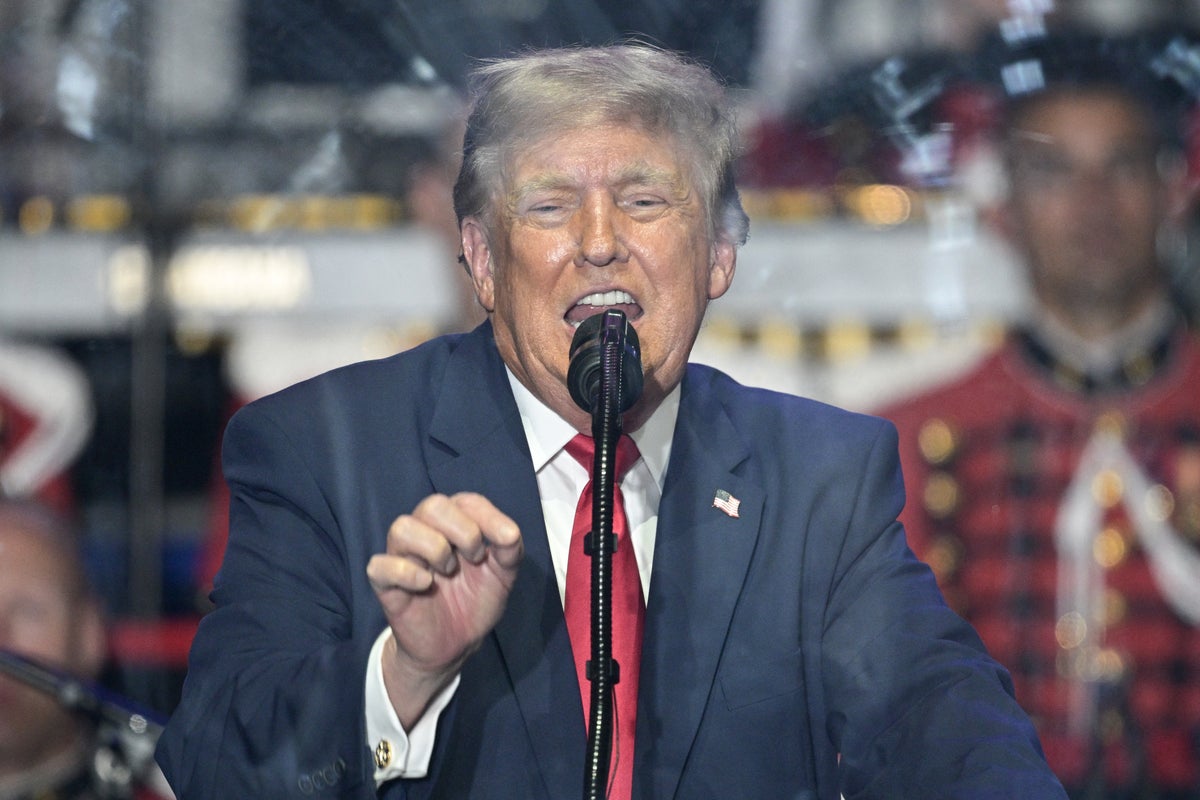
Iran-US war latest: Trump says no Strait of Hormuz tolls or deal is off The US and Iran continue to clash over terms despite an agreement to end the war
independent · 2 months ago
Iranians mark first Ashura since Khameneis killing in the US-Iran war Thousands gathered in Tehran on the eve of Ashura, the first since the killing of Iranian supreme leader Ali Khamenei.
aljazeera · 2 months ago
Kurtulmus calls for Islamic world reform, welcomes US-Iran progress Numan Kurtulmus told the Parliamentary Union of the OIC in Baku on Wednesday that the Islamic world needs comprehensive reform from "A to Z," welcoming positive developments in Switzerland-based US-Iran negotiations while calling for an end to Israeli attacks in Lebanon and the war imposed on Tehran.
yenisafak · 2 months ago
Israels wars since Oct. 7 cost nearly $205B An economic assessment published in the Times of Israels Hebrew edition stated that military operations across Gaza, Lebanon, Syria and Iran have drained approximately 700 billion shekels from state coffers and the wider economy, warning that the financial burden will persist for years through higher taxation and elevated debt.
yenisafak · 2 months ago