
US and Iran agree 60-day roadmap, lift oil sanctions in Swiss talks
Story Timeline
3 months · 16 summary articles
US and Iran lay groundwork for Middle East peace after 18-hour talks in Switzerland, agreeing to a 60-day roadmap, a Lebanon ceasefire, and the reopening of the Strait of Hormuz while Washington temporarily waives oil sanctions on Tehran. The breakthrough, brokered in Burgenstock under Pakistani and Qatari mediation, was hailed by US Vice President J.D. Vance as laying “a very good foundation” for a final deal, while Iran’s Parliament Speaker Mohammad Bagher Qalibaf confirmed the establishment of working groups and implementation mechanisms. Technical teams are set to resume talks this week as both sides prepare for the next phase of negotiations.
The United States will temporarily lift sanctions on Iranian oil exports, allowing Tehran to re-enter global energy markets as part of the 60-day peace negotiations. US Energy Secretary Jared Kushner said oil traffic through the Strait of Hormuz could return to pre-war levels, though it remains unclear who will control the strategic waterway. Iran’s top negotiator, Mohammad Ghalibaf, also announced an agreement to release $12 billion in frozen assets, a move that could inject significant liquidity into the Iranian economy. Oil prices fell to early March levels following the announcement, reflecting market optimism over the diplomatic progress.
Iranian President Masoud Pezeshkian traveled to Pakistan on Monday for consultations with Prime Minister Shehbaz Sharif, who described the first high-level US-Iran meeting as yielding “encouraging progress.” The two leaders are expected to discuss the implementation of a strategic pact estimated to add more than $12 billion to Iran’s economy, as Tehran strengthens ties with its eastern neighbor amid ongoing US-mediated talks. Meanwhile, Iran’s Parliament Speaker Qalibaf and top diplomat Abbas Araghchi arrived in Muscat for further consultations on a new framework for managing the Strait of Hormuz, following the Swiss negotiations.
The Swiss Foreign Ministry welcomed the “constructive” progress, noting that the parties had established a high-level committee and agreed on a 60-day roadmap toward a final settlement. China urged both sides to sustain the diplomatic momentum, voicing support for Pakistan and Qatar as mediators. Iranian President Pezeshkian warned that strict adherence to the Islamabad Understanding is essential for the success of the negotiations, cautioning that deviation from agreed terms could derail efforts to end the war in Lebanon and reopen the Strait of Hormuz.
While the breakthrough represents a significant diplomatic achievement, key details remain unresolved, including the control of the Strait of Hormuz and the extent of international inspections of Iran’s nuclear program. Technical talks will continue in the coming weeks as mediators seek to build on the progress made in Switzerland.
Follow us for live European news
- 1
- 1
- 1
- 1
- 1
1 further source not geolocated
Articles

Iran delegation leaves Switzerland after 18-hour US talks Irans delegation led by Parliament Speaker Mohammad Bagher Qalibaf departed Switzerland for Tehran on Monday after nearly 18 hours of intensive negotiations with US officials, as mediators cited "encouraging progress" in a "positive and constructive atmosphere" and technical teams prepared to resume talks later this week.
yenisafak · 2 months ago
China urges US, Iran to keep positive momentum after Swiss talks Beijings Foreign Ministry on Monday urged Washington and Tehran to sustain diplomatic momentum following the conclusion of high-level talks in Switzerland, voicing support for Pakistan and Qatar as mediators and calling for continued cooperation to implement the recently signed Islamabad Memorandum of Understanding.
yenisafak · 2 months ago
Switzerland hails constructive US-Iran talks at Burgenstock The Swiss Foreign Ministry on Monday welcomed "constructive" progress achieved during intensive overnight diplomatic talks between the United States and Iran at Burgenstock, noting that the parties had established a high-level committee and agreed on a 60-day roadmap toward a final settlement.
yenisafak · 2 months ago
Vance says very good foundation laid for final Iran deal after Burgenstock talks US Vice President JD Vance reported significant progress in negotiations with Iran at Burgenstock, Switzerland, saying the parties have laid a very good foundation for a final agreement. Key achievements include IAEA inspectors returning to Iran, mechanisms to keep the Strait of Hormuz open, and a deconfliction arrangement between Israel and Lebanon. Technical talks will continue in the coming weeks.
yenisafak · 2 months ago
First high-level US-Iran meeting yields encouraging progress, Pakistani PM says Prime Minister Shehbaz Sharif announced that the first high-level US-Iran committee meeting in Switzerland made encouraging progress, including agreement on a 60-day roadmap to a final deal, establishment of a political oversight committee, and commencement of technical talks. Pakistan will continue its mediating role, and Qatar was thanked for its critical support.
yenisafak · 2 months ago
Lebanons Aoun discusses ceasefire, Israeli escalation with US, Qatari officials President Joseph Aoun received phone calls from US Vice President Vance, senior adviser Jared Kushner, and Qatars PM to discuss stabilizing the ceasefire and halting Israeli escalation in Lebanon. Discussions included the possibility of forming a support cell. Irans Foreign Minister reported significant progress in ending the war in Lebanon.
yenisafak · 2 months ago
Qatari PM urges caution on US-Iran talks, warns of external factors Qatari Prime Minister Sheikh Mohammed bin Abdulrahman Al Thani called for caution in US-Iran talks, warning that external circumstances could still affect negotiations despite both sides will. He said the recent memorandum provides an institutional framework requiring regular meetings, and that the framework presented in Switzerland was positive.
yenisafak · 2 months ago
Hormuz oil spill reaches Pakistan coast after US-Iran strikes A thick crude oil slick, likely from tankers hit during US-Iran strikes in and around the Strait of Hormuz, has coated a 20-kilometer stretch of Gwadars coast in southwestern Pakistan. Authorities are investigating three possible sources, including tanker strikes, Iranian exports, and the bombing of Kharg Island. Cleanup is underway, but marine life, including endangered green sea turtles, has already been affected.
yenisafak · 2 months ago
Erdoğan, Pezeshkian discuss regional peace and bilateral ties President Recep Tayyip Erdoğan and Iranian President Masoud Pezeshkian held a phone call to discuss bilateral relations and regional developments. Erdoğan welcomed the US-Iran understanding, offered Türkiyes support for the process, and stressed the need for steps to strengthen regional peace.
yenisafak · 2 months ago
Fidan, Qatari PM discuss Iran-US peace talks by phone Turkish Foreign Minister Hakan Fidan and Qatars Prime Minister and Foreign Minister Mohammed bin Abdulrahman Al Thani discussed the first round of US-Iran peace talks in Switzerland by phone. No further details were provided.
yenisafak · 2 months ago
Iran: No obligation to buy US farm goods under agreements Central Bank Governor Abdolnaser Hemmati has stated that Iran is not obligated to purchase agricultural products from the United States under signed agreements. He added that unfrozen funds are not limited to US purchases, contradicting President Trumps claims that Iran must use released assets for American food imports.
yenisafak · 2 months ago
Trump says Iran sanctions relief will aid US farmers US President Donald Trump said on Monday that any sanctions relief granted to Iran would largely benefit American farmers, warning that Tehran must honor its commitments under a newly signed 60-day negotiating framework or face consequences while claiming the Strait of Hormuz is now fully open.
yenisafak · 2 months ago
Irans chief negotiator in Oman for Hormuz talks Irans Parliament Speaker Mohammad Bagher Qalibaf and top diplomat Abbas Araghchi arrived in Muscat on Monday for consultations on a new framework for managing the Strait of Hormuz, following high-stakes negotiations with US officials in Switzerland under Pakistani and Qatari mediation.
yenisafak · 2 months ago
Iran announces technical talks with US concluded in Switzerland Deputy Foreign Minister Kazem Gharibabadi announced that technical negotiations with the United States concluded in Burgenstock, Switzerland, with agreements to establish working groups and implementation mechanisms, advancing Qatari- and Pakistani-mediated efforts to end the war.
yenisafak · 2 months ago
Qatar says Iran dialogue necessary despite unacceptable acts Sheikh Mohammed bin Abdulrahman Al Thani said dialogue with Tehran remains essential to guarantee regional security and stability, describing recent developments affecting Doha and other Gulf states as "unacceptable" while calling for a unified Gulf vision and a new regional security framework to prevent repeated crises.
yenisafak · 2 months ago
Türkiye can once again change the course of history! If the US and Iran reach a real agreement in the Swiss talks, what kind of power map will emerge in the region? Will Iran, weakened by war and with its regional power broken, gain strength, or will it remain a weakened state confined to its own mainland? Or will it be marketed as a state that "won a victory against the US"? What will happen to the relationship between the Gulf countries, which suffered heavy Iranian attacks, and Iran after this? Will the Gulf Arab states realize that the US will
yenisafak · 2 months ago
Iranian president arrives in Pakistan on first overseas trip since war Iranian President Masoud Pezeshkian arrived in Islamabad for his first overseas visit since the US-Israel war began in February. He was welcomed by Pakistans President Zardari and Prime Minister Sharif. The visit aims to convey Irans gratitude for Pakistans mediation efforts and to discuss trade, energy, border security, and regional cooperation.
yenisafak · 2 months ago
US waives Iran oil sanctions as part of 60-day peace negotiations The United States temporarily waived sanctions on Iranian oil exports on Monday, opening the door for Tehran to return to global energy markets as negotiations between the two countries continue. In this edition, we look at the impact this has had on oil prices, while also examining major job cuts at Oracle linked to AI-driven restructuring and a sharp sell-off in technology stocks thats rippled from Wall Street to Asian and European markets.
france24 · 2 months ago
US, Iran agree on Lebanon ceasefire and lifting sanctions on Iranian oil, but much remains Both Tehran and Washington hailed the negotiations that took place in Switzerland on June 22 to create a roadmap to close down the war in the Middle East. US Vice president JD Vance said it laid a good foundation for a deal to end the war. The parties agreed to establish mechanisms to open the strait of Hormuz but it is unclear who will control it.
france24 · 2 months ago
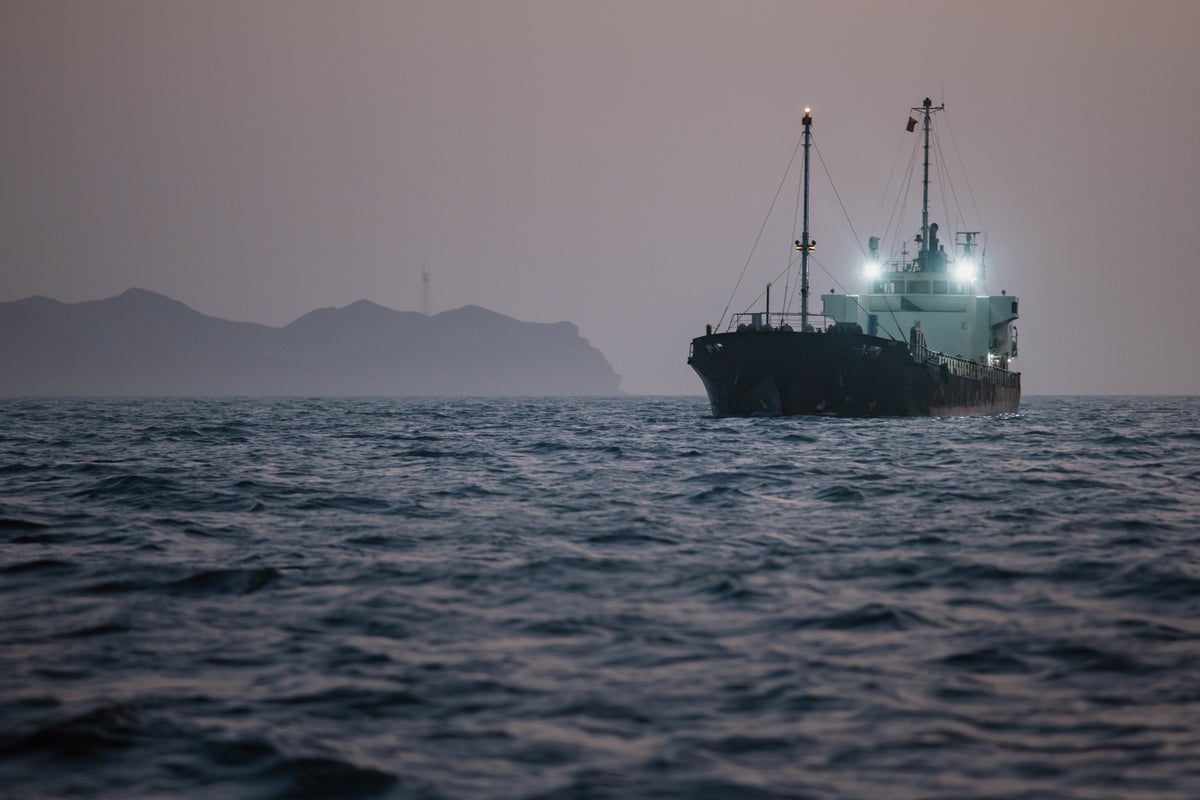
Oil prices fall to early March levels as US-Iran peace talks progress JD Vance stated that extensive discussions with senior Iranian officials have established a good foundation for a comprehensive final peace deal
independent · 2 months ago
Iran says technical talks with US in Switzerland conclude successfully Irans top negotiator Mohammad Ghalibaf also says an agreement reached with the US to release $12bn in frozen assets.
aljazeera · 2 months ago
What Israeli and Lebanese officials are saying before Washington talks Iran has made a ceasefire in Lebanon a key condition in its ongoing negotiations with the US.
aljazeera · 2 months ago
Irans President Pezeshkian lands in Pakistan after US deal Pakistan hosts Iranian President Masoud Pezeshkian after mediating the breakthrough US-Iran negotiations in Switzerland.
aljazeera · 2 months ago

🔴 BREAKINGIrans president visits Pakistan following US mediation breakthroughIranian President Masoud Pezeshkian arrives in Pakistan after crucial negotiations with the US in Switzerland. Pakistan hosted the visit, having mediated the breakthrough talks that marked a significant diplomatic development between Tehran...📰 #USA #Diplomacy #Geopolitics #GeoWire
mastodon bot · 2 months ago
Irans Pezeshkian warns US talks need full commitment Masoud Pezeshkian said the success of negotiations with Washington hinges on strict adherence to the Islamabad Understanding, warning that deviation from agreed terms undermines diplomatic progress achieved during Sundays talks in Switzerland and could derail efforts to end the war in Lebanon and reopen the Strait of Hormuz.
yenisafak · 2 months ago
Israel not party to US-Iran talks, will continue Lebanon operations: Smotrich Israeli Finance Minister Bezalel Smotrich said on Tuesday that Israel is not a party to negotiations between the United States and Iran, vowing that offensive operations in Lebanon will continue until Hezbollah is fully dismantled rather than merely disarmed.
yenisafak · 2 months ago
Cold shoulder at peace talk 🇶🇦🇺🇸At the US-Iran peace talks held near Lake Lucerne in Switzerland, Qatari Foreign Minister Mohammed bin Abdulrahman Al-Thani ignored US Vice President J.D. Vance upon entering the room.It was notable that Al-Thani shook hands with Pakistani Prime Minister Shehbaz Sharif and Army Chief of Staff Asim Munir but left Vance, Trumps right-hand man, empty-handed.The talks ended inconclusively after the Iranian delegation, led by Foreign Minister Abbas Araghchi, left the room following threats from Trump.
yenisafak · 2 months ago
Netanyahu says Israel must break free from dependence after tensions with Trump administration Israeli Prime Minister Benjamin Netanyahu said Israel must reduce its reliance on foreign weapons and build independent military capabilities amid disagreements with the Trump administration over the US-Iran agreement. The remarks came after US Vice President JD Vance sharply criticized Israeli ministers for opposing the deal, warning them not to attack the only powerful ally Israel has.
yenisafak · 2 months ago
Iran says Switzerland four-way talks collapsed after US threats Irans foreign ministry says four-way talks in Switzerland with the US, Pakistan and Qatar failed to reconvene after threatening US statements, with later contact running only through mediators, giving Tehrans account of the round.
intellinews · 2 months ago
Irans Pezeshkian visits Pakistan to advance $12bn strategic pact Irans President Masoud Pezeshkian has flown to Islamabad for a one-day visit focused on implementing a strategic pact estimated to add more than $12bn to Irans economy, as Tehran courts its eastern neighbour and US-talks mediator.
intellinews · 2 months ago