ruv english
Feared political interference would leave Landsvirkjun unable to operate Hörður Arnarson, then CEO of Landsvirkjun, began raising concerns about the working practices of the company's board and fjármálaráðuneytið (the Ministry of Finance) towards the end of last year. He considered the board's interference in the company's operations to be improper and potentially unlawful, and feared it was putting Landsvirkjun's operations at risk.After Hörður Arnarson announced his resignation as CEO of Landsvirkjun, RÚV's news department requested all correspondence between fjármálaráðuneytið (the Ministry of Finance) on the one hand, and Landsvirkjun's board and CEO on the other. Not all the documents were provided, but those obtained show that Hörður first sought to draw attention to what he considered improper interference in the company's operations in November last year. This was six months after a new Landsvirkjun board was elected at the annual general meeting.Hörður also requested a meeting with the Minister of Finance to discuss relations between Landsvirkjun and the ministry. His request was not granted. On 23 December, he received a message from the board's chair saying that Daði Már Kristófersson, fjármálaráðherra (Minister of Finance), had requested a change to the meeting arrangements.On 6 January, Daði Már met the board at the ministry, where they discussed the board's role, corporate governance, and the exchange of information between Landsvirkjun and the ministry. Hörður did not attend.Memorandum on legal risks and responsibilities in Landsvirkjun's operationsHörður sent Landsvirkjun's board a three-page memorandum raising serious concerns about corporate governance.In the memorandum, Hörður expresses concern about increased communication between the Ministry of Finance and Landsvirkjun's board outside annual general meetings. He warns that such communication risks being interpreted as political interference.If Eftirlitsstofnun EFTA (the EFTA Surveillance Authority, ESA) were to interpret it in that way, Landsvirkjun could be rendered unable to operate, as all major decisions would have to be referred to ESA."The framework governing roles and powers [...] is structured in such a way that the ministry has no authority to direct Landsvirkjun's board or operations, and that must be respected," the memorandum states.The memorandum also cites examples of the ministry initiating meetings with the board to which the CEO was not invited. Some of these meetings allegedly involved matters that should not have been discussed with the ministry, while requests were made for information that could not lawfully be disclosed.It also states that an increasing amount of board business was being conducted outside formal board meetings, and that board members had even become directly involved in day-to-day operations, including by discussing company matters directly with external stakeholders and Landsvirkjun employees.Hörður says he considers it his duty to point out that the law may not be being followed, potentially creating serious risks.He concludes:"In the 16 years I have served as CEO of Landsvirkjun, I have never before found myself in a position that made it as difficult to carry out my duties as the situation that has now arisen."Board says it took Hörður's concerns seriouslyLandsvirkjun's board asked lawyer Áslaug Árnadóttir to provide a legal opinion on the company's governance structure.The opinion runs to 18 pages and consists primarily of an explanation of how the laws and regulations governing Landsvirkjun's management structure should be interpreted.It does not determine whether individual board members or the ministry actually exceeded their authority in particular instances. However, it notes that the board and the ministry have considerable scope for communication and action, and that there are clear boundaries between the roles of the board, the CEO, and the company's owner.Landsvirkjun issued a statement towards the evening referring to Hörður's memorandum. It says the company's board took his concerns seriously and, among other things, sought the legal opinion from Áslaug mentioned above."The conclusion is clear: The review of the matter has revealed no evidence that Landsvirkjun's board acted outside its statutory role or powers. There has, however, been disagreement over working practices and the interpretation of the roles of the board, the board's chair, and the CEO."The statement also says that minutes of meetings confirm that the state has not exerted any improper influence over the company's management."Board decisions are made at board meetings, on commercial grounds, and with Landsvirkjun's interests as the guiding principle."Two weeks later, Hörður responded to Áslaug's legal opinion.He acknowledged that her opinion was well prepared but stressed the need to clarify further the boundaries between the board, its chair, the CEO, and the ministry.Landsvirkjun must be able to demonstrate that decisions are made independently, through the appropriate channels, and in a formal and transparent manner.He said this was particularly important because of the company's competitive position and the rules governing state aid.Little trust on either sideOn 11 September, a ministry employee sent a summary to the minister and other ministry staff concerning a meeting between ministry officials and the chair and vice-chair of Landsvirkjun's board.The email was headed "Landsvirkjun (sensitive)".The summary says the situation that had arisen was being examined, but that "there appears to be little trust on either side, making it difficult for the board to carry out its duties".It states that Landsvirkjun's board, in cooperation with Boston Consulting, had undertaken extensive strategic planning work, alongside a review of the company's operations.The intention was to present a new strategy and the changes the board planned to make "at the earliest suitable opportunity".Approximately two weeks later, Hörður resigned as CEO.Final letter to DaðiLast week, on 26 October, Hörður felt compelled to email Daði Már following an interview with the minister on Bítið (The Morning Show) on Bylgjan.Hörður pointed out that since the new board took office last year, five meetings had been held at which he had either been asked to leave or had not been informed about the meetings until afterwards.He had no objections to one of these meetings."I have repeatedly raised formal objections with Landsvirkjun's board about being prevented from participating in the other four board meetings, and I believe this was unlawful under the legislation governing Landsvirkjun," Hörður wrote in his email.He listed two meetings he had been asked to leave, adding that he had not been informed about one meeting until three months after it took place, and another until three weeks afterwards.Board denies interferenceIn the aforementioned statement, Landsvirkjun rejects the claim that Hörður was excluded from discussions about the company's operations."During the board's approximately 18 months in office, it has met without him twice to discuss his criticisms of the board's work. At two other meetings, he left while agenda items concerning him personally were discussed, as is appropriate in such circumstances."The board has a statutory duty to oversee the CEO's work. To fulfil that role, it is natural for the board to discuss such matters in his absence."The board also denies interfering in Landsvirkjun's day-to-day operations.It says that on the few occasions when board members communicated with external parties or employees, this was done in consultation with Hörður and with his approval."No decisions are above criticism, and it is entirely appropriate to discuss working practices in a constructive manner. However, it is incorrect to claim that laws or good corporate governance practices have been breached. Such claims are not supported by the evidence in this case, and the board therefore considers it appropriate to correct them," the statement says.
about 3 hours ago
eldiario.es
Dimite Eduard Rivas, el jefe de gabinete de Salvador Illa investigado en una causa judicial Xavi Amor, hasta ahora secretario de gobiernos locales, será nombrado este martes como mano derecha del presidentEl jefe de gabinete de Illa, investigado por el presunto desvío de fondos de una fundación durante su etapa de alcalde
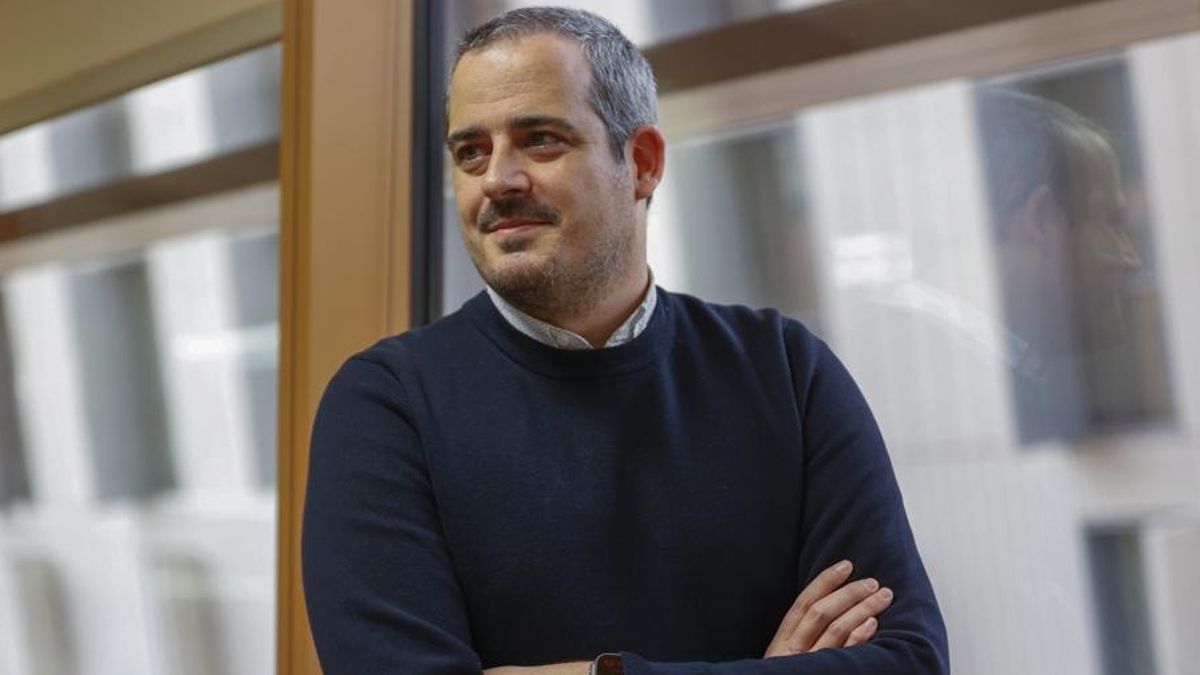
Eduard Ribas, jefe de gabinete del president de la Generalitat, Salvador Illa, ha dimitido de su cargo diez meses después de que se le abriera una investigación sobre presuntas irregularidades en contratos públicos durante su etapa como alcalde de Esparraguera (Barcelona). Su sustituto será Xavier Amor, hasta ahora secretario de gobiernos locales y relación con el Aran.
Rivas, exalcalde de Esparreguera entre 2015 y 2024 está siendo investigado en una causa judicial sobre contratos municipales en su etapa como primer edil. La causa se abrió en enero, y entonces el Govern mostró su plena confianza en el jefe de gabinete ahora dimitido.
Los Mossos d'Esquadra incautaron el pasado enero el móvil de Rivas por orden del juez de Martorell (Barcelona), en el marco de un proceso judicial sobre contratos del ayuntamiento de este municipio. El exalcalde figura como investigado y se ha personado en la causa con abogado defensor.
La investigación busca aclarar supuestas irregularidades en la Fundación para la Inclusión Laboral, con sede en Esparreguera y dedicada a ofrecer trabajo a personas con discapacidad intelectual, ante la posibilidad de que parte del dinero procedente de contratos públicos acabara sufragando presuntamente gastos privados de miembros particulares ligados la entidad.
Xavier Amor será el nuevo jefe del gabinete del president. Su nombramiento se oficializará en la reunión del Govern de este martes, según el departamento de la Presidencia. Nacido en Pineda de Mar en 1975, Amor era hasta ahora secretario de gobiernos locales y relaciones con el Aran.
La nueva mano derecha de Illa fue alcalde de Pined de Mar (Barcelona) diecisiete años, de 2007 a 2024, y previamente ocho años concejal. También presidió la Federación de Municipios de Catalunya entre 2013 y 2019.
about 12 hours ago
novaya gazeta europe
Эстония выслала российского политолога Леонида Карабешкина. Его обвинили в связях со спецслужбами РФ Департамент безопасности Эстонии выслал из страны российского политолога Леонида Карабешкина. По версии ведомства, он поддерживал связь с российскими спецслужбами и людьми, действующими в их интересах. Об этом сообщает издание ERR.Что произошло. Департамент безопасности Эстонии опубликовал видео, в котором показан процесс выдворения Карабешкина из страны. По словам представителя ведомства Марты Тууль, он часто посещал Россию и встречался с представителями спецслужб.Twitter"Он регулярно ездил в Россию и встречался там с ними. Некоторые из них находятся под санкциями ЕС и Украины за осуществление враждебной деятельности по оказанию влияния от имени России. Кроме того, он связан с сетями влияния, такими как CIRP, RuBaltic и Regnum, а также со связанными с ними лицами", — сказала Тууль.Карабешкину также запретили въезд в Шенгенскую зону. Министр иностранных дел Эстонии Маргус Цакхна назвал это справедливым решением. По его словам, Таллинн "не будет терпеть действий, подрывающих безопасность".Кто это. Леонид Карабешкин переехал в Эстонию в 2006 году, став доцентом Евроакадемии и деканом факультета международных отношений. В 2012 году россиянин стал профессором Евроакадемии. После ее закрытия Карабешкин выпускал публикации и выступал на конференциях.С 2022 по 2024 год Карабешкин работал в русскоязычной редакции ERR в качестве международного обозревателя. С ним расторгли договор по соглашению сторон и по причинам, не связанным с нынешними заявлениями полиции.The Insider пишет, что Карабешкин действительно регулярно ездил в Россию и до начала войны в Украине, и после. Кроме того, он и вправду в разные годы публиковался в российских изданиях Regnum, RuBaltic и Baltija.еu. При этом его последняя публикация на Regnum датирована маем 2015 года.
about 17 hours ago