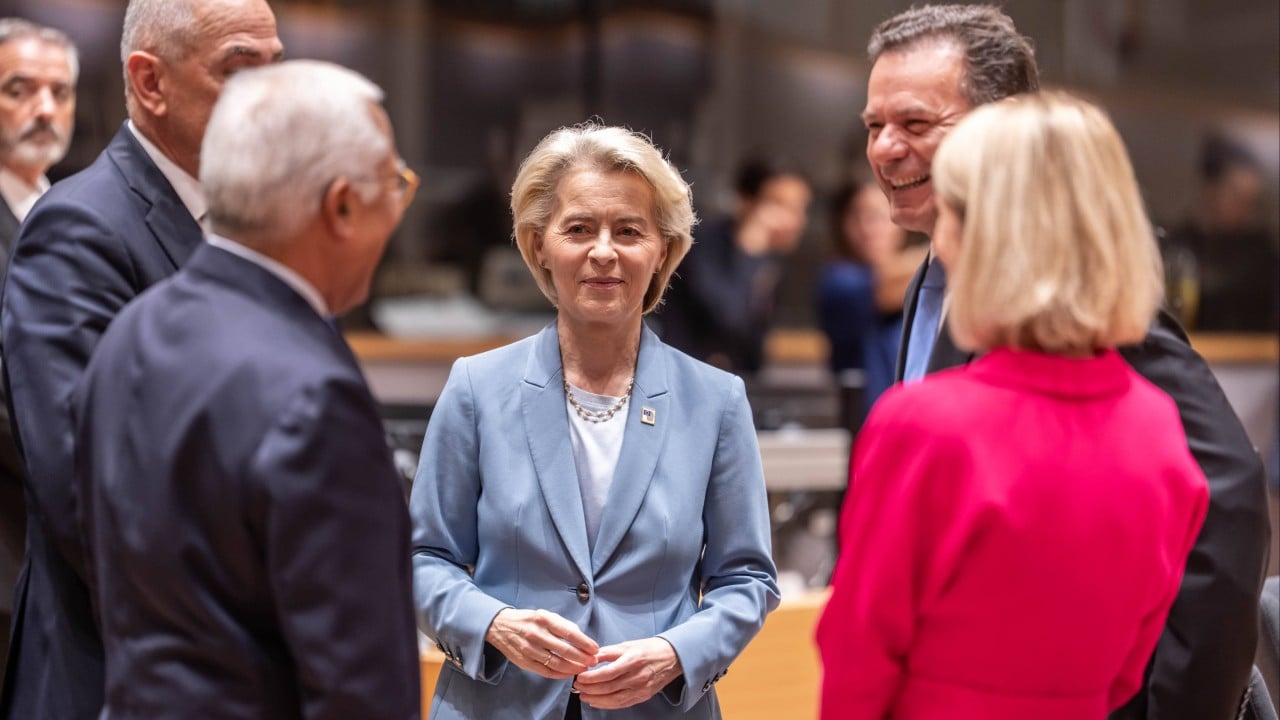
EU leaders failed to break a deadlock on the bloc’s 2028–2034 budget during a two-day summit in Brussels, prompting European Council President António Costa to announce a new compromise proposal ahead of an extraordinary meeting on 26 November.
Costa urged leaders to finalize the nearly €2 trillion budget by December to avoid delays in EU payments to farmers and researchers after 1 January 2028, warning that elections in France, Italy, and Poland next year could push negotiations into late 2027. French President Emmanuel Macron backed the timeline, stating he would lack a political mandate to sign an agreement in the run-up to France’s April 2027 presidential vote. Far-right leader Marine Le Pen criticized the push for a pre-election deal as a “democratic scandal,” according to an EU official.
Divisions persisted between net contributors, including Germany, the Netherlands, Austria, Sweden, Denmark, and Finland, which rejected an Irish proposal to cut €159 billion as insufficient, and cohesion advocates like Romania and Italy. German Chancellor Friedrich Merz, seen as the leader of the frugal camp, called for further reductions but ruled out cuts to agricultural subsidies, while Polish Prime Minister Donald Tusk argued against any reductions amid heightened security threats from Russia .
Greece proposed new revenue streams, including levies on 6G network licenses, as part of efforts to bridge the gap . Latvia, meanwhile, plans to advocate for additional funding for countries on the EU’s eastern flank during the negotiations .