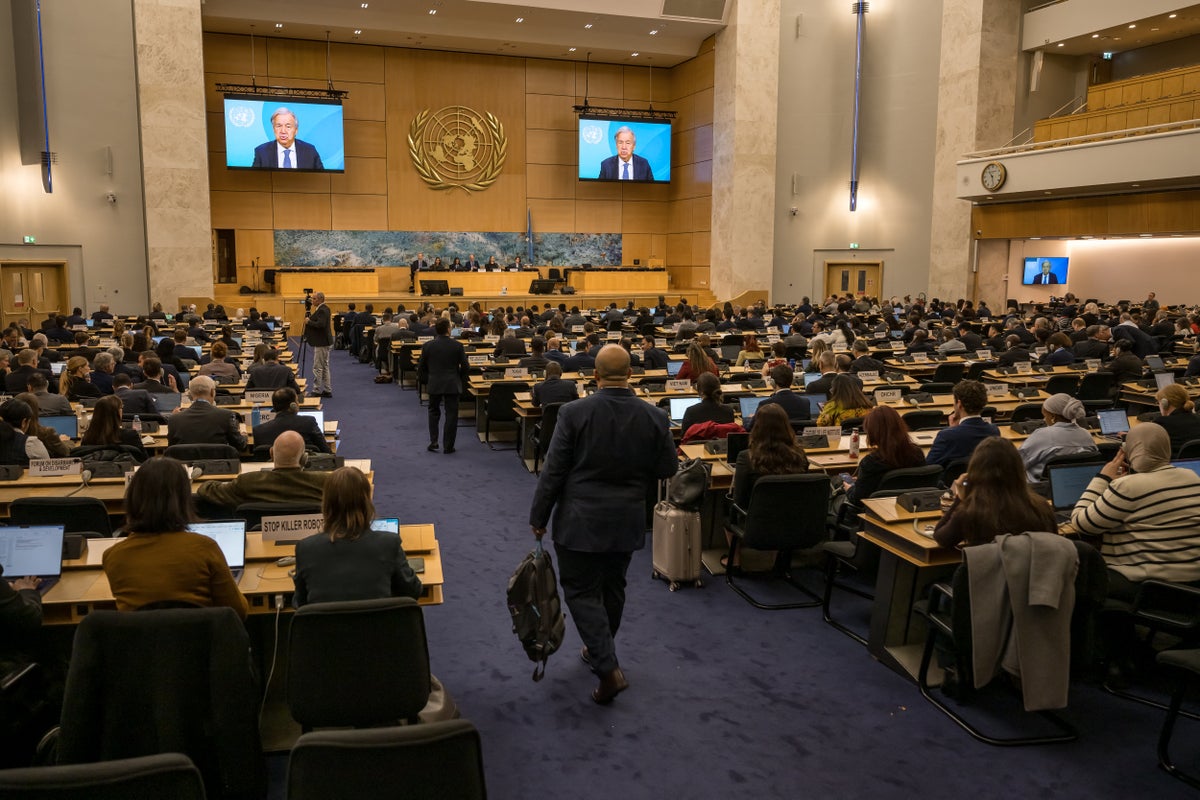
UN talks in Geneva on regulating lethal autonomous weapons ended on Saturday without binding rules, but with a pledge to continue negotiations for two years. [1]
The 128 states party to the Convention on Certain Conventional Weapons agreed only to a minimal consensus. [2] They committed to further talks to develop new rules within two years and to international restrictions on development. [1] Whether those future measures will be legally binding remains unresolved. [3] Around 100 states had pushed for binding rules, but the United States, Russia and Israel opposed them. [1]
Russia blocked the adoption of the agenda at the start of the meeting because it wanted to restrict the speaking rights of the European Union and other observers. [4] Because the conference decides by consensus, such moves amount to a veto. [4] Since then, only informal consultations took place. [4]
"The states bear the decisive responsibility that the future of peacekeeping is not handed over to machines," said Mirjana Spoljaric, president of the International Committee of the Red Cross. [4] UN Secretary-General António Guterres said in a video message: "Let us act to prevent the use and proliferation of these ruthless weapons. [5] We must never abandon the protection of civilians from the bloodshed and destruction caused by armed conflict, from preventing unnecessary suffering." [5]
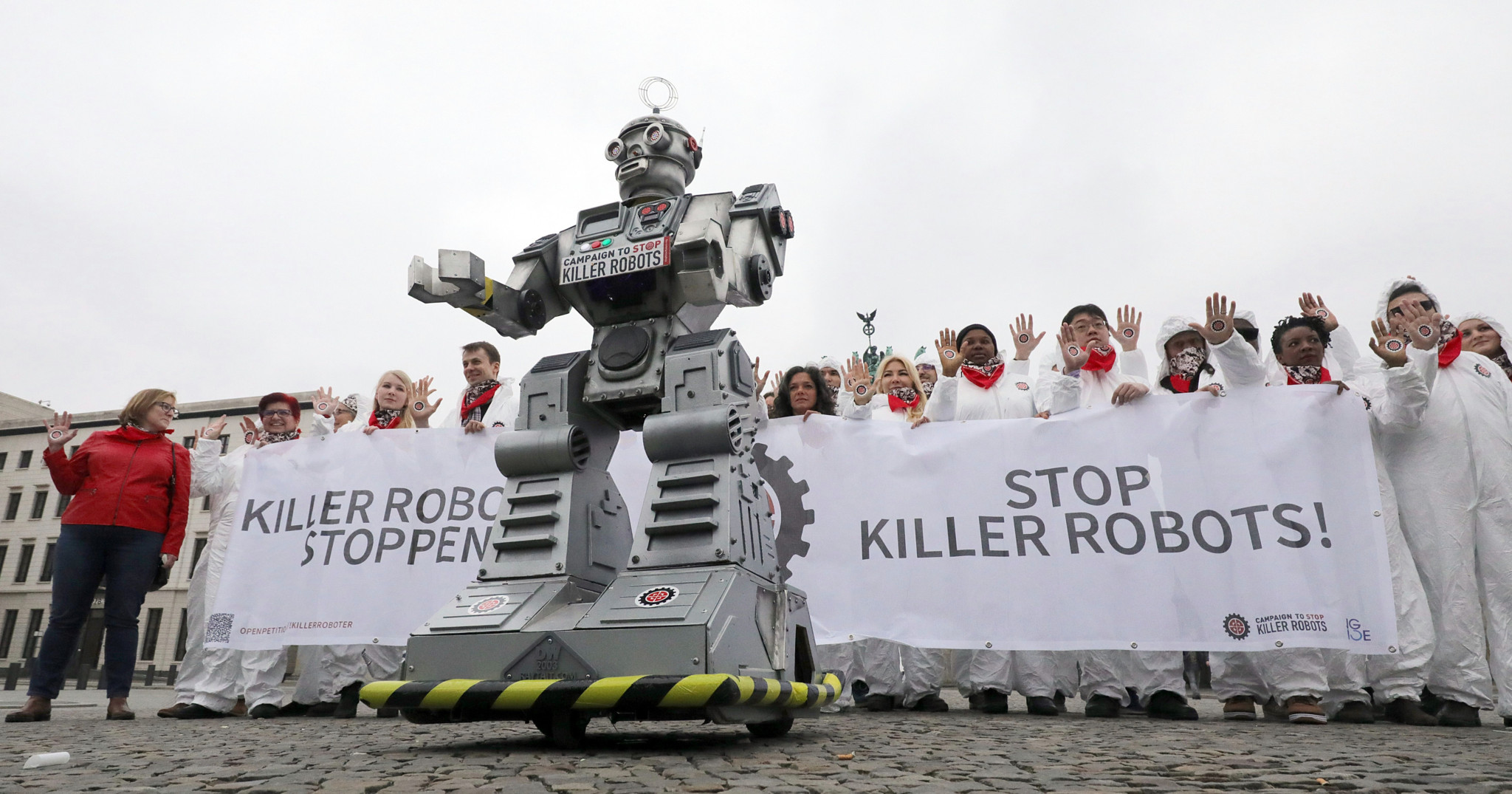
The weapons, officially called lethal autonomous weapon systems, can select and engage targets without human intervention. The Stop Killer Robots campaign says fully automated weapons have already been deployed or tested, particularly since Russia's invasion of Ukraine. [5] Thomas Küchenmeister, the campaign's spokesman in Germany, cited "Lavender," an Israeli-developed artificial intelligence targeting system, as raising questions about human control. [4] "If soldiers only have seconds to check whether an action proposed by artificial intelligence really respects international humanitarian law, that is hardly the case," he said. [4]
Magnus Lovold, a researcher at the Lex International humanitarian foundation, said the development of these technologies gives killer robots an "Oppenheimer moment," referring to physicist Robert Oppenheimer, the "father of the atomic bomb." [5] Frederico Meyer, the Brazilian ambassador, told journalists that states cannot leave the negotiating table empty-handed, because the absence of an agreement would be terrible for humanity and the UN. [5] Anna Hehir, a leader at the Future Life Institute, commented that a minority of member states is trying to block progress in the interests of technology sector leaders and arms manufacturers. [5]