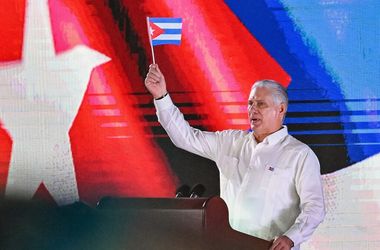
Cuban President Miguel Díaz-Canel said on Friday that the island is stepping up military preparedness daily to repel any possible U.S. attack.
Díaz-Canel spoke during National Defense Day in Boyeros, south of Havana, to military commanders, Communist Party officials and local authorities. He said Cuba is determined to reject any foreign military aggression. "We are determined to repel any attempt at foreign military aggression against our country," he said. He stressed that Cuba is a peaceful country that poses no threat to U.S. national security. He criticized repeated statements by U.S. politicians about military action, without naming Trump. In a social media post, he demanded that the U.S. end its blockade of the island.
President Donald Trump said on Thursday in a radio interview with Hugh Hewitt that he would consider military intervention to "liberate" Cuba. Trump said he wants to "finish with Cuba" before leaving office in 2029. He called the island a failed state. He said Secretary of State Marco Rubio, whose parents are Cuban, would want to carry out such an operation. In October, Trump suggested U.S. warships returning from the war with Iran could stop at Cuba and that Cuban leaders would surrender.
Since January, Cuba has held regular military exercises and defense coordination meetings. The exercises began after U.S. forces captured Venezuelan President Nicolás Maduro in a military operation that killed 32 Cuban soldiers, according to AP. The military also trains civilians in basic combat skills under a strategy the government calls the "war of all the people."
The U.S. imposed new sanctions on Cuba in early November. In January, Trump signed an executive order threatening tariffs on any country that supplies oil to Cuba. Mexico and Venezuela have since stopped sending fuel. The island of 10 million people faces severe shortages and daily power outages of up to 22 hours in parts of Havana. In May, the U.S. deployed the aircraft carrier USS Nimitz and the USS Kearsarge with 2,500 Marines to the Caribbean.
A Marista poll found that 61 percent of Americans oppose a military operation against Cuba. 70 percent believe Congress should approve any such action. Analysts cited by CNBC said continued economic pressure is more likely than military action.