Croatian Prime Minister Andrej Plenković and Montenegrin Foreign Minister Ervin Ibrahimović traded accusations on Friday over their countries' long-running border dispute, with each insisting his country would not cede territory. [1]
Ibrahimović said in Podgorica that Montenegro would not give up "even an inch" of its territory in demarcation talks. He called for continued dialogue and said open issues could be resolved by agreement or before international institutions. [2] Plenković, speaking in Poreč, responded that he could not "fully make out what inch we are talking about" and declared that Croatia "never asks for foreign territory, but does not give up its own." [1]
The exchange comes as Croatia has withheld consent for Montenegro to close Chapter 15 (energy) in its EU accession talks. Zagreb also opposes closing Chapters 14 (transport) and 31 (foreign and security policy). It demands that Podgorica confirm the former republican border on land. [3] Montenegro has provisionally closed 25 of 33 chapters and aims to finish negotiations by the end of this year and join the EU in 2028. [3]
Plenković said Croatia's proposal is based on the principles of the Badinter Commission, the 1991 arbitration body that ruled former Yugoslav republican borders became international borders after independence. [4] He noted that a 2002 temporary regime already confirms the border at Cape Konfin on the Prevlaka peninsula. The solution was endorsed by joint expert groups more than 20 years ago. Montenegro has applied the same principles with Kosovo and Bosnia and Herzegovina. [1]
Montenegrin Justice Minister Bojan Božović wrote to Croatia's foreign ministry that unresolved bilateral issues should not be used as a condition in the final phase of EU accession talks. He argued that Croatia's insistence on Badinter principles slows Montenegro's European path. [5] He announced Podgorica will soon send a counter-proposal for a border agreement covering both land and sea. Minister of European Affairs Maida Gorčević said that if no solution is found, Montenegro will turn to arbitration or an international court. [5]
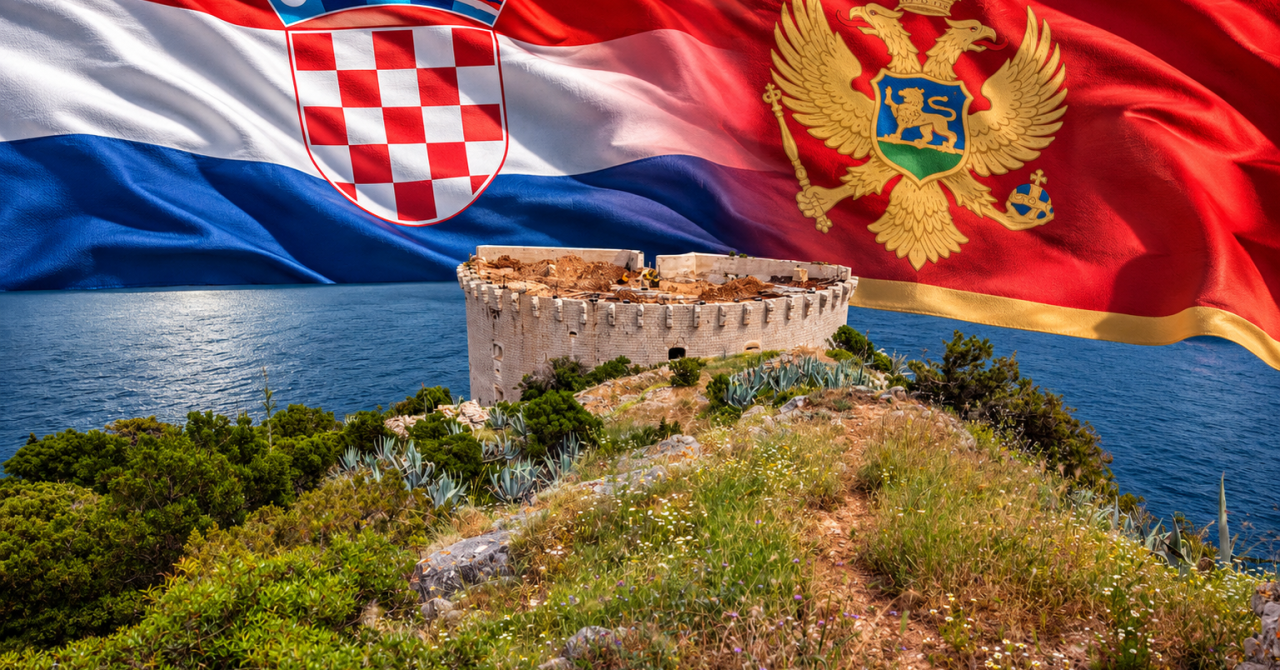
A source close to the Montenegrin government told Vijesti that it is "quite acceptable" to Podgorica for the land border on Prevlaka to remain as set by the 2002 protocol. The source said several points exist from which the maritime line could be drawn to ensure the Bay of Kotor does not become an international bay. [6] Croatian State Secretary Andreja Metelko-Zgombić said in Brussels that Zagreb does not want the maritime issue to slow Montenegro's EU progress. She said Croatia is ready to discuss it later but expects confirmation of the former republican border. [5]
Croatian MEP Sunčana Glavak rejected claims that Croatia is obstructing Montenegro's EU path. She stated that Badinter principles are the foundation of the international legal order from Yugoslavia's breakup and cannot be subject to political trade. [5] The Prevlaka dispute dates to Yugoslavia's dissolution, when the peninsula was placed under UN control before the 2002 protocol. Former prime ministers Milo Đukanović and Ivo Sanader agreed in 2008 to take the maritime border to the International Court of Justice, but the case never reached The Hague. [6] The border also affects rights to Adriatic natural resources, including potential oil and gas deposits. [6]