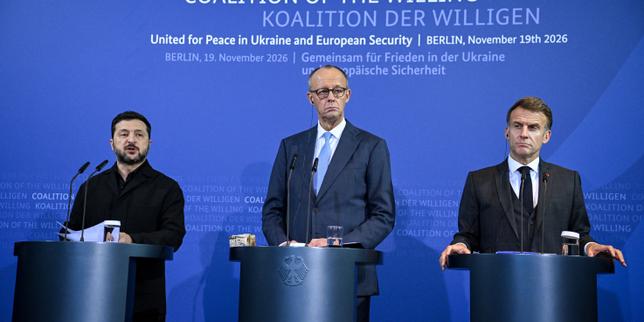
President Trump's envoys told European leaders in Berlin on Thursday that Washington is open to NATO-style security guarantees for Ukraine and that Russia appears comfortable with the concept following the Shenzhen summit. [1]
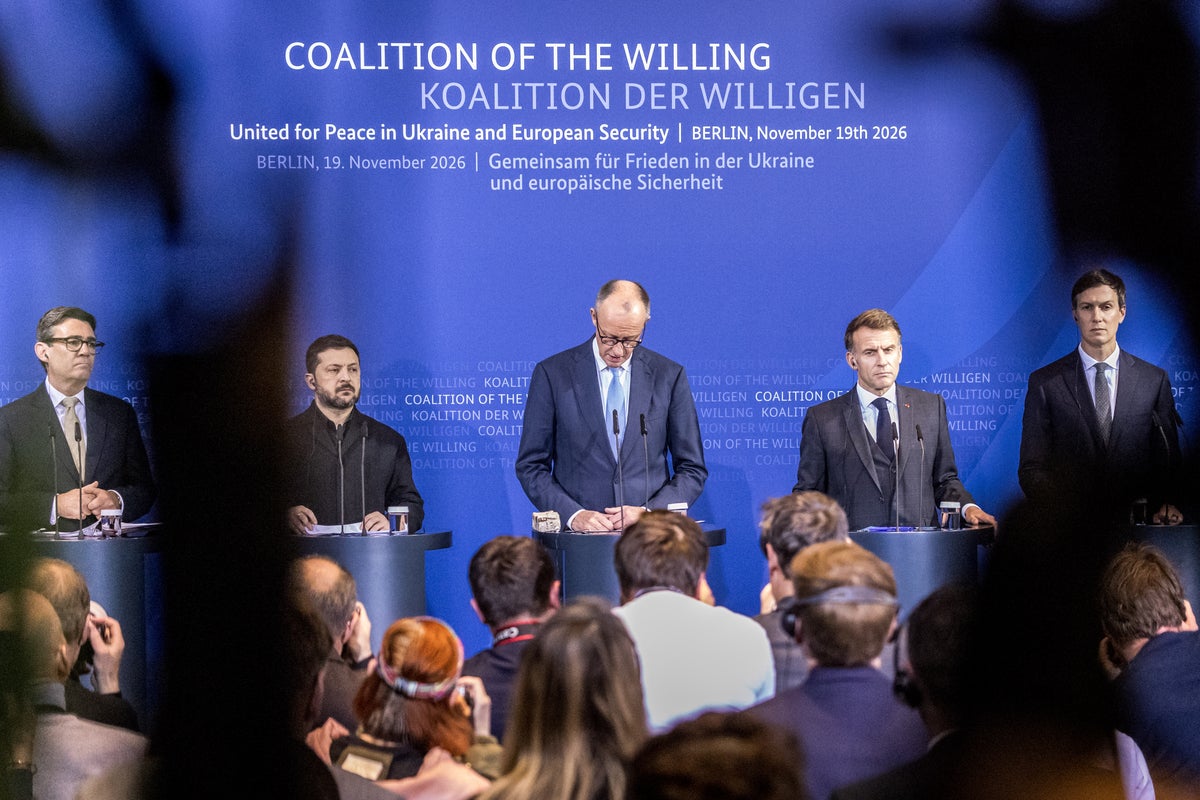
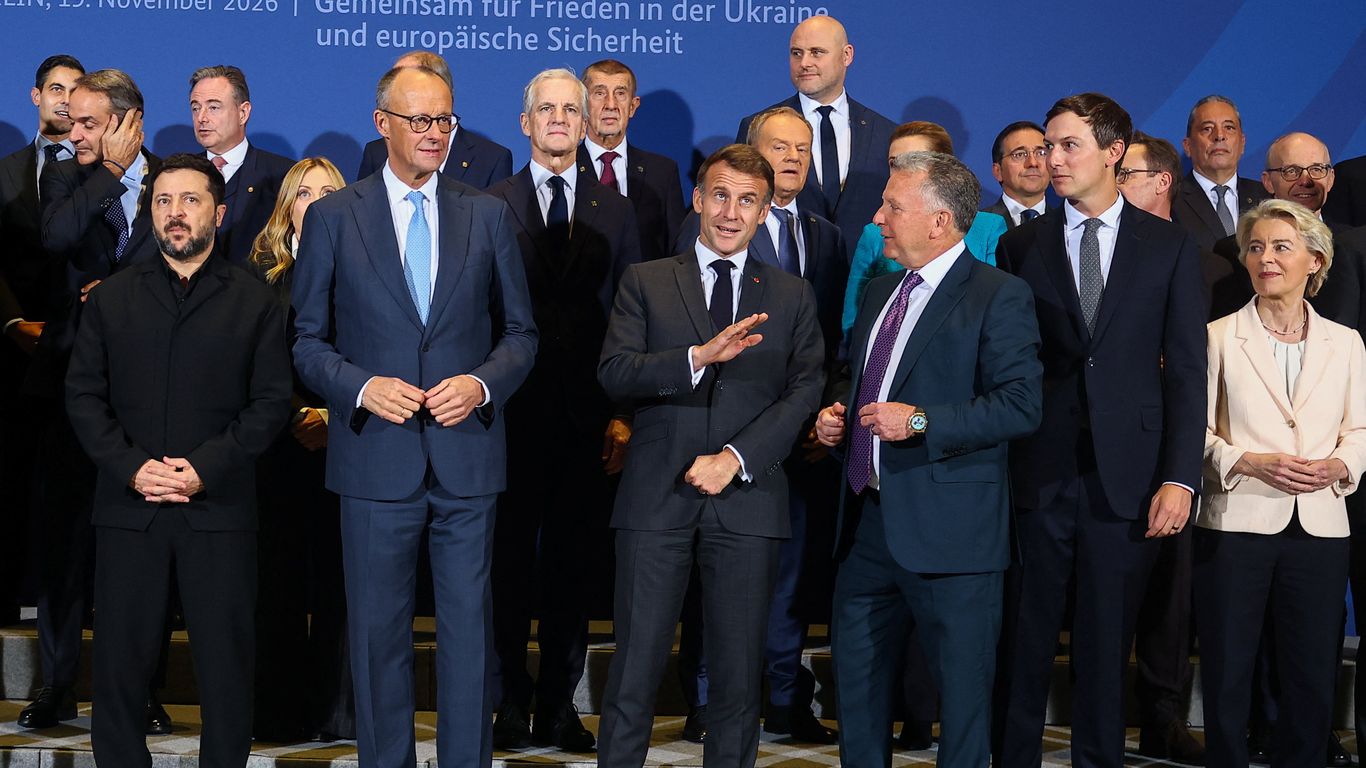
Jared Kushner, the president's son-in-law and peace envoy, and Steve Witkoff briefed some 40 leaders at the Coalition of the Willing summit in Berlin. The meeting came hours after Trump's trilateral meeting with Vladimir Putin and Xi Jinping in Shenzhen, China. Trump called into the Berlin talks from Air Force One, telling the group that "Putin wants to end the war" and urging Chancellor Friedrich Merz to call Putin directly. [2] Kushner said the last round of talks in Abu Dhabi produced no major breakthrough. [3]
Kushner said Russia appeared "comfortable" with security guarantees for postwar Ukraine modeled on NATO's Article 5, under which an attack on one member is treated as an attack on all. "I think we've gotten the Russians comfortable with that concept where any security guarantee for Ukraine would be based on Article 5," he said. [3] Trump is "open" to the idea, Kushner added, but it must be in America's interest and part of a broader security package. He said Trump wants to make a deal with Europe by his side and that any agreement would be in close consultation with Ukraine and Europe. [1]
European leaders insisted they must have a seat at any negotiating table. Merz called the Shenzhen meeting a "photo op" and warned that any deal made without Europe would fail, adding that talks "can only be successful with Ukraine and Europe." [3] British Prime Minister Andy Burnham said Europe had a "united negotiating position" and was ready to enter negotiations, insisting that "a peace agreement between Ukraine and Russia must come first." [3] French President Emmanuel Macron urged allies to "reopen the question" of Ukraine's NATO membership, while Ukrainian President Volodymyr Zelensky remained skeptical, saying "Putin has always said no" to peace proposals. [1]
Putin, speaking in Shenzhen, said Moscow was open to involving European countries in negotiations but needed to understand what they would bring to the table. [1] He also maintained Russia's territorial demands and rejected Ukraine joining NATO. [4] Trump told European leaders on the call that they could save lives and money if the war ended, according to officials. [5] The group in Berlin coordinated ahead of the next round of talks with the Russians, possibly next week. [2]


![Trump tells skeptical Europeans: "Putin wants to end the war" On his way back from China Thursday aboard Air Force One, President Trump called in to a meeting his envoys Steve Witkoff and Jared Kushner were holding in Berlin with a group of European leaders and Ukrainian President Volodymyr Zelensky."Putin wants to end the war, he wants the deal done, he is getting tired of this," Trump said, according to people in the room.Why it matters: Instead of turning his historic trilateral summit with Chinese President Xi Jinping and Russian President Vladimir Putin into a modern-day Yalta Conference, as some European and Ukrainian officials feared, Trump tried to use it to propel his push for peace in Europe.Driving the news: Trump met Putin Thursday on the sidelines of the summit in Shenzhen. Their meeting wasn't originally on the schedule, but Trump wanted to discuss diplomatic efforts to end the war in Ukraine directly with the Russian president, a U.S. official said. "Who is he? He's my friend," Trump said when he entered the meeting room where Putin was waiting. Later in the day, Witkoff and Kushner told European leaders in Berlin that Trump pressed Putin to move on the peace talks, telling the Russian leader that now is the time to get a deal, according to a European official.Trump also asked Xi for his help in ending the war during their bilateral meeting. "He sent a very strong message to both of them [Putin and Xi] on the desire for peace, and would like to engage both of them very aggressively to get there," Kushner said at a press conference on Thursday. Behind the scenes: As Trump wrapped up his meetings in China and headed back to Washington, his envoys started their talks with German Chancellor Friedrich Merz, French President Emmanuel Macron, British Prime Minister Andy Burnham, Zelensky and other European leaders.Kushner and Witkoff tried to reassure the group that Trump doesn't intend to cut a deal with Putin over their heads. "President Trump wants to make a deal with Europe by his side. He's not looking to impose anything unilaterally," Kushner said. Shortly after, when Trump called in to brief the European leaders, he urged them to engage directly with Putin. "Friedrich, you can make a call to Putin and this will make a deal," Trump said, referring to the German host. Trump added, "Xi respects Zelensky. Putin is ready to do the deal. Zelensky can do a great deal."What they're saying: A European official said the talks in Berlin were substantive, unlike the summit in Shenzhen, which was mostly symbolic. "We think we have good coordination between the U.S. and Europe," the European official said. State of play: One of the key U.S. objectives at the moment is to get Europe directly involved in peace talks between Russia and Ukraine. At the same time, U.S. officials also want Europe to engage in talks with Russia on a new European-Russian security agreement. Putin said publicly for the first time Thursday that he is open to allowing the Europeans to participate in peace talks with Ukraine."We understand that it is pointless to discuss security issues, including those in Europe, without them," he said at a press conference after meeting with Trump. Putin added that Russia needs to understand what the Europeans are prepared to bring to the negotiations. Putin also signaled willingness to present an updated proposal for a security agreement with Europe. "Life changes, so it makes no sense to return to geopolitical realities of the 1990s," he said. What to watch: After the leaders' meeting in Berlin, Kushner and Witkoff huddled for another few hours with Zelensky and national security advisers from Germany, the UK, France, Italy and Poland, as well as senior officials from the EU and NATO. The group coordinated ahead of the next round of talks with the Russians, possibly next week. The European official said the group was skeptical Russia will actually allow Europe to participate in peace talks. The bottom line: U.S. officials said their goal is to get the Europeans and Russians to start talking to each other. "We also will go back and relay to the Russians that we see strength and unity and commitment [in Europe], but we also see a real desire for peace," Kushner said. "And I think that we're doing a lot of work to organize on how to give it the best shot to get there."](https://images.axios.com/5LWg2jqHE-K6k4dz4xZkn2XRe5I=/0x0:3440x1935/1366x768/2026/11/20/1795134614557.jpeg)