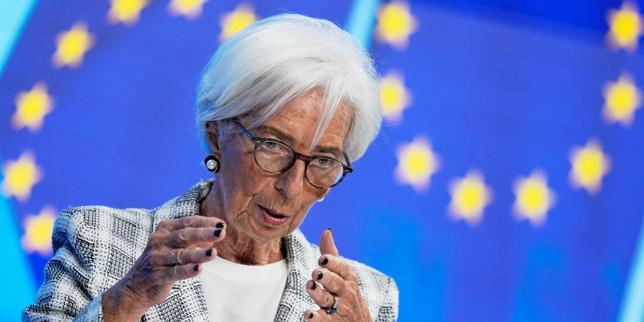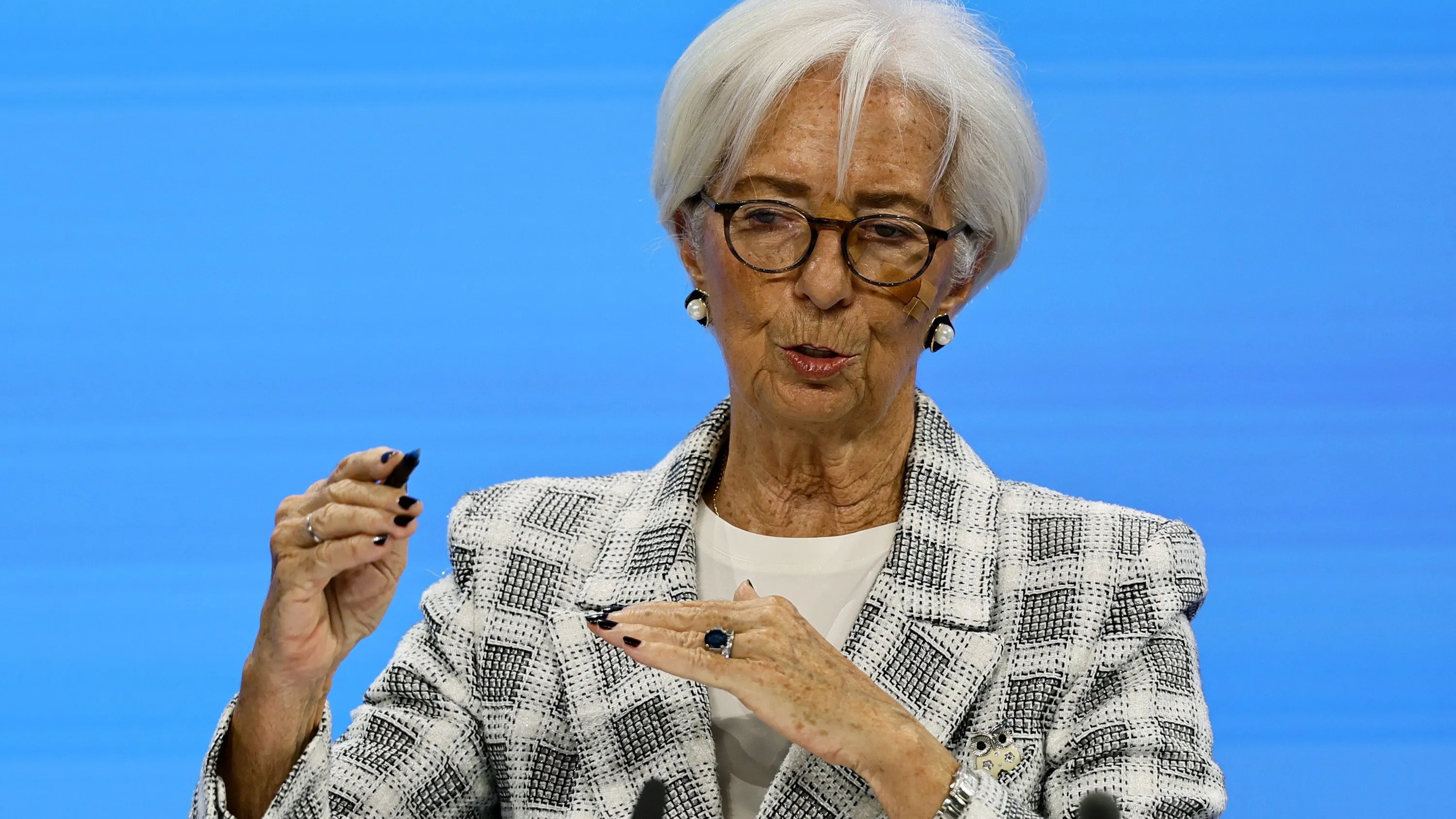
Christine Lagarde announced that she will resign as president of the European Central Bank on Feb. 7, 2027, eight months before her term ends, opening a contest to lead the eurozone's monetary authority .
Lagarde said she wants to regain her "freedom of expression" and may play a role in France's presidential campaign, according to Le Monde . She could even run for the Elysée Palace, the newspaper asked. Her departure comes ahead of France's presidential election on May 2, 2027, where polls show far-right candidate Marine Le Pen leading .
The 21 eurozone heads of state and government must nominate candidates for the ECB presidency by Friday, according to the Tagesspiegel . The Eurogroup will hold a stock-taking meeting on Monday, Nov. 9. Lagarde will only chair the ECB's monetary policy meetings in December and February.
Several names are circulating for the succession. Pablo Hernández de Cos, 55, heads the Bank for International Settlements in Basel and previously led the Bank of Spain from 2018 to 2024 . He is considered a representative of loose monetary policy, according to the Tagesspiegel. Klaas Knot, 59, served as president of the Dutch central bank for 14 years until June 2025 and is known for advocating tight monetary policy . Bundesbank President Joachim Nagel is also mentioned as a possible candidate.
The successor will face an immediate policy decision. Nagel, a member of the ECB's Governing Council, said a rate increase at the Dec. 17 meeting is "very likely necessary" given inflation . Eurozone inflation reached 3.8% in September, the highest in three years, driven by energy prices linked to the Iran conflict .
The transition also unfolds as France grapples with fiscal strain. Fitch downgraded France's fiscal outlook to negative on Oct. 31, citing weak growth and higher borrowing costs. French bond yields have climbed steeply, posing a threat to economic expansion, according to Reuters .
Lagarde took office in November 2019, succeeding Mario Draghi . She steered the ECB through the pandemic, Russia's invasion of Ukraine and the inflation crisis. She shifted the bank from expansive policies to one of the most intense tightening cycles in its history, according to Expansion .