
Europe erupts: Rival marches clash over migration, LGBT rights and free parties
Story Timeline
4 months · 14 summary articles
Thousands of police officers were deployed across Rome on Saturday as rival pro- and anti-migration marches converged on the Italian capital, underscoring the deepening polarisation over immigration just days after a far-right initiative calling for the mass return of migrants gained parliamentary traction.
The demonstrations came amid a broader wave of unrest in the United Kingdom, where thousands joined anti-racism rallies in Belfast, Brighton, Liverpool, Sheffield and Glasgow following days of violent clashes in Northern Ireland. Police made several arrests in multiple cities as far-right groups confronted counter-demonstrators.
In Rome, organisers said 20,000 anti-racism protesters took to the streets in response to the far-right “remigration” march, which was led by CasaPound and other nationalist groups demanding the repatriation of migrants. Italian police erected barriers and deployed water cannon to prevent direct confrontation between the rival crowds.
Across Europe, Pride marches also reflected the charged atmosphere. In Metz, France, organisers described the 22nd annual Pride as a “march blanche” following the fatal beating of 19-year-old Noahm, a gay man killed on 30 May. Participants carried photos of Noahm and denounced what they described as a hostile political climate toward LGBT+ rights.
In Romania and Bulgaria, thousands marched in Bucharest and Sofia to demand equality, while in Thessaloniki, Greece, Christian associations staged a counter-rally under the slogan “Family is only the traditional one,” protesting against Pride events.
The simultaneous mobilisations highlight a continent-wide reckoning over migration, racism and LGBT+ rights. In Paris and Bordeaux, organisers said tens of thousands protested against the government’s proposed “Ripost” law, which would criminalise participation in free parties, potentially leading to prison sentences. The bill, already approved by the Senate, is now awaiting debate in the National Assembly.
Political analysts warn that the surge in protest activity reflects both growing far-right influence and a robust civic pushback. In Italy, the far-right “remigration” initiative has already secured enough parliamentary support to force a national debate, while in the UK, the government has faced criticism for failing to contain far-right mobilisations that have repeatedly turned violent. With no signs of abating, the coming weeks are expected to see further demonstrations across multiple European capitals.
Follow us for live European news
Articles

Thousands rally in Rome, Italy for rival pro- and anti-migration marches Thousands of police deployed to keep the rallies apart as far-right remigration initiative gains traction.
aljazeera · 3 months ago
JÄRELVAADATAV ⟩ Selgusid Red Bull Padel Dash Eesti võitjad Laupäeva õhtul selgusid Padelstar Helme siseväljakutel ainulaadse võistluse Red Bull Padel Dash 2026. aasta Eesti võitjad. Postimees näitas võistlusõhtu kulminatsiooni otseülekandes, mis on nüüd järelvaadatav.
postimees · 3 months ago

Alerta para dupla discriminação de mulheres e crianças A nova regulamentação da União Europeia para as migrações representa uma "dupla discriminação" para mulheres e crianças migrantes, segundo os organizadores do Congresso de Magistrados Europeus.
observador · 3 months ago

Manifestações rivais contra e a favor da imigração em Roma Milhares marcharam pelas ruas de Roma em manifestações rivais contra e a favor da imigração, após iniciativa da extrema-direita com medidas contra migrantes ter reunido apoio para ir ao parlamento.
observador · 3 months ago
Câteva zeci de mii de oameni, la marşul LGBT din București. Contramanifestația „Marșul Normalității, condusă de Diana Șoșoacă Marşul Bucharest Pride al comunităţii LGBT a început, sâmbătă, la ora 17:00, în Piaţa Victoriei, din Bucureşti, iar 35.000 de participanţi au mers pe Calea Victoriei, spre Bulevardul Naţiunile Unite, până în Parcul Izvor. Acţiunea a avut loc la câteva ore de la „Marşul Normalităţii, la care au participat câteva sute de persoane şi în fruntea căruia s-a aflat europarlamentarul Diana Şoşoacă.
digi24 · 3 months ago
Thousands attend anti-racism rally in Belfast Thousands joined anti-racism demonstrations across the UK after days of anti-immigration unrest.
aljazeera · 3 months ago
Duizenden mensen bij antiracismeprotest in Belfast: Onze stad terugveroverd Duizenden mensen hebben zaterdag in Belfast meegedaan aan een groot antiracismeprotest. In de Noord-Ierse hoofdstad braken eerder deze week rellen uit na een steekpartij. Relschoppers staken hierbij huizen in brand en gingen de confrontatie aan met de politie.
nu.nl · 3 months ago
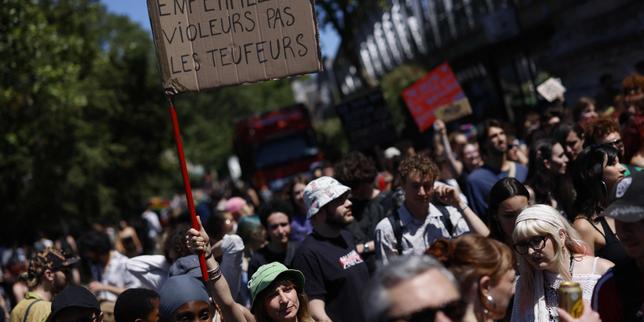
Des milliers de manifestants défendent les free-parties à Paris et à Bordeaux Des collectifs de défense des free-parties sont à linitiative de cette mobilisation. Adopté au Sénat en mai, le projet de loi Ripost prévoit notamment de sanctionner les participants aux free-parties, qui pourraient encourir une peine de prison. Il attend dêtre débattu à lAssemblée nationale.
le monde · 3 months ago
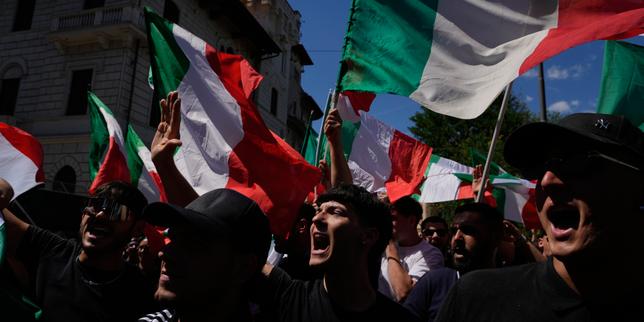
Italie : lextrême droite a manifesté pour la « remigration » à Rome Au même moment, lex-général Roberto Vannacci constituait son parti « Futuro Nazionale », samedi 13 juin, se positionnant encore à droite de la coalition ultraconservatrice de la présidente du Conseil italien, Giorgia Meloni.
le monde · 3 months ago
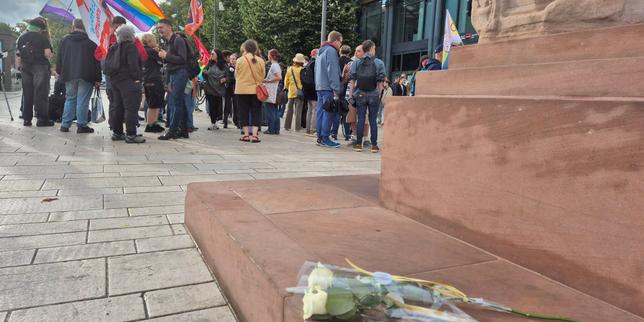
A Metz, la Marche des fiertés rend hommage à Noahm, 19 ans, mort à la suite de sa violente agression Noahm, jeune homme homosexuel, a été agressé dans la nuit du 29 au 30 mai, à Metz, avant de mourir le 2 juin des suites de ses blessures. Jeudi, lenquête pour meurtre a été élargie pour y inclure la circonstance aggravante dhomicide commis en raison de lorientation sexuelle.
le monde · 3 months ago
UK judge rules Elbit protesters face terrorism connection sentencing Justice Johnson said the Palestine Action activists convicted over the August 2024 raid on Elbits Bristol facility caused serious damage with intent to influence government policy, marking the first time in British legal history that criminal damage protesters face a "terrorism connection" sentencing enhancement.
yenisafak · 3 months ago
Γέμισε χρώμα το κέντρο της Αθήνας, πλήθος κόσμου στο Athens Pride 2026, ποιοι πολιτικοί έδωσαν το «παρών», φωτογραφίες και βίντεο Η Αθήνα κινήθηκε σήμερα στους ρυθμούς του Pride - Στο Σύνταγμα ο Χάρης Δούκας, η Ζωή Κωνσταντοπούλου και ο Στέφανος Κασσελάκης, πορεία υπερηφάνειας και μεγάλη συναυλία
protothema · 3 months ago
«Les cœurs sont lourds» : à Metz, dans le sillage du meurtre de Noahm, une Pride aux airs de marche blanche La 22e Marche des fiertés sest tenue à Metz ce samedi, dans un contexte alourdi par la mort de Noahm. Lhistoire de ce jeune homme gay de 19 ans, battu à mort le 30 mai, était dans toutes les têtes. Beaucoup dénoncent un climat politique hostile aux luttes LGBT+.
liberation · 3 months ago
50 tisíc lidí, 5 dní, 8 milionů litrů pitné vody. Rock for People ji zajišťuje unikátním technickým projektem 50 tisíc lidí shromážděných na jednom místě spotřebuje za 5 dní bezmála 8 milionů litrů pitné vody. Alespoň takové jsou statistiky hudebního festivalu Rock for People, který se tento týden koná na letišti v Hradci Králové. Ještě loni přivážely vodu do areálu neustále cisterny, letos je nahradila technická novinka.
irozhlas.cz · 3 months ago
Indépendance des procureurs : Edouard Philippe veut revenir sur une loi de Taubira Dans un entretien au «Parisien», le candidat Horizons à la présidentielle détaille les mesures quil compte prendre, sil est élu, pour lutter contre les violences faites aux enfants. Et défend Gérald Darmanin.
liberation · 3 months ago