
Germany shifts displaced persons' commemoration to Interior Ministry, sparking historical debate
Story Timeline
4 months · 11 summary articles
Germany marks World Refugee Day on Saturday by reigniting a contentious chapter of its post-war history, as the Christian Democratic-led government shifts responsibility for commemorating the 12 million ethnic Germans expelled from Central and Eastern Europe after 1945 from the Ministry of Culture to the Ministry of the Interior. The move, widely seen as a concession to far-right pressure, underscores the escalating politicization of displacement narratives nearly eight decades after the expulsions began.
Under the government’s new allocation, the Interior Ministry will oversee official remembrance of the *Vertriebenen*—the displaced persons—whose suffering has long been a rallying point for nationalist and right-wing groups in Germany. Critics argue the transfer reflects a deliberate strategy to frame the expulsions through a security and migration lens rather than a cultural or historical one, a shift that risks distorting collective memory. “The government’s decision to place this issue under the Interior Ministry sends a clear signal about how it intends to instrumentalize history,” historian Anna Meier told *Le Monde* .
The announcement coincides with Berlin’s inauguration of a memorial dedicated to Jehovah’s Witnesses murdered under the Third Reich, a long-overdue recognition of a persecuted group whose suffering has historically been marginalized in German Holocaust remembrance. Yet even as new monuments emerge, gaps persist: groups labeled “asocial” and “criminal recidivists” by the Nazi regime remain absent from mainstream memorial culture, despite ongoing advocacy from survivor communities. “The void in our memory is not just historical—it is political,” Berlin-based historian Elena Vogel told *Libération* .
The government’s pivot also comes amid broader tensions over migration, with the deputy migration minister reaffirming Cyprus’s commitment to protecting refugees fleeing war and human rights abuses on World Refugee Day. “This day is a reminder that our responsibility to the displaced is not a relic of the past but a living obligation,” the minister stated .
Meanwhile, the far-right Freedom Party of Austria (FPÖ) celebrated its 70th anniversary in Vienna’s Hofburg palace, drawing congratulations from international allies including Hungary’s Viktor Orbán and Germany’s Alice Weidel. In a speech celebrating the party’s “freedom-loving soul,” FPÖ leader Herbert Kickl framed the event as a defiant rejection of the “system,” a rhetoric that echoes growing nationalist sentiment across Europe .
As Germany grapples with these competing narratives, the Interior Ministry’s new role in shaping the displaced persons’ legacy risks deepening divisions over how the country confronts its past while navigating its present. For the 12 million expelled and their descendants, the shift is more than administrative—it is a redefinition of who gets to remember, and why.
Follow us for live European news
- 5
- 3
- 3
- 1
- 1
- 1
Articles

Clara Usón e o trauma dos anos de chumbo da ETA Clara Usón escreveu um romance híbrido, no qual se entrelaçam pessoas e factos reais com personagens e acontecimentos fictícios, para assim se construir um retrato vívido e realista do País Basco nos anos 80
observador · 3 months ago

Warum "König" Trump kein spontaner Betriebsunfall der US-Demokratie ist Die Geschichte autoritärer Strömungen reicht bis in die Gründungsphase zurück, erklärt Politikwissenschafter Fabio Wolkenstein
der standard · 3 months ago

Jürgen Habermas: Umkämpftes Erbe Philosophen, Verleger und ein Bundespräsident: In der Frankfurter Paulskirche wurde an den verstorbenen Philosophen Jürgen Habermas erinnert. Wie aktuell ist sein Denken?
die zeit · 3 months ago
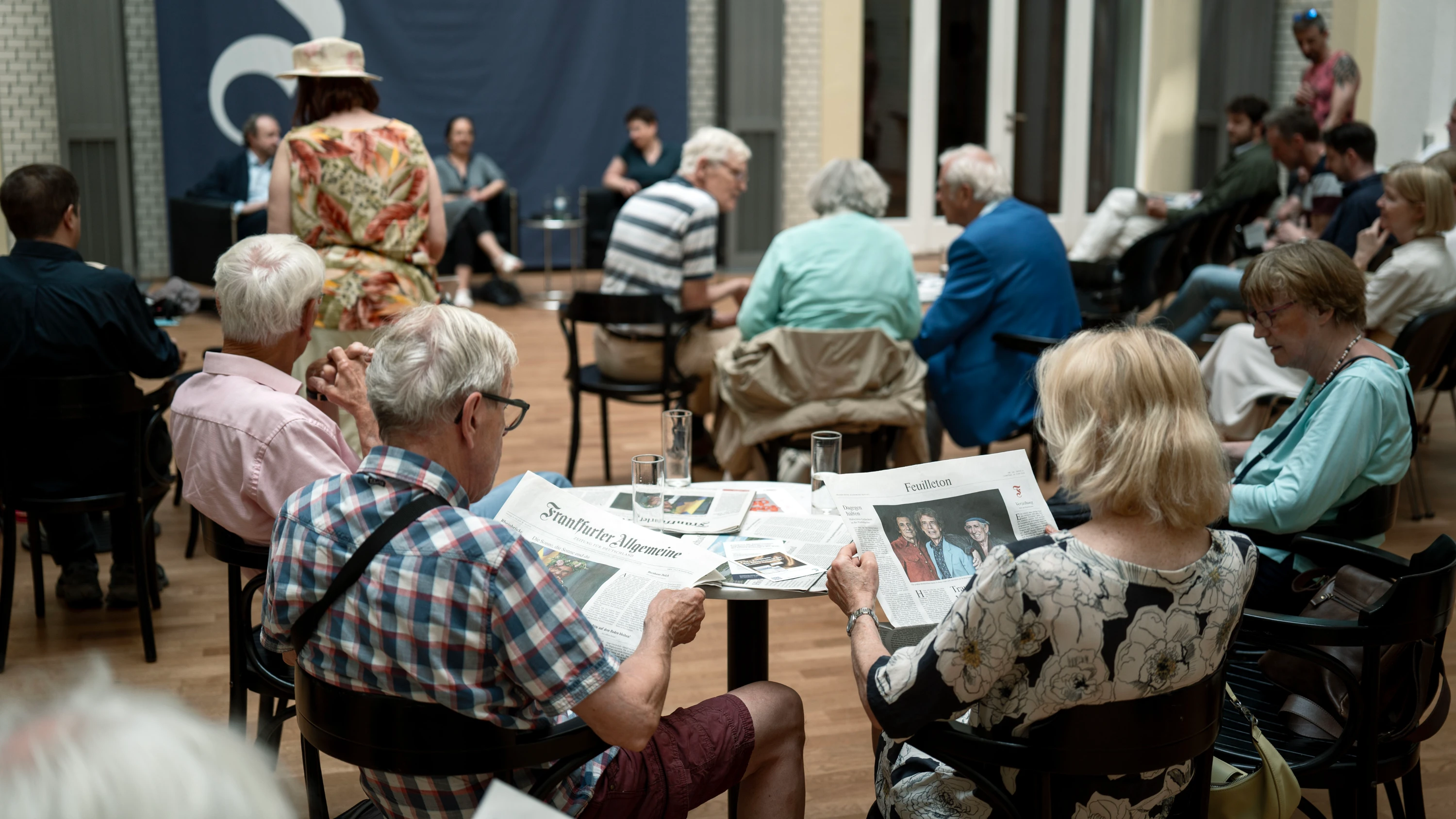
Tag der offenen Tür: Woher wissen F.A.Z.-Redakteure eigentlich, was sie schreiben? Am Samstag öffnete das Berliner Büro der F.A.Z. seine Türen für Besucher. Hunderte kamen – und nutzten die Gelegenheit, Fragen zu Politik und Journalismus zu stellen.
faz · 3 months ago

Warum Ingeborg Bachmann nicht nur Opfer war Erst Männermythos, dann „gefallene Lyrikerin, später von den Gender Studies gefeiert: Zum 100. Geburtstag von Ingeborg Bachmann sollte man kritisch Bilanz ziehen – und ihre eigene Inszenierung nicht vergessen.
welt.de · 3 months ago
En Allemagne, la reconnaissance inachevée des victimes oubliées du nazisme Berlin inaugure le 24 juin un mémorial dédié aux témoins de Jéhovah assassinés sous le Troisième Reich. Mais le vide mémoriel nest pas encore comblé : les «asociaux» et les multirécidivistes cherchent encore leur place dans la culture du souvenir.
liberation · 3 months ago
FPÖ-Festakt: Staatstragend gegen das „System Die FPÖ feierte in der Hofburg ihren 70. Geburtstag. Unter den Gratulanten waren Viktor Orban, Alice Weidel, Geert Wilders. Herbert Kickl analysierte die „freiheitliche Seele.
die presse · 3 months ago
Wie bewahren Sie als ORF-Korrespondentin in den USA die Ruhe, Barbara Wolschek? Wie die Leiterin des ORF-Büros in Washington und zukünftige Axel-Corti-Preisträgerin erklärt, wie sie im turbulenten Trump-Alltag mit der Informationsflut umgeht
der standard · 3 months ago
Heilend, nicht tröstlich: Streeruwitz über Bachmann und warum wir "Malina" lesen sollen Wie war das als Kind, als Tochter, als junge Frau? Über die Nachkriegszeit, das Vatermotiv und die Zurichtungen des Patriarchats in Bachmanns Erfolgsroman "Malina"
der standard · 3 months ago
Tötung im Dorf Högel: Der Tote von Högel In einem nordfriesischen Dorf wird ein Mann getötet – und die Nachbarn freuen sich. Er sei ein Tyrann gewesen, heißt es. Wenn man hinfährt, ergibt sich ein anderes Bild.
die zeit · 3 months ago

Musical „Six in Frankfurt: Sie schreiben die Geschichte um In der Alten Oper Frankfurt laden die sechs Frauen von Heinrich VIII. zum emanzipatorischen Popkonzert. Die Frage des Abends: Wer gewinnt beim Gesangswettstreit um die größte Schmach?
faz · 3 months ago
«германия безоговорочно капитулирует. президент выступает с речью по радио. слушая, я смотрю на цветущий калифорнийский сад». На русском языке вышли рабочие дневники Бертольта Брехта. Вот их фрагмент: на дворе — май 1945 года На русском языке в издательстве Individuum впервые вышли эмигрантские дневники немецкого драматурга Бертольта Брехта, которые он вел с 1938 по 1955 год (в переводе Зои Бороздиновой). На этот период пришлось его изгнание из Германии, а затем и возвращение. В этом документе не так много записей, собственно, о нем самом, как о том, что его окружало — драматург описывает разговоры с другими уехавшими, вклеивает вырезки из газет, фиксирует свои размышления о теории «эпического театра» и его ненависти к Голливуду, где он прожил шесть лет. «Медуза» публикует фрагмент из его дневника с 19 января по 8 мая 1945 года. В это время автор жил в США.
meduza · 3 months ago
Bischof zum Weltflüchtlingstag: „Man lässt keinen Menschen ertrinken, Punkt Der evangelische Bischof Christian Stäblein erinnert an das Schicksal der Menschen auf der Flucht. Dass vielen nicht geholfen werde, sei „furchtbare Realität. mehr...
taz.de · 3 months ago

La littérature de guerre peine à séduire malgré le soutien du Kremlin Dans une enquête, le média russe Verstka a passé au crible 259 livres consacrés à la guerre en Ukraine et au ton très patriote, publiés entre 2022 et mai 2026. Promue dans les librairies, les bibliothèques et même à lécole, cette littérature Z reste pourtant loin de simposer.
courrier international · 3 months ago

Logement social à Bruxelles : On ma déjà demandé dintervenir. Jai répondu : Non, je ne suis pas au PS" Face aux dérives du Foyer anderlechtois, la présidente de Défi, Sophie Rohonyi, dénonce un gouvernement bruxellois miné par le clientélisme et le troc politique. ...
la libre · 3 months ago

Être en retrait nest pas nécessairement une calamité Il y a moult façons de vivre sa retraite et de vieillir. Je ne sais si je dois être fière dêtre retraitée mais je ne dois pas en avoir honte. ...
la libre · 3 months ago
Bundesregierung: Tausende Menschen erleben Politik beim Tag der offenen Tür Politik, Interviews und Begegnungen mit Regierungsmitgliedern: Beim Tag der offenen Tür erleben Besucher Politik aus nächster Nähe – auch bei sommerlichen Temperaturen.
tagesspiegel · 3 months ago
Hellberg setzt auf Haltung statt Effekt Mit einer großen Eröffnungsparty ist das mumok am Samstag in die Ära Fatima Hellberg gestartet. Der schwedischen Kulturmanagerin war im Vorfeld nicht nur Wohlwollen entgegengeschlagen. Nun zeigt sie, wie sie arbeitet: leise, aber mit klarer Haltung – eine Sammlungspräsentation auf fünf Etagen, teils im Bühnenbild von Anna Viebrock, und im Untergeschoß die faszinierende Schau von Tolia Astachischwili.
orf.at · 3 months ago

German government stokes up the memory wars surrounding the displaced persons of 1945 Germany is marking World Refugee Day on Saturday, commemorating the 12 million Germans expelled from Central and Eastern Europe after World War II. Under pressure from the far right, the Christian Democratic government has taken up the issue and chosen to assign it to the Ministry of the Interior rather than the Ministry of Culture.
le monde · 3 months ago
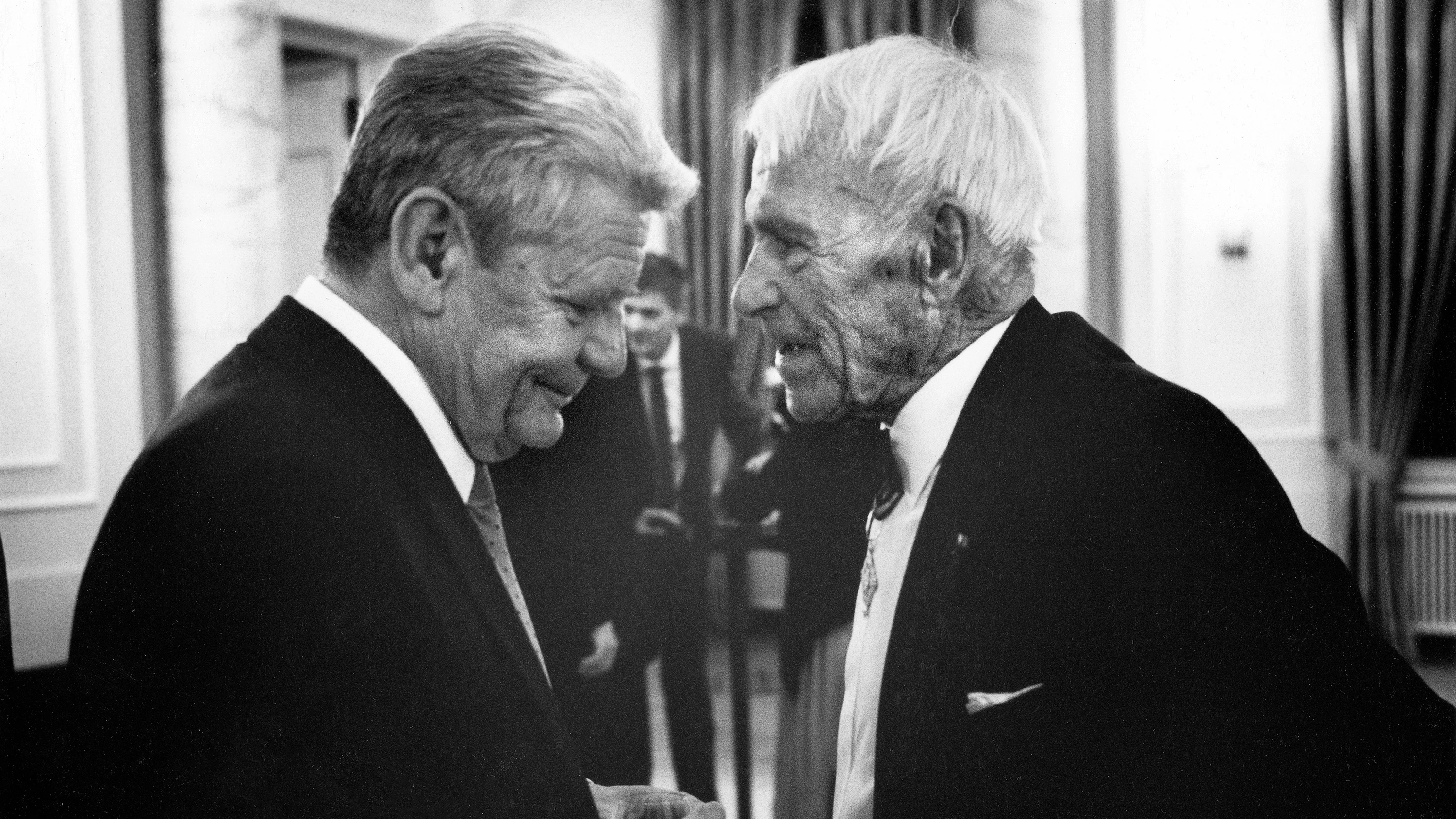
Albrecht Schönes Erinnerungen: Naiv war er in keiner Weise Albrecht Schönes Lebenserinnerungen enthalten eine halb offene, halb verdeckte Abrechnung mit seinem Lehrer Benno von Wiese. Auf Schöne wiederum reagierte Helmut Lethen in seinen eigenen Memoiren.
faz · 3 months ago

„Meine rührendste Flaschenpost war ein seitenlanger Abschiedsbrief An Nordseestränden landen Munition, Muscheln, Müll – aber auch skurrile oder kostbare Gegenstände. Rainer Borcherding ist Experte für Strandfunde und dokumentiert die spannendsten Fälle. Manchmal weiß aber sogar er nicht, was das Meer da angespült hat.
welt.de · 3 months ago