Loading…
 Tuesday, September 1Tuesday, September 1
6 days · 11 summary articles
The death toll from catastrophic flash floods along the Nepal-China border has surpassed 1,000, with Nepalese authorities reporting 1,056 fatalities and China confirming 16 deaths as of Tuesday, according to state media and official updates . Nearly 4,500 people remain missing, including hundreds of hydropower workers believed trapped in tunnels along the Trishuli River, where rescue teams continue operations amid unstable terrain and debris .
The floods were triggered on August 26 by the collapse of a Himalayan glacier near the Langtang Lirung peak, unleashing a surge of water, rocks, and debris through valleys in both countries. In Nepal, authorities have begun burying unidentified victims in mass graves after collecting DNA samples, with 1,003 bodies recovered so far . At least 17 bodies have been recovered downstream in India, while Prime Minister Balendra Shah described the disaster as “unimaginable and heartbreaking” .
Survivors and relatives in Kathmandu have posted photographs of missing loved ones on a 25-meter wall outside Tribhuvan University Teaching Hospital, as rescue efforts are hampered by damaged roads and infrastructure . A British man was rescued alive nearly a week after the disaster, while Nepali army teams are using drones and air pumps to search tunnels where workers were trapped .
Kanni Wignaraja, U.N. assistant secretary-general and regional director for Asia and the Pacific, warned that the Himalayan region faces severe risks from future glacial floods, with 47 potentially dangerous glacial lakes identified in Nepal, China, and India in 2020—a number now estimated to be significantly higher . The U.N. Development Programme reported that 15 major power stations under construction were destroyed, threatening Nepal’s hydroelectric-dependent energy supply .
Diana Ürge-Vorsatz, professor of environmental studies at Central European University and vice-chair of the U.N. Intergovernmental Panel on Climate Change, told FRANCE 24 that the June heatwave “could not have been possible without human-induced climate change” and that the trend points to “hotter summers, more wildfires, more drought and more floods” . She added that halting fossil fuel use is necessary to stabilize global warming at current levels.
Meanwhile, Europe’s wildfire season has scorched nearly 700,000 hectares, exceeding the yearly average of the past two decades, according to a speech by European Commissioner Lahbib . The U.K. recorded its hottest summer on record, with the Met Office stating the top five warmest seasons have all occurred since 2003 .
Follow us for live European news
6 further sources not geolocated

Orange flood alert in Nepal On 26/08/2026, a flood started in Nepal, lasting until 28/08/2026 (last update). The flood caused 527 deaths and 0 displaced .
gdacs · about 2 hours ago
Kyrenia shipwreck: object found at 550 metres believed to be sunken ferry, Erhurman says An object located at a depth of 550 metres off Kyrenia is believed to be the ferry that capsized on Sunday, Turkish Cypriot leader Tufan Erhurman said. No further detail on the discovery was immediately available. A specialist Turkish search team has been working to pinpoint the wreckage, with 20 people still missing. Erhurman said […]
in-cyprus · about 2 hours ago
UK summer was hottest on record, Met Office says, after severe heat, drought Britain had its hottest summer since records began, provisional Met Office statistics published on Tuesday said, after a season of intense heat and drought that has tested infrastructure, food production and wildfire-fighting capacity. The agency said Britain had experienced record warmth for the second summer in a row, according to statistics that go back to […]
in-cyprus · about 2 hours ago
Himalayas face severe glacial flood risks in years ahead, UN official warns The Himalayan region faces severe risks from future glacial floods, a senior U.N. official has warned, as the death toll from last weeks flood in Nepal, triggered by a glaciers collapse, surpassed 1,000. Not only is the hydroelectric power that many depend on threatened, but entire riverbanks where millions live might become effectively uninhabitable. Technology […]
in-cyprus · about 2 hours ago
Funerals held for four, including child, after Kyrenia ferry disaster Funerals were held on Tuesday for four people who died after a passenger ferry sank off the coast of Kyrenia on Sunday, with one of those buried being 14-year-old Nisa Torer. Torer was buried in her native Mersin, having travelled to Cyprus on holiday with her father, 43-year-old Ferdi, and her two younger brothers, Yusuf […]
cyprus mail · about 2 hours ago

A Food Crawl in Taiwan Finds Chinese Tradition Without the Spectacle Plus, China rejects claims it could have warned Nepal earlier of deadly floods and how China weathered the Iran oil shock, in charts.
wsj · about 2 hours ago
Expert warns of hotter summers, more wildfires, more drought and more floods One of the worlds leading climate scientists has spoken to FRANCE 24 about the extreme heat events of this summer, and in the wake of the catastrophic flooding in Nepal, how other similar events are all but inevitable. Diana Ürge-Vorsatz is professor of environmental studies at the Central European University and vice-chair of the UNs Intergovernmental Panel on Climate Change.
france24 · about 2 hours ago

British man is rescued alive nearly a week after Nepal flood disaster Nepali rescuers have rescued a British man nearly a week after devastating flash floods tore through the country and killed over 1,000 people.
dailymail · about 2 hours ago
A series of heatwaves leads Britain to record its hottest summer Britains summer has been the hottest on record, according to provisional data from the national weather service
abcnews · about 2 hours ago
Lightning density in Switzerland second highest in Europe Switzerland experienced a summer with a high number of thunderstorms. More than 22,000 cloud-to-ground lightning strikes were recorded between early June and late August. Relative to its land area, it has the second-highest density of lightning strikes in Europe, according to a report by Meteorage published on Tuesday. In total, the detection network run by the Météo-France subsidiary recorded 22,158 cloud-to-ground lightning strikes in Switzerland during the meteorological summer, which runs from June 1 to August 31, according to a press release. Across Europe, the total number reached 893,458. Switzerland lags far behind major countries such as Italy, France and Spain in absolute terms. It stands out, however, when lightning activity is measured relative to the countrys surface area. With 2.43 ground strikes per km² per year, it ranks second in Europe, behind Italy (4.73), but ahead of, in particular, the Netherlands (2.39), Belgium (2.20), France (2.09) and Germany (1.30).
swissinfo · about 2 hours ago
Photos: Nepal begins burying flood victims in mass graves The Hindu rituals of death, cremation, prayer and final farewell have been overwhelmed by the scale of the disaster.
aljazeera · about 2 hours ago
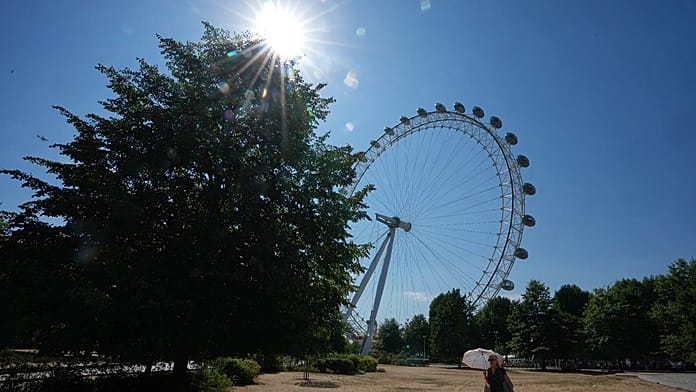
UK records hottest summer on record, Met Office says According to a study carried out by Met Office scientists, the record-breaking season was made roughly 130 times more likely due to "human-induced climate change."
euronews · about 2 hours ago
Nepal families post photos of missing relatives on Kathmandu hospital wall Families in Kathmandu post photos of missing relatives after Nepal floods kill more than 1,000 people, with thousands still unaccounted for.
euronews · about 2 hours ago
Sea Rescue Robot Saves Five After Boat Stranded in Rough Seas, Tarquinia Tarquinia, Italy, 1 September (Brussels Morning Newspaper) – Five people were rescued after their 10-metre leisure boat became stranded on rocks off the SantAgostino coast, where rough conditions and shallow water prevented an Italian Coast Guard patrol vessel … Read more
brussels morning · about 2 hours ago
Europes summer of wildfires puts spotlight on economic cost of climate inaction As Europe keeps spending far more on fighting wildfires than preventing them new economic strategies have to be thought over.
euobserver · about 2 hours ago
🇺🇸 ⚠️ Two people dead after Grand Canyon flash floods A monsoonal downpour lashed the northern side of the Grand Canyon in Arizona, sending torrents of water, rock and debris down a popular hiking course. Two people are known to have died in the sudden floods and one is still missing
bluesky_AFP English · about 2 hours ago
🇳🇵 🇨🇳 ⚠️ Nepal rescuers search underground for missing workers Nepali army rescuers crawl through tunnels leading to a hydroelectric power station site, searching for dozens of workers believed to be trapped. It is six days since devastating glacial floods hit the border region between Nepal and Tibet
bluesky_AFP English · about 2 hours ago
China-Nepal flood toll tops 1,000 as tunnel rescue offers last hope READ: Follow @InsiderPaper for more news
telegram_Insider Paper · about 2 hours ago

No, este vídeo no muestra piedras sagradas de millones de años encontradas en Nepal tras la riada del 26 de agosto: es una roca tallada por artistas entre abril y mayo de 2026 Los shaligramas son fósiles de ammonites (un grupo extinto de cefalópodos), que se encuentran de forma natural en el río Kali Gandaki en Nepal. Son consideradas piedras sagradas en el hinduismo.El verificador India Today, miembro del International Fact-checking Network (IFCN) como Maldita.es, también aclaró que este vídeo no se registra tras la riada del 26 de agosto de 2026. Según explica, el taller de escultura fue organizado por el municipio rural de Gharpjhong y cofinanciado por la Oficina de Servicios Integrados de Mustang. Imagen del vídeo viral vs imagen de la escultura.
maldita · about 2 hours ago
Erhurman meets grieving Kyrenia families, rejects doubts over death toll Turkish Cypriot leader Tufan Erhurman and prime minister Unal Ustel met relatives of missing people waiting at Kyrenia port on Tuesday and briefed them on the ongoing search operations. Erhurman said an extremely delicate operation was under way that would take time. The TCG Isin began taking part in operations today, he said, with a […]
in-cyprus · about 2 hours ago
Akinci: Would ferry disaster have happened if we were in the EU? Former Turkish Cypriot leader Mustafa Akinci on Tuesday suggested that the sinking of a passenger ferry off the coast of Kyrenia on Sunday may not have happened if the Cyprus problem had been solved and northern Cyprus were inside the European Union. He said that he wished to observe for a few days what was […]
cyprus mail · about 2 hours ago

Lété 2026 est le plus chaud jamais enregistré en Belgique Lété 2026, marqué par trois vagues de chaleur, est le plus chaud jamais enregistré en Belgique, avec une température moyenne de 20,3°C, un record depuis les premières observations en 1833 et plus de 2°C au-dessus de la normale (17,9°C), selon le "bilan climatique" de lété dressé par lIRM. Cest la première fois que la température moyenne sur une saison dépasse 20°C en Belgique. ...
la libre · about 2 hours ago

Nepal-China flash floods death toll tops 1,000 Official data confirmed on Tuesday that flash floods and mudslides in the Himalayas have killed more than 1,000 people, with Nepalese authorities reporting 987 fatalities and China confirming 16 deaths as rescue teams search for over 4,400 missing.
yenisafak · about 2 hours ago

Au Népal, la détresse des proches des disparus : Il ny a plus rien à faire quespérer Six jours après la coulée de boue qui a tout détruit sur son passage dans le nord du Népal, un bilan – toujours provisoire – fait état de plus de 1 000 morts et 4 000 disparus. À lhôpital de Katmandou, raconte la rédactrice en chef du Nepali Times, les proches des disparus scrutent les photos des corps, guettent des noms sur des listes et saccrochent à de très minces espoirs.
courrier international · about 2 hours ago
Nepals rescuers navigate mud-swamped tunnels for hundreds of missing workers The death toll in Nepal has crossed 1,000 from the deadly floods that tore through an area on the border with Tibet on August 26, and nearly 4,000 people remain missing. six days on hopes for survivors are dimming, but rescuers focused on a network of hydropower sites along the Trishuli River are holding out hope. Of the roughly 900 workers missing, some 500 people are believed to be trapped in the tunnels, according to Nepalese authorities.
france24 · about 2 hours ago
After the floods, Nepal works to bury hundreds of washed-up unidentified bodies Nepal is burying dozens of bodies in multiple trenches as Nepals disaster agency said that 1,003 deaths had been counted there, with 3,916 people missing, including 583 foreign nationals. In its latest update, China reported 16 deaths and 546 missing, including 261 foreigners. Crews faced challenging conditions as they searched unstable terrain and piles of debris. FRANCE 24s Shahzaib Wahlah tells us more.
france24 · about 2 hours ago
Summer 2026 was the hottest since records began in 1884, Met Office says Top five warmest seasons have all occurred since 2003 as human-caused climate change takes hold, UK scientists say
financial times · about 2 hours ago

Air conditioners save thousands of lives every year in the US Household air conditioning prevents over 5,000 heat-related deaths every year in the United States alone, a new study found.
euronews · about 2 hours ago
South London Hindu temple prays for missing members after deadly floods in Nepal Sixteen members of a south London Hindu temple remain missing after a flood near Nepal and Tibet, leaving families waiting for news of loved ones.
euronews · about 2 hours ago
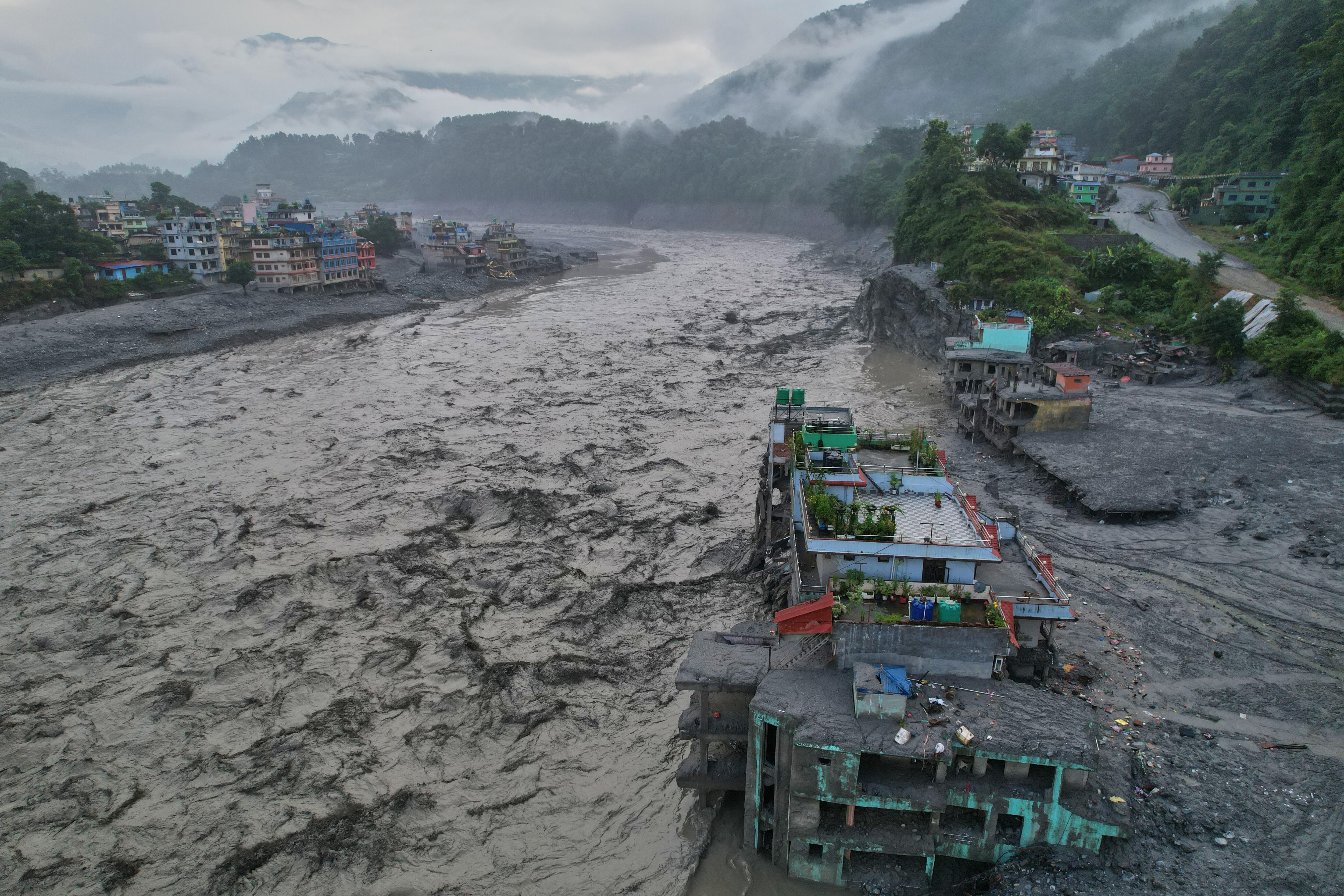
Nepal tragedy highlights a growing threat: 15 million people live at risk from glacial lakes The global risk map for flash flooding caused by the overflow of these lakes, a phenomenon known as GLOF, has increased sixfold in a century, driven by climate change
elpais · about 2 hours ago