
US and Iran trade strikes in seventh night of escalation across Middle East: Kuwait, Bahrain hit
Story Timeline
3 months · 19 summary articles
The United States and Iran have escalated their military conflict, with both sides conducting strikes on each other's targets across the Middle East. On July 18, 2026, Iran struck US military targets in Kuwait, Bahrain, Jordan, and Saudi Arabia overnight as American forces completed a seventh consecutive night of strikes on Iranian territory, officials on both sides said.
The Islamic Revolutionary Guard Corps (IRGC) said in its 28th wartime statement that naval units had hit a fuel support pier used by the US fleet at Kuwait's Mina Al-Ahmadi port, a concentration of American combat aircraft at Shaikh Isa Air Base in Bahrain, and a data center in Bahrain operated by Batelco, the kingdom's main telecoms operator. The IRGC said its forces had also destroyed a US signals and communications facility in Kuwait, describing the strikes as the 19th wave of its Operation Nasr 2, and said it retained control of the Strait of Hormuz.
Mina Al-Ahmadi, Kuwait's principal oil export terminal, is the site of the US Navy's bunkering program supplying fuel to American government vessels in the Gulf. Shaikh Isa, in southern Bahrain, is the main base of the Royal Bahraini Air Force and has hosted US Marine Corps, Navy, and Air Force deployments since the 1991 Gulf War. Iran's regular army said separately that loitering munitions had struck aircraft shelters and fuel storage at Shaikh Isa in the 15th phase of its own campaign, codenamed Saeqeh, or Thunderbolt, and claimed hits on several bridges in Bahrain.
Neither Bahraini nor US officials have commented on damage or casualties at the base. Kuwait's army confirmed missile and drone attacks on several military sites and critical infrastructure. Air raid sirens sounded over the emirate for a fifth time, Kuwaiti airspace was closed, and most flights were rescheduled. The Kuwaiti defense ministry told residents that explosions heard overhead were air defense systems engaging incoming fire. Bahrain's interior ministry activated sirens and told residents to move to the nearest safe location.
US Central Command said the seventh night of strikes on Iran ended at 05:00 Tehran time, targeting surveillance centers, logistics infrastructure, underground weapons storage, and naval capabilities. Iranian outlets reported American strikes on Larak Island, an IRGC naval outpost in the Strait of Hormuz, and on targets around Bandar Abbas and Jask on the Hormozgan coast. Two bridges on the road linking Bandar Abbas to Rudan were destroyed, killing an unspecified number of people and injuring several others, according to the Tasnim news agency, which published video from the scene.
The conflict has led to significant disruptions in the region. Shipping traffic in the Strait of Hormuz, one of the world's key oil and gas transit chokepoints, remains at reduced levels amid the ongoing conflict. The Strait has been a central flashpoint in the tensions between Washington and Tehran, with Iran effectively closing the waterway following the outbreak of the conflict in February, causing turbulence in energy markets.
The recent escalation follows a pattern of mutual threats and attacks. On July 17, 2026, the United States launched airstrikes on Iran, targeting an airport, a strategic bridge, and a telecommunications tower. Iranian media reported that at least seven people were wounded in the US airstrikes. The US strikes followed mutual threats, with President Donald Trump warning of potential strikes on power plants and bridges if Iran refused to negotiate.
The ongoing conflict has raised concerns about further escalation and the potential for a wider war in the region. The US military has continued to target Iranian military infrastructure, while Iran has responded with attacks on US allies and bases in the region.
The situation remains fluid, with both sides showing no signs of backing down. The international community is watching closely as the conflict continues to unfold, with potential implications for global energy markets and regional stability.
Follow us for live European news
Articles

🇺🇸🇰🇼❌🇮🇷 — Footage shows the launch of U.S. Army tactical ballistic missiles from Kuwait toward Iran. Based on the reported impacts in Khorramabad, Lorestan Province, the missiles were likely Precision Strike Missiles (PrSM) rather than ATACMS, as ATACMS lacks the range to reach that area. @IntelSlava
telegram_Intel Slava · 2 months ago
Middle East live: Kuwait says Iran hit second water and electricity plant Kuwait said on Saturday that an Iranian attack hit a water and electricity plant one day after a similar strike damaged another plant. Tehran launched attacks on US military sites hosted by several of its Gulf neighbours in response to a seventh night of US strikes on Iran overnight on Friday. Follow our liveblog for the latest updates.
france24 · 2 months ago
Iran hits targets in three Gulf countries and Jordan as seventh night amid American strikes Iran struck US military targets in four countries, hitting a fuel pier in Kuwait and an air base in Bahrain, as a seventh night of American strikes on Irans Gulf coast cut water supplies and destroyed bridges.
intellinews · 2 months ago
Iran claims strikes on US drone base and AI centre in Bahrain Irans Revolutionary Guard has claimed it destroyed a US unmanned vessel depot and Bahrains main artificial intelligence centre in retaliation for US strikes. The IRGC warned it would target industrial and tech assets linked to American shareholders across the region if attacks continue.
yenisafak · 2 months ago
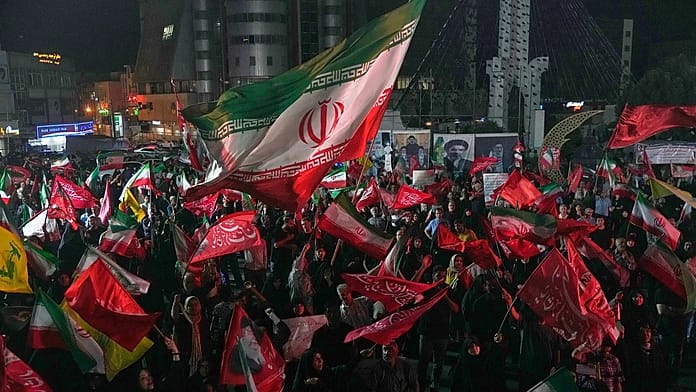
US forces strike Iran for seventh consecutive night Irans Fars state news agency reported that Iranian forces had responded by attacking US allies and bases in the region, including the Ali Al Salem airbase in Kuwait.
euronews · 2 months ago
#Iran Overnight U.S. airstrikes targeted multiple Iranian cities and regions, including Yazd, Larestan, Bandar Abbas, Bushehr, Ahvaz, Sirik, and Qeshm Island, with explosions and missile strikes reported in those areas. Subscribe to @OSINTdefender Chat room
telegram_OSINTdefender · 2 months ago
#Jordan A large fire broke out at U.S. troop barracks at Muwaffaq Salti Air Base in Jordan after overnight Iranian ballistic missile strikes; Jordanian authorities reported intercepting incoming missiles and no casualties or damage were confirmed at the time. Subscribe to @OSINTdefender Chat room
telegram_OSINTdefender · 2 months ago
Krieg in Nahost: Sorge vor Eskalation und Ausweitung des Iran-Kriegs In der siebten Nacht in Folge greifen die USA Iran an. Während Iran die Golfstaaten Bahrain und Kuwait beschießt, droht die Huthi-Miliz Saudi-Arabien, das mit dem Vermittler Pakistan verbündet ist.
sueddeutsche · 2 months ago
Explosions rock southern Iran as US launches seventh night of strikes Explosions have been reported in several areas of southern Iran, including Bushehr, Qeshm Island and Sirik, as the US military carried out a seventh consecutive night of attacks. Iranian media reported the strikes but no official details on targets or damage have been released.
yenisafak · 2 months ago
Middle East live: Tehran threatens full-scale offensive as US launches seventh night of attacks The US launched a seventh wave of airstrikes on Iran overnight on Friday despite a warning from Tehran that it would resume "full-scale offensive operations" if the attacks continued. Follow our liveblog for the latest updates.
france24 · 2 months ago
A seventh night of US strikes cuts water to villages in Irans south The US has bombed bridges and energy infrastructure in the seventh straight night of attacks on Iran.
aljazeera · 2 months ago
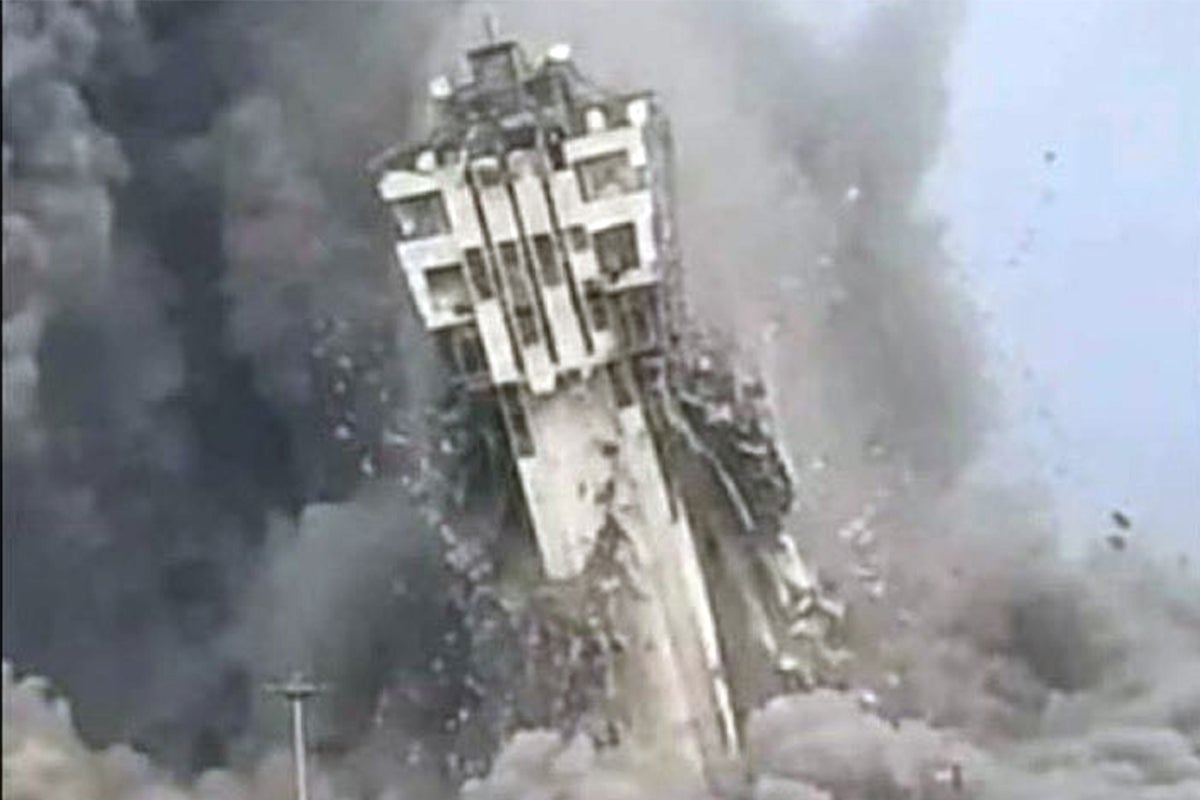
Iran-US war latest: Tehran targets vessels in Strait of Hormuz after Trumps seventh night of strikes on Iran Iran claims to have stopped four vessels in the Strait of Hormuz and warns Gulf oil exports could be disrupted
independent · 2 months ago
U.S. and Iran attack infrastructure, raising fears of escalation The United States struck bridges in Iran, and Tehran responded by hitting a power and desalination plant in Kuwait on Friday, as the two sides risked further escalation…
japantoday · 2 months ago
Iran war live: Kuwait, Bahrain and Jordan under attack from Iran Intense fighting between the two sides as US attacks shift further into Irans interior.
aljazeera · 2 months ago
🇮🇷❌🇺🇸 — The Gulf is under fire again tonight. The IRGC has been striking US military bases across Bahrain, Kuwait, and Jordan for several hours now, in a sustained wave that shows no sign of slowing — hitting American positions from Juffair and Sheikh Isa to Ali Al Salem, Arifjan, and the air bases of Jordan, with Tehran vowing the operation will continue and expand for as long as US strikes on Iran go on. @IntelSlava
telegram_Intel Slava · 2 months ago
US launches seventh straight night of strikes on Iran The US military says its degrading Irans military but has been accused by Tehran of targeting civilian infrastructure.
aljazeera · 2 months ago

Iran renews attacks on Gulf states after another night of US strikes reut.rs/3THWVJi
bluesky_Reuters · 2 months ago
US launches fifth consecutive night of strikes against Iran: CENTCOM US Central Command said Thursday that American forces began a fifth consecutive night of strikes against Iran to degrade military capabilities, as Washington accused Tehran of violating a Pakistan-mediated ceasefire agreement by firing on commercial vessels in the Strait of Hormuz.
yenisafak · 2 months ago

Iran fires ballistic missiles, drones at Kuwait, several wounded, Kuwaiti military says
news.yahoo.com · 2 months ago
Jordan intercepts 3 Iranian missiles as US strikes continue Jordans armed forces said on Friday that air defenses intercepted and destroyed three Iranian missiles targeting the kingdom, as Washington launched its sixth consecutive night of military operations against Tehran amid ongoing tensions over the Strait of Hormuz.
yenisafak · 2 months ago
Qatar intercepts aerial attacks as US-Iran escalation enters sixth night Qatars armed forces have intercepted multiple aerial attacks targeting the country, with one child injured by falling shrapnel. The incidents came as the US launched a sixth consecutive night of strikes against Iran, with tensions over the Strait of Hormuz showing no sign of easing.
yenisafak · 2 months ago
US strikes hit airport and strategic bridge in Iran as infrastructure war escalates US strikes have targeted an airport, a strategic bridge, and a telecommunications tower in Iran, wounding at least seven people, according to Iranian media. The attacks followed mutual threats, with President Trump warning that power plants and bridges would be hit if Tehran refuses to negotiate.
yenisafak · 2 months ago
+++ Iran-Krieg +++: USA beenden siebte Angriffsnacht gegen Iran – Explosionen in Chorramabad Wadephul warnt vor Wiederbewaffnung der Hamas und lehnt Israel-Sanktionen ab +++ USA und Iran melden weitere gegenseitige Angriffe in Golfregion Berichte +++ Der Newsblog.
handelsblatt · 2 months ago
US military says it completed latest strikes on Iran, marking 7th consecutive night of attacks reut.rs/4bRIR6j
bluesky_Reuters · 2 months ago
Targets of latest US strikes on Iran signal strategic shift The US has broadened its military campaign in Iran, says Al Jazeeras Mike Hanna.
aljazeera · 2 months ago
🇺🇸❌🇮🇷 — US strikes reported on three bridges and additional tunnels in Hormozgan province, Iran.
telegram_Intel Slava · 2 months ago
🇮🇷❌🇸🇦🇺🇸 — Iran has fired a ballistic missile at a US military base in Saudi Arabia, Axios reports. @IntelSlava
telegram_Intel Slava · 2 months ago
New US Attacks On Roads, Bridges Reported As Iran Hits Back At Gulf States US strikes on Iran widened early on July 18 from the Strait of Hormuz hotspot to multiple sites throughout central and southern Iran, including through the use of fighter jets, while Iran continued to pound US Gulf allies, as a fragile cease-fire further tattered.
radio free europe · 2 months ago
⚡️ US military says its launched strikes on Iran for a seventh night in a row as fighting escalates over Strait of Hormuz 💧 Rainbet.com the #1 Non-KYC Crypto Casino & Sportsbook @rainbetcom +18
telegram_War Monitors · 2 months ago
Iran war live: US and Iran exchange deadly attacks for 7th night Fighting between the two sides rages as US attacks shift further into Irans interior
aljazeera · 2 months ago