
Trkiye hosts pivotal NATO summit as alliance faces strategic crossroads

Story Timeline
4 months · 30 summary articles
President Recep Tayyip Erdoğan declared on Friday that Türkiye will host the NATO summit in Ankara on July 7–8, positioning the country as the alliance’s central actor in shaping its strategic future amid rising regional tensions. Speaking in Istanbul, Erdoğan said Türkiye is the “leading actor” in efforts to resolve crises, citing its mediation role in the Iran war as the latest example, while also inaugurating the Halkalı-Airport Metro Line . The announcement follows repeated statements from Turkish Defense Minister Yaşar Güler, who on the same day described the summit as a “turning point” for the alliance, stressing its role in adapting to evolving security threats and defining NATO’s long-term direction .
The summit comes as NATO faces unprecedented pressure to modernize its deterrence posture, with U.S. Defense Secretary Lloyd Austin confirming on June 18 a review of American force distribution across Europe—a move that has unsettled allies despite Washington’s insistence it is a routine adjustment . Dutch Prime Minister Mark Rutte is set to meet U.S. President Donald Trump in Washington ahead of the summit, where the alliance’s future structure—dubbed “NATO 3.0” by analysts—is expected to dominate discussions .
Japan’s defense minister, Shinjiro Koizumi, will travel to Ankara in early July to attend summit-related events and hold bilateral talks, underscoring Tokyo’s deepening security ties with NATO despite its non-member status . Meanwhile, European leaders are accelerating defense projects to strengthen the alliance’s eastern flank, with Latvia’s defense minister warning that cooperation with the U.S. remains the “foundation of security” for the Baltic region .
The summit’s timing is critical as the war in Ukraine enters its third year, with Baltic states and Poland warning that the next potential conflict could emerge closer to NATO’s borders than previously anticipated . Lithuanian President Gitanas Nausėda joined European counterparts in welcoming a U.S.-Iran deal this week, signaling cautious optimism that regional de-escalation could ease pressure on NATO’s southern flank . Yet the alliance remains divided over Washington’s shifting military commitments, with allies grappling with the ambiguity of U.S. strategy even as they prepare for a historic gathering in Ankara.
Follow us for live European news
- 1
- 1
3 further sources not geolocated
Articles

Cooperation with US is foundation of security for Latvia and entire Baltic region - Melnis - The Baltic Times RIGA - Cooperation with the United States is the foundation of security for Latvia and the entire Baltic region, Defense Minister Raivis Melnis ......
baltic times · 3 months ago
Latvia will emphasize at European Council need to accelerate implementation of defense projects aimed at strengthening Eastern Flank - The Baltic Times RIGA - At the upcoming European Council meeting, Latvia will emphasize the need to accelerate the implementation of European Union (EU) defense ......
baltic times · 3 months ago
Latvian, Lithuanian and Polish NGOs urge review of migrant pushbacks at Belarusian border - The Baltic Times RIGA - Three nongovernmental organizations (NGOs) from Latvia, Lithuania, and Poland are calling for a review of "migrant pushbacks" a......
baltic times · 3 months ago
Pace of EU fund implementation in Latvia is accelerating, and up to 95 of funds could be absorbed by end of year - Finance Ministry - The Baltic Times RIGA - The pace of implementation of European Union (EU) funds in Latvia is accelerating, and up to 95 percent of the funds could be absorbed by......
baltic times · 3 months ago
Rail Baltica can only be implemented with EU funding - transport minister - The Baltic Times RIGA - The Rail Baltica railway project can only be implemented with European Union (EU) funding, Transport Minister Rihards Kozlovskis (New Uni......
baltic times · 3 months ago
Lithuanian foreign minister calls for lasting peace in Middle East - The Baltic Times VILNIUS - Foreign Minister Kestutis Budrys said on Tuesday a lasting peace must be achieved in the Middle East.The mi......
baltic times · 3 months ago
Lithuanian Airports sees capacity of up to 8 mln passengers after terminal upgrade - The Baltic Times VILNIUS - Lithuanian Airports CEO Simonas Bartkus said on Tuesday the renovated old departure terminal will now be capable of handling up to 8 m......
baltic times · 3 months ago
Trump confirms visit to Türkiye for NATO summit in Ankara US President Donald Trump has announced plans to travel to Türkiye for the NATO Summit scheduled for July 7-8 in Ankara. The visit places Türkiye at the center of a key diplomatic gathering as NATO leaders prepare to discuss regional security, defense cooperation and strategic challenges facing the alliance.
yenisafak · 3 months ago
Key quotes from Nausedas annual address - BNS REVIEW - The Baltic Times VILNIUS - President Gitanas Nauseda, currently serving his second term, delivered his seventh annual address to the Seimas on Tuesday.&......
baltic times · 3 months ago
Lithuanian president joins European leaders in welcoming US-Iran deal - The Baltic Times VILNIUS - Lithuanian President Gitanas Nauseda joined leaders from Britain, France, Germany and Italy in welcoming a memorandum of understanding......
baltic times · 3 months ago
Tsahkna to Discuss Ukraine-Related Issues with EU Colleagues - The Baltic Times TALLINN – Foreign Minister Margus Tsahkna is set to participate in the European Unions Foreign Affairs Council meeting in Luxembourg ......
baltic times · 3 months ago
Turkish ambassador visits frigate TCG Oruçreis at Norfolk Ambassador Sedat Önal visited the Turkish frigate TCG Oruçreis during its port call at Norfolk Naval Station. The vessel is participating in FLEETEX‑250, a multinational exercise marking the 250th anniversary of the US Declaration of Independence, alongside 31 warships and multinational aircraft.
yenisafak · 3 months ago
Japanese defense minister to visit Türkiye for NATO summit talks Shinjiro Koizumi, Japans defense minister, is planning a visit to Türkiye in early July to attend events linked to the NATO summit and hold bilateral meetings. The trip underscores Tokyos growing security engagement with the transatlantic alliance, even as a non-member.
yenisafak · 3 months ago
Türkiye, Germany seek deeper economic ties at JETCO talks Turkish Trade Minister Ömer Bolat said Ankara and Berlin discussed expanding cooperation on trade, energy transition and digital transformation during high-level JETCO talks in the capital, with both sides emphasizing the strategic importance of their $52 billion economic partnership for European supply chains.
yenisafak · 3 months ago
Japan extends Self-Defense Forces deployment in South Sudan Defense Minister Shinjiro Koizumi announced on Friday that Tokyo will extend its deployment of Self-Defense Forces personnel at the UN Mission in South Sudan headquarters for another year, stating that continued participation enables Japan to contribute to global stability while advancing its national security interests.
yenisafak · 3 months ago
Türkiyes external assets rise to $406B on reserve gains The Turkish Central Bank reported on Friday that Türkiyes external assets climbed to $406 billion in April, driven by a substantial increase in reserve holdings, even as the nations total liabilities expanded and the net international investment position widened to minus $402.3 billion.
yenisafak · 3 months ago
Putin holds talks with Thai, Singaporean leaders in Kazan Russian President Vladimir Putin held separate talks with Thai Prime Minister Anutin Charnvirakul and Singaporean Prime Minister Lawrence Wong during the ASEAN-Russia summit in Kazan, focusing on expanding trade and energy cooperation while addressing regional security concerns and tourism ties.
yenisafak · 3 months ago
Istanbuls Sabiha Gokcen tops European punctuality rankings HEAS chief Faruk Kacir said Istanbul Sabiha Gokcen International Airport achieved an 88 on-time departure rate to lead Europes 20 busiest airports, citing EUROCONTROL data that places the Turkish hub 16 percentage points above the continental average as it prepares for major expansion.
yenisafak · 3 months ago
Türkiye raises Turkish Straits transit fee to $6.70 per ton Transport and Infrastructure Minister Abdulkadir Uraloglu said the new rate will take effect on July 1, 2026 under the 1936 Montreux Convention, boosting foreign currency revenue for the Treasury as annual transit income is projected to reach $254 million in the next fiscal cycle.
yenisafak · 3 months ago
Ankara NATO summit to mark turning point for alliance: Guler Turkish National Defense Minister Yasar Guler said the July 7-8 leaders meeting in Ankara will mark an important turning point for the alliance, demonstrating NATOs determination to adapt to evolving security threats while shaping its future strategic direction.
yenisafak · 3 months ago
Erdoğan hosts Singapores Wong in Istanbul for talks on defense, finance President Recep Tayyip Erdoğan met Singapore Prime Minister Lawrence Wong in Istanbul to discuss bilateral relations and regional issues. Erdoğan said Türkiye and Singapore will seek to deepen cooperation in defense, logistics, aviation, maritime, and finance.
yenisafak · 3 months ago
Erdoğan: Türkiye leading actor in resolving regional crises President Recep Tayyip Erdoğan declared that Türkiye is the leading actor in efforts to resolve regional crises, citing the Iran war as the latest example. He also announced the opening of Istanbuls Halkalı‑Airport Metro Line and confirmed Türkiyes hosting of the July NATO summit.
yenisafak · 3 months ago
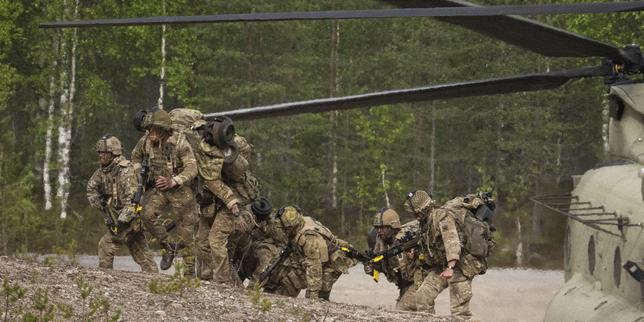
After US signals another review of its military presence in Europe, allies grapple with Washingtons ambiguities On June 18, the US defense secretary announced a review of the distribution of American NATO forces on the continent. The decision has raised concerns, even though it is being presented as a simple adjustment, a senior US defense official told Le Monde.
le monde · 3 months ago
Turkeys Guler: Cyprus-France military deal violates international law The signing of a status of forces agreement between the Republic of Cyprus and France, which will, among other things, allow France to station troops on the island violates international law, Turkish Defence Minister Yasar Guler said on Friday. The agreement signed between France, which does not have guarantor status, and the Greek Cypriot administration […]
cyprus mail · 3 months ago

US Pushes Bold NATO Overhaul With Europe-Led Defense Review #Europe #NATO
mastodon bot · 3 months ago