
US and Iran halt strikes in Strait of Hormuz and resume talks in Doha

Story Timeline
3 months · 13 summary articles
The United States and Iran agreed on Sunday to halt days of mutual strikes in the Strait of Hormuz and will resume technical talks in Doha on Tuesday, senior U.S. officials said, seeking to salvage a fragile ceasefire that had been tested by tit-for-tat attacks over the weekend.
A senior U.S. official told Axios that both sides have “decided to stop all the kinetic activity,” using military terminology for strikes and other offensive operations. A second U.S. official confirmed that vessels can now move freely through the strait as both sides stand down “for now,” while technical discussions continue. The planned meeting in Qatar’s capital was originally scheduled for Switzerland to address Iran’s nuclear program but was relocated and refocused on Hormuz after the recent escalation.
The renewed fighting erupted despite a 60-day interim ceasefire and threatened to unravel the memorandum of understanding reached in Switzerland last week. Under that deal, Iran committed to make its best efforts to allow safe passage of commercial vessels through the strait in exchange for the lifting of the U.S. blockade of Iranian ports. The agreement also included the establishment of a U.S.-IRGC “hotline” to coordinate traffic, though it had not yet become operational as of Saturday.
Iran launched fresh drone and missile attacks on Bahrain and Kuwait on Sunday in response to new U.S. airstrikes, according to France 24, and warned it would halt negotiations and close the strait if Washington continued its strikes. Meanwhile, U.S. President Donald Trump threatened to “complete the job” militarily if the ceasefire collapsed, escalating rhetoric that had already strained the tenuous peace.
Nick Stewart, head of the U.S. technical team, is expected to participate in Tuesday’s talks in Doha, according to a U.S. official and a source with knowledge of the negotiations. The White House did not immediately respond to requests for comment.
The crisis underscores the fragility of the current truce and the high stakes of Hormuz, through which roughly a fifth of the world’s seaborne oil passes. Oil prices rose on Monday as markets reacted to the renewed instability, with Brent crude edging higher amid concerns over the strait’s reopening. The U.S. and Iran’s willingness to return to the negotiating table reflects a shared, if precarious, interest in avoiding a broader regional conflict, even as both sides maintain competing claims over control of the waterway.
Follow us for live European news
- 4
- 3
- 2
- 2
- 1
- 1
- 1
- 1
- 1
- 1
- 1
2 further sources not geolocated
Articles

US-Iran talks stall after fresh military clashes Negotiations between Washington and Tehran have been halted following renewed hostilities, according to The Wall Street Journal. Talks expected to resume in Switzerland this weekend were stalled after Iran attacked a commercial vessel and the US struck Iranian targets. No American casualties were reported.
yenisafak · 2 months ago
#Iran #USA The US and Iran have agreed to halt hostilities and continue peace talks in Doha, Qatar, following recent exchanges of strikes that tested their fragile ceasefire. Subscribe to @OSINTdefender Chat room
telegram_OSINTdefender · 2 months ago

U.S. and Iran Agree to Halt Days of Fighting Over Strait The two sides are set to resume peace talks intended to strike a long-term deal to end hostilities and restrain Tehrans nuclear program.
wsj · 2 months ago
Iran, US agree to halt Gulf hostilities and resume Strait of Hormuz talks Iran and the United States agreed to halt recent hostilities in the Gulf and renew talks regarding their dispute over the Strait of Hormuz, a U.S. official said on Sunday, raising hopes of saving an interim peace deal that was under pressure from days of tit-for-tat strikes. Technical talks are slated to continue on all […]
cyprus mail · 2 months ago
Iran war live: Tehran insists on control of Hormuz amid reports of US talks Washington and Tehran have agreed to stop attacks and renew talks in the Qatari capital, Doha, Axios reports.
aljazeera · 2 months ago
U.S. and Iran Agree to Stop Fight Over the Strait of Hormuz The two sides are set to resume peace talks intended to strike a long-term deal to end hostilities and restrain Tehrans nuclear program.
wsj · 2 months ago
Media: US and Iran agree to stop attacking each other According to the American media Axios, the USA and Iran have agreed to stop attacking each other. An unnamed US official told Reuters that the two nations will halt attacks, allowing ships to move freely in the Strait of Hormuz. Additionally, both parties plan to meet on Tuesday in Doha, Qatar, to resolve their disagreement […]
cphpost · 2 months ago
USA och Iran uppges avbryta attacker USA och Iran är överens om att avbryta attackerna mot varandra och, för Irans del, mot dess grannar runt Persiska viken. Det uppger amerikanska källor för bland andra Axios och Reuters. Attackerna har pågått i flera dygn, trots vapenvila.
svenska dagbladet · 2 months ago
Iran-Krieg: USA wollen Dialog mit dem Iran trotz Angriffen fortsetzen Trotz des Abkommens flammt der Konflikt zwischen dem Iran und den USA immer wieder auf. Beide wollen trotzdem weiterverhandeln. Der Iran stellt allerdings klare Bedingungen.
handelsblatt · 2 months ago
USA und Iran wollen Angriffe „vorerst stoppen Nach erneuten gegenseitigen Angriffen haben die USA und der Iran offenbar einen Stopp der Kämpfe und einen Termin für Verhandlungen vereinbart. „Beide Seiten werden sich vorerst zurückhalten, erklärte ein US-Regierungsvertreter in Washington am Sonntag nach Angaben der Nachrichtenagentur AFP. Laut dem Sender CNN und dem Onlineportal Axios sei zwischen dem Iran und den USA zudem eine Wiederaufnahme der Gespräche vereinbart worden.
orf.at · 2 months ago
Iran attacks Bahrain and Kuwait, threatens to halt talks after fresh US strikes Iran launched fresh drone and missile attacks on Bahrain and Kuwait on Sunday after new US airstrikes, while warning it would completely halt negotiations and close the Strait of Hormuz if Washington continues its attacks.
france24 · 2 months ago
US, Iran Agree To Halt Attacks, Resume Negotiations, Official Says As the US-Israeli war with Iran continues to impact and shape the region, journalists from RFE/RLs Central Newsroom and Iranian service, Radio Farda, deliver ongoing updates and analysis.
radio free europe · 2 months ago
Iranian lawmaker warns US strikes during talks bring retreat and regret The head of Irans parliamentary National Security and Foreign Policy Commission said Saturday that US strikes on Iranian targets during ongoing negotiations expose Washingtons blatant disregard for diplomatic principles and ceasefire understandings, warning that such aggression would ultimately bring only "retreat and regret" for American forces.
yenisafak · 2 months ago
USA und Iran: Ist die Waffenruhe im Iran schon wieder Geschichte? Trotz des Rahmenabkommens greifen sich die USA und der Iran wieder gegenseitig an. Scheitern die Friedensbemühungen endgültig? Und: Nachhaltigkeitskonferenz in Hamburg
die zeit · 2 months ago
Iran condemns US strikes, says Washington violated peace deal The Iranian Foreign Ministry on Saturday condemned US strikes on its southern coastline as a violation of the UN Charter and a recently signed peace pact, vowing retaliatory action and urging Gulf states to deny aggressors access to their territory as the fragile 14-point agreement risks collapse.
yenisafak · 2 months ago
US and Iran agree to cease hostilities, meet Tuesday in Qatar Senior officials in Washington and Tehran confirmed on Sunday that both nations would halt kinetic military operations and hold emergency talks in Doha on Tuesday to address mounting tensions over the Strait of Hormuz, after renewed clashes threatened to unravel the fragile ceasefire agreement.
yenisafak · 2 months ago
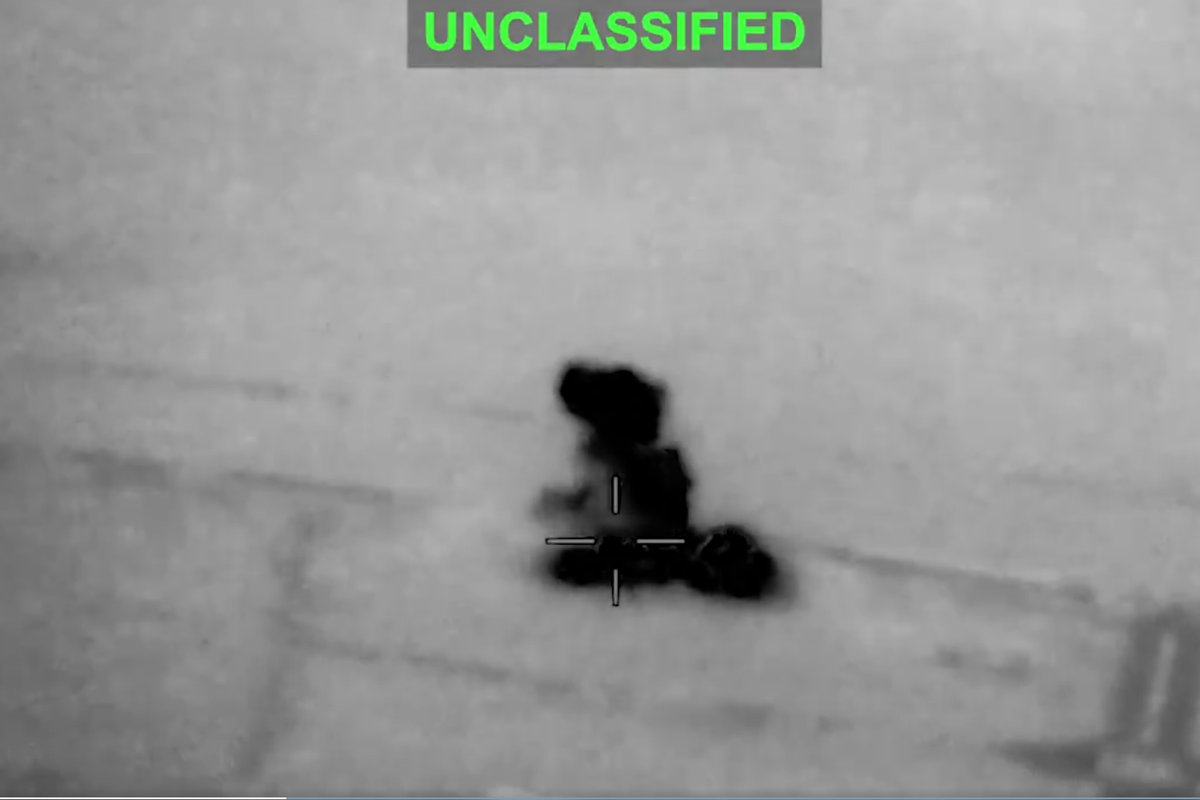
Iran-US war latest: Trump and Tehran agree to halt attacks after exchanging strikes over Strait of Hormuz Iran and the US traded attacks in the Gulf in recent days as each accused the other of violating an interim ceasefire deal
independent · 2 months ago

Iran und USA vereinbaren laut Bericht Ende von Angriffen und Gespräche in Doha Der Iran blieb wegen US-Angriffen am Sonntag technischen Gesprächen fern. Am Wochenende griffen der Iran und die USA trotz Waffenruhe gegenseitige Ziele an
der standard · 2 months ago
Iran and U.S. agree to halt attacks and renew talks, Axios reports Iran and the United States agreed to halt recent hostilities in the Gulf and renew talks regarding their dispute over the Strait of Hormuz, Axios reported on Sunday,…
japantoday · 2 months ago
US strikes Iran targets after tanker drone attack: CENTCOM The US militarys Central Command confirmed on Saturday that American forces carried out fresh strikes against Iranian military infrastructure, including surveillance and air defense sites, following an early-morning drone attack on a commercial oil tanker near the strategic Strait of Hormuz.
yenisafak · 2 months ago
Irans Revolutionary Guard strikes US bases in Kuwait, Bahrain Irans Revolutionary Guard said early Sunday that missile and drone strikes targeted eight US military installations in Kuwait and Bahrain, declaring that any future attacks by the "enemy" would draw a "crushing response" amid warnings that navigation arrangements in the Strait of Hormuz hang in the balance.
yenisafak · 2 months ago
Pakistan, Bahrain ministers discuss Mideast tensions after Iran strikes The foreign ministers of Pakistan and Bahrain on Sunday discussed the escalating Middle East crisis following Iranian missile and drone attacks on US positions in the Gulf, with the Bahraini envoy praising Islamabads constructive role in securing the recently signed framework deal between Washington and Tehran.
yenisafak · 2 months ago

US and Iran agree to pause attacks and meet in Qatar US and Iran agree to halt strikes and hold talks in Qatar on Tuesday over Strait of Hormuz tensions, US media reports.
euronews · 2 months ago
Lage im Überblick: USA setzen trotz Eskalation auf Dialog mit Iran Die jüngsten Angriffe zwischen den USA und dem Iran schüren die Sorge vor einem Wiederaufflammen des Kriegs. Beide wollen nach US-Angaben aber weiter reden. Auch im Libanon bleibt die Lage angespannt.
tagesspiegel · 2 months ago

Liveblog Irankrieg: US-Medien: Neue Gespräche zwischen USA und Iran am Dienstag in Katar Nach erneuten gegenseitigen Angriffen +++Irans Klerus drängt auf Abbruch der Gespräche mit den USA +++ Israel: Hizbullah-Kämpfer in Südlibanon getötet +++ alle Entwicklungen im Liveblog
faz · 2 months ago
Middle East live: US says Iran talks to continue, with both sides pausing strikes The United States and Iran will continue their talks aimed at ending the Middle East war, a US official said on Sunday, adding that both sides will stand down after recent clashes. This comes hours after Lebanese Parliament Speaker Nabih Berri rejected a US–Israel–Lebanon framework deal, calling it an agreement of dictates that fails to protect Lebanons rights. Follow our liveblog for the latest updates.
france24 · 2 months ago
US says Iran talks to continue, with both sides pausing strikes
france24 · 2 months ago
US says it has agreed deal with Iran to end strikes and resume talks Tehran is yet to confirm agreement to stop tit-for-tat attacks that have threatened fragile truce in Strait of Hormuz
financial times · 2 months ago

Iran Risks Peace Talks With U.S. to Maintain Leverage Over Strait Iran sees its control over the Strait of Hormuz as critical leverage in peace talks with the United States. It seems willing to risk the cease-fire to maintain that power.
new york times · 2 months ago
+++ Iran-Krieg +++: USA rechnen trotz Angriffen weiter mit Iran-Gesprächen Iran beansprucht alleinige Kontrolle über Straße von Hormus +++ Israel: Haben Hisbollah-Kämpfer im Südlibanon getötet +++ Trump bestätigt US-Angriffe und droht Iran mit Vernichtung +++ Der Newsblog.
handelsblatt · 2 months ago