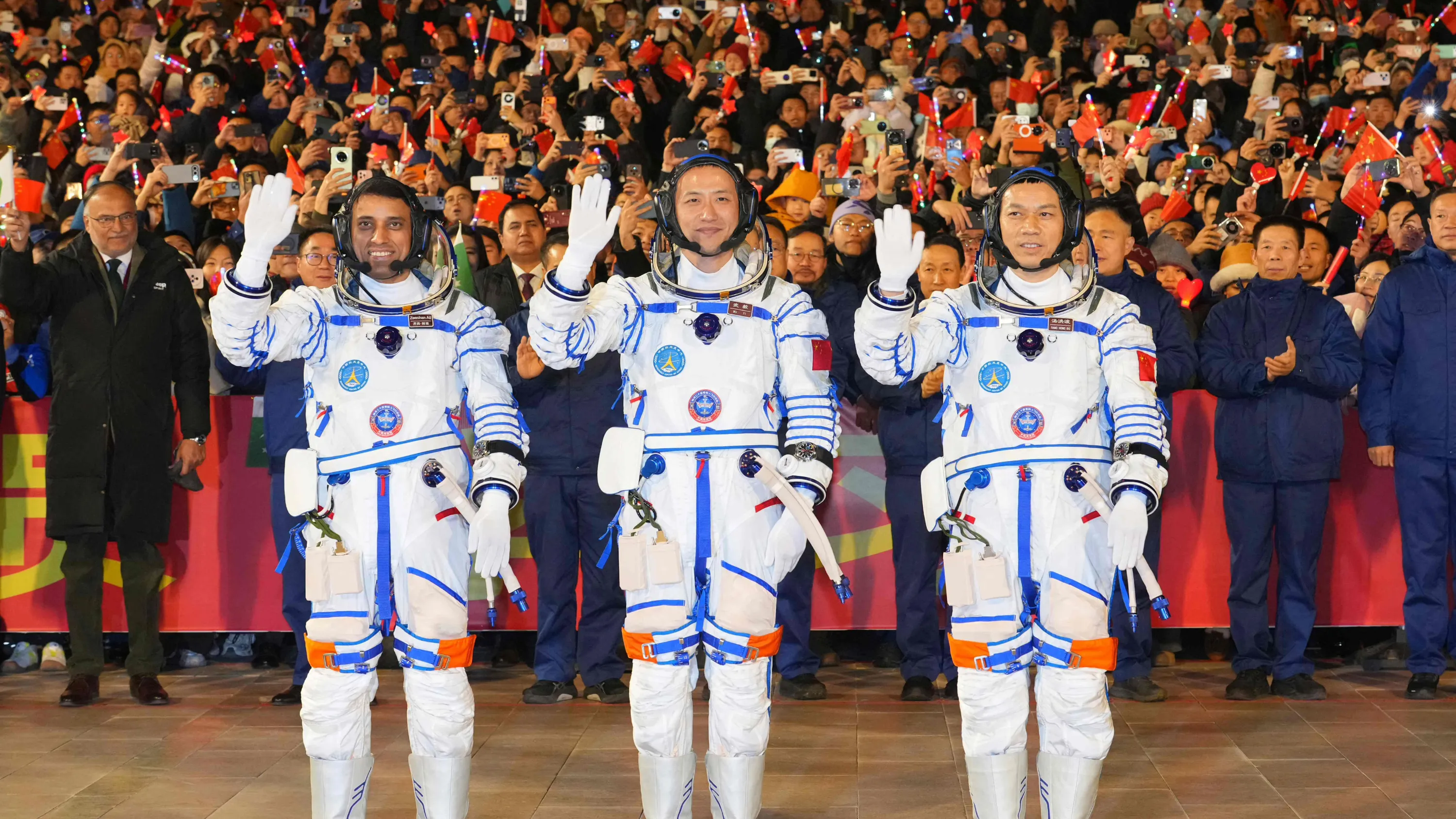
China launched the Shenzhou-24 mission on Wednesday carrying three astronauts, including Muhammad Zeeshan Ali, the first Pakistani and first foreign national to visit the Tiangong space station. [1]
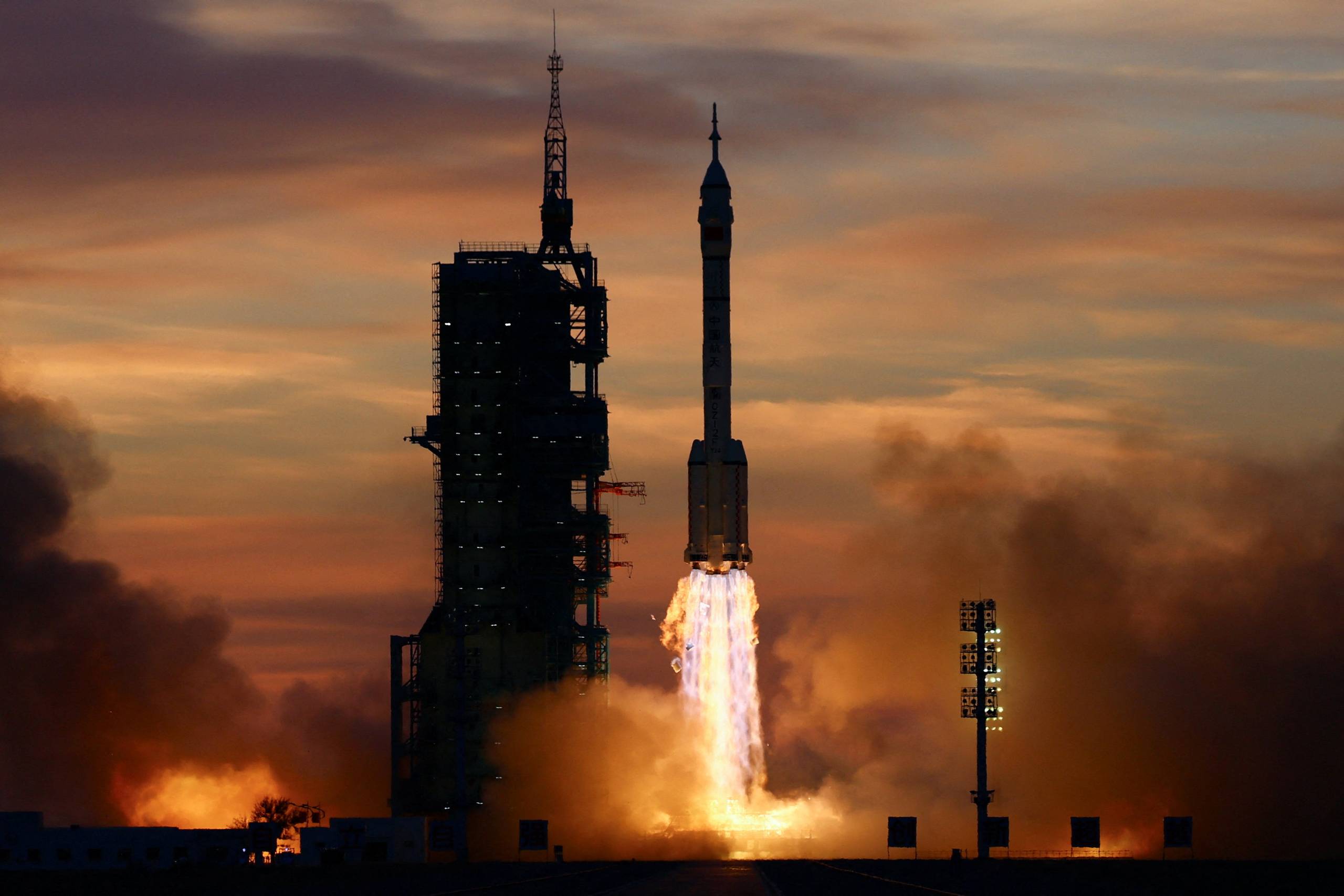
The Long March 2-F rocket took off at 8:18 am from the Jiuquan launch centre in the Gobi Desert under a pink sky. The spacecraft separated from the rocket roughly 10 minutes after blast-off and entered orbit. The China Manned Space Agency declared the launch a "complete success" and said the crew was in good condition. [1]
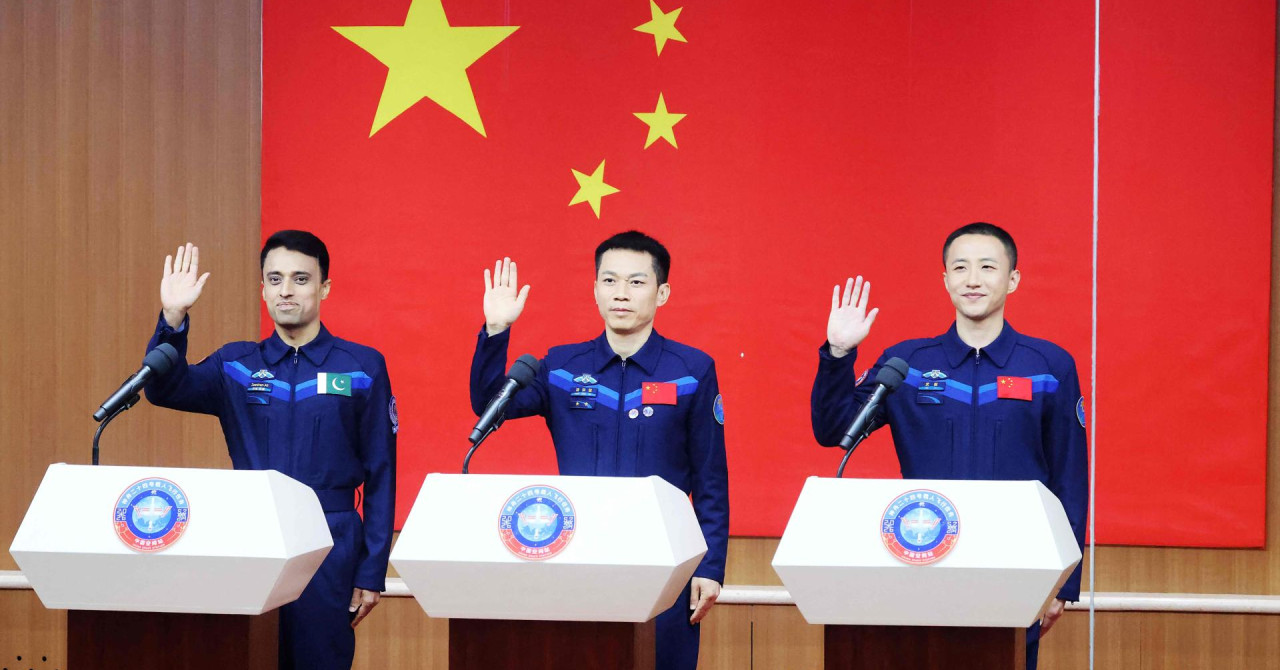
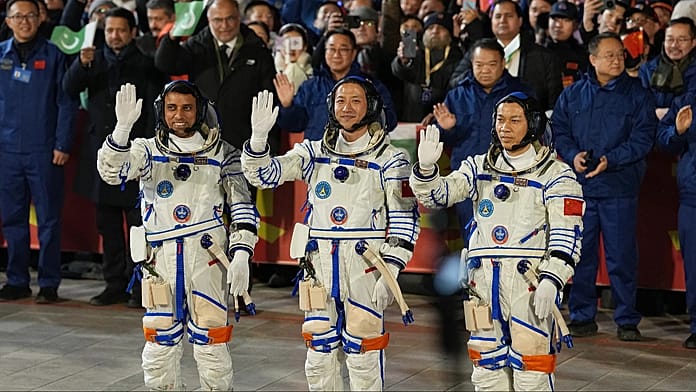
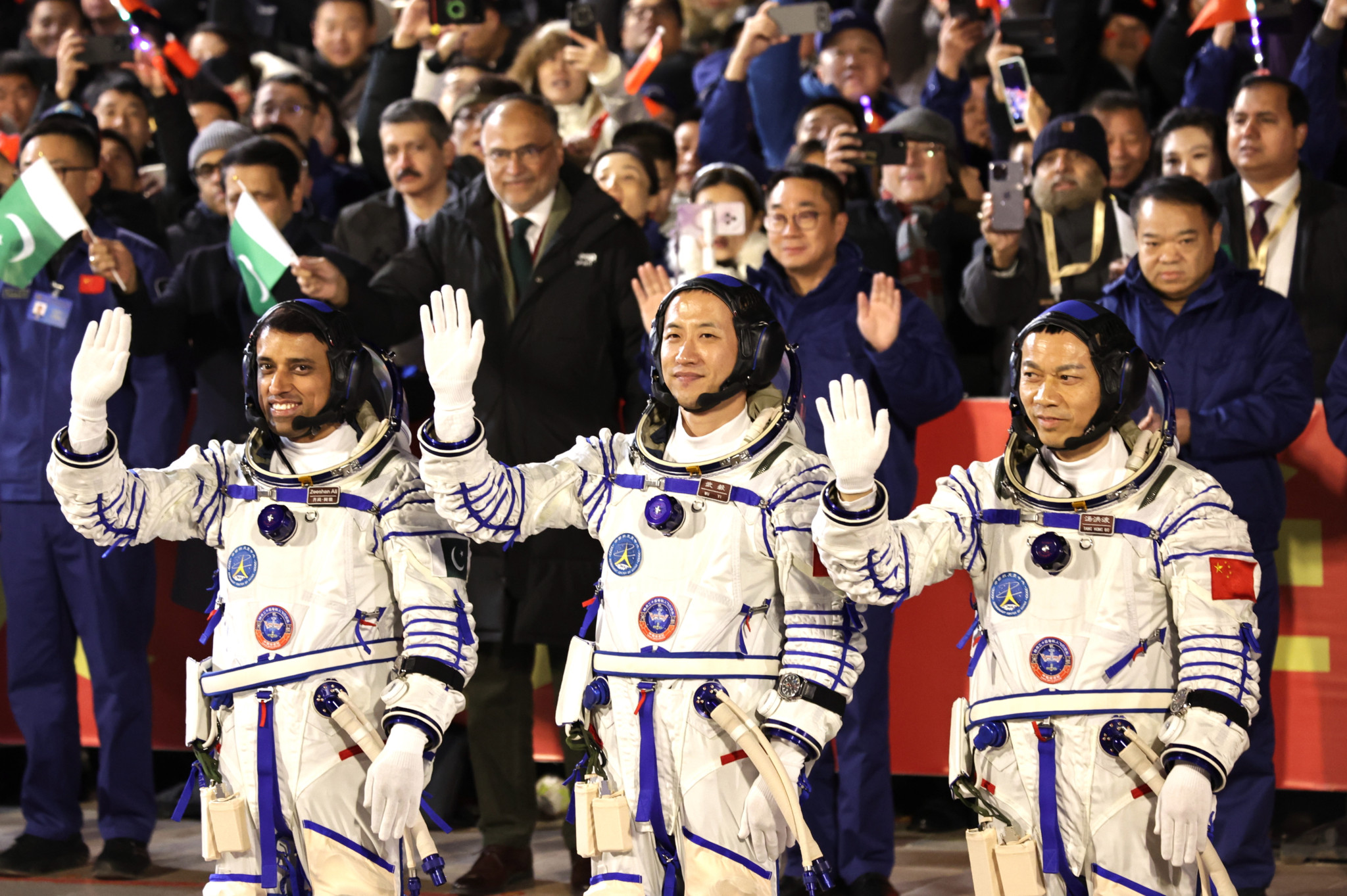
The crew comprises commander Tang Hongbo, 51, flight engineer Wu Yi, 39, and Ali, 40, a Pakistan Air Force pilot serving as payload specialist. Ali is the first foreign astronaut to fly on a Chinese space mission and the first non-Chinese national to board Tiangong. He will join a short orbital flight expected to last around five days before returning with the Shenzhou-23 spaceship. [1]
Ali said he was carrying "the name of Pakistan on my shoulder, the hopes of 250 million Pakistanis." Pakistan's Prime Minister Shehbaz Sharif hailed the mission as a testament to the "exceptional trust, mutual respect and enduring brotherhood" between the two countries. "Pakistan-China friendship is surpassing the heights of the Himalayas, in its journey to outer space," Sharif said. [2] [1]
The mission stems from an agreement China and Pakistan signed in February 2025. The crew will carry out more than 90 scientific experiments and technology tests. Ali will conduct studies on photosynthetic cyanobacteria and the effects of radiation and microgravity on quinoa seeds. He will also test cultivating microalgae as a potential food and oxygen source. [3] [1]
After docking, the Shenzhou-24 crew will join three astronauts currently aboard Tiangong: Zhu Yangzhu, Lai Ka-ying and Zhang Zhiyuan. Lai is Hong Kong's first astronaut and the only woman currently aboard. Ali is scheduled to return to Earth alongside Lai and Zhang. Zhu will remain on board to complete China's first full-year stay in space. [1]
Ali trained for seven months in Beijing, taking intensive Mandarin courses and studying Chinese poetry. At a press conference on Tuesday, he spoke Mandarin and cited a line of Chinese poetry about climbing higher to see farther. "It's like my daily training. Day after day, reaching new heights," he said. [3] [4]
Planning Minister Ahsan Iqbal thanked President Xi Jinping and Chinese scientists, saying he hoped the flight would be the start of broader cooperation. "The sky is no longer our limit; it is our launching pad," Iqbal said. He added that Ali carried the Pakistani flag on his uniform. [3]
Beijing has poured billions into China's space programme as it aims to land astronauts on the Moon before 2030. The United States is competing with its Artemis programme, aiming to put astronauts on the lunar surface in 2028. China and Pakistan have 75 years of cooperation in space. [1] [3] [2]