Loading…
 Saturday, September 26Saturday, September 26
4 months · 11 summary articles
Councils across Ireland are racing against a June 30 deadline to unlock €1 billion in state funding for 82 housing-linked infrastructure projects, or risk losing the entire allocation, the Government confirmed today. Housing Minister James Browne said the projects—spanning new roads, bridges, parks and harbour links—will directly enable the delivery of 86,000 new homes, but warned that councils must accelerate approvals and procurement to meet the tight timeline. “Every day counts,” Browne told reporters in Dublin. “We have the money, we have the projects, and we have the partners—what we need now is speed.”
The funding, drawn from the Government’s Housing for All programme, targets areas including Wicklow, Kildare and Meath, where the N11 road bridge, Naas harbour link and new municipal parks are among the flagship schemes. Local authorities have until the end of the month to submit final plans or risk forfeiting the funds, which cannot be rolled over into the next financial year. Officials at the Department of Housing confirmed that over 80 projects have already been approved in principle, but stressed that construction cannot begin without council-level sign-off on planning permissions and contractor tenders.
The urgency reflects broader tensions in Irish housing policy, where ambitious supply targets have repeatedly been undermined by planning delays and resource constraints. Speaking to the *Irish Times*, one senior council official in Leinster described the situation as “a Damocles sword”—a high-stakes gamble on local governments’ ability to deliver at pace. “We’re being asked to build the infrastructure for 86,000 homes in a few months,” the official said. “That’s not just ambitious; it’s unprecedented.”
Meanwhile, in Estonia, a parallel debate over resource extraction has reignited as Tallinn considers a new limestone quarry near Pihali, just outside the capital. Paavo Pettai, a board member of Trisector—a company specialising in mining waste recycling—argued in a policy paper that the country faces a stark choice: prioritise domestic supply of high-quality construction materials for national infrastructure, or protect local communities from industrial encroachment. “The state has a legitimate need for quality materials to build roads and railways,” Pettai wrote. “But so do residents, who have an equally legitimate expectation that their neighbourhoods won’t become industrial zones.”
Across Europe, infrastructure and environmental trade-offs are sharpening political divides. In Norway, Crown Prince Haakon has scaled back public duties to support his wife, Crown Princess Mette-Marit, who is battling a rare pulmonary fibrosis. The palace confirmed the adjustment, which comes as Norway debates constitutional reform to allow Princess Ingrid Alexandra to serve as regent should the need arise. In Germany, meanwhile, the federal government’s new *Gebäudetyp E*—a simplified building standard aimed at cutting red tape—has drawn criticism from the German Lawyers’ Association, which argues it could increase litigation rather than reduce it.
Follow us for live European news

Kas uus südamestimulaator võiks olla maailma muutev tulevikulahendus? Muudetud geenid hakkavad reageerima ultrahelile Ameerika teadlased on töötanud välja uue südamestimulaatori, mille paigaldamiseks pole tarvis operatsiooni. Kas tegu on tulevikutehnoloogiaga, mis muudaks südamehaigusteravi täielikult?
postimees · 3 months ago
PAAVO PETTAI ⟩ Kas küla taha ikka on taas uut kaevandust vaja? Arutelu Tallinna külje alla kavandatava Pihali lubjakivikarjääri üle näitab selgelt, millise valiku ees Eesti lähiaastatel seisab. Ühel pool on riigi õigustatud vajadus tagada teede, raudteede ja muu taristu ehitamiseks piisav kvaliteetse ehitusmaterjali varu. Teisel pool on kohalike elanike sama õigustatud ootus, et nende kodukeskkond ei muutuks uueks mäetööstuspiirkonnaks, kirjutab Paavo Pettai (Keskerakond) kaevandusjäätmete väärindamisega tegelevast ettevõttest Trisector.
postimees · 3 months ago
Bezose Kuu maandur on NASAs juba astronautidele testimiseks valmis – kas Musk on hiljaks jäänud? Käimas on suur kosmosevõidujooks Jeff Bezose juhitud Blue Orgini ning Elon Muski SpaceX-i vahel. Sellega seoses on kerkinud küsimus, kumb jääb selles peale? Esimesed katsetused mehitatud Kuu-missiooni osas on juba tehtud.
postimees · 3 months ago
‚Budu koukat do zdi. Britským mladým budou po zákazu sociálních sítí chybět alternativy pro socializaci Britská vláda plánuje od příštího roku zavést plošný zákaz sociálních sítí pro děti do 16 let. Premiér Keir Starmer ve videu zveřejněném na síti X argumentuje ochranou dětí před nebezpečím internetu a navrácením jejich dětství. Města a vesnice po celém Spojeném království ale za posledních několik let uzavřely stovky mládežnických klubů a dalších tzv. třetích prostor, kde by se mladí lidé mohli setkávat offline.
irozhlas.cz · 3 months ago

Le prince George inscrit dans une école délite à plus de 70.000 euros Le fils du prince William devrait intégrer lEton College comme son père avant lui. ...
la libre · 3 months ago
Sinner arriva anche nello spazio: un asteroide porta il suo nome. È un punto di riferimento luminoso per le nuove generazioni Pensavate che Jannik Sinner non potesse andare oltre la posizione numero uno del ranking Atp? E invece sì, perché il tennista azzurro è arrivato addirittura nello spazio. Non in senso letterale, ovviamente, ma grazie a un riconoscimento decisamente particolare: il Working Group Small Bodies Nomenclature (WGSBN) dellUnione Astronomica Internazionale (IAU) ha ratificato lassegnazione del nome […] Larticolo Sinner arriva anche nello spazio: un asteroide porta il suo nome. È un punto di riferimento luminoso per le nuove generazioni proviene da Il Fatto Quotidiano.
il fatto quotidiano · 3 months ago
Ausflugstipp für den Sommer in Berlin: An diesem Neuköllner Biergarten kann man auch Kanu fahren Am Neuköllner Schifffahrtskanal betreibt das Team von Canoa Berlin jetzt eine Beachbar mit Kanuverleih. Auch geführte Touren kann man von hier aus unternehmen.
tagesspiegel · 3 months ago
Katalyst Space raises $12 million for GEO servicing demo mission Satellite servicing startup Katalyst Space Technologies has raised $12 million for a geosynchronous orbit demonstration as its mission to boost the orbit of a NASA observatory nears launch. The post Katalyst Space raises $12 million for GEO servicing demo mission appeared first on SpaceNews.
spacenews · 3 months ago
Ministrul interimar Mihai Dimian a semnat ordinul pentru Bacalaureat 2030. Ce se schimbă la examen Ministrul interimar al Educației, Mihai Dimian, a anunțat marți că a semnat Ordinul de Ministru privind aprobarea probelor și disciplinelor examenului național de bacalaureat 2030, destinat elevilor care vor începe clasa a IX-a în anul 2026.
digi24 · 3 months ago
Primăria Capitalei anunță cum se modifică traficul și transportul public pe durata lucrărilor la Pasajul Basarab Primăria Capitalei a prezentat marți planul de trafic pentru perioada lucrărilor de reparații la Pasajul Basarab, care încep pe 20 iunie. Șoferii vor circula temporar pe câte o singură bretea, iar mai multe linii STB vor fi suspendate sau deviate pe durata intervențiilor.
digi24 · 3 months ago
Remorcherul scufundat în martie lângă Portul Midia va fi ridicat la suprafaţă miercuri. Acesta se află la o adâncime de 26 de metri Reprezentanţii Midia Marine Terminal au anunţat că remorcherul scufundat în Marea Neagră la jumătatea lunii martie, eveniment în urma căruia doi marinari au murit şi trei au fost daţi dispăruţi, va fi ridicat, miercuri, la suprafaţă. Acesta se află la o adâncime de 26 de metri şi se estimează că operaţiunea va dura cinci sau şase ore. Remorcherul va fi adus în Portul Midia la sfârşitul acestei săptămâni.
digi24 · 3 months ago
Espoo | Oittaan kuntorata muuttui asfaltiksi 200 000 eurolla, hanke saa kiitosta ja kritiikkiä Oittaan kuntorata on saanut lisää asfalttipintaa rullahiihtäjiä ja -luistelijoita varten. Muutos ilahduttaa hiihtäjiä, mutta osa ulkoilijoista kyseenalaistaa sen tarpeellisuuden.
helsingin sanomat · 3 months ago
Byrådet gjør stort privatiseringsgrep i hjemmetjenesten. – Hårreisende. Byrådet vil gjøre et stort privatiseringsgrep i hjemmetjenesten. De vil overføre 40 prosent av brukerne som ikke tar et aktivt valg mellom privat og kommunal hjemmetjeneste, til de private. I dag får alle som ikke tar et valg kommunens tjeneste. Opposisjonen reagerer sterkt.
aftenposten · 3 months ago
Kronprinsen tar över när Börje Ekholm avgår En civilingenjör från KTH byter plats med en annan när Per Narvinger tar över efter Börje Ekholm som koncernchef för Ericsson. Detta är en avgörande tid för vår bransch, säger Per Narvinger i ett pressmeddelande.
svenska dagbladet · 3 months ago

Le Royaume-Uni interdit les réseaux sociaux aux ados : stupide ou indiscutable ? Au terme de trois mois de consultation, le Premier ministre travailliste, Keir Starmer, a choisi dinterdire aux moins de 16 ans laccès aux principales plateformes comme TikTok, YouTube et Snapchat. Downing Street sest inspiré du modèle australien. Mais veut aller plus loin, au grand dam dune partie de la presse.
courrier international · 3 months ago

Le Japon est-il prêt à avoir une impératrice ? Le gouvernement de la Première ministre, Sanae Takaichi, envisage de faire voter dici lété une loi visant à revoir les règles de succession impériale, actuellement en crise. Si lopinion publique soutient lidée daccorder plus de place aux femmes, les politiques japonais tiennent à préserver laspect patriarcal, explique la presse nippone.
courrier international · 3 months ago
Une voyageuse a-t-elle été verbalisée 200 euros pour avoir remonté à contresens un escalator à larrêt dans une gare parisienne ? Largement relayée sur X, cette verbalisation a indigné de nombreux internautes. La SNCF assure enquêter sur les circonstances de lincident et a suspendu lamende le temps des investigations.
liberation · 3 months ago
Drones, IA : la marche pas toujours forcée des entreprises japonaises pour muscler la défense nationale Le gouvernement nippon, qui augmente ses dépenses militaires face aux pressions de la Chine, tend la main aux sociétés pour faire de larchipel un producteur darmes. Un changement de cap qui divise et chamboule le pacifisme.
liberation · 3 months ago
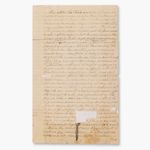
"No Kings": Schon George Washington kritisierte "protzige Nachahmung des Königshauses" Sothebys versteigert einen Brief des ersten US-Präsidenten, in dem er sich Gedanken darüber macht, wie sich das Verhalten des Amtsträgers von Monarchen unterscheiden solle
der standard · 3 months ago
Pragues Jiřího z Poděbrad Square Reopens After Major Renovation After more than two years behind construction fences, one of Pragues busiest public spaces is returning to daily life. Jiřího z Poděbrad Square, known to generations of Prague residents simply as Jiřák, will officially reopen today, June 17th, following an extensive renovation. The project has brought new trees, upgraded infrastructure and redesigned public areas, while also triggering heated discussions among locals over how one of the citys best-known squares should evolve. City officials say the reconstruction was designed to make the square more resilient to rising temperatures and increasingly frequent periods of drought. Around 100 new trees have been planted throughout the area, including a new tree-lined section along Vinohradská Street intended to help reduce traffic noise and limit the spread of dust and pollutants from one of the districts busiest roads. The renovation also replaced traditional asphalt surfaces with permeable paving capable of absorbing and retaining rainwater. Drinking fountains have been installed, childrens play elements added and the squares fountain upgraded with more energy-efficient technology. Despite the changes, planners insist the site has retained its identity as an urban park rather than becoming a predominantly paved plaza. However, not everyone has been convinced. Among the most common concerns raised... The post Pragues Jiřího z Poděbrad Square Reopens After Major Renovation appeared first on Prague Morning.
prague morning · 3 months ago
Mutare-șah contra Beijingului: SUA trimit echipament militar în Australia Armata americană intenţionează să instaleze pe coasta de sud-est a Australiei un stoc de echipament militar gata de utilizare, inclusiv arme, potrivit informaţiilor menţionate în documentele de licitaţie, confirmate de oficiali pentru AFP.
adevarul · 3 months ago
Coșuri cadou: de ce le aleg tot mai mulți români Alegerea unui cadou potrivit a devenit, pentru mulți români, o mică provocare. Nu pentru că lipsesc opțiunile, ci tocmai pentru că sunt prea multe. Un parfum poate fi prea personal. O bijuterie poate să nu se potrivească stilului.
adevarul · 3 months ago
Operațiunea de recuperare a remorcherului Astana începe miercuri. Nava se află la 26 de metri adâncime ARAS Salvage a anunțat că miercuri, 17 iunie, vor începe operațiunile de ridicare la suprafață a remorcherului Astana, scufundat în Portul Midia. Nava se află la o adâncime de 26 de metri.
adevarul · 3 months ago

Por qué mujeres y hombres envejecen de distinta forma: un gen protector tiene la culpa Una proteína contenida en el cromosoma X ayuda su correcto funcionamiento. Este hallazgo es relevante para las mujeres, con dos cromosomas X, frente a los hombres, que solo tienen uno Leer
elmundo · 3 months ago

Gebäudetyp E: Weniger Streit am Bau? Von wegen! Mit dem neuen Gebäudetyp E will die Bundesregierung das Bauen einfacher machen. Doch die Kritik daran wächst. Der deutsche Anwaltsverein glaubt nicht, dass es weniger Bauklagen gibt – im Gegenteil.
faz · 3 months ago

N11 road bridge, new parks and Naas harbour link among 82 projects approved under housing fund The infrastructure projects will support the roll-out of thousand of houses, says Housing Minister James Browne.
thejournal · 3 months ago

Stortinget sier ja til at Ingrid Alexandra kan lede statsråd Et enstemmig storting vil endre Grunnloven slik at prinsesse Ingrid Alexandra kan fungere som regent i kongens og kronprinsens fravær. Dermed kan det bli prinsessen som leder et statsråd når situasjonen krever det. Det går fram av en innstilling fra Stortingets kontroll- og konstitusjonskomité tirsdag. I dag er det slik at dersom både kongen og kronprinsen er utilgjengelige, er det regjeringen som fungerer som statsoverhode. (NTB)
nrk · 3 months ago
Canicule : la baignade ouverte dès ce mercredi au canal Saint-Martin à Paris Alors que louverture officielle des brasses estivales dans la Seine et bassins parisiens ne devait pas se dérouler avant le 4 juillet, le canal Saint-Martin prend de lavance à cause de la canicule et sera accessible dès ce 17 juin.
liberation · 3 months ago