
IRGC warns ships to reverse course in Strait of Hormuz after Oman corridor rejected
Story Timeline
3 months · 18 summary articles
The Islamic Revolutionary Guard Corps (IRGC) warned vessels on Thursday to reverse course in the Strait of Hormuz after Tehran rejected Oman’s temporary maritime corridor, escalating tensions despite ongoing US-Iran diplomacy. The IRGC Navy broadcast warnings that only Iranian-authorized routes were legal, directly contradicting Oman’s UN-backed initiative and prompting at least four ships to alter their paths. The confrontation unfolded as US Secretary of State Marco Rubio met Gulf leaders in Bahrain to finalize a 60-day roadmap toward a broader regional peace deal, underscoring the fragile balance between diplomatic progress and military posturing.
Oman’s Foreign Ministry had announced on Wednesday that no tolls would be imposed on vessels transiting the strait, following consensus among mediators including Qatar, Pakistan, and Oman after initial US-Iran talks in Switzerland. The Sultanate also opened a temporary corridor on Tuesday, coordinated with the International Maritime Organization, to ensure safe passage for ships including two Qatari LNG tankers that resumed transit on Thursday. Yet Iran’s Foreign Ministry spokesman Esmaeil Baqaei accused Washington of undermining the recent memorandum by contradicting its terms, while Trump warned that any attempt to impose Hormuz tolls would immediately terminate negotiations.
Rubio, addressing GCC foreign ministers in Manama, reaffirmed that any Iran deal must align with the interests of US partners, emphasizing Gulf security as central to the talks. He also met UAE President Sheikh Mohamed bin Zayed to discuss post-war stability and maritime safety. Meanwhile, Iran’s Supreme Leader’s advisor Numan Kurtulmus welcomed US-Iran progress but called for sweeping reforms across the Islamic world, urging an end to Israeli attacks in Lebanon and the war in Tehran.
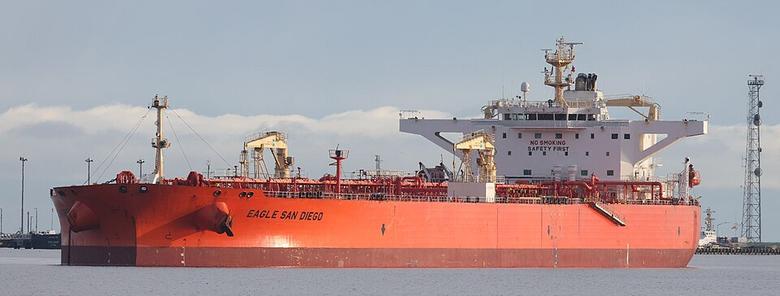
Oil markets reacted cautiously, with Brent crude falling 1.7% to below $72.50 per barrel as over 20 tankers carrying 35 million barrels resumed Hormuz transit. Iraq, meanwhile, urged OPEC to allow increased oil production after exports plummeted during the US-Iran war. The US Senate blocked a resolution to end military involvement in Iran, signaling Republican support for ongoing negotiations despite skepticism over concessions.
The IRGC’s broadcasts—echoing a similar standoff last weekend that saw no attacks—highlight the persistent risk of miscalculation. Analysts warn that while diplomacy advances, Iran’s insistence on controlling transit routes and Washington’s refusal to accept fees could derail the fragile momentum. With technical talks set to resume next week, the coming days will test whether regional stakeholders can translate cautious optimism into lasting stability.
Follow us for live European news
- 2
- 1
- 1
- 1
- 1
2 further sources not geolocated
Articles

Iraq pushes Opec to let it pump more oil Baghdads crude sales were drastically reduced when US-Iran war blocked exports via Strait of Hormuz
financial times · 2 months ago
Iran tells ships to turn back in Strait of Hormuz At least four vessels change course as Tehran challenges International Maritime Organizations evacuation route
financial times · 2 months ago
Iran, Israel and the Bomb How a decades of sabotage and brinkmanship over Irans nuclear programme erupted into the 2026 US-Israeli war on Iran.
aljazeera · 2 months ago
IRGC warns ships off Omans corridor in Hormuz as Rubio draws line on tolls The IRGC warned that any vessel navigating outside Tehrans designated routes was acting illegally, directly rejecting Omans newly announced temporary corridor, as Rubio told a GCC meeting the US would not accept fees regardless of how they are framed.
euronews · 2 months ago
Brent crude has fallen below $73 a barrel, touching its lowest level since before the Iran war erupted on February 28. The drop is the clearest economic signal yet that the four-month conflict is winding down. 🌍 #worldnews
mastodon bot · 2 months ago
⚠️- Strait of Hormuz Declared Unsafe – Controlled Vessel Evacuation Underway The Sultanate of Oman has requested the issuance of an urgent navigation warning for the Arabian Gulf and Strait of Hormuz after authorities determined that the existing Traffic Separation Scheme (TSS) is no longer safe for navigation. ❗️Key Developments: • Omani authorities report an elevated risk of vessel collisions in the current operating environment. • A gradual and controlled evacuation of maritime traffic has been initiated. • Two temporary emergency transit corridors one north and one south of the existing TSS have been established for vessels exiting the strait. • Ships must assemble in a designated waiting area before receiving transit instructions. • Vessel movements will be coordinated by the International Maritime Organization (IMO) and relevant coastal authorities. Mandatory Measures: • Ships will be assigned specific transit windows and instructed individually. • AIS tracking systems must remain active throughout transit. • Masters must maintain communications with coastal authorities and be prepared for sudden traffic suspensions to allow naval vessel movements. • Vessel owners remain responsible for conducting independent risk assessments before proceeding. Oman also reaffirmed its commitment to maintaining freedom of navigation through the Strait of Hormuz without the imposition of transit tolls. The emergency navigation warning was distributed through the Oman National Hydrographic Office and coordinated via NAVAREA IX channels. The Strait of Hormuz handles roughly one-fifth of global oil trade, making any disruption to maritime traffic a significant development for global energy markets and regional security.
telegram bot · 2 months ago
🇮🇷‼️- Iran has expressed criticism toward Oman for establishing shipping routes in the Strait of Hormuz without the participation of Tehran. According to a statement released by the Islamic Revolutionary Guard Corps (IRGC) Navy, unspecified authorities without explicitly naming Oman declared a new vessel traffic route through the strait without coordination with Iran. The statement further asserted that the sole authorized traffic routes are those designated by Tehran and warned that alternative routes are "highly dangerous." These remarks follow Omans announcement of a "temporary maritime corridor" in the Strait of Hormuz, established in coordination with the International Maritime Organization.
telegram bot · 2 months ago
🇴🇲- The Ministry of Foreign Affairs of Oman has responded to Irans objections regarding the establishment of vessel traffic routes in the Strait of Hormuz without prior coordination with Tehran, affirming that no fees will be levied on transiting vessels. During the Gulf Cooperation Council summit in Bahrain, the Omani Foreign Minister emphasized the necessity of restoring freedom of navigation and ensuring the safe passage of ships through the Strait. As a coastal state, the Sultanate of Oman underscored its responsibility to support international efforts in securing maritime navigation in compliance with international law and the United Nations Convention on the Law of the Sea. The statement further clarified that future arrangements concerning the Strait will not involve the imposition of any transit fees.
telegram bot · 2 months ago
#BREAKING 🇮🇷🛥- Vessels are maneuvering to reverse course in the Strait of Hormuz following renewed Iranian assertions that only vessels with Iranian authorization may transit. The Islamic Revolutionary Guard Corps (IRGC) Navy continues to disseminate broadcasts declaring the Strait closed and warning of consequences should vessels proceed. It should be noted that a similar situation occurred last weekend, during which no attacks were launched against shipping. This precedent does not necessarily indicate that the same outcome will occur this time.
telegram bot · 2 months ago
Generation Jihad | Is the MOU DOA? One week after President Trump signed a landmark Memorandum of Understanding (MOU) with Iran, the 60-day negotiation window is already under pressure—and the concessions are piling up. So, is this two-page MOU actually worth the paper its written on? FDD Iran Program Senior Director and Senior Fellow Behnam Ben Taleblu joins Bill Roggio to break it all down. The post Generation Jihad | Is the MOU DOA? appeared first on FDDs Long War Journal.
long war journal · 2 months ago
Oman opens temporary maritime corridor in Strait of Hormuz Oman has announced the opening of a temporary maritime corridor for vessels transiting the Strait of Hormuz, coordinated with the International Maritime Organization. The measure aims to ensure freedom of navigation without imposing tolls, following recent US-Iran diplomatic efforts. Ships must coordinate with the IMO to use the route.
yenisafak · 2 months ago
Rubio meets UAE president, reaffirms US security commitment after Iran war US Secretary of State Marco Rubio met with UAE President Sheikh Mohamed bin Zayed to reaffirm US security commitments following the Iran war. They discussed safe transit through the Strait of Hormuz, and Rubio praised the UAEs resilience against Iranian attacks.
yenisafak · 2 months ago
Trump warns Iran talks would end if Hormuz tolls imposed US President Donald Trump said Wednesday that diplomatic negotiations with Iran would terminate immediately if Tehran attempts to collect fees from vessels transiting the Strait of Hormuz, warning that such tolls would derail ongoing efforts to address regional tensions.
yenisafak · 2 months ago
Pakistan welcomes Iranian president Islamabad accorded Iranian President Masoud Pezeshkian a full ceremonial welcome on his official visit, deploying a six-jet fighter escort and a 21-gun salute. Prime Minister Shehbaz Sharif and President Asif Ali Zardari received the Iranian delegation at the tarmac before a formal guard of honor parade.
yenisafak · 2 months ago
Kurtulmus calls for Islamic world reform, welcomes US-Iran progress Numan Kurtulmus told the Parliamentary Union of the OIC in Baku on Wednesday that the Islamic world needs comprehensive reform from "A to Z," welcoming positive developments in Switzerland-based US-Iran negotiations while calling for an end to Israeli attacks in Lebanon and the war imposed on Tehran.
yenisafak · 2 months ago
Israels wars since Oct. 7 cost nearly $205B An economic assessment published in the Times of Israels Hebrew edition stated that military operations across Gaza, Lebanon, Syria and Iran have drained approximately 700 billion shekels from state coffers and the wider economy, warning that the financial burden will persist for years through higher taxation and elevated debt.
yenisafak · 2 months ago
Iran warns US against contradicting memorandum text Iranian Foreign Ministry spokesman Esmaeil Baqaei called on Washington to refrain from interpretations that are completely contrary to the explicit text of the recent memorandum, warning that contradictory remarks by US officials risk deepening accumulated mistrust among Iranians.
yenisafak · 2 months ago
Qatari LNG tankers transit Hormuz as Gulf trade rebounds Two Qatari liquefied natural gas carriers transited the Strait of Hormuz on Thursday as security concerns eased following recent peace talks between Washington and Tehran, marking a tentative recovery in energy shipments through the strategic chokepoint after months of severe wartime disruption.
yenisafak · 2 months ago
US and Gulf ministers open talks in Bahrain amid regional shift Secretary of State Marco Rubio and foreign ministers from the six Gulf Cooperation Council states opened high-level talks in Bahrain on Thursday, gathering to discuss regional security and economic cooperation following the recent US-Iran memorandum and the resumption of maritime traffic through the Strait of Hormuz.
yenisafak · 2 months ago
US Senate blocks resolution to end military role in Iran The US Senate rejected a resolution Wednesday that would have directed President Donald Trump to remove American forces from hostilities against Iran, with the measure failing amid Republican concerns that congressional interference could undermine ongoing peace negotiations.
yenisafak · 2 months ago
No tolls for Hormuz passage as diplomacy gathers pace Mediators including Qatar, Pakistan and Oman have reached consensus that no fees will be charged for transiting the Strait of Hormuz, following positive initial US‑Iran talks in Switzerland. A second round is set for next week, while Tehran insists its ballistic missile programme is not on the table.
yenisafak · 2 months ago
GCC: Regional arrangements must safeguard Gulf security interests Gulf foreign ministers meeting with US Secretary of State Rubio in Manama emphasised that any future regional understandings must incorporate GCC security requirements and preserve their interests, based on international law, sovereignty, and non‑interference.
yenisafak · 2 months ago
Half of South Korean ships stranded in Hormuz Strait exit Thirteen of 26 South Korean-linked vessels stranded in the Strait of Hormuz have passed through following the waterways reopening, according to Yonhap News Agency. The IMO has begun evacuating around 11,000 seafarers stranded in the region.
yenisafak · 2 months ago
Rubio: Introducerea de taxe pentru traversarea Strâmtorii Ormuz „s-ar putea răspândi în întreaga lume ca o epidemie Secretarul de stat american Marco Rubio, aflat într-un turneu în Golf, a avertizat joi în legătură cu „haosul total pe care l-ar putea provoca introducerea de către Iran a unor taxe pe care navele ar trebui sa le achite pentru traversarea Strâmtorii Ormuz.
digi24 · 2 months ago
Aoun: Lebanon-Israel talks separate from US-Iran negotiations President Joseph Aoun has stated that negotiations with Israel in Washington are on a separate track from the US-Iran talks in Switzerland. He said work is underway to consolidate the ceasefire, followed by Israeli withdrawal, army deployment, reconstruction, and prisoner releases, while pilot zones remain under discussion.
yenisafak · 2 months ago
Rubio: Iran deal must not contradict interests of US partners US Secretary of State Marco Rubio said on Thursday that any Iran nuclear agreement must safeguard the interests of Washingtons regional partners, emphasizing that Gulf security remains central to American diplomatic efforts during high-level talks with GCC foreign ministers in Bahrains capital.
yenisafak · 2 months ago
Oil prices retreat as Strait of Hormuz reopens to tankers Brent crude fell 1.7 to below $72.50 per barrel on Thursday as more than 20 oil tankers carrying 35 million barrels of crude resumed passage through the Strait of Hormuz following the US-Iran agreement to reopen the strategic waterway, easing wartime supply fears.
yenisafak · 2 months ago