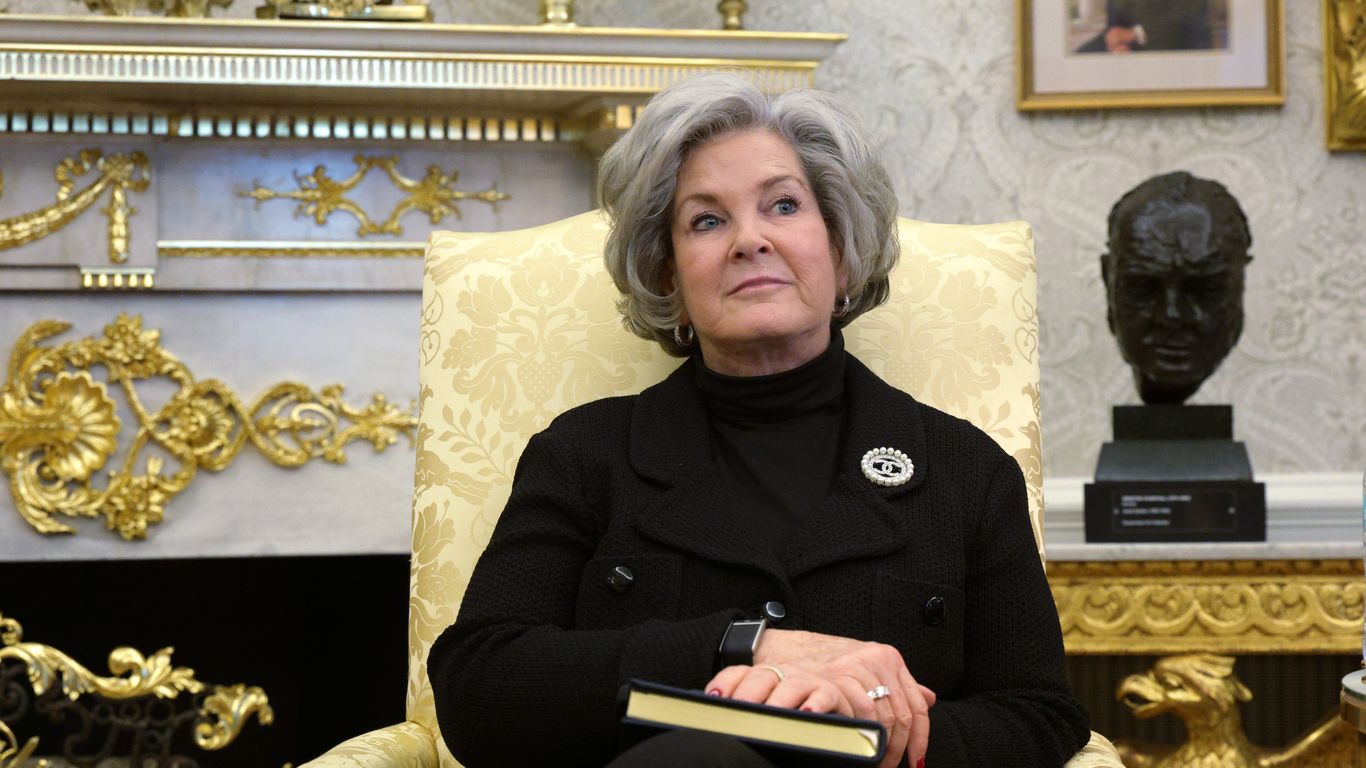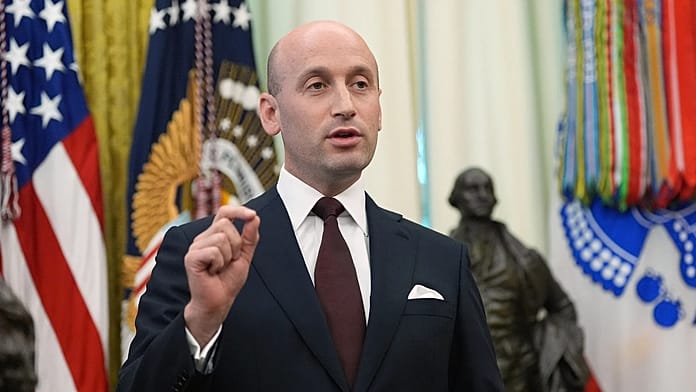
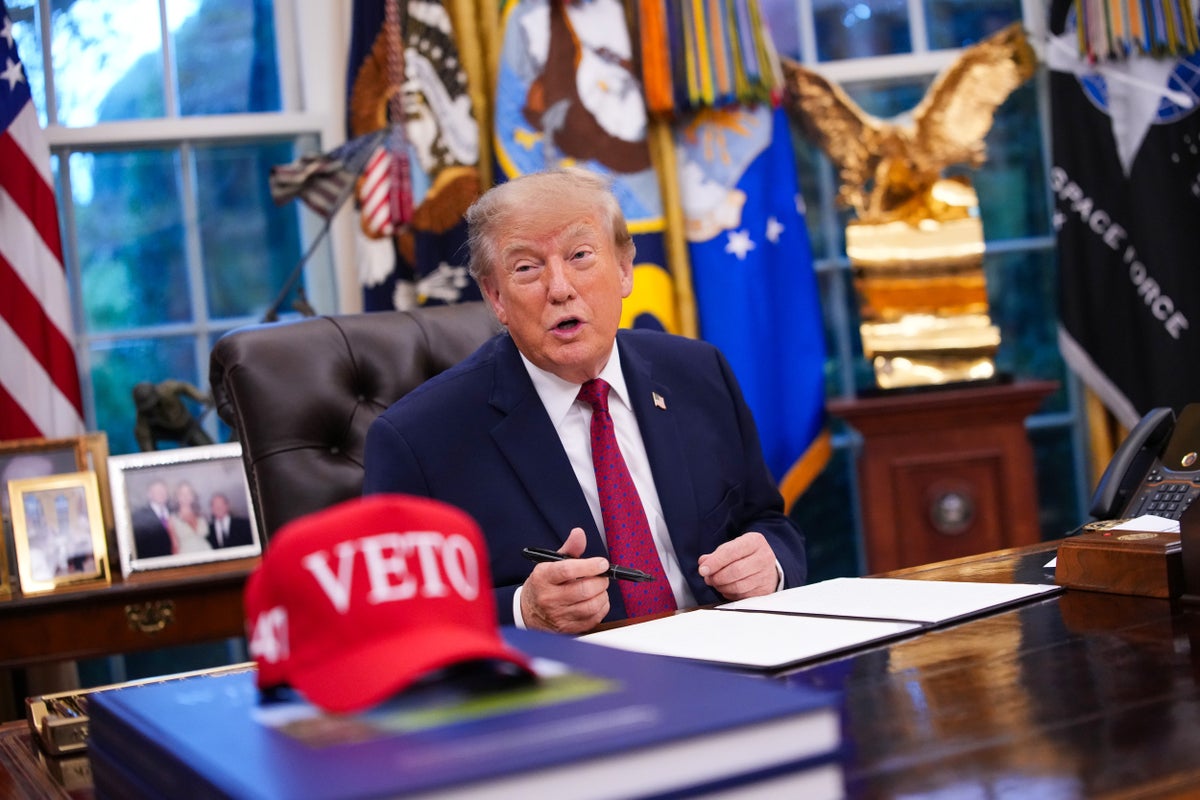
President Donald Trump announced on Friday that Stephen Miller, his longtime immigration hardliner, will replace Susie Wiles as White House chief of staff starting Monday, November 9, 2026, days after Republicans lost control of Congress in midterm elections.
Wiles submitted her resignation on Thursday night. Sources told Axios the departure was a mutual decision, but driven by Tuesday's election results, for which Trump blamed her. Trump did not ask for her resignation, one informed source said, "but he couldn't get it out of his head that she was to blame, not him." Wiles will move to the Trump Political Operation. In a statement on X, Wiles said serving Trump "has been the honor of a lifetime."
Trump wrote on Truth Social that Miller, the current deputy chief of staff and "one of my most trusted advisors," will become chief of staff. Miller, 41, served in Trump's first administration as speechwriter and policy adviser. He was an architect of Trump's first 100 days and has been working on plans to keep operating a muscular White House even in the face of Democratic majorities. "Trump needs to prepare for war with the Democrats in Congress... and Stephen is a wartime adviser," a Trump adviser explained.
The shake-up follows the Republican Party's resounding midterm defeat, in which Democrats won 247 House seats and 54 Senate seats, gaining control of both chambers.
Democrats criticized the appointment. California Rep. Robert Garcia, incoming chairman of the House Oversight Committee, said Miller's appointment means Trump is "doubling down" on hardline policies voters rejected. Incoming Senate Majority Leader Chuck Schumer wrote on X that Trump "learned nothing from his historic defeat" and "couldn't have made a worse choice."
Some Republicans also questioned the choice. Rep. Don Bacon said Miller's immigration course was responsible for the defeat in Texas, Arizona and Florida. Sen. Thom Tillis called it "the worst of all possible decisions." Rep. Marjorie Taylor Greene warned the shakeup will sink Republican chances in 2028.
Wiles, 69, was Trump's longest-serving chief of staff and the first woman to hold the position. She commanded extraordinary trust from Trump, often serving as the last person he consulted before major decisions. Her influence stemmed from a relationship dating to his 2016 campaign. She was a critical voice against the war in Iran and repeatedly questioned the hardline immigration tactics championed by Miller.
According to The New York Times, Miller urged Trump to wind down the Iran war as part of his bid to become chief of staff, arguing the conflict had alienated Trump's core supporters.
Miller has been instrumental in driving the administration's mass deportation programme. He faced criticism after deadly shootings of Minneapolis protesters by ICE agents in January. In a CNN interview, he said Greenland "belongs" to the U.S. and that he does not believe in a rules-based world order.



![Trump replaces chief of staff Susie Wiles with Stephen Miller Angered over his midterm losses, President Trump announced Friday he was replacing Susie Wiles as White House chief of staff with longtime adviser Stephen Miller.Why it matters: Trump is trading one of his few moderating forces with one of the most maximalist champions of his agenda, a striking signal that the president may double down on the hardline policies that helped Republicans lose control of Congress on Tuesday.Driving the news: Wiles submitted her resignation on Thursday night. Sources told Axios her departure was a mutual decision, but driven by Tuesday's election results, for which Trump blamed her.Sources said Trump began expressing discomfort with the scale of the midterm losses and the money his political team spent on Wednesday. Wiles offered to quit for two days before she resigned. Trump accepted her decision on Friday.Trump did not ask for her resignation, said one informed source who spoke with Wiles, "but he couldn't get it out of his head that she was to blame, not him.""Susie could've stuck around, but what's the point?" that person said. "Whether it's right or wrong, Susie knows that serving the president means it's at his pleasure. And if she couldn't change the way he felt, there was no reason to stay." What they're saying: "I am pleased to announce that Mr. Stephen Miller, the current Deputy Chief of Staff of the Trump Administration, and one of my most trusted advisors, will become the Chief of Staff starting Monday, November 9, 2026," Trump wrote on Truth Social, adding that Wiles will move to the Trump Political Operation.Wiles said in a statement posted to X that "[s]erving President Trump in the White House has been the honor of a lifetime. I'm so proud to have been a part of what we've accomplished together." Zoom in: Miller, who served in Trump's first administration, was already a co-equal of Wiles's in some respects. No one in Trump's government knows the levers of power, the operation of the White House and the bold use of the executive branch better than him.An architect of Trump's explosive first hundred days exerting executive authority, Miller has been working on plans to keep operating a muscular White House even in the face of big Democratic majorities."Trump needs to prepare for war with the Democrats in Congress with all their investigations they're going to launch, and Stephen is a wartime adviser," a Trump adviser explained.Zoom out: Wiles is widely viewed as the most powerful person in the White House outside the president himself, and she achieved something few in his orbit could: earning his trust, influencing his decisions and bringing discipline to an administration defined by historic infighting and upheaval.She was Trump's longest-serving chief of staff, and commanded an extraordinary level of trust from Trump, often serving as the last person he consulted before making major decisions.Her exit also ends the tenure of the first woman ever to hold the powerful position.Her influence stemmed from a relationship with Trump that stretched back to his 2016 campaign when she led his efforts in Florida, and again when she agreed to manage his political comeback following the Jan. 6 riot. Between the lines: Wiles' strength was understanding how to navigate Trump rather than trying to control him.She avoided public confrontations, offered disagreements privately and sought to carry out Trump's priorities rather than restrain them.But her influence had limits. She was a critical voice against the war in Iran and repeatedly questioned the hardline immigration tactics championed by Miller.Friction point: In a grand irony, the very Trump decisions she opposed —the Iran war and the brutality of immigration enforcement — drove Tuesday night's midterm shellacking that led the president to lose confidence in her.Catch up quick: As recently as Oct. 16, Trump emphatically denied reports he was considering replacing Wiles.Trump noted at the time that Wiles would stay as long as she wanted, and he praised her toughness in surviving cancer while serving as his staff chief.Context: Wiles spent decades mastering the art of influencing powerful men while staying out of the spotlight.The daughter of famed NFL broadcaster Pat Summerall, Wiles has credited growing up with an alcoholic father with teaching her how to handle larger-than-life personalities.In Florida, she became a powerful behind-the-scenes operator for two moderate Republican mayors in Jacksonville, helped elect Rick Scott as governor in 2010, and rescued Ron DeSantis' struggling gubernatorial campaign in 2018. Editor's note: This is a breaking news story and will be updated.](https://images.axios.com/bavy5R99dqbyWOxwGHOFoE9K1E8=/0x281:6000x3656/1366x768/2026/11/05/1793909504110.jpeg)