eldiario.es
El nido nazi reducido a cenizas: Alemania debate sobre cómo reconstruir el refugio alpino de Hitler Con el auge de la extrema derecha en Alemania de fondo, los expertos están divididos sobre qué hacer ahora con el 'Nido del Águila' del dictador tras el incendio del pasado octubre: si es mejor restaurarlo o dejarlo en ruinasUn detenido en Alemania por el incendio del 'Nido del Águila', la casa de Hitler en los Alpes bávaros
La que era una de las últimas reliquias arquitectónicas de la dictadura de Adolf Hitler fue concebida para proyectar un poder indomable. Hace dos semanas, quedó reducido a cenizas tras un incendio provocado. Ahora, el debate está abierto en Alemania: ¿Volverá a construirse? ¿Debe reconstruirse?
El histórico refugio nazi en la cima de una montaña, conocido como el Nido del Águila, se alza sobre un pico alpino a una altitud de 1.834 metros, con unas impresionantes vistas del sur de Alemania y Austria. En alemán, su diseño se conoce como "Überwältigungsarchitektur", un término en alemán que se traduce literalmente como arquitectura de la intimidación o de la dominación.
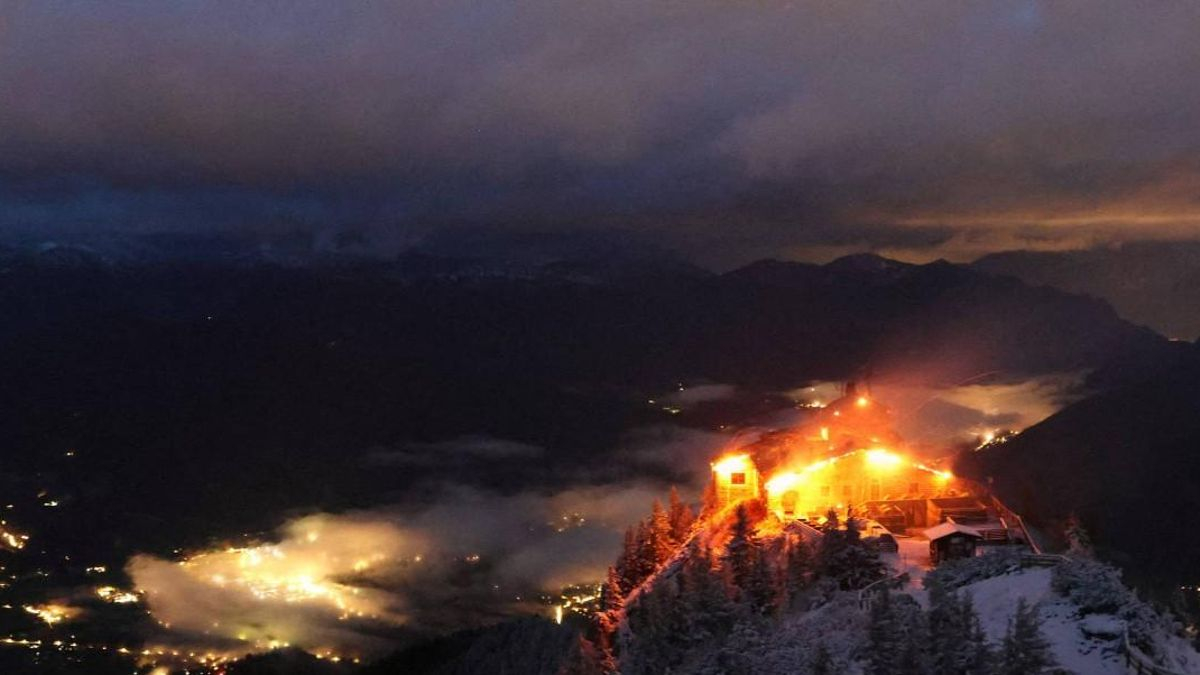
A pesar de los esfuerzos de 200 bomberos que lucharon durante toda la noche contra el fuego, solo quedan ruinas carbonizadas del antiguo albergue, una atracción turística y lugar de conmemoración que ahora ha quedado destruido en el fuego que se inició el 23 de octubre. Desde entonces, permanece cerrado indefinidamente.
"Incluso si una bomba de la fuerza aérea británica hubiera impactado en el edificio el 25 de abril de 1945, como ocurrió con la mayoría de las demás estructuras de lo que entonces era la "zona prohibida del Führer" en el Obersalzberg, cerca de Berchtesgaden, la antigua casa de té de Hitler; difícilmente habría sufrido daños más graves que los causados por el incendio", escribió el periódico Süddeutsche de Múnich.
El incendio ha desencadenado durante estas últimas semanas un debate en Alemania sobre si se debe reconstruir este lugar tóxico para la próxima generación de visitantes y, en caso afirmativo, cómo hacerlo, mitigando al mismo tiempo el riesgo de crear un santuario para los neonazis, que nunca ha estado del todo erradicado.
La casa Kehlsteinhaus, conocida como el Nido del Águila, tras un incendio. El refugio de Hitler está localizado en las montañas de Berchtesgaden, en el estado de Baviera, al sur de Alemania.
Si bien los lugares asociados con las víctimas de Hitler, incluidos los antiguos campos de concentración, se conservan a perpetuidad, la cuestión sobre cómo tratar los objetos relacionados con los nazis sigue siendo compleja, sobre todo teniendo en cuenta el auge de la extrema derecha que se está viviendo en la actualidad en Alemania y, en general, en toda Europa.
Las autoridades locales creen que el incendio fue provocado intencionadamente por un sospechoso de 33 años con antecedentes de enfermedad mental. El lugar, propiedad del estado alemán de Baviera, atrae a más de 300.000 personas cada año, pero ese día estaba cerrado al público. No hubo heridos.
El ministro de Cultura del estado de Baviera, Markus Blume, anunció que se creará una comisión de expertos en conservación del patrimonio, construcción y la cultura alemana de la memoria del Holocausto para ayudar a determinar el futuro del Nido del Águila. Dados los vínculos inextricables del edificio con el régimen nazi y sus crímenes, Blume afirmó que "cualquier reconstrucción debe hacer justicia a esta responsabilidad histórica".
Todo el proyecto costó unos 130 millones de euros
Esta maravilla de la ingeniería alpina, cuya construcción necesitó a 3.800 trabajadores durante algo más de un año, se conoce más prosaicamente en alemán como "Kehlsteinhaus", por la montaña en la que se asienta. Tras un trayecto en autocar por carreteras serpenteantes que atraviesan cinco túneles, los visitantes subían durante 41 segundos en un ascensor revestido de latón, construido en la roca, para llegar a su entrada.
"El prestigioso proyecto y la carretera que conduce hasta él costaron unos 30 millones de marcos del Reich, lo que equivale hoy a unos 130 millones de euros actuales", afirma el historiador especializado en la época nazi Felix Bohr, autor del libro Before the Downfall: Hitler's Years in the Wolf's Lair (Antes de la caída: los años de Hitler en la Guarida del Lobo), que se publicará en el Reino Unido en noviembre. "A Hitler le encantaba la arquitectura que hacía que los demás parecieran pequeños. Insistía en participar en la planificación y la construcción de edificios propagandísticos", explica.
La residencia se terminó de construir en 1938 y se utilizó principalmente para recibir e impresionar a invitados de Estado, diplomáticos y periodistas extranjeros selectos. A poca distancia, bajando la montaña, en el complejo de Obersalzberg, se encontraba la residencia personal de Hitler, el Berghof, donde pasó aproximadamente una cuarta parte de sus doce años en el poder.
"Aquí se tomaron decisiones importantes sobre leyes y delincuencia, sobre la guerra y el genocidio", afirma Sven Keller, director del Centro de Documentación de Obersalzberg, un centro educativo situado en el lugar. "El paisaje montañoso que rodea el lugar se utilizó como telón de fondo para la construcción de la imagen de Hitler como Führer. Ofrecía unas vistas espectaculares e impresionantes, y demostraba la destreza técnica necesaria para someter incluso a este entorno natural tan agreste", detalla.
En su interior contaba con muchos de los elementos de ostentación nazi, como el mármol de Untersberg donado por Mussolini, espejos venecianos y mullidos sillones de cuero verde que recordaban a una casa señorial inglesa.
Según Bohr, Hitler visitó el Nido del Águila sólo 14 veces hasta 1939 y después dejó de hacerlo por el estallido de la Segunda Guerra Mundial, ya que, ante aquellas circunstancias, la casa de té no encajaba con la imagen de guerrero y estadista que deseaba proyectar. Sin embargo, sus colaboradores más cercanos, incluida Eva Braun, siguieron utilizándola con frecuencia.
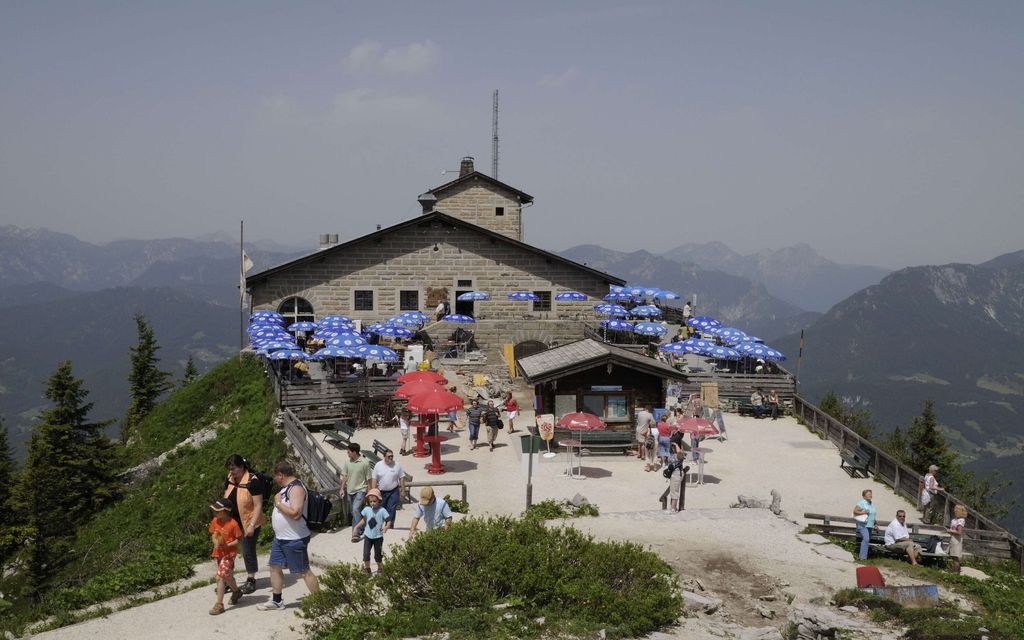
La Kehlsteinhaus, también conocida como Nido del Águila, el refugio de Hitler en los Alpes.
Tras la guerra, Obersalzberg se convirtió en un centro de recreo para las tropas estadounidenses de ocupación, pero los últimos vestigios del Berghof fueron derribados y se plantaron cientos de árboles en su lugar, una decisión fatídica que ha servido de advertencia. "Los estadounidenses y el estado de Baviera intentaron evitar que se convirtiera en un lugar de peregrinación para nazis y admiradores de Hitler. No lo consiguieron. De hecho, un lugar oculto en el bosque resulta aún más interesante y misterioso", afirma Keller. A menudo se encontraban esvásticas nazis talladas en la corteza de los árboles.
Según él, un giro de 180 grados hacia una señalización clara del lugar y la revelación de su historia, incluyendo su papel en el aparato de poder nazi, demostró ser un enfoque más acertado. "El acceso público genera transparencia, mientras que las barreras o vallas fomentan los rumores y las leyendas", explica Keller. "Hoy en día, un popular sendero público atraviesa el lugar, y se realizan actividades cotidianas como el senderismo que evita que se convierta en un espacio sagrado (para los neonazis)", añade.
Keller asegura que la transparencia debería ser la consigna de cara al futuro. "No puedo imaginar que los responsables opten por una simple reproducción de la arquitectura nazi, pero tampoco se puede dejar como una ruina porque suelen resultar aún más fascinantes", señala.
"En cambio, deberíamos encontrar maneras de integrar los restos materiales con la nueva información y la educación, mostrando las distintas capas temporales, incluido su uso como destino turístico desde la década de 1950. El incendio ha añadido una nueva capa a la historia de Obersalzberg, y esto también debería quedar visible", defiende. .
También habrá que tener en cuenta las nuevas realidades políticas en Alemania y Austria, donde el partido de extrema derecha Alternativa para Alemania (AfD) y el Partido de la Libertad lideran sus respectivas encuestas nacionales, recordó.
Bohr explica que este contexto tan preocupante le ha llevado a oponerse a cualquier reconstrucción del Nido del Águila: "La megalomanía de Hitler debe permanecer en ruinas. Mi sugerencia sería preservar la estructura restante en la medida de lo posible y utilizarla para transmitir la historia del lugar". "Especialmente teniendo en cuenta la fuerza de la AfD y el auge del extremismo de extrema derecha en Alemania, el objetivo debería ser hacer frente a la ideología nazi, no restaurar sus decorados", asegura.
about 13 hours ago