
NATO summit in Ankara avoids major conflict but leaves tensions over defense spending and Ukraine aid unresolved
Story Timeline
3 months · 12 summary articles
The NATO summit is taking place in Ankara, Turkey, on July 15, 2026. The summit has been described as a success in avoiding major conflicts, but underlying tensions and structural issues within the alliance remain.
Defense spending was a key topic at the summit. The Trump administration highlighted progress in defense spending by NATO allies. Ambassador Matthew Whitaker, the permanent representative of the US to NATO, stated that the alliance is working towards a European-led NATO, which would allow the United States to focus on global issues. "It’s a process and we need to make sure that this first year of success continues now as our allies become more capable and spend more money on their own defense, and therefore make NATO stronger collectively," said Whitaker .
Turkish President Recep Tayyip Erdogan came closer to the lifting of U.S. sanctions that might allow Turkey to finally buy F-35s. This was a significant development at the summit, as it indicates a potential thaw in relations between Turkey and the United States .
The situation in Ukraine was also a major focus. Discussions included the need for more air defense systems for Ukraine. President Trump suggested that the US would approve licenses for the production of Patriot air defense missiles to help Ukraine, which is continuing to face attacks from Russia as it strikes deeper into Russian territory in response. Whitaker said he will be continuing the conversations as industry and the Pentagon also coordinate on the effort. "I'm working together with many people in the administration and in industry to effectuate the president's intent on that. But you know, there's a lot of work to do when you're dealing with licenses and manufacturing overseas, and so we're going to take it a step at a time," Whitaker said .
The joint communique issued at the end of the summit contained all the correct platitudes and buzzwords, including the allies' "ironclad commitment to [their] collective defense under Article 5 of the Washington Treaty" and their dedication to a "360-degree approach to deterrence and defense." However, the communique did not set a date for a meeting next summer, reflecting the increasing common wisdom that NATO summits in the Trump era present little more than an opportunity for strife and presidential blow-ups from the U.S. contingent .
The summit also highlighted the structural issues within NATO. Military alliances are not ends in themselves; they are simply a means by which states seek to make themselves more secure in the face of a common threat. And no matter your view of Russia today, NATO’s members do not face the same clarifying, focus-the-mind threat environment that existed when the alliance formed back in 1949 .
Reactions from various leaders and officials were mixed. Latvian President Edgars Rinkevics said that the summit provided Latvia with assurances regarding the importance of collective defense commitments . Canadian Prime Minister Mark Carney told Latvian President Edgars Rinkevics that Canada will extend its Operation Reassurance mission until 2031 .
The broader geopolitical context includes relations with Russia and Iran. The summit took place without any prospect of a ceasefire in Iran or Ukraine, proof that the US’ powers of deterrence are not as great as previously thought .
The summit also saw discussions about Europe's defense build-up and the need for Europe to take more responsibility for its own defense. French President Emmanuel Macron announced a revised goal to double France's defense budget by 2027, bringing forward an initial 2030 target .
The summit in Ankara was a tactical readjustment, one that barely managed to renegotiate burden-sharing agreements, particularly with regard to Ukraine. For Europe, the result is that it remains lost. Unlike NATO Secretary-General Mark Rutte, the continent continues to resist (or defy) Trump. However, it is also unable to make progress towards federal integration – a vital step towards building its own defense capabilities .
The summit also highlighted the tensions caused by U.S. President Donald Trump. Trump's continued, baseless threats to annex Greenland and moves to withdraw troops from Europe have antagonized key European leaders. The Ankara summit should have served to improve relations between the US and its European allies, but it has failed to effectively address the damage of previous meetings .
Albania to host NATO summit as alliance eyes Balkan security. Tirana's selection to host the 37th NATO summit signals the alliance's renewed strategic focus on the Western Balkans, placing Prime Minister Edi Rama at the center of efforts to strengthen regional security and counter Russian influence while accelerating Albania's path toward European Union membership .
Follow us for live European news
- 1
- 1
- 1
- 1
- 1
- 1
- 1
3 further sources not geolocated
Articles

NATOs Ankara Summit Only Kicked the Can Down the Road
gdeltproject.org · 2 months ago
Die Türkei setzt nicht auf Friedensdiplomatie Auch wenn sich das Land gerne als Vermittler oder Gastgeber wie beim Nato-Gipfel präsentiert: Ankara geht es alleine um Machtausbau. Pikant wird es dort, wo Vermittlung und Parteinahme ineinander übergehen
der standard · 2 months ago
Trump administration highlights NATO allies progress in defense spending pledge
gdeltproject.org · 2 months ago
DN: Nationella säkerhetsrådgivaren glömde anteckningsbok under Natomötet Sveriges nationella säkerhetsrådgivare, Niclas Kvarnström, glömde kvar en anteckningsbok under Natomötet i Turkiet förra veckan.Det rapporterar Dagens Nyheter.
expressen · 2 months ago
NATO Is Splitting in Two Mark Carney and Mark Rutte offer competing visions for the future of the trans-Atlantic alliance.
foreignpolicy.com · 2 months ago

Two Competing Visions of NATOs Future #Europe #homepage_regional_europe #NATO
mastodon bot · 2 months ago
Türkiye, Egypt defense ministers hold talks in Ankara National Defense Minister Yaşar Güler welcomed Egyptian Defense Minister Lt. Gen. Ashraf Salim Zahir in Ankara on Monday, hosting his counterpart with a formal military ceremony at the ministry headquarters before the two held closed-door negotiations on bilateral matters.
yenisafak · 2 months ago
Türkiyes warships dock at Latakia in first visit since Syrian war The Turkish National Defense Ministry announced Monday that Turkish Naval Forces Command vessels have docked at Syrias Latakia Port in the first such visit since the Syrian civil war began, with Admiral Ercument Tatlioglu leading the delegation aboard the TCG Istanbul.
yenisafak · 2 months ago
Albania to host NATO summit as alliance eyes Balkan security Tiranas selection to host the 37th NATO summit signals the alliances renewed strategic focus on the Western Balkans, placing Prime Minister Edi Rama at the center of efforts to strengthen regional security and counter Russian influence while accelerating Albanias path toward European Union membership.
yenisafak · 2 months ago
Macron sets accelerated target to double Frances defence budget by 2027 French President Emmanuel Macron has announced a revised goal to double the countrys defence budget by 2027, bringing forward an initial 2030 target. He stated military spending would reach €64 billion, emphasising the need for continued investment amid growing European security challenges.
yenisafak · 2 months ago
Türkiye says EUs new Cyprus envoy appointment remains an internal matter Türkiye has described the European Commissions decision to appoint a new special envoy for Cyprus as an internal EU matter, while criticising the blocs approach to the island. Ankara argued the EU lost its neutrality on the issue when it admitted the Greek Cypriot administration in 2004.
yenisafak · 2 months ago
Turkish envoy says naval cooperation with Syria expanding Turkish Ambassador to Damascus Nuh Yilmaz said on Tuesday that cooperation and solidarity between Türkiye and Syria are developing in the naval field, as a high-level military delegation led by the naval forces commander visited the Port of Latakia where Turkish vessels were docked.
yenisafak · 2 months ago
European Commission President Visits Azerbaijan
gdeltproject.org · 2 months ago
Trump at the Atlantic Council: Impressed by the leaders, I felt love in the room. NATO relaunches on Europe and missile defense
gdeltproject.org · 2 months ago
Letter: Nato would be backing a winner with Kyiv From Eugen Solf, Kronberg, Germany
financial times · 2 months ago

North Koreas Missiles: What You Need to KnowExplore North Koreas missiles program: the latest launches, tech specs, and what these tests mean for regional security. Read more here. #WorldNews #ForeignPolicy
mastodon bot · 2 months ago

Notre nouveau hors-série : lAtlas des communications Aujourdhui, 99 des communications intercontinentales passent par des câbles sous-marins. Cest banal, quotidien. Pourtant ce réseau physique toujours en expansion est vulnérable, convoité, au cœur des enjeux géopolitiques. Cest ce que décrypte notre Atlas des communications, en vente tout lété chez votre marchand de journaux.
courrier international · 2 months ago
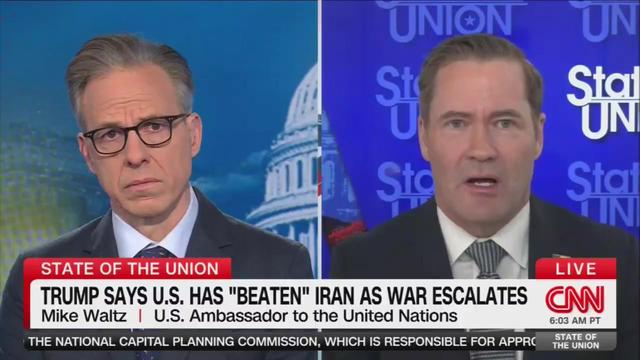
Mike Waltzs "Dominant Victory" Claim AssessedWas Mike Waltzs claim of a "dominant victory" accurate? We assess the context and analyze the geopolitical implications of his statement. #WorldNews #ForeignPolicy
mastodon bot · 2 months ago

Editorial : Summit shows NATO alliance will endure with or without U . S .
gdelt bot · 2 months ago
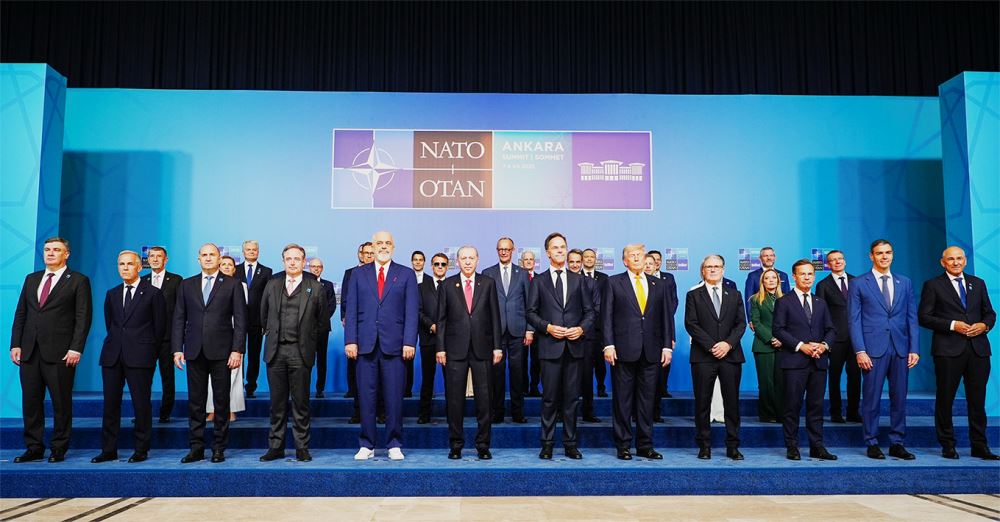
Ankarada NATO Zirvesi - 1 - YENİ ASYA
gdelt bot · 2 months ago
NATO summit begins in Ankara today - The Baltic Times RIGA - The NATO summit will take place in the Turkish city of Ankara today and tomorrow. Latvian President Edgars Rink......
baltic times · 2 months ago
Erdogan receives Pakistan army chief at Ankara Airport Turkish President Recep Tayyip Erdogan on Tuesday received Pakistans army chief Field Marshal Syed Asim Munir at Ankara Airport, with Vice President Cevdet Yilmaz and senior security officials also attending the closed-door talks focused on bilateral defense cooperation and regional security developments.
yenisafak · 2 months ago
Türkiye showcases counter-drone tech at NATO summit Türkiyes domestically developed electronic warfare platforms provided continuous protection against unmanned aerial threats during the recent alliance meeting in the capital, as Ankara advances defense export ambitions and NATO launches a multibillion-dollar counter-drone initiative.
yenisafak · 2 months ago
Canada will extend Operation Reassurance mission until 2031 - The Baltic Times ANKARA - Canadian Prime Minister Mark Carney told Latvian President Edgars Rinkevics on Wednesday during the NATO summit in Ankara that Canada w......
baltic times · 2 months ago
NATO summit provided Latvia with assurances regarding importance of collective defense commitments - Rinkevics - The Baltic Times RIGA - Latvias security has been strengthened by the outcome of the NATO summit in Turkey, President Edgars Rinkevics said on social media,......
baltic times · 2 months ago
Eurobarometer: Stronger action needed on defense - The Baltic Times TALLINN - In light of current global challenges, Europeans are calling for greater democratic participation, stronger defense capabilities, and ......
baltic times · 2 months ago
Nato Ankara Summit: why only a federal, unified EU can mount its own credible military defence - 15-Jul-2026
gdeltproject.org · 2 months ago

Trump administration highlights NATO allies progress in defense spending pledge #Europa #Europe #NATO #OTAN
mastodon bot · 2 months ago
Europes defense build-up is delivering for NATO — and America
gdeltproject.org · 2 months ago
Aliyev Sees Azerbaijan and Central Asias Interests Converging - The Times Of Central Asia
gdeltproject.org · 2 months ago