
Iran launches first direct missile strike on U.S. forces in Middle East: all intercepted

Story Timeline
2 months · 9 summary articles
The Islamic Revolutionary Guard Corps launched multiple ballistic missiles from Iran in an attempted surprise attack on U.S. forces based in the Middle East on July 28, 2026, at 5:45 p.m. ET, according to the U.S. military's Central Command (CENTCOM). All Iranian missiles were successfully intercepted.
This attack marks the first direct missile strike by Iran on U.S. forces since President Donald Trump paused a two-week bombing campaign on Iran over the weekend. The pause was intended to give diplomatic negotiations another chance, but Trump has threatened to restart strikes if negotiations do not yield results.
In response to the attack, U.S. and Saudi Arabian Armed Forces conducted joint strikes on multiple terrorist logistics and weapons sites across eastern Iraq. These strikes were in retaliation for more than 30 drone attacks launched by Iran-aligned terrorists over the past 72 hours, targeting U.S. forces and Saudi energy infrastructure.
The U.S. military accused Iran’s paramilitary of directing terrorists to attack American forces and Saudi energy infrastructure. “U.S. and Saudi fighter aircraft struck multiple terrorist logistics and weapons sites across eastern Iraq in a strong response” to the Iran-directed attacks, CENTCOM said.
Earlier on Tuesday, Israeli Prime Minister Benjamin Netanyahu met with President Trump at the White House for closed-door talks. Netanyahu described the meeting as “one of the best” they’ve had, and the White House called it “positive and productive.” The meeting was Netanyahu’s first visit since the U.S. and Israel launched a joint war against Iran.
Iran’s Revolutionary Guards later claimed responsibility for firing several ballistic missiles at a U.S. air base and a U.S. military Central Command center in Jordan. The attack was seen as a response to U.S. actions against Iranian interests.
The U.S. military has been on high alert following the attack. “U.S. forces remain vigilant and at a high state of readiness,” CENTCOM stated.
The recent escalation comes after a brief pause in hostilities between the U.S. and Iran. The U.S. had previously conducted airstrikes on Iran for 13 consecutive nights before Trump decided to halt the campaign temporarily.
According to Iran expert Hamidreza Azizi, this attack was the first time Iran has launched a missile attack without being provoked by a prior U.S. or Israeli strike. Azizi suggested that the attack could be a signal to the U.S. not to initiate or join a new military campaign against Iran.
The joint strikes by the U.S. and Saudi Arabia targeted logistics and weapons sites of Iran-backed militant groups in eastern Iraq. Saudi Arabia's defense ministry confirmed its participation in the strikes, stating that the kingdom does not seek escalation but will respond to any aggression it faces.
The U.S. military has reported over 600 attempted attacks on U.S. citizens and facilities in Iraq by Iran-aligned militias between February and April 2026. These attacks have been ongoing, with more than 30 drone attacks in the past 72 hours alone.
The recent attacks have caused oil prices to rise again after a brief decline. The tension in the region has been heightened by these developments, with both sides on high alert.
Follow us for live European news
- 3
- 2
- 2
- 2
- 1
- 1
- 1
- 1
- 1
- 1
- 1
8 further sources not geolocated
Articles

Saudi intercepts drones targeting oil facilities, blames Iran-backed militias Saudi Arabia has intercepted and destroyed several drones targeting oil facilities in the Eastern Province, blaming Iran-backed militias in Iraq. Riyadh said it reserves the right to respond at the appropriate time.
yenisafak · about 2 months ago
.jpg?width=1200&auto=webp&trim=0%2C0%2C0%2C0)
Iran-US war latest: Trumps forces accuse Tehran of ending pause in strikes with surprise missile attack CENTCOM says the Saudi Arabian Armed Forces aided American service members in a separate military effort after Iran-aligned terrorists launched over 30 drone attacks
independent · about 2 months ago

Iran launches surprise ballistic missile attack on U.S. forces in the Middle East Centcom in a post on X said that the attack originated from Iran, but all missiles were intercepted.
cnbc · about 2 months ago

Iran demands Hormuz control as condition for reopening strait deal Iran says it will only reopen the Strait of Hormuz if Oman accepts Tehrans demand for greater control over key shipping lanes. Iranian officials warned that the strategic waterway will remain closed unless a new agreement reflects what they describe as Irans security and sovereignty requirements.
yenisafak · about 2 months ago
US military reports surprise Iranian attack in Mideast The US militarys Central Command (Centcom) has thwarted a surprise Iranian missile attack on US forces in the Middle East, shooting down all ballistic missiles. Centcom also reported that over 30 drone attacks were carried out against US forces and energy infrastructure in Saudi Arabia over the past 72 hours. According to Centcom, these attacks […]
cphpost · about 2 months ago
+++ Iran-Krieg +++: US-Militär wehrt iranischen Raketenangriff auf US-Truppen ab – Ölpreise steigen Iran schlägt Oman Übergangslösung für Straße von Hormus vor +++ Treffen zwischen Trump und Netanjahu im Weißen Haus beendet +++ Ukraine warnt Iran nach Angriff auf Schiff vor Eskalation +++ Der Newsblog.
handelsblatt · about 2 months ago
USA: Attackerat Iran-allierade i Irak
svenska dagbladet · about 2 months ago
Liveblog Irankrieg: USA und Saudi-Arabien greifen „Terroristen im Irak an Bericht über abgewehrten iranischen Angriff auf US-Truppen im Nahen Osten +++ EU verurteilt „Aggression gegen französische Diplomaten in Iran +++ Weitere Hinrichtungen in Iran +++ Trump lobt „sehr tiefgreifende Gespräche – und droht Iran +++ alle Entwicklungen im Liveblog
faz · about 2 months ago
USA melden iranischen „Überraschungsangriff und greifen mit Saudi-Arabien im Irak an Die USA haben neue Raketenangriffe des Irans abgewehrt. Im Gegenzug haben sie „mit dem Iran verbündete Terroristen im Irak ins Visier genommen.
die presse · about 2 months ago
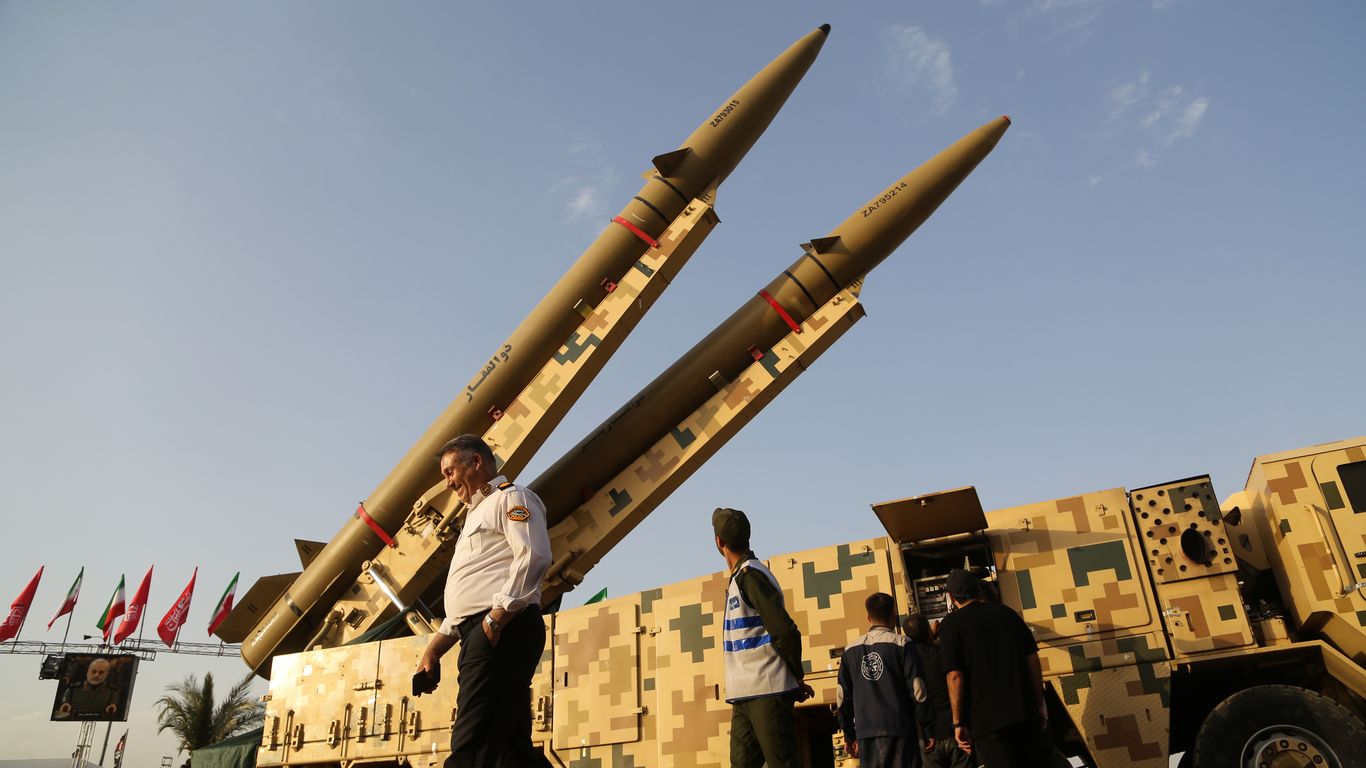
Iran launches missiles at U.S. base for first time since Trump paused strikes Iran launched multiple ballistic missiles toward a U.S. military base in Jordan on Tuesday in what U.S. Central Command described as an "attempted surprise attack." All of the missiles were intercepted, CENTCOM said in a statement.Why it matters: This marks Irans first ballistic missile attack against a U.S. base in the region since President Trump paused strikes against Iran on Friday to give diplomacy another chance.The attack threatens to unravel the fragile pause and could force Trump to decide whether to resume military action.What theyre saying: Trump told Axios on Monday that the U.S. was in "very deep talks" with Iran but warned that he would return to "very strong military action" if diplomacy failed."Not much time," Trump said when asked how long he was willing to give the negotiations. "Either it goes fast or not at all."State of play: CENTCOM said forces from Irans Islamic Revolutionary Guard Corps (IRGC) launched the missiles at 5:45pm ET."U.S. forces remain vigilant and at a high state of readiness," the command said.The latest: CENTCOM said Tuesday evening that U.S. and Saudi fighter aircraft struck multiple logistics and weapons sites in eastern Iraq in response to what it described as more than 30 IRGC-directed drone attacks over the previous 72 hours.Saudi Arabias Defense Ministry later confirmed it participated in the strikes, saying they were coordinated with CENTCOM.CENTCOM said the attacks on U.S. forces were unsuccessful.There were more than 600 attempted attacks on U.S. citizens and facilities in Iraq by Iran-aligned militias between February and April, according to CENTCOM."The IRGC and its terrorist proxies must cease these attacks to avoid further U.S. military response," CENTCOM added.The big picture: Earlier this month, Iran targeted a U.S. airbase in Jordan, killing two U.S. service members in a missile and drone barrage, prompting Trump to intensify what became a 13-night campaign of strikes.Tuesdays ballistic missile attack by Iran came hours after Trump met Israeli Prime Minister Benjamin Netanyahu at the White House for talks focused heavily on Iran. The White House described the meeting as "positive and productive."Editors note: This story has been updated with additional details throughout.
axios · about 2 months ago
🇮🇷❌🇺🇸 — BREAKING: CENTCOM: At 5:45 p.m. ET today, Islamic Revolutionary Guard Corps forces launched multiple ballistic missiles from Iran in an attempted surprise attack on U.S. forces based in the Middle East. All Iranian missiles were successfully intercepted. U.S. forces remain vigilant and at a high state of readiness. @IntelSlava
telegram_Intel Slava · about 2 months ago
#Jordan Iran launched multiple ballistic missiles toward a U.S. military base in Jordan Subscribe to @OSINTdefender Chat room
telegram_OSINTdefender · about 2 months ago
Saudi-Arabien und die USA griffen gemeinsam Ziele im Irak an Zuvor flogen mit dem Iran verbündete Milizen Drohnenangriffe aus dem Irak auf Saudi-Arabien. Die USA wehrten zudem Raketenangriffe aus dem Iran ab
der standard · about 2 months ago
⚡️ — Admin Note: Iran did this for the first time, launching a surprise attack with no ongoing pretext. The only reason is that they may think they are still at war and reject all forms of negotiation. If this is only a one-off attack, it may not lead to a resumption of tit-for-tat attacks between the US and Iran. If Iran continuously attacks in the next hours, then the tit-for-tat attacks will return. @IntelSlava
telegram_Intel Slava · about 2 months ago
🇺🇸🇸🇦❌🇮🇶🇮🇶🇮🇷 — BREAKING: U.S. Central Command says U.S. and Saudi Arabian forces carried out precision airstrikes in eastern Iraq, targeting Iran-aligned groups that it said were directed by the IRGC to attack U.S. forces and Saudi energy infrastructure. ➡️ U.S. and Saudi fighter aircraft struck multiple logistics and weapons sites in response to more than 30 IRGC-directed drone attacks over the previous 72 hours. ➡️ CENTCOM warned that the IRGC and its allied militias must halt the attacks or face further U.S. military action.
telegram_GeoPWatch · about 2 months ago

🔴 BREAKINGIran launches missiles at US forces in JordanIran fired a barrage of missiles targeting US military troops stationed in Jordan. The US military reported successfully intercepting the incoming projectiles, marking a significant escalation following a five-day pause in hostilities.📰 #USA #Military #Geopolitics #GeoWire
mastodon bot · about 2 months ago

Iran Rejects Omani Proposal to Share Strait of Hormuz, Demands More Control Mediators see Irans position on the critical waterway as a setback to efforts to revive U.S.-Iran peace deal.
wsj · about 2 months ago
Iran attackerar USA: Skjutit ned robotar
expressen · about 2 months ago
Iran missiles target US forces in Jordan after a five-day pause in war The US military says it has successfully intercepted a barrage of missiles fired by Iran at its troops in Jordan.
aljazeera · about 2 months ago
Live: US and Saudi Arabia launch strikes on Iraq, target Iran allies US and Saudi warplanes carried out strikes on Tuesday against Iran-backed militants in Iraq who launched more than two dozen drone attacks in recent days, the US military said. Meanwhile, Irans Revolutionary Guards said they struck and halted three oil tankers in the Strait of Hormuz early Wednesday. Follow our live blog for the latest developments. 👉 Read more:
telegram_France 24 · about 2 months ago
Iranüberblick: USA greifen proiranische Milizen im Irak an, Iran beschießt US-Militär Zusammen mit Saudi-Arabien attackieren die USA Ziele im Irak. Ein »Überraschungsangriff« auf US-Truppen sei abgewehrt worden, meldet das US-Militär. Die Nacht
die zeit · about 2 months ago
Iran-US war latest: American military intercepts Tehrans latest surprise ballistic missile attack CENTCOM says the Saudi Arabian Armed Forces aided American service members in a separate military effort after Iran-aligned terrorists launched over 30 drone attacks
independent · about 2 months ago

🟠 UPDATETrump pauses Iran bombing campaign amid strategic reassessmentUS Central Command intercepted multiple ballistic missiles fired by Iran in an attempted surprise attack on US forces in the Middle East.📰 #USA #Military #Geopolitics #GeoWire
mastodon bot · about 2 months ago
Saudi Arabia, US carry out strikes on Iran-backed groups in Iraq Riyadh says its targeted attacks were done in coordination with the US military.
aljazeera · about 2 months ago

US thwarts an Iranian missile attack and launches strikes with Saudi Arabia against militias in Iraq
news.yahoo.com · about 2 months ago
Iran war live: US, Saudi forces attack Tehran-aligned groups in Iraq Attacks come as Saudi Arabia intercepts drones and Iran warns of any action to maintain its control of Hormuz.
aljazeera · about 2 months ago
Slo tilbake mot droneangrep: USA og Saudi-Arabia råka mål i Irak USA og Saudi-Arabia gjennomførte presisjonsangrep i Irak mot Iran-støtta grupper tysdag, melder den amerikanske militærkommandoen for Midtausten, CENTCOM, på X. Kommandoen opplyser at gruppene har vorte beordra av Revolusjonsgarden i Iran til å angripe amerikanske mål og saudiarabisk infrastruktur. Amerikanske og saudiarabiske kampfly råka fleire av logistikk- og våpenanlegga til terroristane over heile det austlege Irak, som svar på Revolusjonsgarden sine droneangrep dei siste 72 timane. Forsvarsdepartementet i Saudi-Arabia melde tysdag kveld at dei hadde stansa fleire dronar som vart avfyrte mot eit av oljeanlegga deira, og skuldar Iran-støtta grupper i Irak for å stå bak.
nrk · about 2 months ago

BREAKING US and Saudi warplanes have carried out strikes against Iran-backed militants in Iraq who launched more than two dozen drone attacks in recent days, US military says
bluesky_AFP English · about 2 months ago

US military says US, Saudi forces struck sites of Iran-backed groups in Iraq reut.rs/4vYajqn
bluesky_Reuters · about 2 months ago
Saudi Arabia vows decisive response as Iraq-launched drones hit oil sites again Saudi Arabias cabinet has vowed a decisive response to attacks on its oil facilities and shipping by Iran-aligned groups in Iraq and Yemen. Hours later the defence ministry intercepted a second wave of drones launched from Iraq.
intellinews · about 2 months ago