
US strikes Iran for ninth straight night targeting missile and drone sites
Story Timeline
2 months · 20 summary articles
The United States has conducted nine consecutive nights of airstrikes on Iran, targeting military command centers, missile and drone launch sites, coastal surveillance systems, and maritime capabilities. The strikes are in response to what the US describes as Iranian aggression, including attacks on US troops in Jordan and Iraq.
On Sunday, the US military announced that it had completed the ninth consecutive night of strikes on Iran. The strikes targeted military command centers, missile and drone launch sites, coastal surveillance systems, and maritime capabilities to "further diminish Iran’s ability to attack commercial vessels and civilian mariners transiting the Strait of Hormuz," according to a statement from the US Central Command.
The latest strikes came a day after a US soldier was killed in what was described as the controlled detonation of unexploded Iranian ordnance in northern Iraq. Meanwhile, air raid sirens sounded in Bahrain, and Kuwait said its air defenses responded to hostile drones as Iran retaliated against America's Gulf allies in the wake of the latest strikes.
Iran’s Revolutionary Guard warned that “not a single drop of oil and gas” would pass through the Strait of Hormuz if what it called US “aggression” continued. The warning came after the Iranian military said it disabled two oil tankers trying to cross the strategic waterway without its permission, though the claim could not be independently verified.
The US military said the service member was killed in Iraq on Saturday during the “controlled detonation” of a downed Iranian drone. Earlier, the military said its strikes targeted Iran's paramilitary Revolutionary Guard to retaliate for Friday's killing of troops in Jordan. One service member was missing after that attack, and the military's new statement said “unidentified remains” were found Sunday and were being examined.
Since the war began, 17 U.S. service members have been killed. The renewed exchanges of fire, now in their second week, have seen the U.S. target bridges, water desalination plants and electrical facilities in Iran. Tehran has hit U.S.-allied countries throughout the Middle East. Kuwait, Jordan and Bahrain again activated air defenses for incoming Iranian drones and missiles. Israel warned that missiles launched toward neighboring Jordan could cause fire to spill over into Israeli territory for the first time in weeks.
The U.S. military’s Central Command said it hit “Iranian military coastal surveillance and air defense facilities, maritime capabilities and missile and drone storage sites.” It said the attack was designed to degrade Iran's ability to control the strait and “swiftly punish Islamic Revolutionary Guard Corps forces,” a power base in Iran's theocracy that controls its ballistic missile arsenal.
Footage released by the U.S. military appeared to show strikes carried out by fighter jets and by Tomahawk cruise missiles launched from the sea. One target site appeared to be in a valley of a mountainous region. The Guard often has missile bases and other military equipment tucked into mountain ranges.
Iran’s atomic energy agency said U.S. strikes targeted the construction site of a planned nuclear power plant in the southwest, state television reported. Satellite images from Planet Labs PBC of the Darkhovin nuclear plant site showed earth clearing but little construction as of July 9.
Oil prices climbed above $90 a barrel amid fears of further disruption to shipping through the vital waterway.
Follow us for live European news
Articles

US strikes Iran for ninth day; Iran says two oil tankers in Strait of Hormuz exploded and immobilised U.S. forces hit Iran for a ninth consecutive day on Monday as concerns grew over shipping through the Strait of Hormuz after Iran said two oil tankers had exploded and been immobilised. In a statement, U.S. Central Command said it had begun a new wave of strikes aimed at degrading Irans ability to attack commercial […]
cyprus mail · 2 months ago
US Hits Iran For Ninth Night To Honor Fallen Americans, Trump Says As the US-Israeli war with Iran continues to impact and shape the region, journalists from RFE/RLs Central Newsroom and Iranian service, Radio Farda, deliver ongoing updates and analysis.
radio free europe · 2 months ago
U.S. announces another troop death as Israel warns Tehrans attacks are coming close The United States announced another death of a service member as it launched more airstrikes at Iran on Sunday in response to the killing of U.S. troops, and…
japantoday · 2 months ago
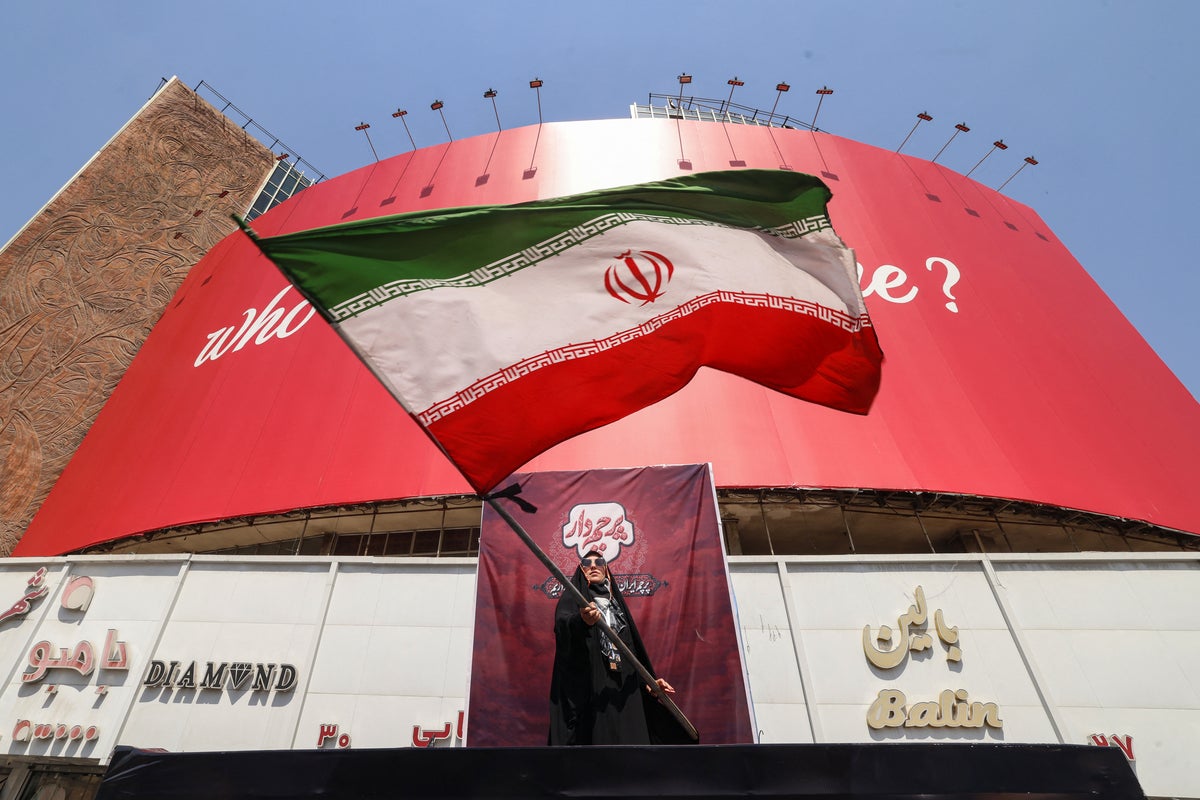
Iran-US war latest: Iran warns not a single drop of oil will pass through Hormuz as US ends ninth night of strikes Oil prices climb above $90 a barrel after Iranian military targets two tankers in Strait of Hormuz
independent · 2 months ago
🇺🇸❌🇮🇷 — 4x explosions reported in Khormuj and Sirik, Iran.
telegram_Intel Slava · 2 months ago
Nionde attacken USA fortsätter attackera Iran
expressen · 2 months ago
US launches new strikes on Iran near Qeshm Island, Bandar Abbas The US Central Command announced early Sunday that American forces had begun launching new airstrikes against Iran, targeting sites near Qeshm Island and Bandar Abbas in retaliation for Iranian ballistic missile and drone attacks that killed American service members in Jordan the previous night.
yenisafak · 2 months ago
Irans army claims large-scale drone attacks on US bases in Kuwait The Iranian army said on Sunday it launched large-scale drone attacks against two US military installations in Kuwait, striking ammunition depots and air-defense systems as retaliatory strikes between Washington and Tehran continued despite a Pakistan-brokered peace initiative.
yenisafak · 2 months ago
Iran-US war latest: US announces ninth night of strikes after service member dies in controlled explosion in Iraq Irans supreme leader warns US will receive unforgettable lessons if it keeps attacking country
independent · 2 months ago
🇺🇸❌🇮🇷 — U.S. Central Command (CENTCOM) has announced a new wave of strikes against Iran. Footage shows two U.S. Air Force airstrikes targeting Tabriz in northwestern Iran. @IntelSlava
telegram_Intel Slava · 2 months ago
US launches new strikes on Iran targeting IRGC: CENTCOM US Central Command announced Saturday that American forces conducted fresh airstrikes against Iran, targeting Revolutionary Guard units in retaliation for a deadly missile and drone attack on a base in Jordan that killed two service members.
yenisafak · 2 months ago
US soldier killed in Iraq while disposing of Iranian drone ordnance A US service member was killed and another wounded in northern Iraq while disposing of unexploded ordnance from a downed Iranian drone, CENTCOM said. The military also reported finding unidentified remains in Jordan following a July 17 attack that killed two US personnel.
yenisafak · 2 months ago
🇰🇼❌🇮🇷 — Reports of another missile launch from Kuwait to Iran @GeoPWatch
telegram_GeoPWatch · 2 months ago
🇺🇸❌🇮🇷— Reports of an explosion in Tabriz, Iran. @GeoPWatch
telegram_GeoPWatch · 2 months ago
Attacker mellan USA och Iran – nionde natten USA har genomfört en ny attackvåg mot Iran – för nionde natten i rad.Samtidigt har flyglarm och smällar ljudit i flera länder i Mellanöstern.– Vi slog till mycket hårt mot dem igen, säger USA:s president Donald Trump.
svenska dagbladet · 2 months ago

US launches Iran strikes for ninth day as another American confirmed killed reut.rs/3TudZT7
bluesky_Reuters · 2 months ago
Die Lage in Nahost: Sorge vor Ausweitung des Iran-Kriegs wächst Das US-Militär hat in der bereits neunten Nacht in Folge Ziele im Iran bombardiert. Kuwait und Bahrain vermeldeten Beschuss von iranischer Seite. Ist Washington zu einem größeren Krieg bereit?
handelsblatt · 2 months ago
Irankrieg: US-Militär beendet nächtliche Angriffswelle gegen den Iran Die jüngste Angriffswelle auf den Iran durch das US-Militär ist zu Ende. US-Außenminister Rubio fordert mehr Unterstützung anderer Länder gegen den Iran. Das Liveblog
die zeit · 2 months ago
Middle East live: US launches strikes to punish Iran after troops killed The United States began a new round of airstrikes early Monday targeting Iran after announcing the death of another American service member, and Iran fired missiles toward Jordan that risked widening the conflict into neighboring Israel. Follow our liveblog for the latest updates.
france24 · 2 months ago
+++ Iran-Krieg +++: US-Militär beendet neunte Angriffswelle gegen Ziele im Iran Schiff in der Straße von Hormus in Brand +++ Kuwait wieder unter Beschuss – Alarm in Bahrain +++ Neunte Nacht in Folge – US-Angriffe gegen Iran gehen weiter +++ Der Newsblog.
handelsblatt · 2 months ago
US service member killed during detonation of Iranian drone in Iraq A US soldier has been killed in northern Iraq during a controlled detonation of an Iranian downed drone.
aljazeera · 2 months ago
🇺🇸❌🇮🇷 — CENTCOM Ends Weekend Wave of Strikes Against Iran TAMPA, Fla. — U.S. Central Command (CENTCOM) successfully completed the ninth consecutive evening of strikes against Iran, July 19, at 10 p.m. ET. CENTCOM assets targeted Iranian military command centers, air defense and coastal surveillance sites, maritime capabilities, missile and drone launch sites, and communications networks to further diminish Irans ability to attack commercial vessels and civilian mariners transiting the Strait of Hormuz. The U.S. military is holding Iran accountable at the Commander in Chiefs direction. CENTCOM forces remain highly vigilant, focused, lethal, and ready. @IntelSlava
telegram_Intel Slava · 2 months ago
USA: Nattens angrep mot Iran er avsluttet Det amerikanske militæret sier de har gjennomført nattens angrep mot Iran. Det skriver den amerikanske militærkommandoen for Midtøsten i et innlegg på meldingstjenesten X. Dette er den niende natten på rad USA angriper Iran. Samtidig er det meldt om droneangrep i Kuwait.
nrk · 2 months ago
Krieg in Nahost: Jüngste Angriffe auf Iran laut Trump „zu Ehren getöteter US-Soldaten Die USA hätten Iran in der neunten Nacht in Folge „wieder sehr hart getroffen, sagte US-Präsident Donald Trump.
sueddeutsche · 2 months ago
Bahrain says it repelled multiple Iranian aerial attacks Bahrains Defense Force has said it intercepted and destroyed several aerial attacks launched by Iran, affirming that all its units are at "the highest levels of readiness." The statement came as Iran continues to strike Gulf countries hosting US military assets.
yenisafak · 2 months ago
US attacks disable 116 telecom towers in Irans Hormozgan An Iranian official said US attacks on Friday night knocked 116 telecommunications towers offline in Irans southern Hormozgan province, disrupting landline, mobile phone and internet services in northern Bandar Abbas and Hajiabad as tensions continue to escalate between Washington and Tehran.
yenisafak · 2 months ago
US announces death of another service member, Jordan summons Iranian envoy over attacks A US service member died during a "controlled detonation" of unexploded ordnance from a downed Iranian drone in northern Iraq, the military said Sunday. It followed the killing of two US troops in Jordan late Friday. Jordan on Sunday summoned Irans top envoy in Amman to protest Tehrans attacks on its territory as Iran targeted US allies in the region in retaliation for US strikes across Iran.
france24 · 2 months ago

US renews strikes on Iran after at least two military personnel killed by Iranian attack
news.yahoo.com · 2 months ago
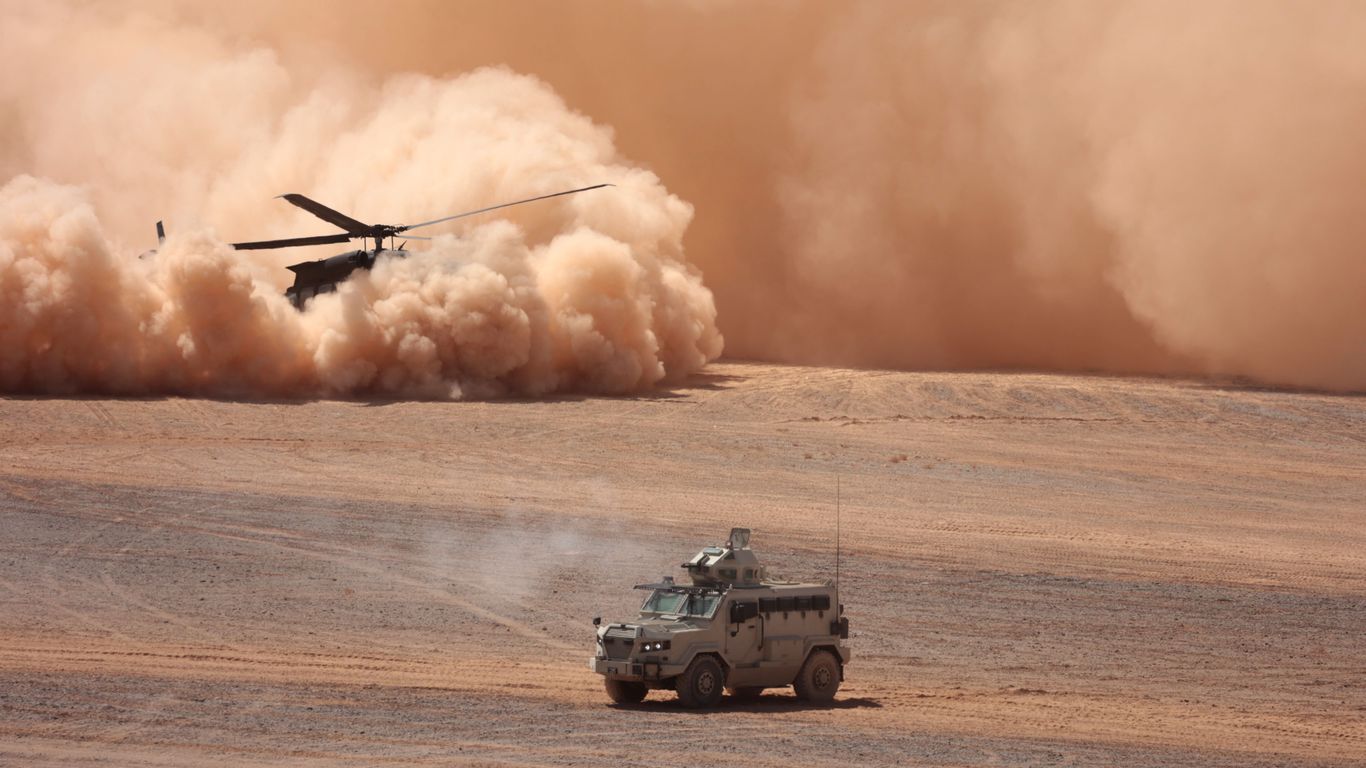
U.S. strikes Iran again after troop deaths The U.S. military launched fresh strikes against Iran on Sunday evening, after announcing the death of one American service member and the recovery of anothers remains following an Iranian missile strike in Jordan.The big picture: The deaths underscore the growing toll of the U.S.-Iran conflict as both countries continue military attacks and the risk of further escalation rises.Driving the news: The U.S. military said Sunday it found the remains of a service member who went missing after an Iranian missile attack on a base in Jordan that killed two American troops.U.S. Central Command (CENTCOM) also revealed an American service member was killed Saturday in northern Iraq during a controlled detonation of unexploded ordnance from a downed Iranian one-way attack drone.The conflict has now killed 18 U.S. service members.What theyre saying: President Trump told reporters that the U.S. hit Iran "very hard again" on Sunday. "We feel very badly, but you know those great people, those great patriots, were out there fighting that Iran cannot have a nuclear weapon," Trump said."Iran has been very, very badly damaged, theyve lost everything almost militarily, theyve got very little left, theyve got some missiles, theyve got some drones, theyve got some manufacturing ability, not much, we control the straight, they dont control anything."Zoom in: At least two Iranian ballistic missiles struck the Muwaffaq Salti Air Base in Jordan, which hosts U.S. troops and fighter jets, on Friday.CENTCOM said in a statement the service members remains were found after a thorough search and that an examination to verify the remains was ongoing.A second service member was wounded and received medical treatment for a minor injury, CENTCOM added."CENTCOM is withholding additional information, including the identities of the missing and fallen warriors, out of respect for the families during the notification process," CENTCOM added.Go deeper: Oil tops $90 as Middle East fighting escalatesEditors note: This story has been updated with comment from President Trump and details of the latest U.S. strikes on Iran.
axios · 2 months ago
US launches fresh Iran strikes as death toll climbs A service member died in a controlled detonation of a drone after two soldiers were killed in Jordan with another missing
financial times · 2 months ago