
EU shifts stance: Brussels moves to curb Chinese exports with new tariffs

Story Timeline
4 months · 18 summary articles
The European Union is poised to adopt a harder line against Chinese exports, with Germany’s shift in stance on Friday marking a decisive turning point in Brussels’ approach to Beijing’s trade practices. The bloc’s growing willingness to confront China’s industrial overcapacity reflects a recalibration of priorities, as concerns over economic competition increasingly outweigh fears of retaliatory measures from Beijing .
EU leaders are now scrambling to reach a consensus on measures to curb imports that have devastated domestic industries, particularly in sectors such as solar panels, electric vehicles, and steel. The urgency was underscored by a proposed new law aimed at reducing the bloc’s dependence on China, which the European Commission is expected to unveil next week . The draft legislation, provisionally titled the “Diversification and De-Risking Act,” would introduce stricter tariffs and quotas on sensitive goods while incentivizing companies to relocate supply chains to allied nations.
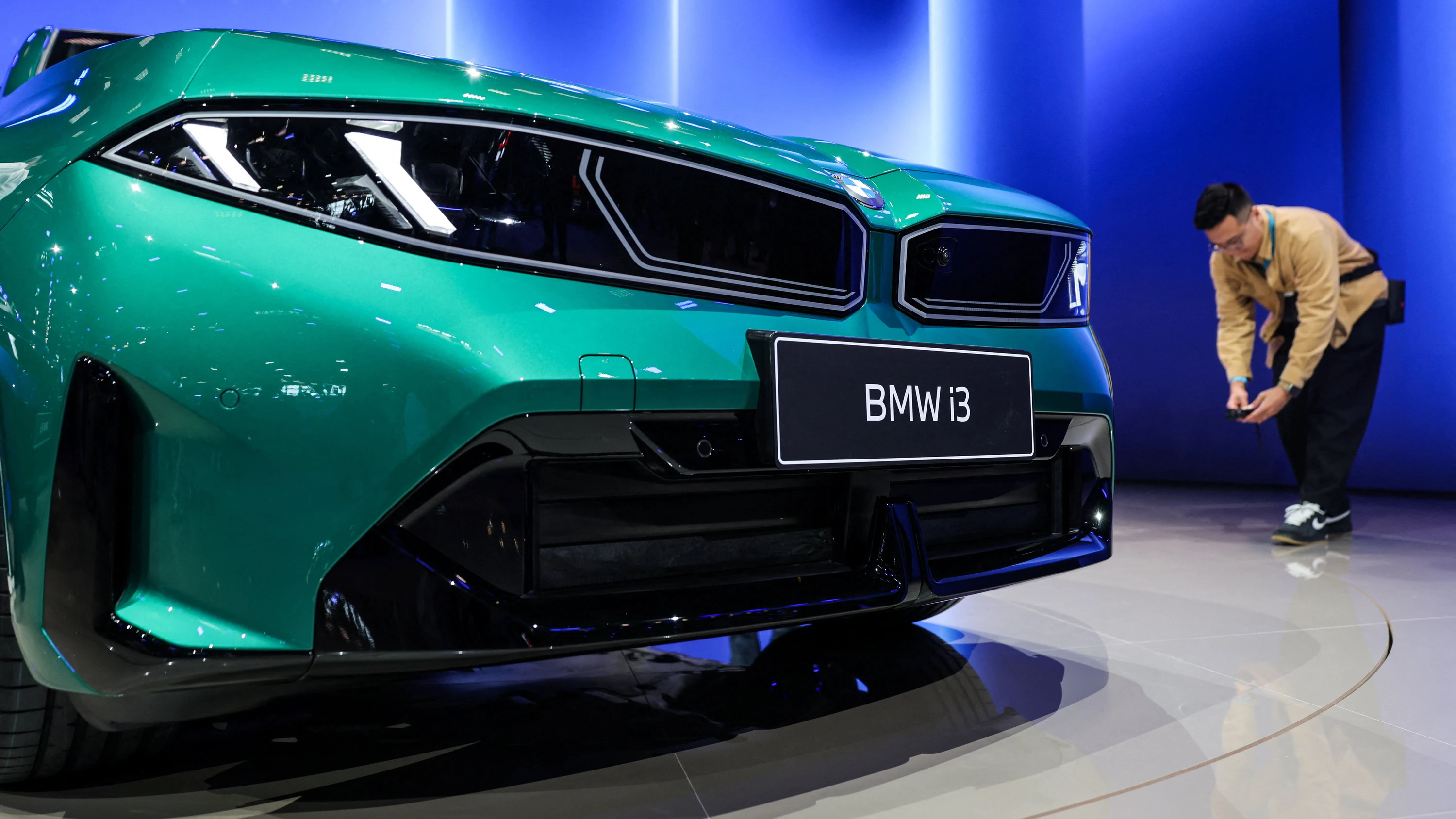
The shift follows months of internal debate, with Germany’s volte-face—long seen as a brake on EU trade restrictions—removing a key obstacle. “The fear of Chinese retaliation is no longer paralyzing decision-making,” said a senior EU diplomat in Brussels, speaking on condition of anonymity. “The reality of job losses and industrial decline has forced a rethink.” The move comes amid mounting pressure from European manufacturers, including German automakers BMW, Mercedes-Benz, and Volkswagen, which have warned that without protective measures, their operations in Europe could become unviable .
Yet the path forward remains fraught with division. At an emergency EU summit in Brussels on Thursday, German Chancellor Friedrich Merz and French President Emmanuel Macron clashed over the scope of proposed tariffs, with Merz cautioning against a full-blown trade war . Meanwhile, business leaders have cautioned that excessive regulation could stifle growth, with executives from major corporations warning that EU overreach risks undermining competitiveness .
The proposed measures also risk exacerbating tensions with Beijing, which has already signaled its displeasure through diplomatic channels. “China will not stand idly by if the EU imposes discriminatory trade barriers,” warned a Chinese commerce ministry spokesperson in a statement released Friday. Analysts suggest the EU’s strategy may hinge on a delicate balance: imposing enough restrictions to protect domestic industries without triggering a retaliatory spiral that could destabilize global trade.
For now, the bloc appears determined to press ahead. The European Commission is expected to finalize the draft law by July, with a vote in the European Parliament slated for autumn. The outcome will test whether Europe can present a united front—or whether internal divisions will once again dilute its response to China’s economic challenge.
Follow us for live European news
- 2
- 1
- 1
- 1
- 1
- 1
2 further sources not geolocated
Articles

Execs are warning that EU overregulation is constraining business
gdeltproject.org · 3 months ago

Xi Jinping quiere que China impulse la demanda. ¿Por qué no está funcionando? La actividad económica se está estancando a medio camino de 2026, lo que socava los esfuerzos por reactivar la economía. Leer
expansion · 3 months ago
EU-Gipfel: Merz gegen Handelskrieg mit China und Dialog mit Russland Auf dem EU-Gipfel in Brüssel gab es Streit über den richtigen Kurs in der Außen- und Wirtschaftspolitik. Schnelle Lösungen zeichnen sich nicht ab. mehr...
taz.de · 3 months ago
Europa kiest voor hardere koers tegen Chinese export Nu ook Duitsland de draai maakt, beweegt de Europese Unie naar een hardere koers tegen Chinese export. De angst voor Chinese concurrentie is het aan het winnen van de angst voor Chinese vergelding.
nrc · 3 months ago

En Chine, le désir de consommer a chuté à un niveau historiquement bas Pékin a érigé en priorité absolue la relance de la consommation intérieure. Mais le nouveau recul de la vente au détail en mai 2026, qui enregistre sa plus mauvaise performance depuis 1994, révèle lampleur de la tâche.
courrier international · 3 months ago
EU plant Instrument gegen Abhängigkeit von China
orf.at · 3 months ago
Probleme in China: Skurrile Ausreden der deutschen Autokonzerne BMW, Mercedes und VW haben keine andere Möglichkeit, als noch stärker in China zu investieren. Europas Politik läuft Gefahr, sie zu Regionalphänomen zu degradieren.
faz · 3 months ago

Chinese Export Flood Tests Europes Stomach for Trade War With Beijing EU leaders are struggling for consensus on how much to restrict imports that are battering their industries.
wsj · 3 months ago

EU to propose diversification law to drive de-risking from China reut.rs/4xF6UyK
bluesky bot · 3 months ago